main

Baby in travel

Grounded by a sick child

04/06/2015 — by Magdalena Kuźma0

grounded1-960x720.jpg

So it happened, yesterday for the first time since we travel with our daughter we were forced to give up our plans. During this long June weekend we planned to get to know the Balkans a little better. We kept on thinking about Belgrade, which we run through last year, and wanted to come back there some day. We planned this moment to be this June weekend. Instead we were grouned by Ola’s sickness. Suddenly she got sick, now she barely can make any sound, has fever and doesn’t feel too good. In such situation any longer trip would not be a pleasure either for her, nor for us, so there was nothing else to do than give up the trip.

Dziecko w podróży

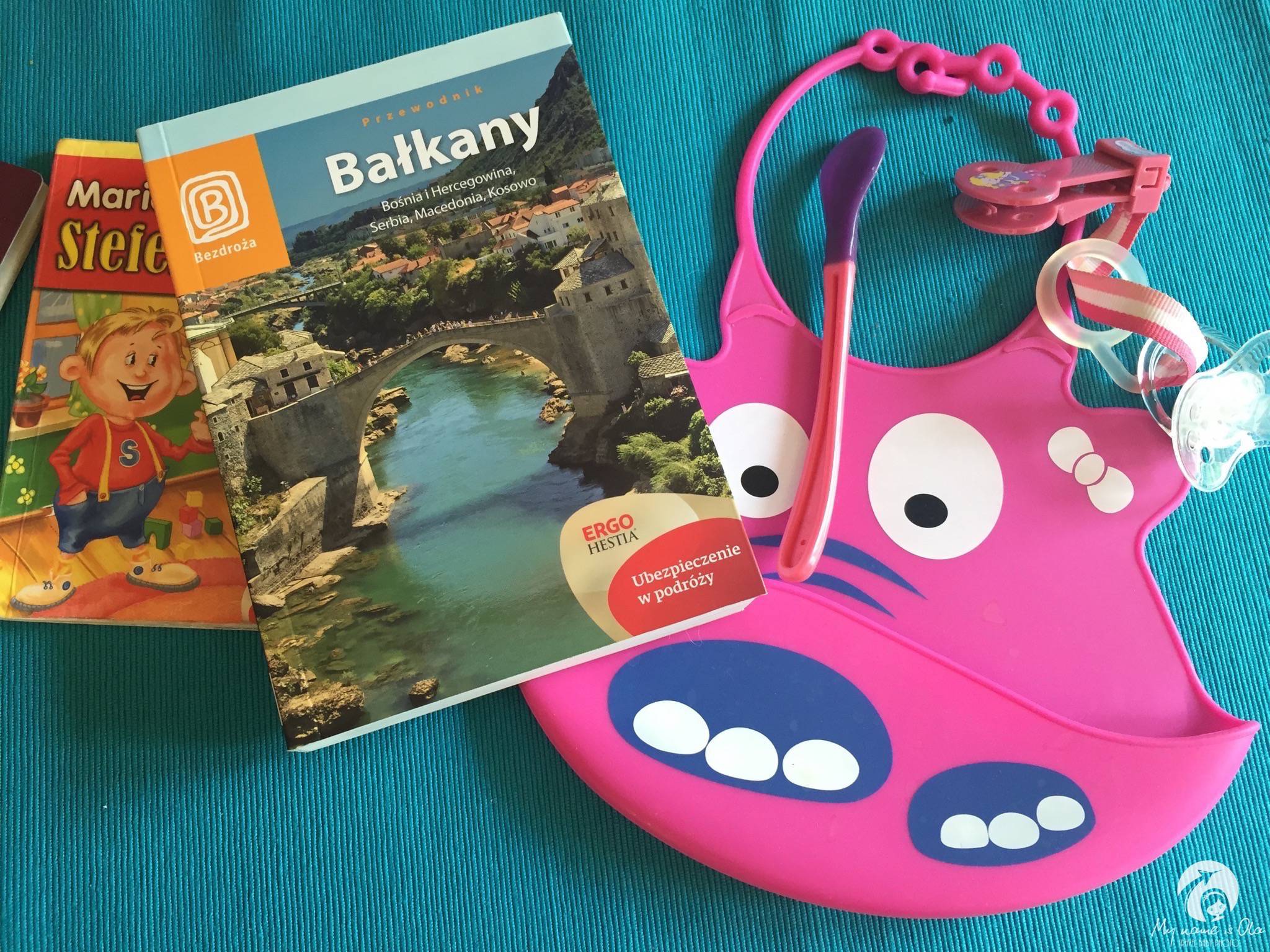
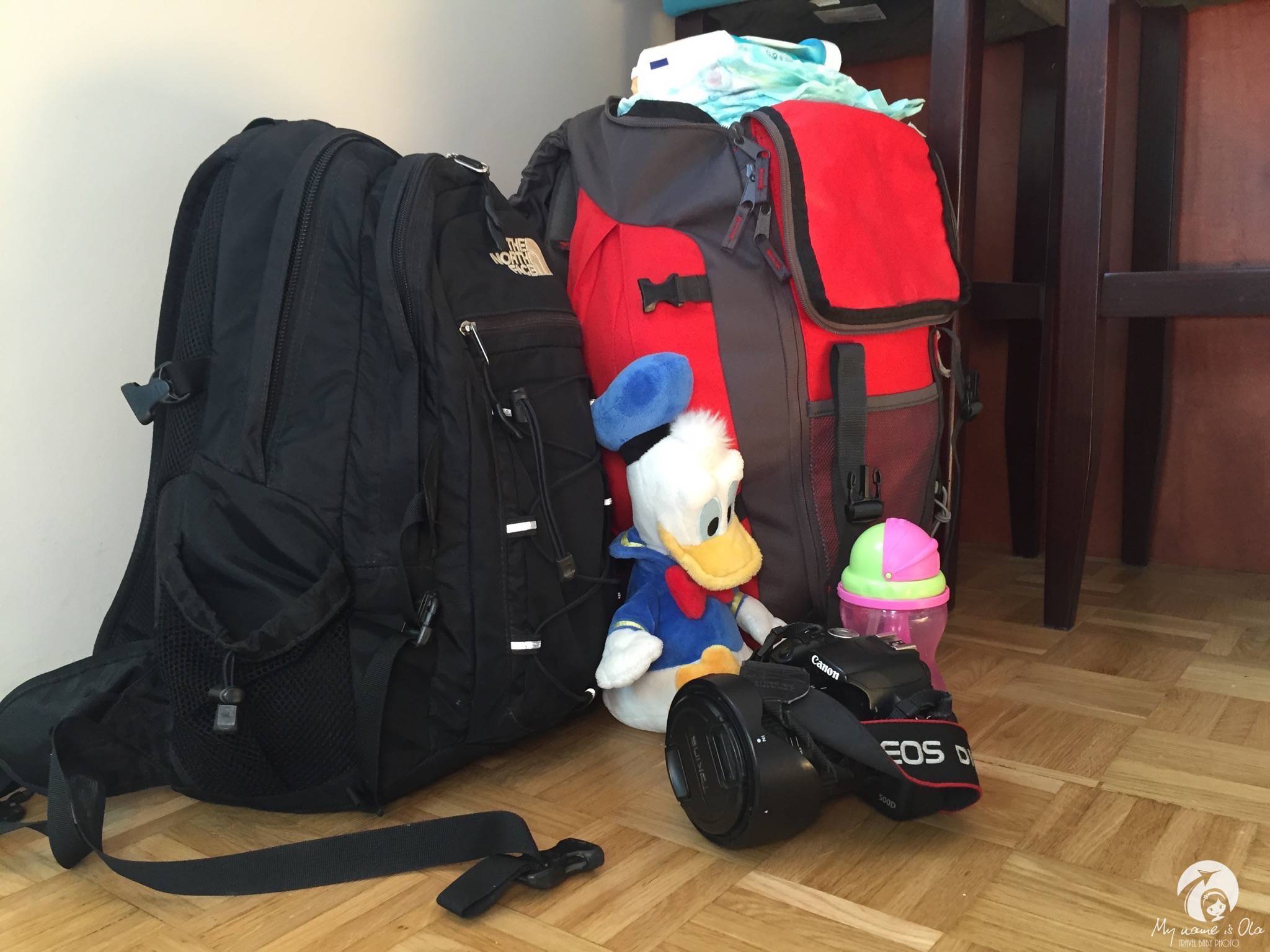
The decision wasn’t easy and we made it only an hour before planned departure to the airport. Diapers were already packed, small and big clothes too, cosmetics in tiny bottles were already in a backpack, blank memory card in the camera, we even did an online checkin. However, long time ago we have promised ourselves that our trips will never be to the detriment of Ola, will not be a burdon for her and will only be a pleasure for all the three of us. Therefore, in this case we had no other option than to stay home.

And what do you do now? Now nothing. You just pretend nothing happened and cancel all the reservations. But in fact taking care for all that you should start long before. Traveling with baby you should expect unexpected and making holiday plans do the reservations in a way allowing to cancel them as late as possible. We are starting from airplane tickets. No, just kidding, the price difference is too big to and we always choose the most favorable price (read more about flying with a baby here).

But booking accomodation you can pay attention on cancellation policies of different hotels. Simply choose those that allow to cancel everything as late before your arrival as possible. Those who prefer not to book hotels in advance but just look for the place to spend a night being there are in comortable situation. However this is not our favourite way, mainly because our trips are not long enuogh comparing to all those things we want to see and do. The time we would have to spend  looking for acommodation we would rather dedicate to something much more fascinating. We have mentioned before some loyality programs that allow participants for some more than other hotel guests, for example for late room cancellation, even on the same day. Yesterday we had to use such option. Thanks to that we did’t loose any money calling off our arrival to Belgrade (read more about choosing a hotel when traveling with a baby here).

Dziecko w podróży

It’s worth to pay attention on cancellation policy also when booking a car. Here we usually have no choice and have to face determined conditions. Usually it is 48 hours before pick up date when you can call off the reservation for free. If cancelling your booking later you will be charged for. The amount of money depends on the company you chose and this is for example 50 euro in economycarrentals.com or 1 day rental when canceling before 24 hours in Avis. But you should check in details when booking your car.

The conclusion is one: being a parent you should always be ready for sudden changes of plans. Any kind of sicknesses can get you everywhere, even somewhere already in travel. If you would like to be ready for all type of ailments packing only a carry on in any trip would not be possible. This is why, when do not see any symptomps of something upcoming, we travel only with painkillers and something for diarrhea. It would be different if Ola had to take any medicines chronically. Those have to be taken no matter what, there is no option to leave them home. But even when packing all that stuff you can make your life easier, means your luggage lighter: preparing medicines for a trip do not just throw whole pack of pills in the backpack but take out one blister pack that you will be likely to use during your trip and pack it together with a leaflet. Maybe one day we will try to write something about packing only in carry on luggage when leaving for a weekend or a big suitcase when leaving for a two weeks holidays with a baby.

Dziecko w podróży

It is difficult to anticipate any type of disease and despite all efforts to prevent it, you or your baby can get sick in the worst possible time. To ensure yourself a peace of mind and your baby a medical help in any situation, before leaving it is worth to look around for some kind of insurance. There are so many offers to choose from and the cost of insuring a couple days trip is not a big expense. Spending probably around 15€ you will be able to get a reasonable insurance for family of three for a weekend getaway. Before buying additional insurance make sure if don’t already have one. For example some credit cards include different holiday packages even as a basic option. However such policy will not be enough to apply for a visa. Some countries require a medical insurance to be provided with a visa application. Than you have to get a separate insurance for your trip.

Of course we keep fingers crossed so that you and us didn’t have to use those insurance and any medicines tirelessly carried on your back never in your trips and all your journeys were carried in good health of whole family and awesome atmosphere.

Best regards to all who managed to leave for this weekend and will see some interesting places in the world. Have fun!

Blog

Chisinau – between East and West

02/07/2015 — by Magdalena Kuźma6

moldova025-960x640.jpg

Mongolia? Macedonia? When we came home from Moldova not everyone was sure where exacly we were coming back from. Indeed Moldova is not a well-known country and information about it hardly ever occupy first pages of western newspapers. Even the latest bank scandal when billion dollars were stolen from Moldavian banks has not been widely discussed in world media. That confirms that really hardly anyone knows this country and remembers about its presence in Europe. And what comes to your mind when you think Moldova? In the coming days we want to introduce you this country and we are starting today from one of its capitals – Chisinau.

Moldova, Chisinau

One of the capitals? Right. Although there are few countries which divide capitals responsibilities by couple cities, here the situation is unique. Left bank of the Dnieper river occupies a separatistic Pridnestrovian Moldavian Republic with the capital in Tiraspol and southern areas of the country are in the Autonomous Territorial Unit of Gagauzia with the capital in Comrat. Now during the conflict in neighboring Ukraine and after the annexation of Crimea by Russians there regions grow in strength.

Nobody knows so far what will Chisinau do facing increasing separatist aspirations of the other capitals. Last elections did not allow to have any assumptions about that. Although pro-European parties have won and even quite fast managed to form a government with Prime Minister Chiril Gaburici the situation still is not stable. Prime Minister has already demitted his post and opposition demands new election and tightening relations with Russia. As a political life curiosity we can mention that Moldovan parliament was not able to appoint President for three years. Currently Moldovan president is Nicolae Timofti. Will Chisinau keep its course towards West? It is not so sure as the moods in society seem to be different than the results of elections. Because of the funding problems new prorussian party with couple percent support was not allowed to take part in the elections. If it wasn’t for that the result might have been way different. In recent elections for Chisinau mayor proeuropean parties still managed to keep Dorina Chirtoace on his position.

5 things to do in Chisinau

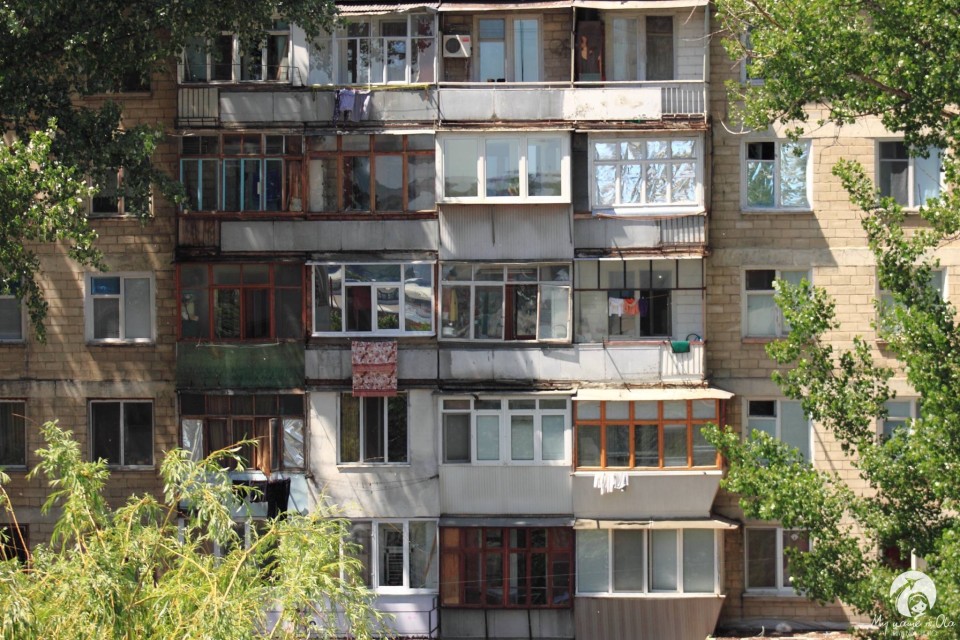
This suspension between East and West is visible for city guests. Arriving from the airport, first thing that will attract your attention will be two huge blocks of flats on both sides of the street, making kind of a gate to the city. Heading towards the center you will be passing higher buildings of different shapes and heights – now you know where you are. Such massive bulidings were built only in the Eastern block. In the center it seems to be different – Steven III the Great street has already that western look, fast food chains, expensive boutiques, flashing neon commercials. All that seems to be an illusion for us as buildings are renovated or covered by commercials only on first floors, it’s enough just  to raise your head to see again that Moldovan east.

The central point of the city is the Great National Assembly Square. This, so called hub of Chisinau, is bustling not only on weekends. Everyday hundreds of Moldovans are there, many youth with notebooks gather there to use free WIFI. Real national meetings take place here on weekends when pro-European and pro-Russian demnstrations take place.

[photosetgrid layout=”22″]Sobór Narodzenia Pańskiego w KiszyniowieSobór Narodzenia Pańskiego w KiszyniowieŁuk Triumfalny w KiszyniowieChisinau[/photosetgrid]

In the middle of the square there is a big triumphal arch. This one of the city’s symbols was built to celebrate Russian victory over the Turks and incorporation of whole Bessarabia to the Empire. Across the street there is a government seat where after ratification by the parliament, the association agreement with EU was signed. Chisinau is exactly the same as whole Moldova – full of contradictions, torn between East and West.

During our trip we were lucky to meet some NGO’s activists serving on the square tea brewed in authentic samovars. Our attention was drawn mainly by those devices, not seen for so much time. Polished to a high gloss, silver and golden, with long pipes leading out all the hot air above peoples heads did not let us just to pass by. Really well preserved, still working samovars are something vere rare these days, while on the streets of Chisinau we are drinking tea just brewed in them! Amazing!

Moldova, Chisinau

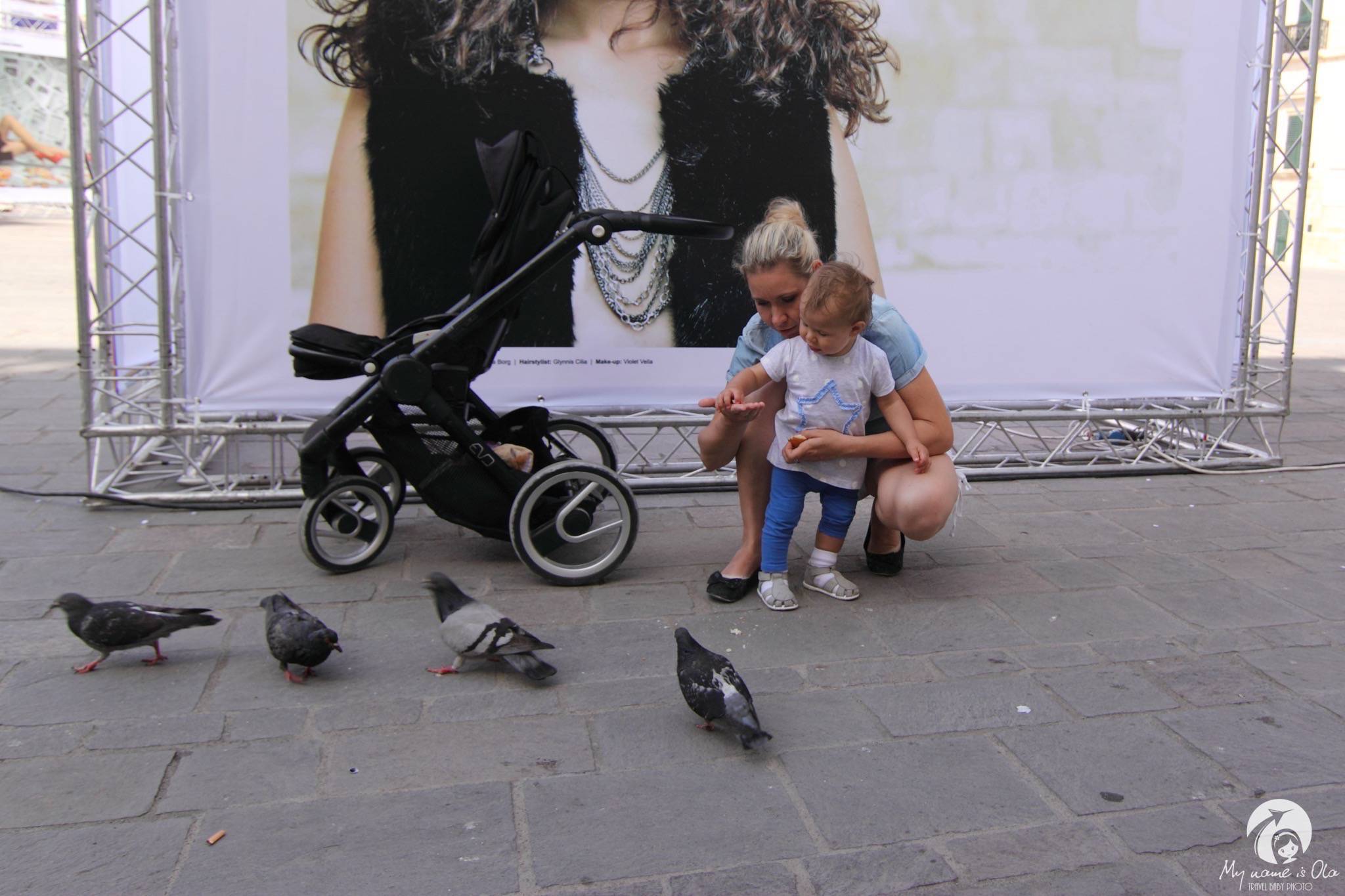
Square with adjacent park is a main place of relaxation and entertainment of Chisinau residents. On Sunday afternoon it is full of sunning on benches older people, younger playing giant chess and children chasing for pigeons. Here Ola made her best friend during the whole trip to Moldova. She met a little girl, a bit older than her, a tourist from far eastern Russia. It was hard to disturb their cheerful chase for pigeons! New pigeons kept coming and girls with neverending energy did not allow them to rest even for a moment. The time to say good bye we managed to survive somehow, girls hugged and eventually each one went her way.

[photosetgrid layout=”12″]Moldova, ChisinauMoldova, ChisinauMoldova, Chisinau[/photosetgrid]

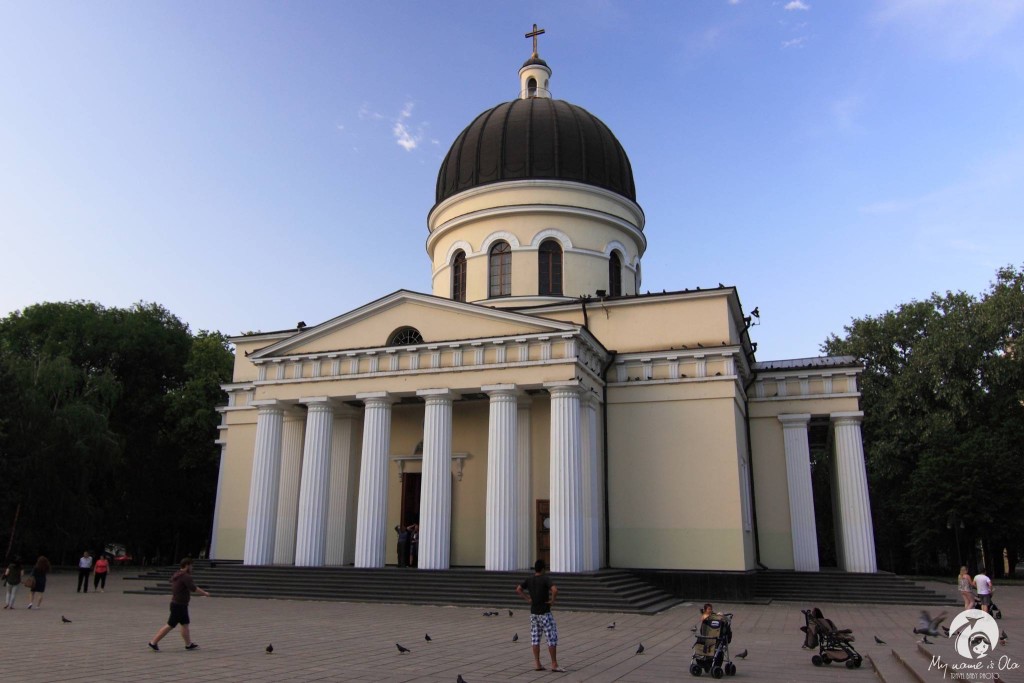
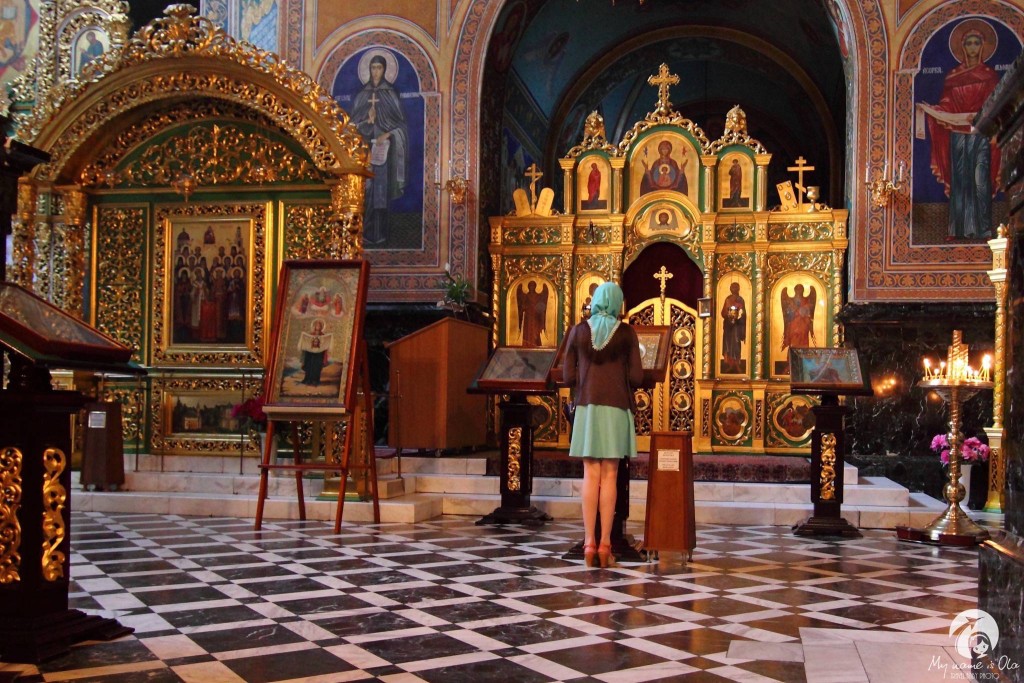
Being on the square it is worth to see the biggest Orthodox church in the country. The classicist Cathedral of Christ’s Nativity was built in the early 19th century. After communist era when it served as an exhibition hall it was reopened as a church in 1996. They also rebuilt previously destroyed bell tower.

Moldova, Chisinau

It is not the only religious building recommended in Chisinau. Many orthodox churches are now being renovated after years of working as Museum of Religion and are especialy interesting inside. Be sure to see also the synagogue and Jewish cemetery.

5 most important sacral buildings in Chisinau

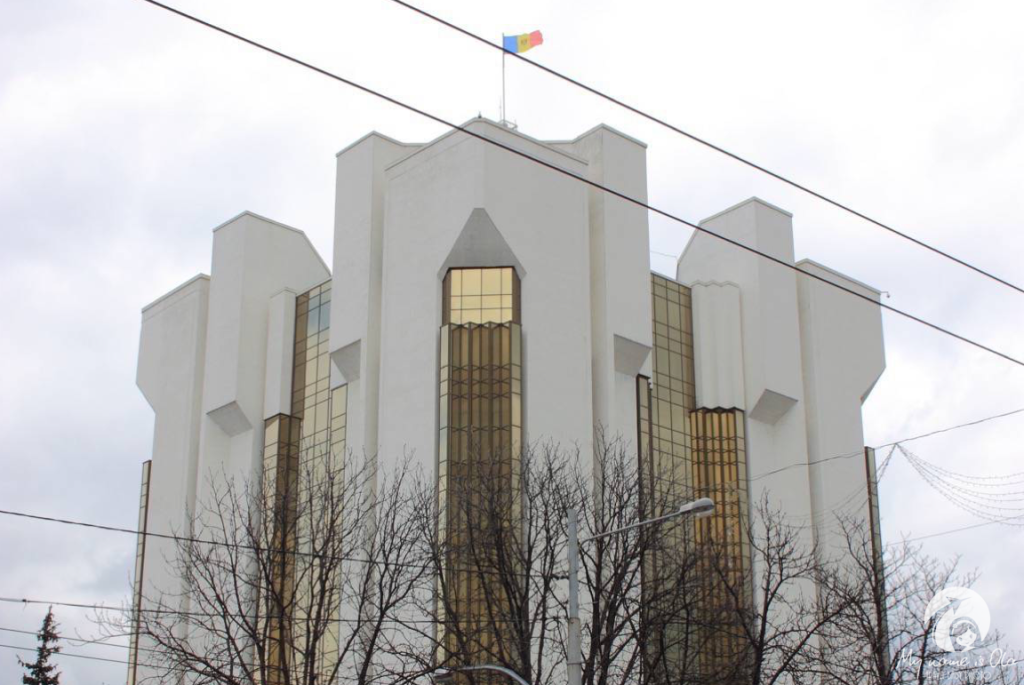
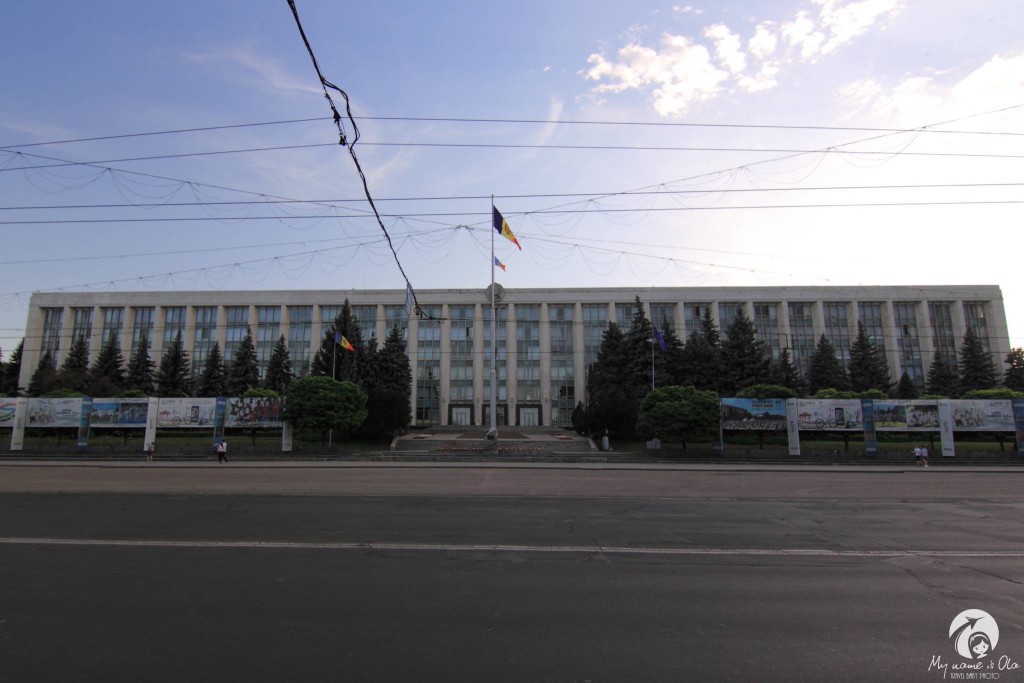
Heading north-west you will pass Pushkin’s favourite Stefan Cel Mare park, with his monument at the main gate. Right next to it there is an interesting building of Presidential Palace. It remins a glass castle with four huge towers. Across the street from it you will find, contrastinfg with golden palace, a grey structure of Moldovan Parliament.

[photosetgrid layout=”13″]Moldova, ChisinauMoldova, ChisinauMoldova, ChisinauMoldova, Chisinau[/photosetgrid]

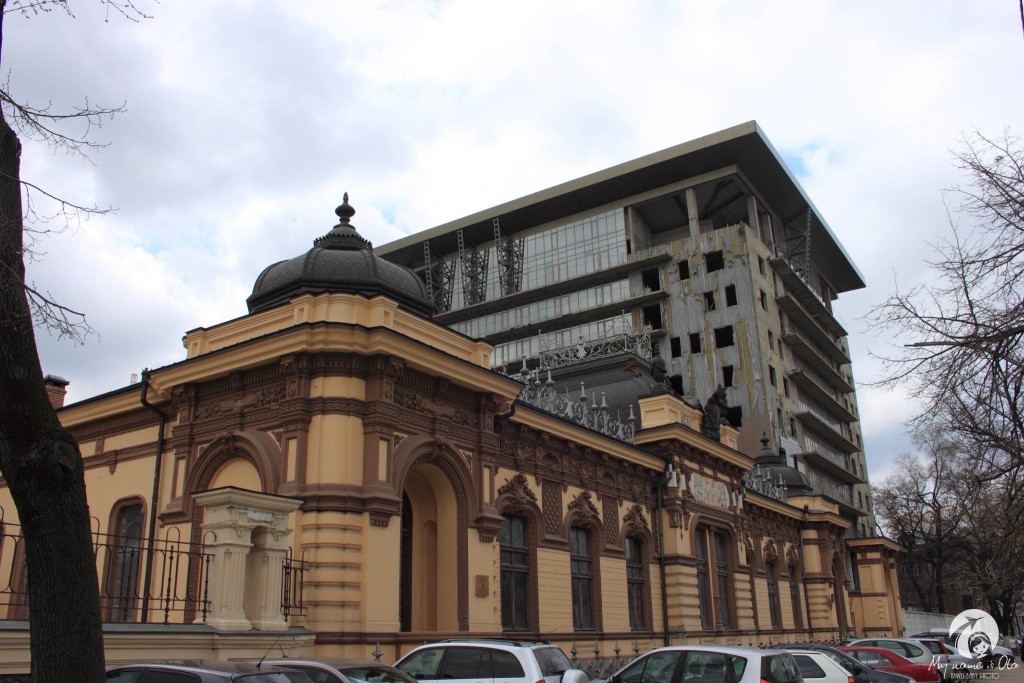
On the way you will pass the residential building which used to be owned by Vladimir Herta, built in the style of Viennese Baroque is one of the true gems of Chisinau. Main facade is richly decorated with reliefs, pay attention on iron finish and floral motifs. The whole thing is topped with a dome. Interior is as much interesting with its frescoes and paintings on the ceiling and walls.

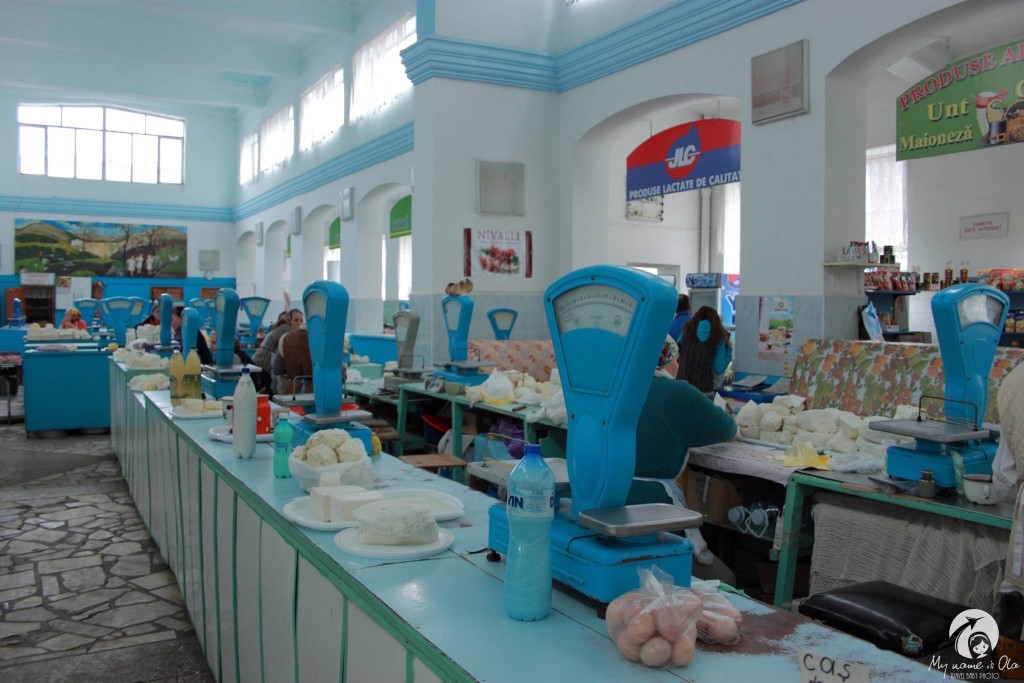
Walking the streets of Chisinau you should take a chance and leave the main street. Only after few steps you will find a specific mix of small houses falling apart and massive blocks of flats. Huge contrast. The city center with its neon lights and expensive boutiques creates an impression of western capital but only few steps away you will find a typical eastern village. Central market located right off the main street poures to the city. There you will get anything, among others the most interesting for tourists local food and wine. Make sure to try some homemade cheese.

Chisinau market

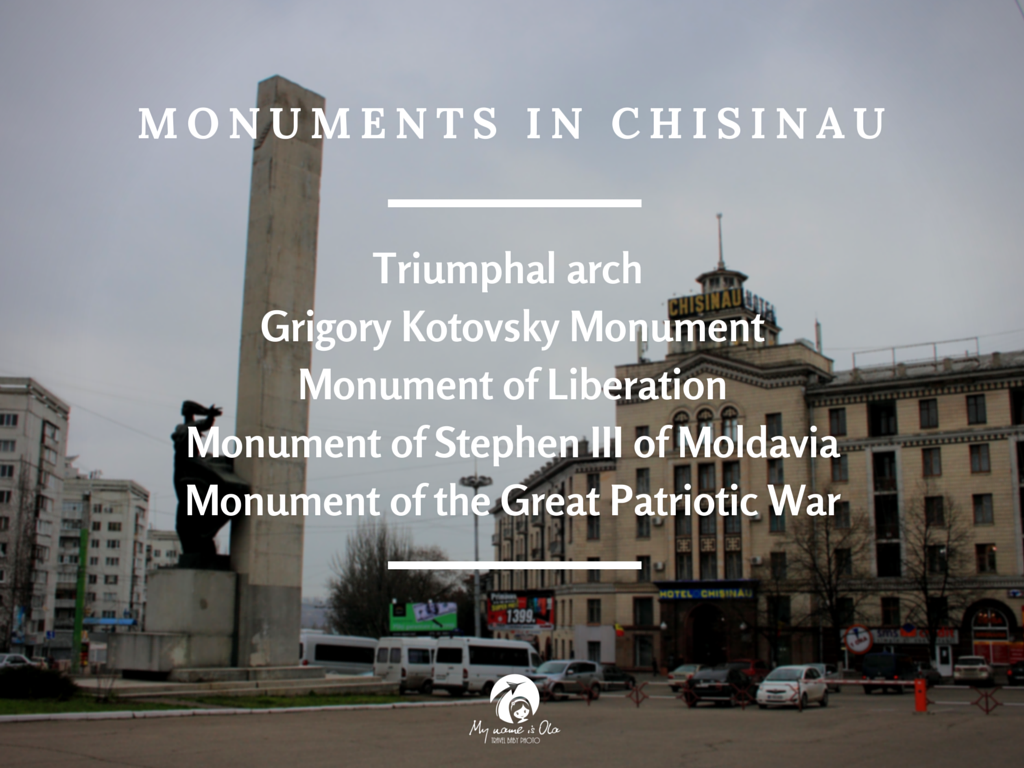
Heading south – east from the main square you will pass an interesting town hall and main post office where you can get souvenirs and handicraft. Going further you will see two more Moldovan monuments: Grigorija Kotowski’s, Bolshevik leader who fought for annexation of Bessarabia to Ukrainian Soviet Socialist Republic and the Monument of Liberation, dedicated to the „liberation” of Chisinauin August 1944 by Soviet troops. Both of them are accompanied by two hotels Cosmos and Chisinau being also some kind of capital’s symbols.

5 most important monuments of Chosinau

They look exactly like the rest of the city with only first floors renovated and attract guests with flashing lights of their casinos. The monumental building of Hotel Cosmos looks way better from the outside than it does inside. The higher, the lower room standard is. 5 top floors are closed and as the rumour says the last one is occupied by an escort agency. The route of most guests is simple: from casino, through bar to the last floor or possibly the same in exactly opposite order. Rooms are rather simple, the only thing that surprised us was the presence of two glasses and wine carafe. You don’t have too look for corkscrew too much, just go straight to etazowa, a person residing on each floor, which you can turn to with all your problems. The only thing that the place does not offer is a baby cot. But, as we wrote, if you need anything, just visit etazowa. During our stay Ola used both: our bed and her own, made of couple blankets and clean sheets. We didn’t have to worry about her comfort and safety but honestly speaking we would better appreciate a regular travel cot for her.

Cosmos hotel

The building itself contrasts with the area. Right next to it there are main shopping malls of Chisinau, including the biggest one MallDova. This english name might have been given in order not to antagonize russian and english speaking people. Chains of fast foods and shopping malls of no matter what kind of names do not suit Chisinau, they stand out from the city’s landscape, seem to be strange. The same do casinos, which arrived form East right after Putin banned them in Russia. That’s another Moldova tragedy – taking the worst from East and from West.

MallDova, Chisinau

This time Chisinau did not amaze us, visible changes in the city landscape do not seem to go in the right direction. How will it be next time? We will see. It’s worth to visit the city to feel it yourself especialy that Chisinau is a good start to see all other attractions of the country. You will read about them in our next posts.

BlogNa stole

Wine in Malta: Marsovin cellars full of treasures

29/05/2015 — by Magdalena Kuźma8

wino37-960x640.jpg

How is that possible that on the island with few thousand years od settlement history, with Europe’s oldest detached temples the best vineyards are only 100 years old. The British are to blame for everything. In 19th century when they ruled the island all vines were destroyed ruining long history of vine growing and were replaced by cotton.

Viticulture on the island was initiated by Phoenicians, continued by Greeks and Romans. Even Arab domination on the island didn’t destroy the tradition. In 16th century when the Order of Malta came to the island the wine industry developed. Along with Joannites came new techniques of vine cultivation and the export of wine grew so much that in order to increase the crops from limited area of land they started to grow vines on pergolas. The apperance of British interrupted this golden age. Fortunately the experiment with cotton did not last long. At the turn of  20th century the demand for cotton was over. At that time first vineyards that are there until today started to appear.

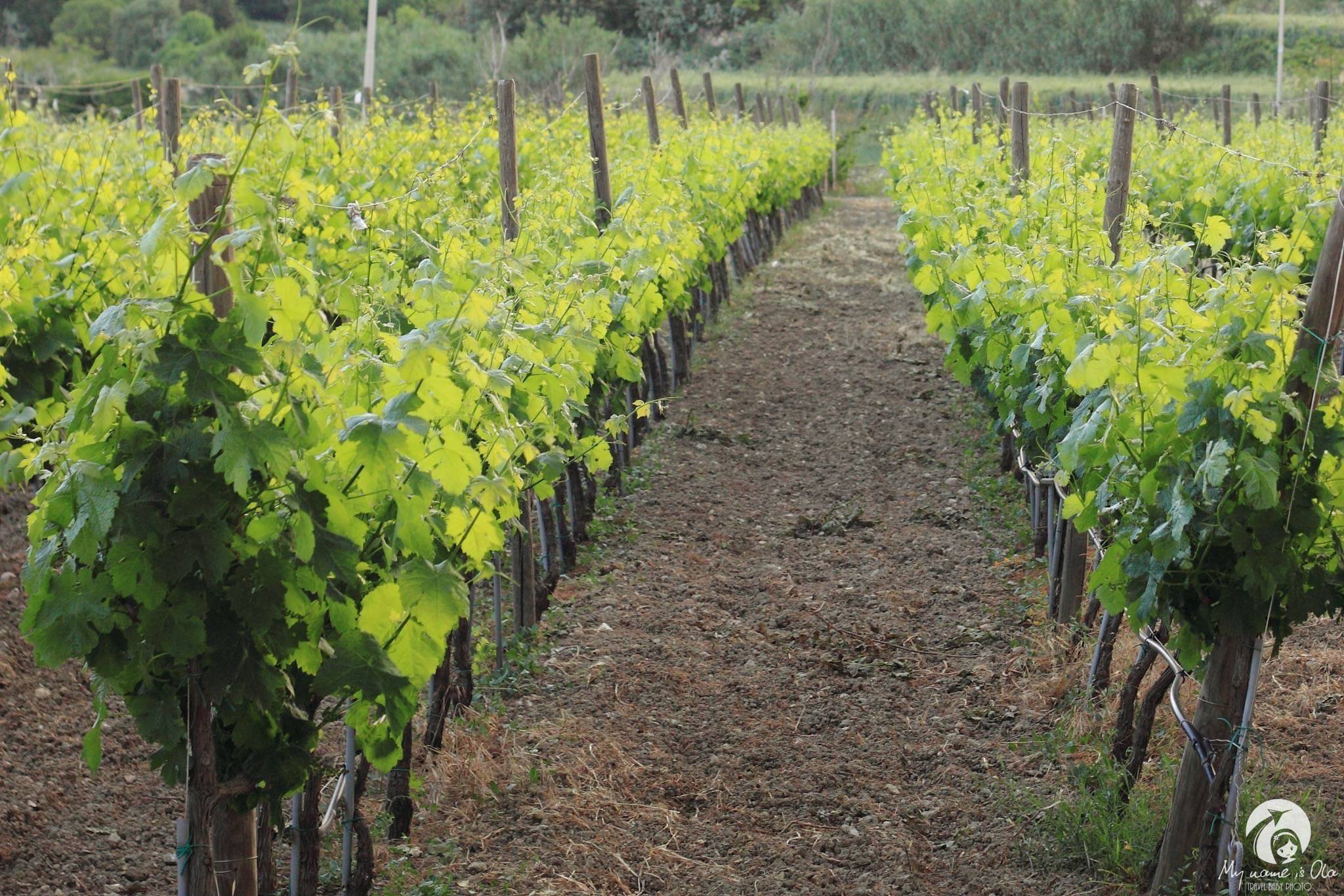
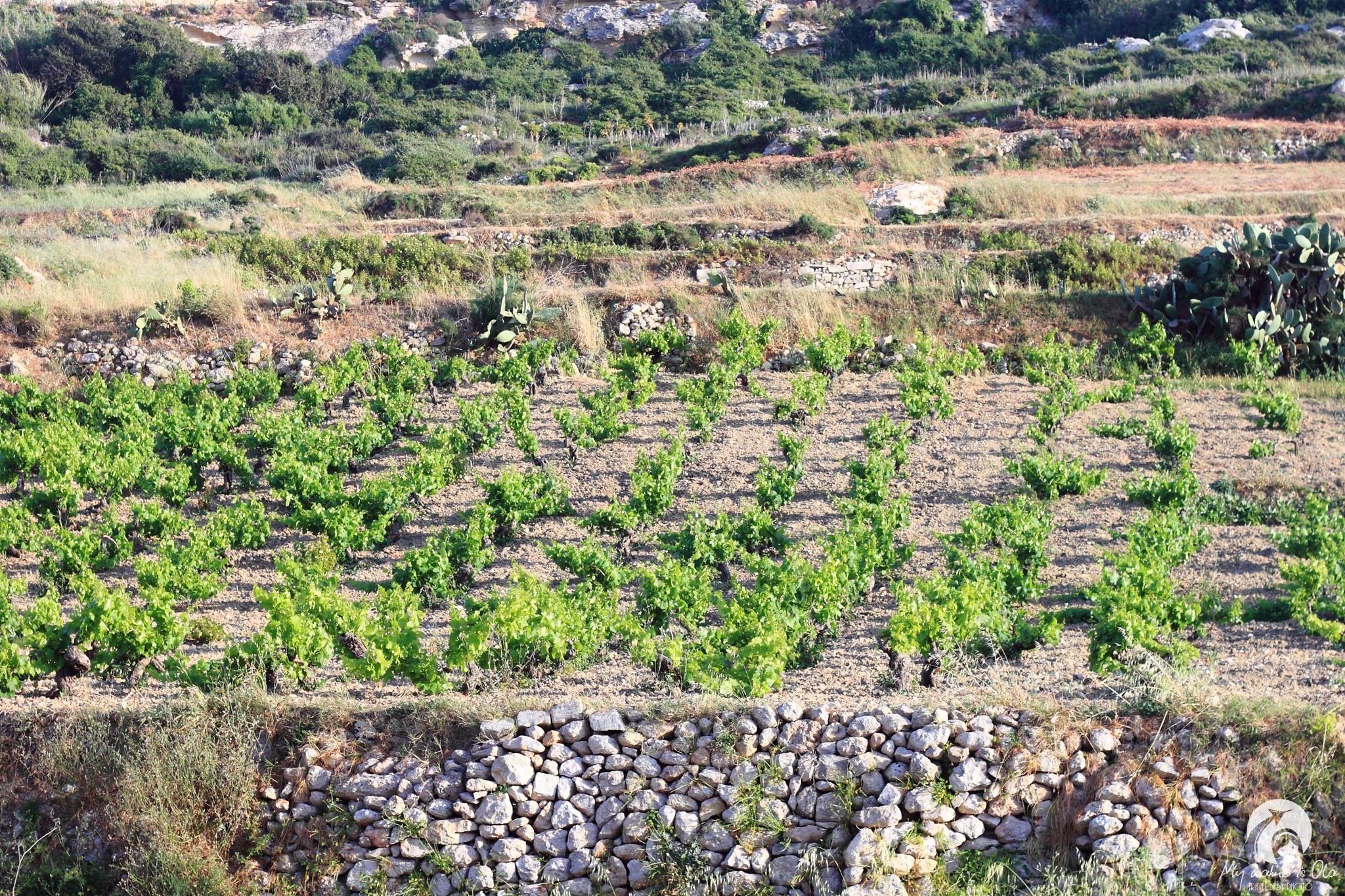
Maltese wineyards

Going to Malta we planned to get to know local wines close but we didnt expect finding first vine crops after driving just few kilometers. First impression – how small all that is. Next days, driving around the island we kept on seeing small vineyards all the time. Malta has very good conditions to grow vines but are those little vineyards able to supply ingredients to produce 70 000 hl of wine each year? Of course not. Most of Maltese wines are produced of vines imported from Italy. We were not really surprised, as the same they do in another similar size country, Liechtenstein, importing ingredient from Austria (more about Liechtenstein wineries here).

Maltese wineyards

Current area of the vineyards on Malta and Gozo is around 500 ha. All the production is made by 5 major wine companies, only two of which have history longer than several years. The oldest are Delicata, established in 1907 and Marsovin founded in 1917. The others: Camilleri Wines, Montekristo and Meridiana were opened only at the end of 20th century. As we wanted to let Ola play on the beach as long as she wanted we did’t visit all of them. Marsovin seemed to be the most interesting because, unlike Delicata, they make wines from produce of Malta and Gozo, they use indigenous grape varieties and have their cellars  open for visitors.

[photosetgrid layout=”13″]Marsovin Cellars, MaltaMarsovin Cellars, MaltaMarsovin Cellars, MaltaMarsovin Cellars, Malta[/photosetgrid]

We directed to our steps to Paolo, where the headquarters of the company is. The factory complex is quite big but the tourists get to visit only a part of it. First we got to see the museum of former wine making techniques and the history of Marsovin. Narrow and winding stairs lead to the cellars built in 17th century, in the times winery art heyday. The builders and first users of cellars were Joannites. Today 10 000 of bottles and hundreds of oak barrels are storred there. Surely these are not the cellars of Moldovan Cricova but on such a small island everything seems to be bigger and more impressive.

In the first room from behind the bars we saw the library of wines, the collection of all kinds and vintages of wines since the beginning of company history. The conditions underground seem to be perfect for wines storing. Next we passed the exhibition of instruments used for wine making and bottling the drink of gods. Walls are decorated with elements reminding the history of the place. Main objects of the exhibition are barrels, although they are full it was hard to believe our guide that they contain their best wines. Hundreds of tourists, noise, changes of light are not the best conditons for good wine maturation. The part of the exhibition shows production process of “Maltese champagne”. Marsovin is proud of their sparkling wine Cassar de Malte, produced of chardonnay grapes. The production process itself is identical to the method of French champagnes manufacturing.

[photosetgrid layout=”13″]Marsovin Cellars, MaltaMarsovin Cellars, MaltaMarsovin Cellars, MaltaMarsovin Cellars, Malta[/photosetgrid]

The most interesting was still to come – after seeing the museum we went to another room for wine tasting.  In that place we were observed by the statue of Chevalier Anthonym Cassara, a man who in 1918 gave up the cultivation of oranges and started to grow vines giving birth to Marsovin. Today it is only history because, as our guide said, family of founder does not even visit the place. The tasting itself disappointed us a little, as we later found out that wines we were offered to taste were of Marsovin cheapest ones. Apart from the quality of wines, the presentation was more like a direct sales than interesting story about wines. Surely it works for participants of tours visiting factory willingly and frequently. We were not satisfied with this as we were looking forward to trying some wines of indigenous Maltese varieties.

[photosetgrid layout=”2″]Marsovin Cellars, MaltaMarsovin Cellars, Malta[/photosetgrid]

Thankfuly in the liquor stores in Malta some interesting wines are to be found. The same evening we tried, made of indigenous ġellewża variety, 1918 Red wine, D.O.K. from 2010. We liked this one, it had deep red color, intense fruity aromas with some chocolate flavours, very drinkable, delicate. Choosing your wine it is worth to pay attention to Maltese wine certificates, inspired by Italian ones. I.G.T designation says that wine was made of local grapes. D.O.K certificate testifies that traditional methods were used for vines growing, fruit harvesting and wine production. As for the quality I.G.T wines are between table wines and those of D.O.K. However this is not a strict rule, sometimes products not meeting the regional requirements can be of really good quality.

Marsovin Cellars, Malta

During our stay in Malta we also tried La Torre from Marsovin, white wine made of second indigenous Maltese variety – girgentina. This is a type with light flourish aroma, refreshing, seems to be perfect for hot Maltese climate. In the factory shop we also bought Ulysses, wine made of French shiraz grapes, hand-picked in family vineyards on Gozo. Red wine, although it was quite heavy, we really liked it.

Tasting of other wineries products was much worse. Table wines of Delicata, although couple euro cheaper, are according to our taste a worse choice. Finally we gave up visiting Delicata when we found out that they do not have any vineyards in Malta. Another local winery, Meridiana, produces only wines of international  varieties.

Our last meeitng with Maltese wines was in a duty-free shop at the airport but we found out that prices in liquor stores in Valletta were much better than here. So if you are going to Malta remember to enjoy the wines on the island.

[photosetgrid layout=”2″]Marsovin Cellars, MaltaMarsovin Cellars, Malta[/photosetgrid]

Baby in travel

Baby on the plane – how to buy ticket and not to go crazy on board

31/05/2015 — by Magdalena Kuźma13

on-board9-960x521.png

When we were going in our first airplane trip with Ola we had of course a lot of questions, fears and daubts. Many times on board of planes we have seen people traveling with children, younger and older, infants and toddlers so we knew that it was possible. As for our first tirp we were wondering if it wasn’t too early, how Ola will tolerate the flight, what to do with her stroller, we need to take it with us, how to pack all that baby stuff etc. After weighing all the pros and cons we decided to leave home. It was few months ago and since then we have flown together already more than once, each time going through all airport procedures, check-in, security check, we have been on board of several different airlines so we have gained some experience and would like to share it, helping other parents plan a good journey with an infant.

To go or not to go?

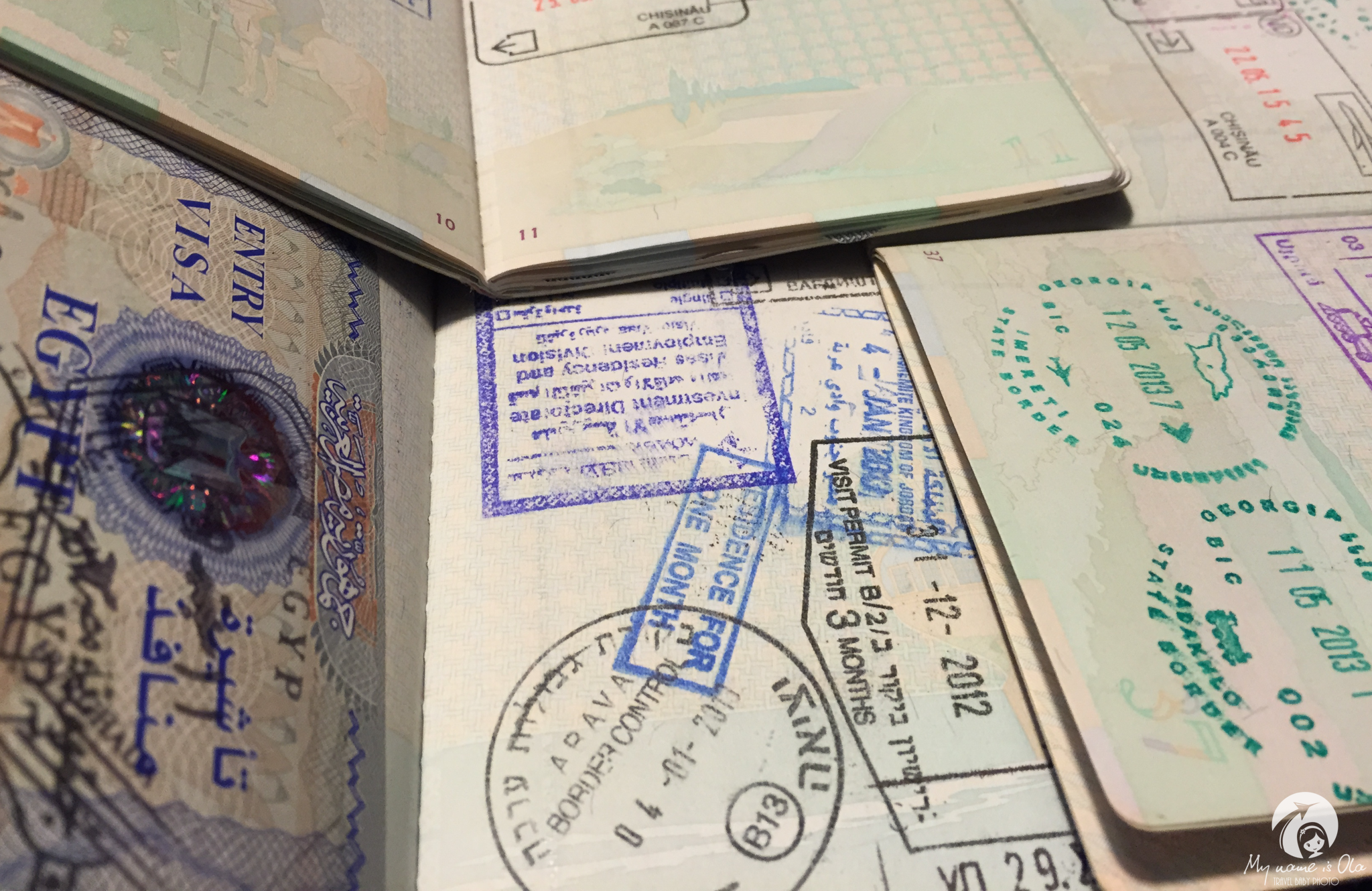
The decision when to go on the first airplane trip with an infant, whether to go at all, we leave to parents. There are so many opinions about that and we think that parents have to decide themselves. In our opinion if you are not affraid of your child’s reaction on the plane and your pediatrician approves the idea you can plan a trip. Although most airlines do not take on board infants younger than 2 weeks, doctors’ opinions are a bit more restrictive. General consensus is that a healthy child can fly from 10 weeks of age. However there are many exceptions concerning for example time and method of birth and potential child’s chronic diseases so before first trip it is worth to pay a visit at the doctor’s to check if you should feel free to go. Remember also about vaccination – planing any kind of trip right after inoculation is rather risky. You cannot be sure how the baby reacts so it is advisable to let him or her stay home for few days before going anywhere. What is also important, you will need some kind of ID for your little one. We applied for passport for Ola right away, now it is her ID in the country at the same time allowing us to travel abroad.

Georgian beach

How to buy a ticket for a baby

Interesting fact is that airlines consider infants all kids below 2 years and for such they do not provide a separate seat. Infants travel on parents lap. Of course it is not impossible to transport such a little one on a separate seat. It’s not a popular solution but you can buy a separate seat for your baby if you have  a special, attested device for kids transportation. Basicly there are two options: a car seat certified for an on board use (mounted usually by the window, in rows not next to the emergency exit) and specialy designed seatbelts CARES (dla dzieci od 10 do 20 kg). In both cases it’s the parent, who has to provide the deviced and what is more, very often inform airlines about plans of traveling with such and sometimes even buy the ticket through call center. Airplane certificates for those devices should be presented at the airport. There are some airlines that provide such eqipment (i.e. Virgin Atlantic) but you have to make sure to book it at least a day in advance. Paying for a separate seat for an infant you also get the right to take more luggage. Regardless of how your baby will travel you cannot buy only a ticket for him. The thing is that baby’s ticket is always added to adult’s reservation. One adult can take on board only one infant and their total number on the plane is limited by airlines’ internal rules and number of kids seatbelts avaliable.

Since they do not have their own seats it seems that child’s ticket should be way cheaper than adults’ but it is not so obvious. In traditional airlines kids under 2 years get a 90% discount of their fare, to which later on airport fees are added. The thing looks different in cheap airlines – there is a fixed fee for an infant, in two the most popular on our market airlines this is: 20€ in Ryanair, 25€ in Wizz Air so if you are looking for best offers it might happen that your ticket will be much cheaper than baby’s. To avoid such situations, if adult ticket is cheaper than 25€ Wizz Air lowers kid’s fare to the same amount.

[photosetgrid layout=”2″]Baby on the planeBaby on the plane[/photosetgrid]
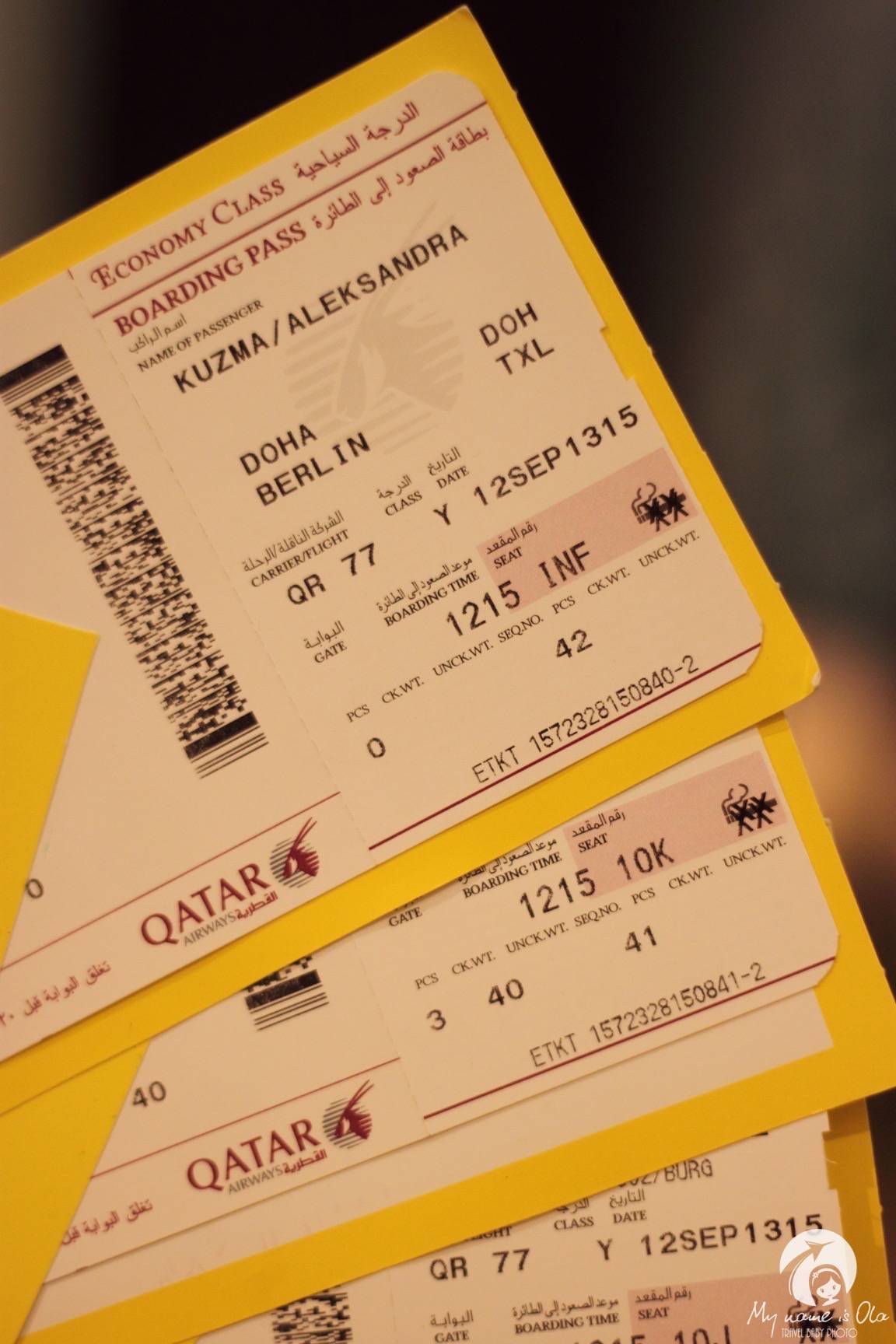
If you want to add a child ticket to your already existing reservation, you can do it only on the phone. You need to reach your airlines’ call center but pay attention at the cost because in cheap airlines those are quite expensive calls. Sometimes, it makes sense to consider buying a ticket for a child together with yours even if you are not sure if the baby flies. Above mention price reduction in Wizz Air works only at purchasing online. Ryanair always charges that fixed 20€.

Kids under 2 years cannot participate in airlines loyalty programs. But if you expect your boy or a girl to become an air travel enthusiast and Wizz Air fan, you can join a kind of loyalty program for kids. It involves collecting stamps to a special passport each time when being on board of Wizz Air planes. You print Captain’s Pass at home and when fill it up with 6 stamps your baby will be invited for a visit in the cockpit and will seat at Airbus’ controls.

Where will I fit all the diapers? The thing about infant’s lugagge

Baggage limits for people traveling with children depend on airlines regulation. Most of them allow infants to take not only hand luggage but also checked one. Some carriers, such as Lufthansa or British Airways grant infants the same baggage allowance as adults, others limit bag’s weight to 10 kg (i.a. Air France, Emirates, Singapore Airlines). Totaly different policy have for example Air Asia or Wizz Air – they do not allow passengers under 2 years to carry any luggage. The only thing you can freely take flying any airline is baby pushchair. It is always accepted no matter what size and it is free of charge. Ryanair additionally allows, besides baby stroller a car seat, one more thing: booster seat or a travel cot. Some online services for parents love making long lists of necessary things you need to take with you when leaving home with a baby, today we have only one advice – make sure not to take on board any toys making sounds and remember that the less things you take, the easier travel will be.

Baby on the plane

What does an infant do at the airport – how to get through check-in and security

Arriving to the airport with baby in a stroller, even if you checked in online and have no other luggage to be checked, first thing you need to do is to visit check-in anyway. If you want your pushchair to travel by plane it needs to be tagged exactly as all the other luggage with the code of your destination as it will be transported in hatch. Parents with kids often have priority to check-in and in some airports there are specialy designated check-ins for them. In most airports you can choose whether you want to check your pushchair in or you take it to the gate and there hand over to the staff. If you prefer to get rid of it at check-in you might be asked to put it in oversize luggage point. Leaving the stroller at check-in makes you carry the baby all the way to the plane but saves you from passing through security check with it. Unfortunately stroller, as all other baggage needs to be X-rayed and that requires from parents demounting it totaly to fit it in way too small machine. In big airports after passing security sometimes we find strollers prepared for children to be used for free on the airside of the terminal. There are different types of them but all are rather suitable for babies that already sit.

[photosetgrid layout=”5″]Baby on the planeBaby on the planeBaby on the planeBaby on the planeBaby on the plane[/photosetgrid]
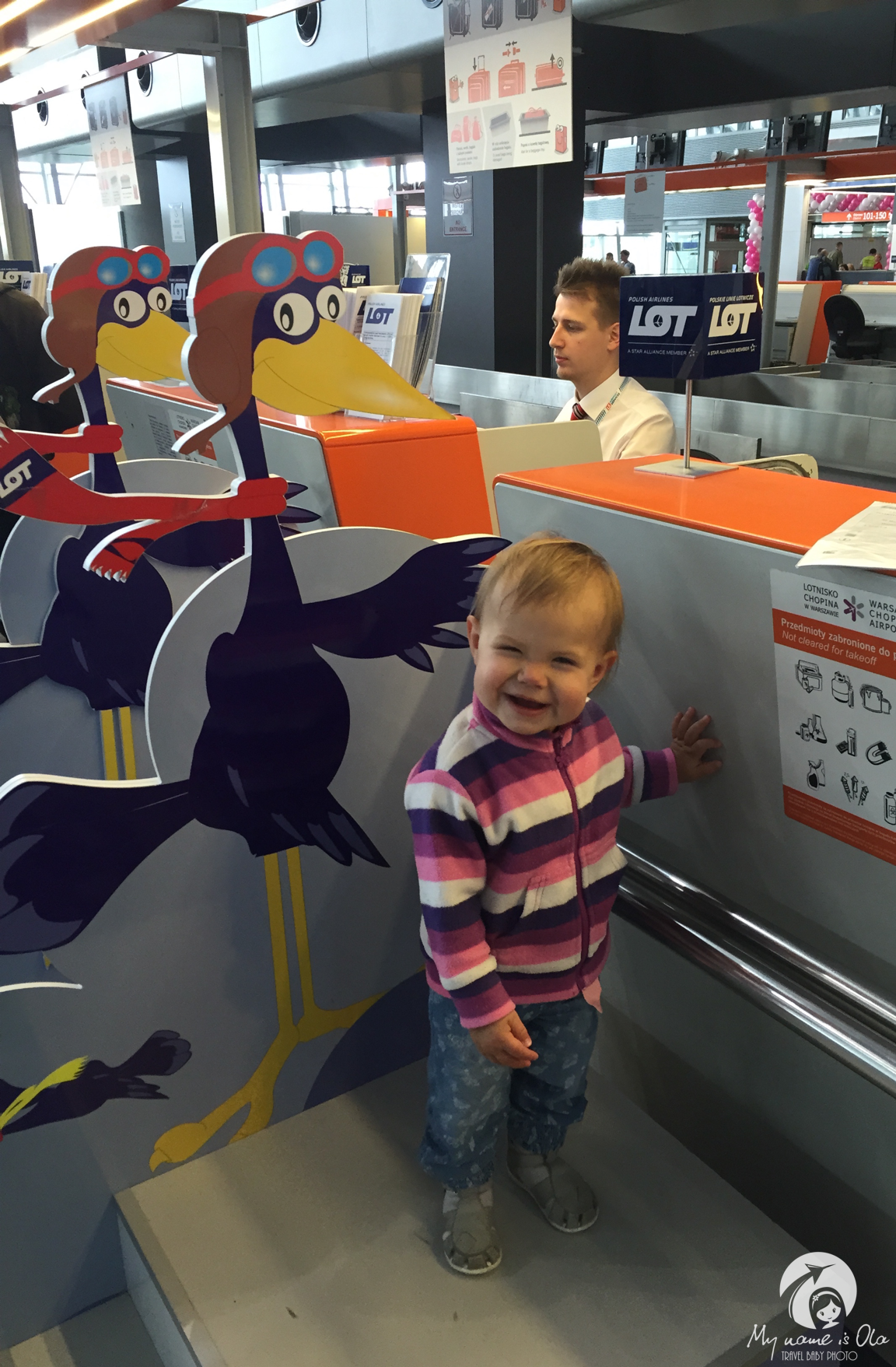
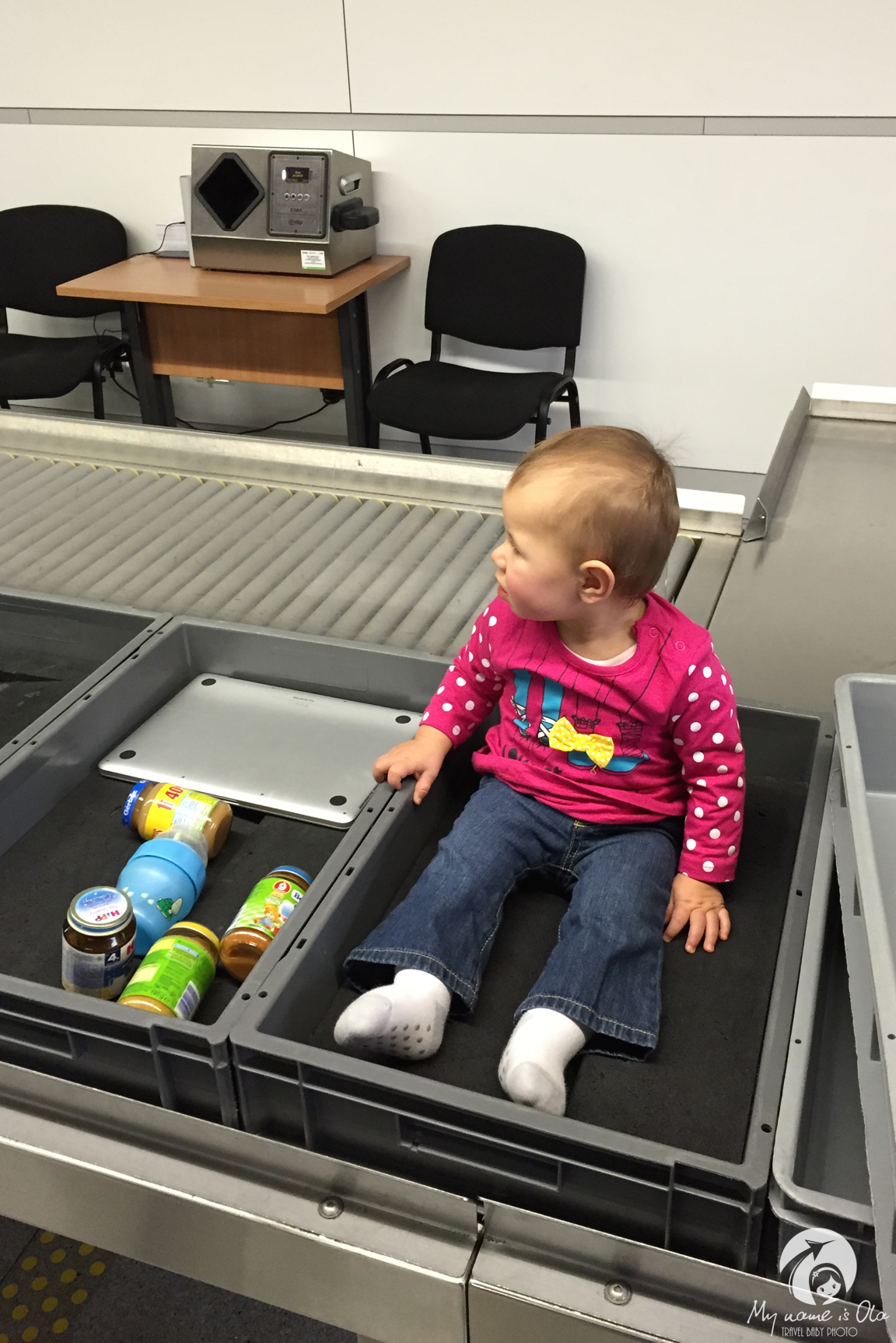
At security check parents with children go through a designated pass. This is to be used by people with kids and those carrying medicines in their handluggage. Sometimes scanners are little bigger there but still not enough for the stroller to go through without disassembling it. You have to know that traveling with an infant you can carry milk, other meals, drinks and medicines exceeding standard limit for liquids (bottles of 100 ml, max. 1l) however it is not specified how much more you can take. Remember only that they mean food and drinks for the time of travel, not for two weeks of holidays. All the products will be scanned and you will get a special container for liquids. If you do not have a stroller and any more liquids than standard quantities you can choose any queue, don’t have to use this exact one.

After passing security check, on the airside, you will find some facilities prepared for children. Before flight you might want to use a mother&baby room where you can feed the little one and change the diaper. It will be much more convenient to do it there than in microtoilet on the plane. The rooms on most airports are nice and clean. If your baby falls asleep and he or she needs quiet to get good rest for the time of waiting for boarding you can visit airport quiet rooms. But remember that all the people came there looking for peace.

Baby on the plane

Some passengers like to visit business lounges but we think that it depends on the airport. Some business lounges are designed for passengers looking for some rest and coming with a little one you can that atmosphere. Lounges toilets usually do not have changing tables. However there are exceptions – you can find lounges that welcome kids, have playgrounds for children and offer high chairs for little guests. There you know you can freely go with a baby and let him/her play with other kids (or rather next to other kids at that age). Playgrounds for younger and older children are avaliable on most of terminals and are usually occupied by little travellers. Older kids will more likely look for some multimedia entertainment than playgrouns. They are avaliable but only on some airports, bigger ones and more exclusive.

[photosetgrid layout=”3″]Baby on the planeBaby on the planeBaby on the plane[/photosetgrid]

Boarding starts around 40 minutes before the scheduled time of flight. Families with children have priority for boarding, probably because it takes us a little more time to store handluggage, take places and fasten seatbelts. If you decied not to check your stroller in just come with it to the gate. If you are boarding through the jet bridge, no problem, hand it to operating personnel at aircraft door. Another thing is when you need to take the bus to get to the plane – in most cases you will have to go downstairs form the gate to ground level. And here usually you will find stairs. No lifts. Then happens something that all parents love – carrying a stroller, baby and baggage daownstairs. Not a pleasure. When finally get to the plane fold the stroller and leave it by the stairs. Some airlines, to be honest those more expensive, help parents protect their strollers from getting dirty in the hatch and put them in big plastic bags. Thanks to that you get your pushchair at the destination airport clean and dry but those are only those top ones.
Where to look for your stuff at the destination airport? It depends on internal regulations of each port. In some of them you will find it on the belt together with other luggage, on the others with oversize baggage while at some others – by the stairs of the airplane. Do not hurry when leaving the plane, look around, maybe your stroller is already waiting for you.

So far you are doing pretty good, you checked in, passed security control and arrived to the plane smoothly, holding boarding passes for every member of your family and having everything under control. But what will happen on board? It is unpredictable how your sweet little one will tolerate the flight but there are some things that you can do to help him or her. First check some general information about an infant in the air.

[photosetgrid layout=”2″]Baby on the planeBaby on the plane[/photosetgrid]

Is it possible to survive a flight with an infant at all?

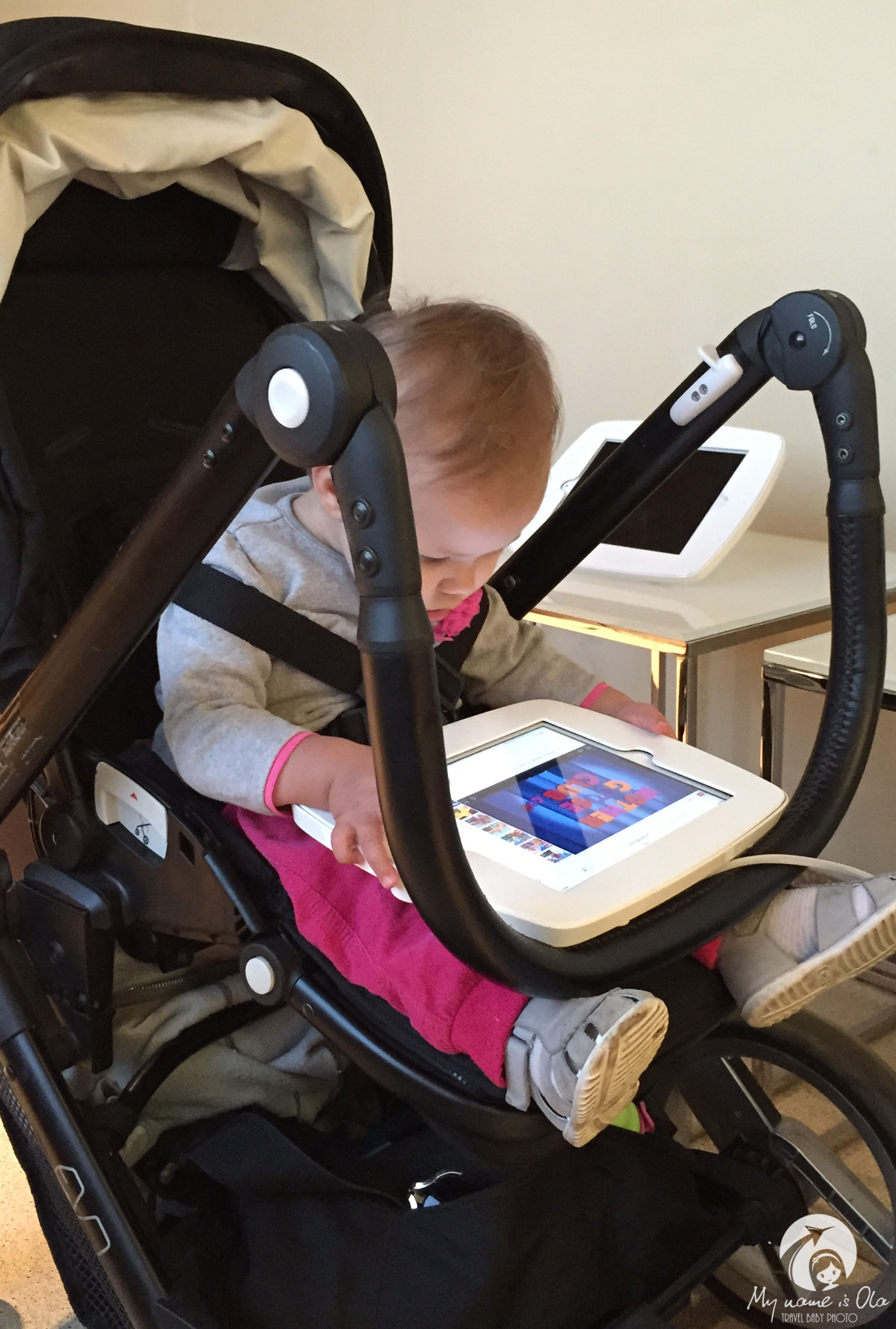
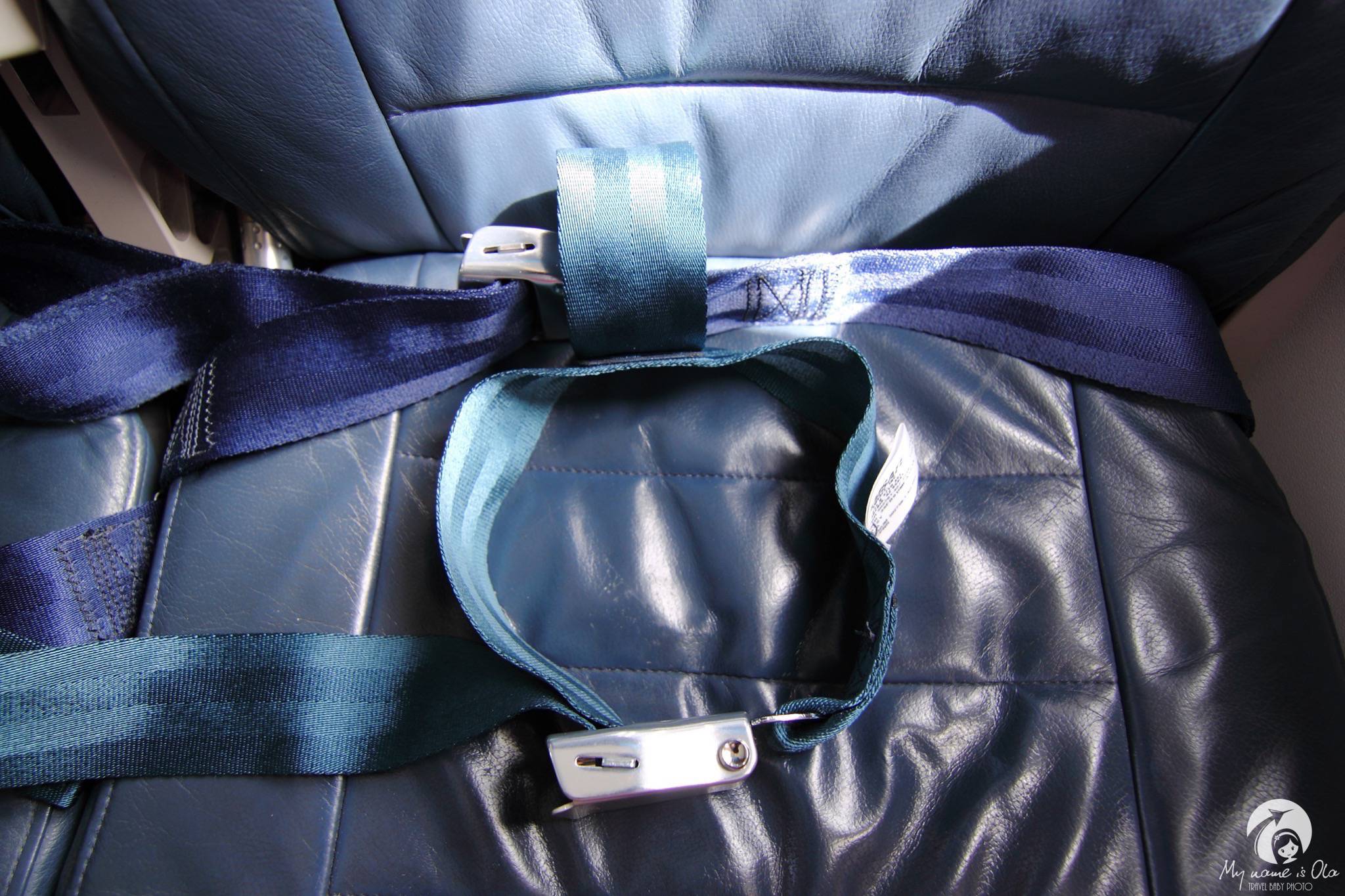
The most important for parents thing about flying with a baby, we already mentioned it before, is the fact that those under 2 yers old usually do not get their own seat on the plane but travel on parent’s lap. We have to say that it is not really comfortable. Especialy in cheap airlines where the space is limited. But on the other hand it’s not that bad to make you stay home. The younger the baby is and the less it moves the more convenient it is. When it starts moving and gets curious of everything you have to be strong to hold your young. Basic safety rules, like fastening a seatbelt, apply to all passengers, even so small ones. Infant gets from cabin crew his or her own seatbelt which adult fastens first to his own and than wraps around baby’s waist and buckles. When flying over some bigger bodies of water you will also get a lifevest for you child. Put it under your seat and keep the fingers crossed not to have opportunity to use it.

[photosetgrid layout=”3″]Baby on the planeBaby on the planeBaby on the plane[/photosetgrid]

Usually the most dfficult part for an infant is taking off and landing. More noise, changes of pressure, clogged ears might cause big cry. There is no wonder, some adults don’t like it either. To help the baby unclogg ears give her something to drink, water or milk. You can also try pacifier. Swallowing will help to equalize the pressure in ears and get rid of this uncomfortable feeling.

Depending on the length of your journey and time of day your baby can get hungry during the flight. If you use formula milk do not hesitate to ask cabin crew for water. In cheap airlines you will probably have to pay for it but still will be able to feed the kid. When traveling by traditional airlines on longer routes infant can count on getting a meal as other passenger. Little one gets a dinner in a jar, milk, water or juice and fruit. Either it is breastmilk, formula or fruit child eats still on parent’s lap. There is no any quiet place on the airplane which you could use for feeding.
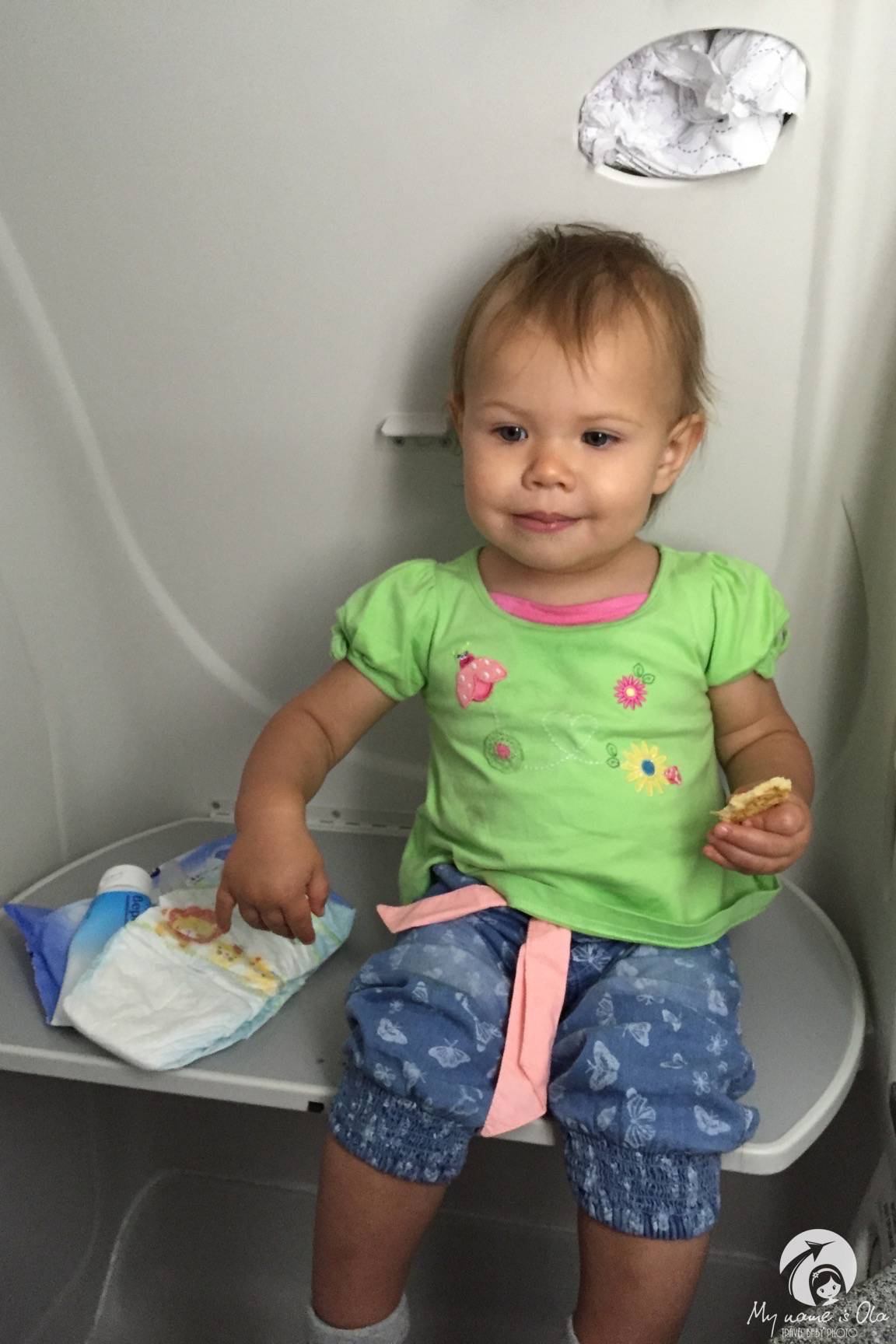
After eating as we all know the necessity of changing the diaper might come. Luckily all the toilets are equipped in changing board so no problem. Space in the toilets is limited but to change the diaper it is enough. Good solution helping us keep hygiene in public places are disposable pads you can use to put baby on. The disadvantage of aircraft toilets is a little more noise but it should not bother the baby.

[photosetgrid layout=”2″]Baby on the planeBaby on the plane[/photosetgrid]

Remember to take on board some favourite toys of your child, something that can keep him or her attracted for the longest possible time and will let passengers seating next to you survive the flight, we mean toys that will not be making any sounds. Imagine sitting next to you a crying baby and parents trying to calm it with some noisy toys… insane. You will know what to choose to entertain your son or daughter best but keep in mind limited dimensions of hand luggage.

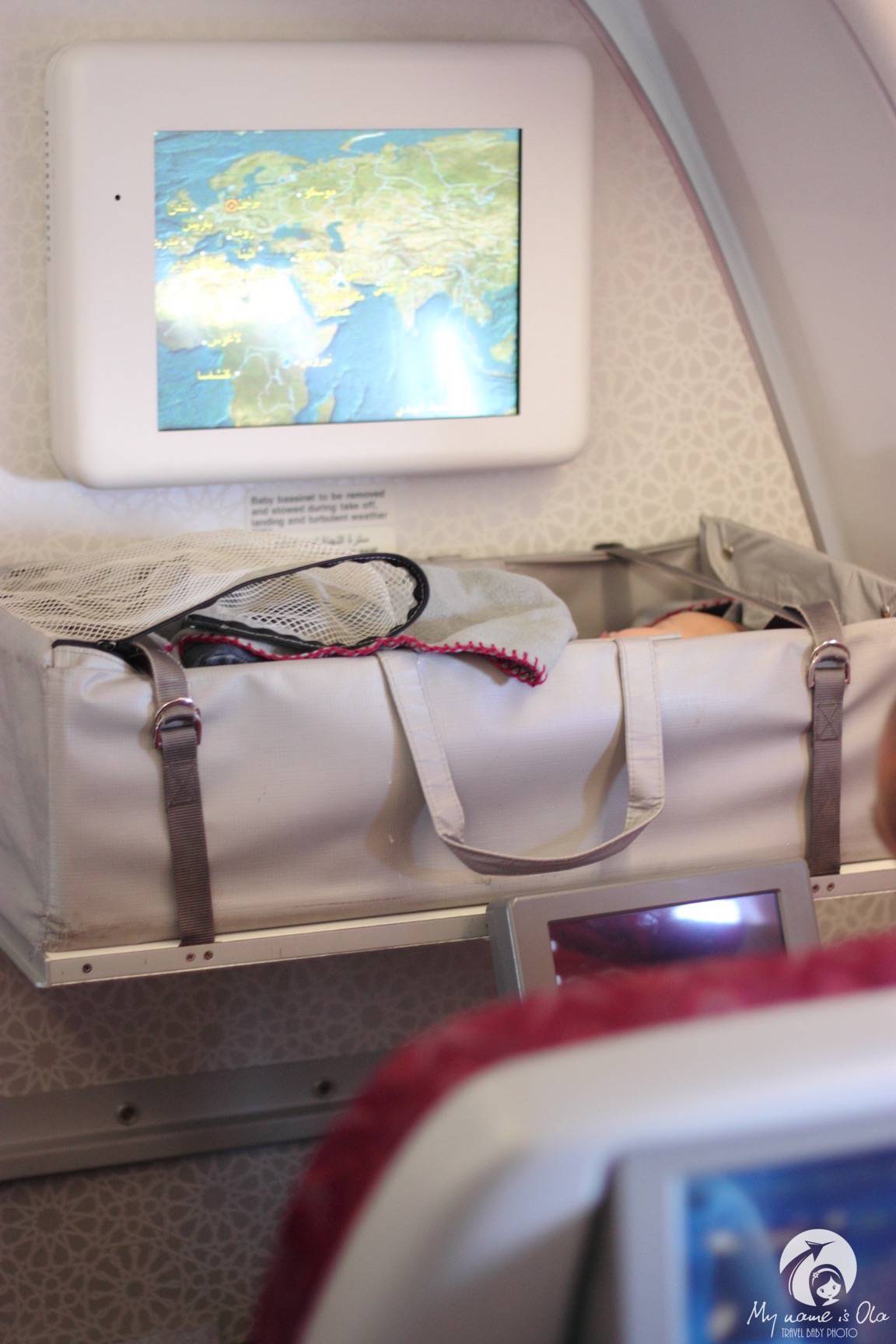
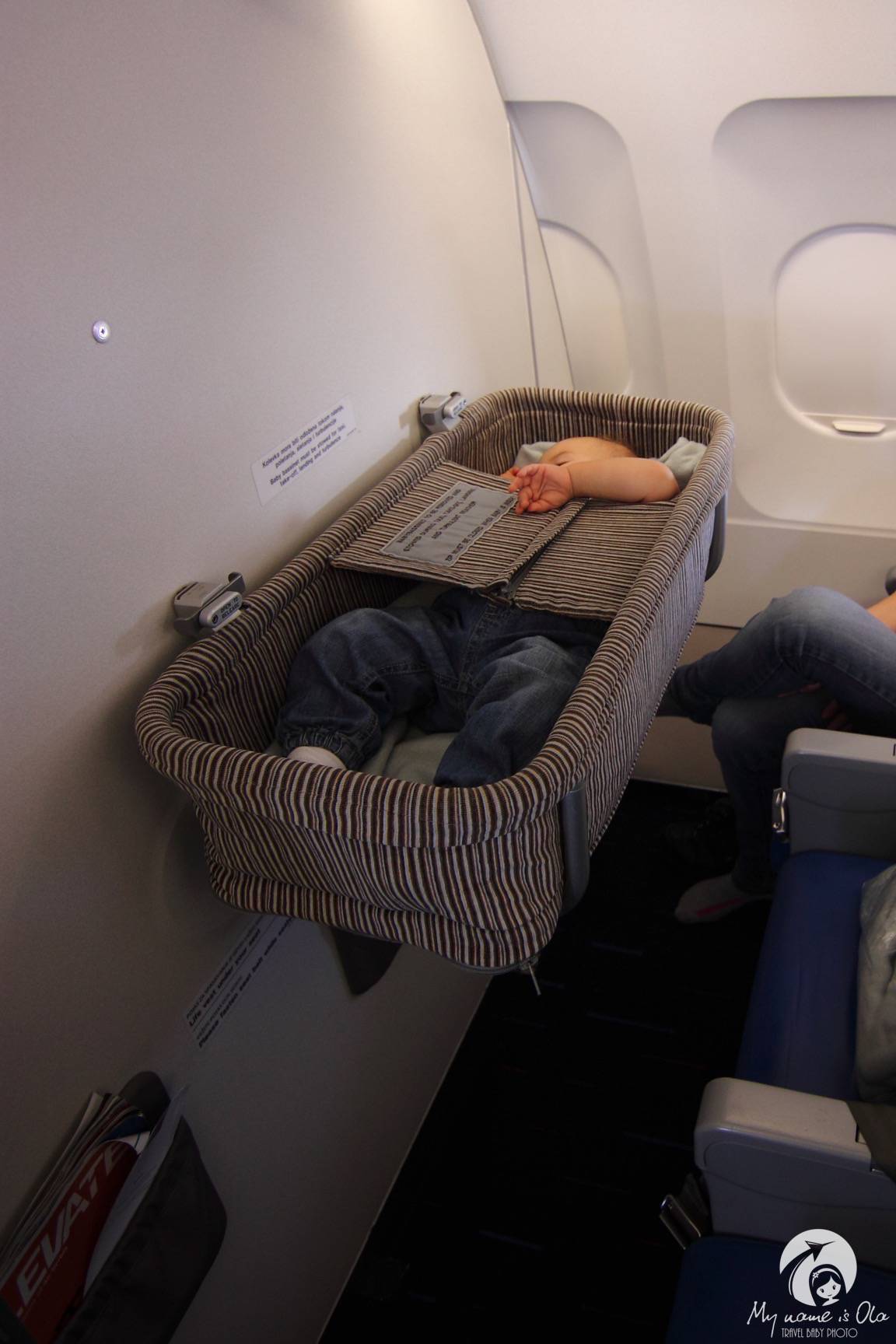
Traveling with a baby on longer routes you can apply for a special cot, a bassinet mounted at first rows or at  partitions separating classes or parts of the cabin. Applying for a bassinet you will get a seat right in front of it. Thanks to that not only baby will travel comfortably but you will also get some more space for yourself and your baggage. Different airlines offer different types of bassinets but in most cases they are suitable for children under 10 kg and one year. But it is worth checking directly at the airlines because there are bassinets serving even kids up to 2 years. Cheap airlines do not offer them at all. The cot, even if sometimes doesn’t look like, is really stable and trustworthy and you can safely put your baby there. It’s perfect when traveling with a newborn, who put there to sleep and potected by belts will not get out on her/his own. Such thing lets parents get some rest, although safety rules do not allow leave the child unattended and go to sleep. Anyway it will be easier to survive the flight, even without sleeping, when the baby will not be on your laps all the time. Of course for take off and landing bassinete needs to be removed and baby has to come back to parent’s lap and fasten the seatbelt or if you chose that solution seated in that special seat or buckled with CARES restrains.

[photosetgrid layout=”13″]Baby on the planeBaby on the planeBaby on the planeBaby on the plane[/photosetgrid]

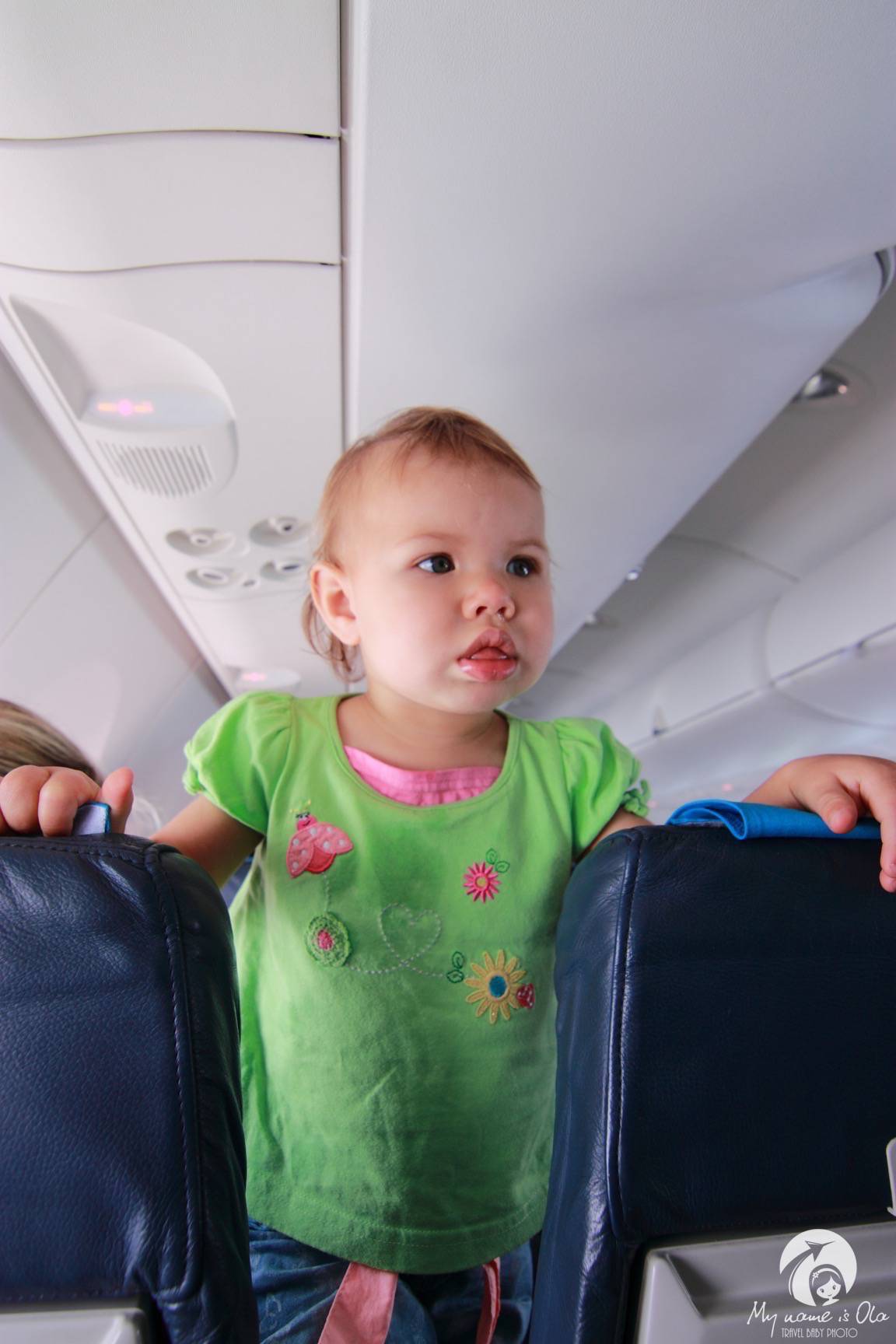
As you see even the flight with an infant can be spent in quite a nice atmosphere but we want to remind you to do everything to keep the same atmosphere for other passengers. Making a little baby be quiet during the flight is not always possible but keeping the older one from coming in too close contact with others is. Although your baby is the most beautiful, the sweetest and nicest in the whole world other passengers might not be willing to play with him or her. Baby running around the plane all by herself, disturbing others and waking up those sleeping ones is unacceptable. Let the others travel in peace and you will be better treated and will not hear those heavy sighs when sitting with the baby next the others on the plane.

[photosetgrid layout=”2″]Baby on the planeBaby on the plane[/photosetgrid]

If you have any questions we didn’t answer above, there is something still unclear or you need to get some more information on anything, please feel free to ask us. It will be our pleasure to help. And after your first flight with the little one you will see that all that is easier than it looks. Of course you have to be well organised but it’s the same for every kind of trip. Do not hesitate and choose your destination! Good luck!

WP Google Maps Error

In order for your map to display, please make sure you insert your Google Maps JavaScript API key in the Maps->Settings->Advanced tab.

Blog

Beaches in Malta – we checked them all #2

20/05/2015 — by Magdalena Kuźma0

St-Peters-Pool2-kopia-960x640.jpg

Why Malta? Sea, sun, historical monuments, wine and beaches. Some people say that beaches are the negative side of the island, some say opposite. Before going to Malta on holidays you have to know that local beaches are very different and very often things that Maltese call beach are far away from what an average tourist sees thinking about his or her seaside rest. To find out what the island really offers we drowe entire coast and checked all of them, from the smallest, rocky on the sidelines to those most popular sandy ones. Below all we have seen divided in two parts: the north-west part and south-east regions of the island. We advise going through our review before deciding about hotel for your holidays.

Today part two: SOUTH-EASTERN MALTA

1. Paceville Beach is located in St. George’s Bay in St. Julian’s, right in the middle of entertainment district of the city. This is a sandy beach divided in two parts, one of which, smaller, belongs to one of nerby located hotels. The bigger part is public. Water is clear, sand rather clean, whole impression is spoiled only by cars passing right next to. Neighborhood is full of bars, restaurants and entertainment offer.

OLA’S RATE: 6/10
PROS: sandy shore
CONS: paid parking in the area
INFRASTRUCTURE: toilets, water equipment rental, bars and restaurants around

[photosetgrid layout=”13″]Paceville BeachPaceville BeachPaceville BeachPaceville Beach[/photosetgrid]

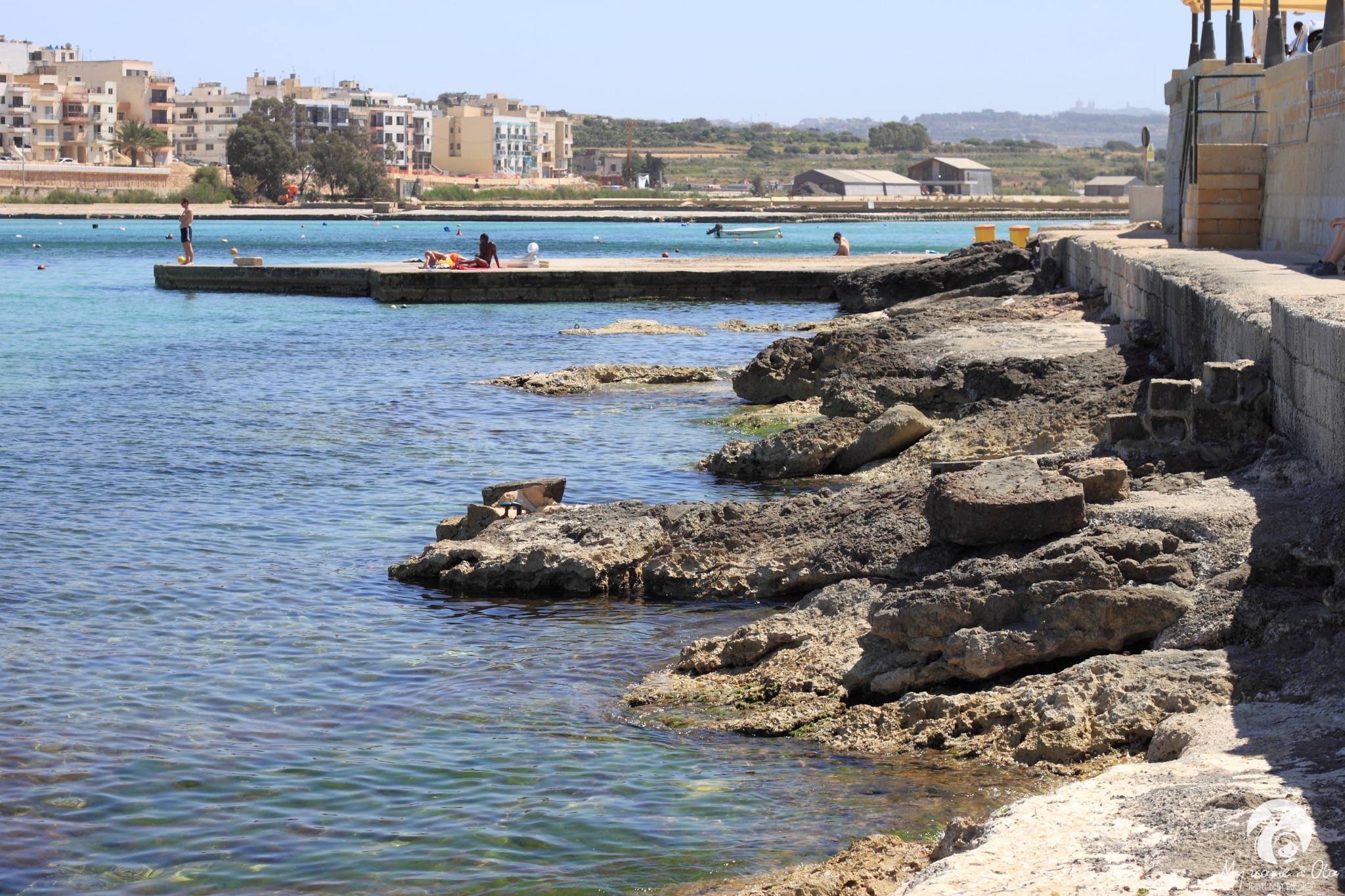
2. Balluta Bay Beach is another beach located in St. Julian’s. It is in a bay but right above the heads of sunbathers there goes a busy road. There is not too much sand there because there are stairs on the shore. Stone blocks do not seem to be a good place to relax.

OLA’S RATE: 1/10
PROS: none
CONS: no sand, no space on the beach, no parking, just what you find on the streets around
INFRASTRUCTURE: forget about sunbeds or water equipment, city restaurants around

[photosetgrid layout=”3″]Balluta Bay Beach, MaltaBalluta Bay Beach, MaltaBalluta Bay Beach, Malta[/photosetgrid]

3. Buġibba Perched Beach – located in Buġibba at St. Paul’s Bay. It is few steps from full of bars and restaurants town center. The beach itself doesn’t impress, it’s rocky, here and there some stone blocks. In few places fine gravel. Higher located promenade gives a little shadow allowing to rest from the sun. And that’s it as for advantages of this beach.

OLA’S RATE: 3/10
PROS: none
CONS: rocky shore, uninteresting neighborhood
INFRASTRUCTURE: bars and pubs around, a small waterpark around

[photosetgrid layout=”13″]Buġibba Perched Beach, MaltaBugibba Perhed Beach MaltaBuġibba Perched Beach, MaltaBuġibba Perched Beach, Malta[/photosetgrid]

4. Salina Bay Beach is a place where water and land meet, we cannot call it beach. It rocky coast with some bigger, flat stones which allow to crouch at the wated, is located in Salina Bay. To enter the sea you need to use stell railings. Swimming here hardly can be called a pleasure and beware of this place when with children.

OLA’S RATE: 2/10
PROS: clear, calm waters
CONS: rocky coast, no sand at the shore,
INFRASTRUCTURE: none

[photosetgrid layout=”3″]Salina Bay Beach, MaltaSalina Bay Beach, MaltaSalina Bay Beach, Malta[/photosetgrid]

5. Pwales Beach is a little part of the coastline in St. Paul’s Bay torn from the bay. Rocky-gravel beach at the busy road, nothing special.

OLA’S RATE: 1/10
PROS: nice view over the bay
CONS: location, neighborhood, no parking
INFRASTRUCTURE: none

[photosetgrid layout=”2″]Pwales Beach MaltaPwales Beach Malta[/photosetgrid]

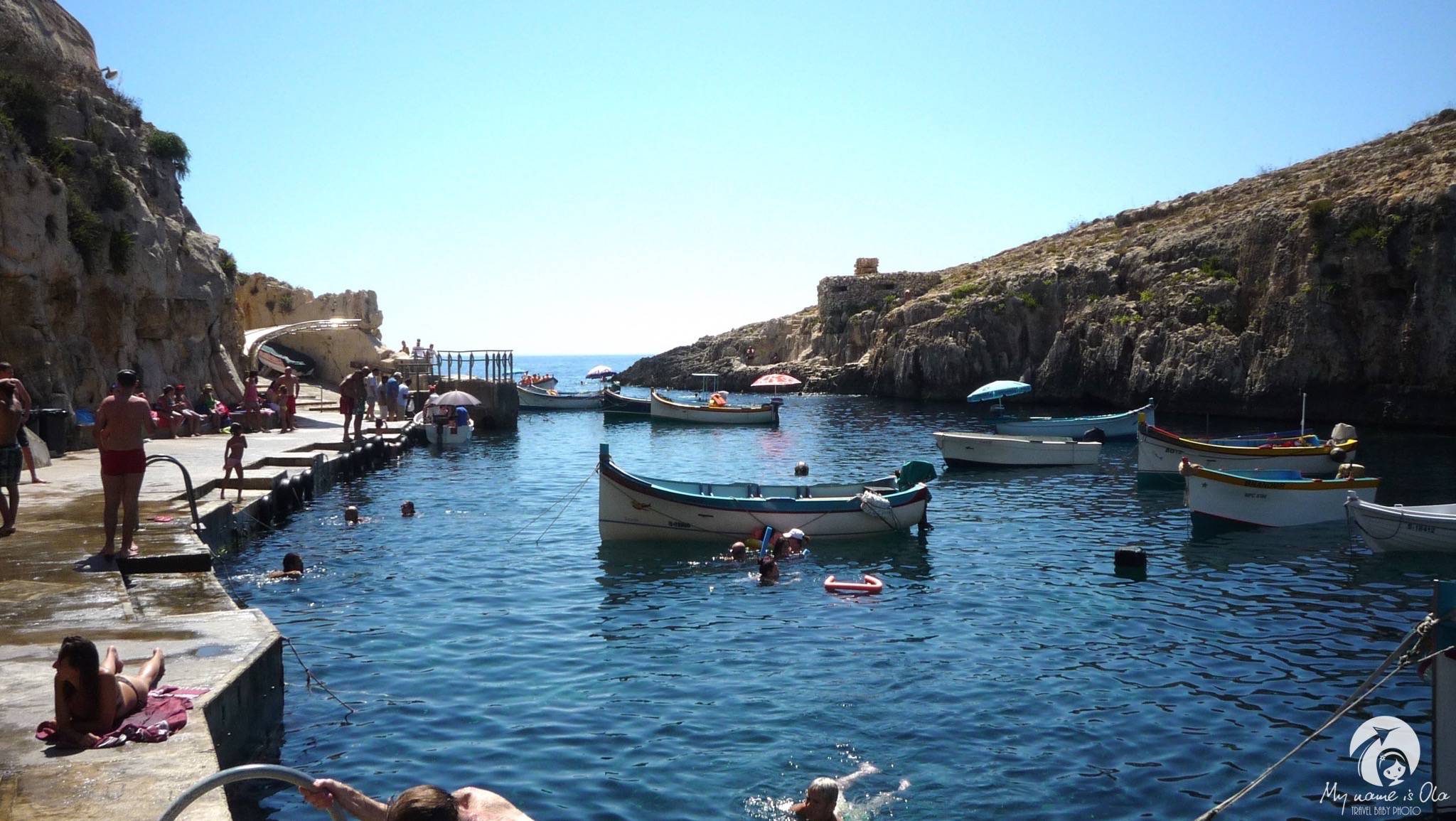
6.  Blue Grotto are the caves considered to be the biggest attraction of the island. The best recognizable view can be admired from afar but without taking a boat and getting inside the caves you will miss the most important. Right next to “marina” you can swim in the water but this is actually not a beach, there are only some railings helping to get to the water.

OLA’S RATE: 3/10
PROS: easy access
CONS: lots of people, no sand
INFRASTRUCTURE: none

[photosetgrid layout=”2″]Blue Grotto, MaltaBlue Grotto, Malta[/photosetgrid]

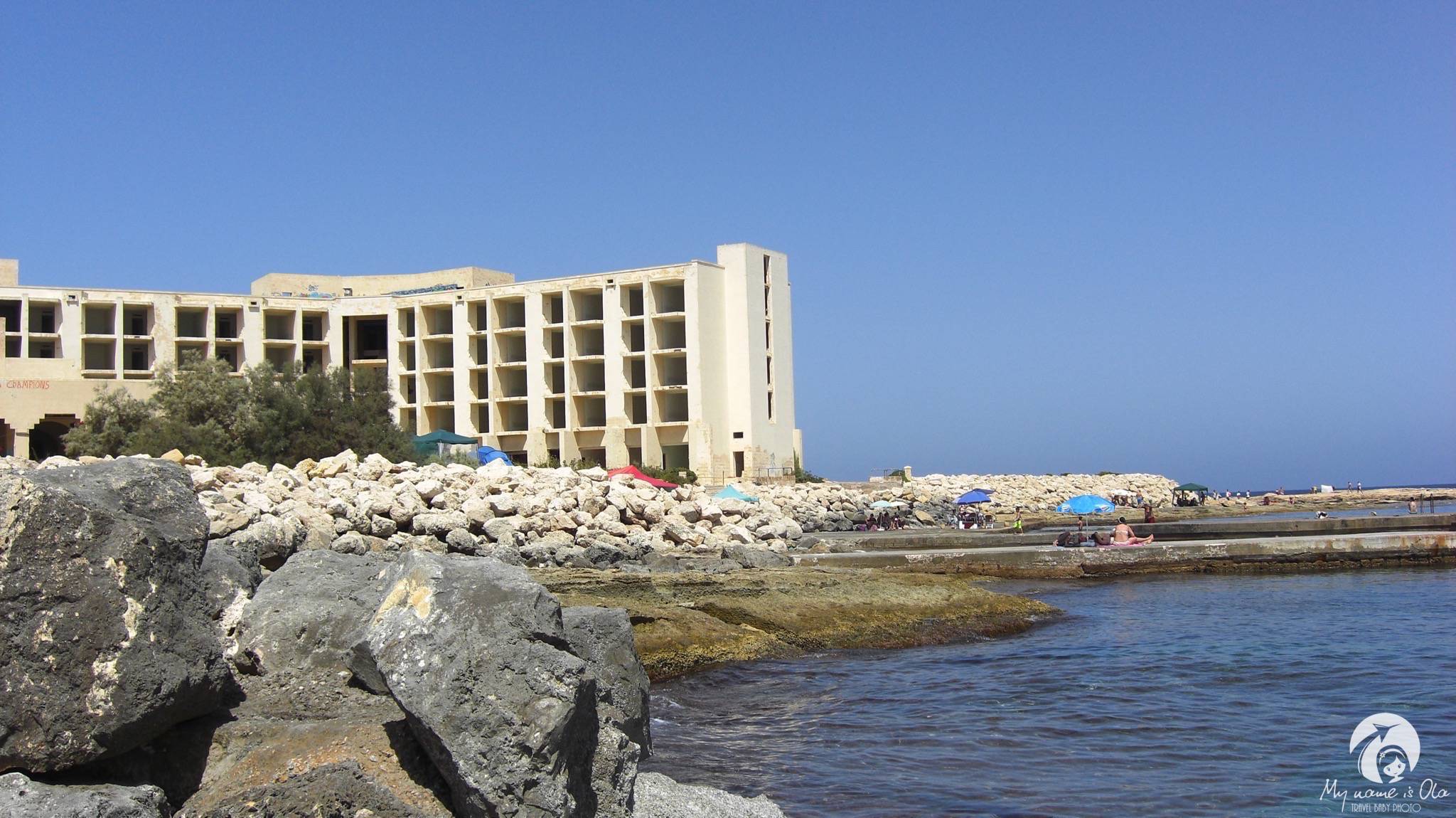
7. St. Thomas Bay is located south from the town Marsascala. There are at least three beaches in the bay, starting from the most beautiful, sandy one, through the one with big rocks and little sandy area accross the bay to the one, also with rocks, but also with an intersting story. Right at the beach there is an abandoned hotel and urban legend says that it is one of the former residences of Muammar Gaddafi, plundered after  overthrowing the dictator. Pleace only for hardy bathers, certainly not for children.

OLA’S RATE: 5/10
PROS: easy access to the places
CONS: no good access to water, no sand at those rocky ones
INFRASTRUCTURE: none

[photosetgrid layout=”2″]St Thomas Bay MaltaSt Thomas Bay Malta[/photosetgrid]

8. Pretty Bay has in fact couple of beaches in the bay in the town of Birżebbuġa. Coming from the north first you will come accross the rocky shore, which does not impress and doesn’t seem like a place for convenient bathing. Going accross marina on the other side of the headland you wil find another beach – this time big, nice and sandy man-made place. Common feature of both beaches is not rather romantic  view over the port but on the other hand there might be something in watching ships upcoming to the port… Despite the neighborhood of the port water is here clean and calm.

OLA’S RATE: 6/10
PROS: easy access, sandy part well maintained, gentle descent to the water, calm waters of the bay
CONS: view over the port, on the rocky beach no convenient access to water
INFRASTRUCTURE: on the sandy beach sunbeds and umbrellas for rent, playing fields not far away, in the neighborhood city restaurants and bars.

[photosetgrid layout=”3″]Birżebbuġa beach, MaltaBirżebbuġa beach, MaltaBirżebbuġa beach, Malta[/photosetgrid]

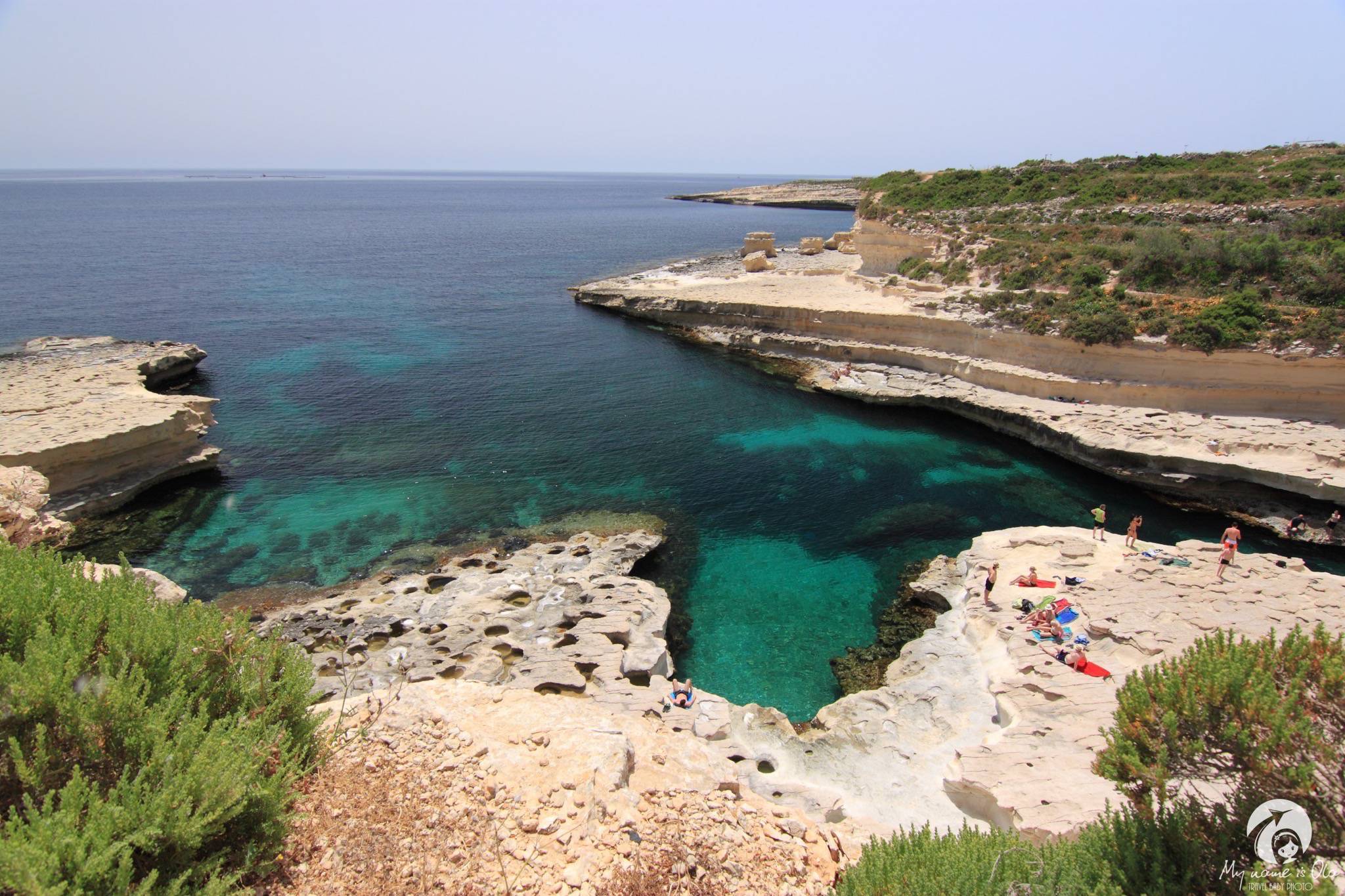
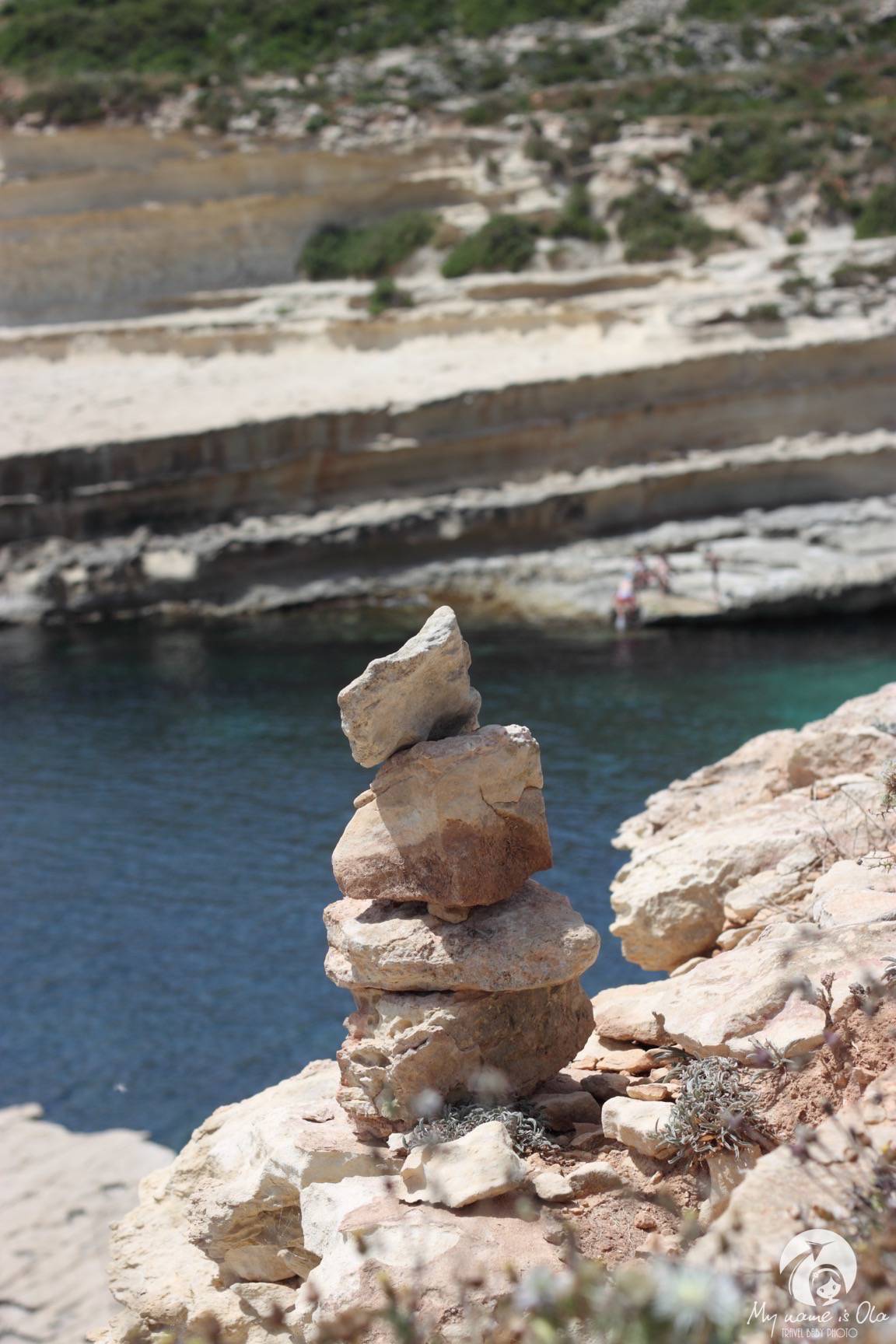
9. St. Peter’s Pool is the last bathing area, located in the southeastern part of the island. It’s a little fairytale looking natural pool, carved in rocks. Very interesting place, worth visiting, with azure and clear waters. Despite difficult ride by narrow dirt roads and than the necessity of taking narrow stairs down, quite a lot of people vitis it. Tough conditionc are compensated by amazing views. To get to the water it is the best to simply jump from the rock, it’s deep water everywhere so taking there a little baby will not be a good idea. We didn’t wake Ola up, she fell asleep on the way, as whe wouldn’t have been able to even wet her feets. But if you have no children it’s worth to get there and feel like in some wild place at the end of the world.

OLA’S RATE: 2/10
PROS: view, crystal clear, azure waters
CONS: inconvenient roads, difficult access on foot, no good access to water
INFRASTRUCTURE: none

[photosetgrid layout=”13″]St Peters Pool, MaltaSt Peters Pool, Malta St Peters Pool, Malta St Peters Pool, Malta[/photosetgrid]

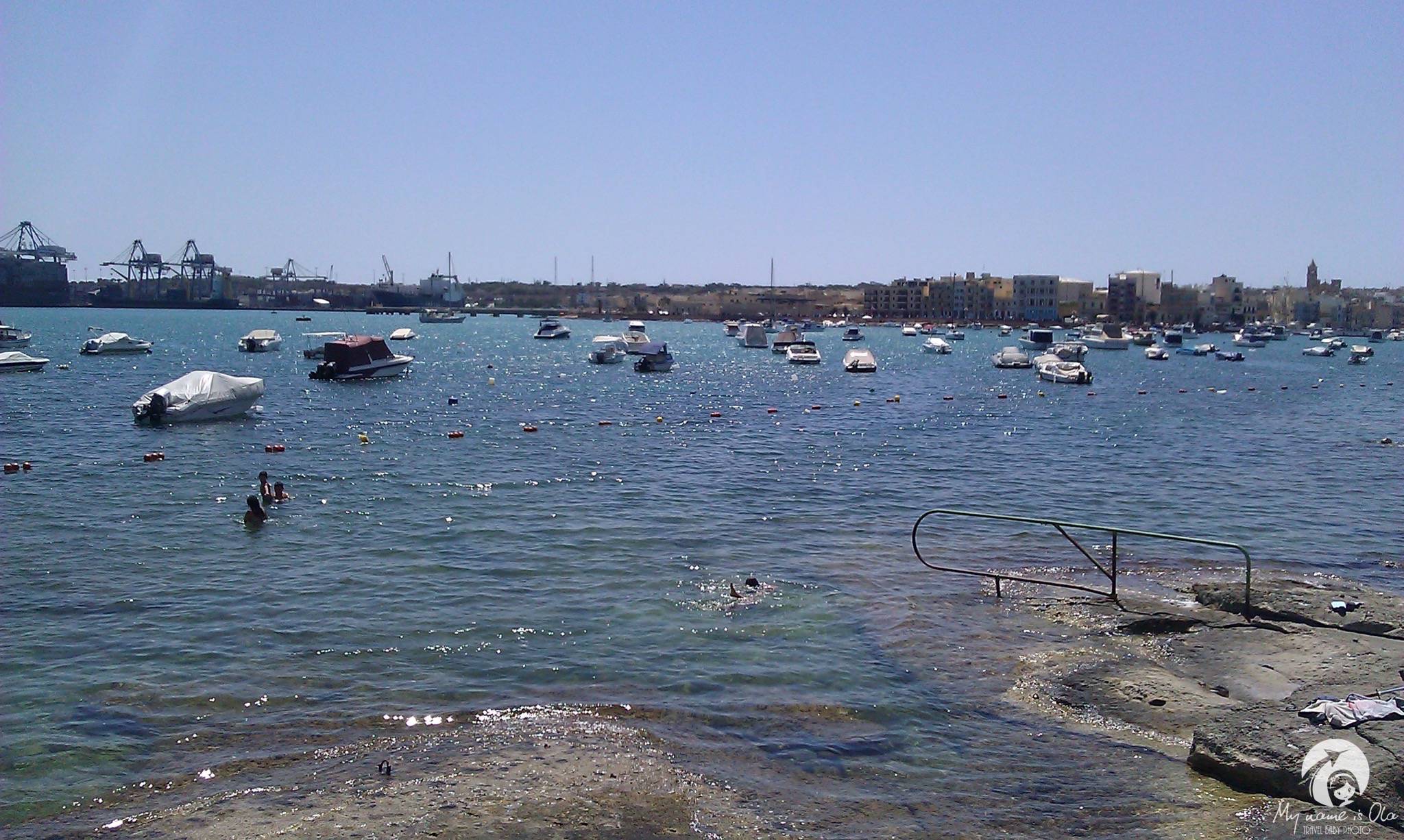
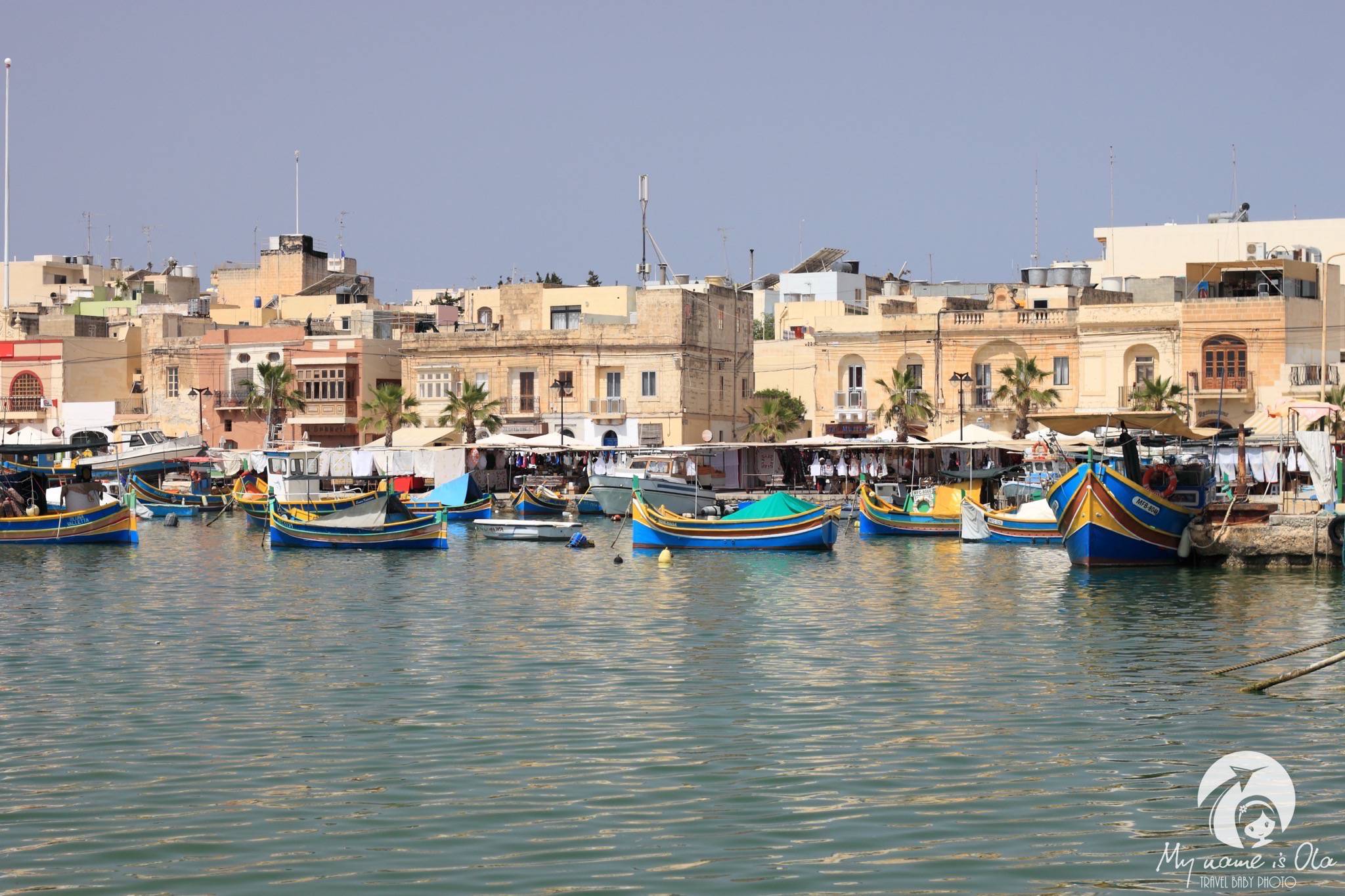
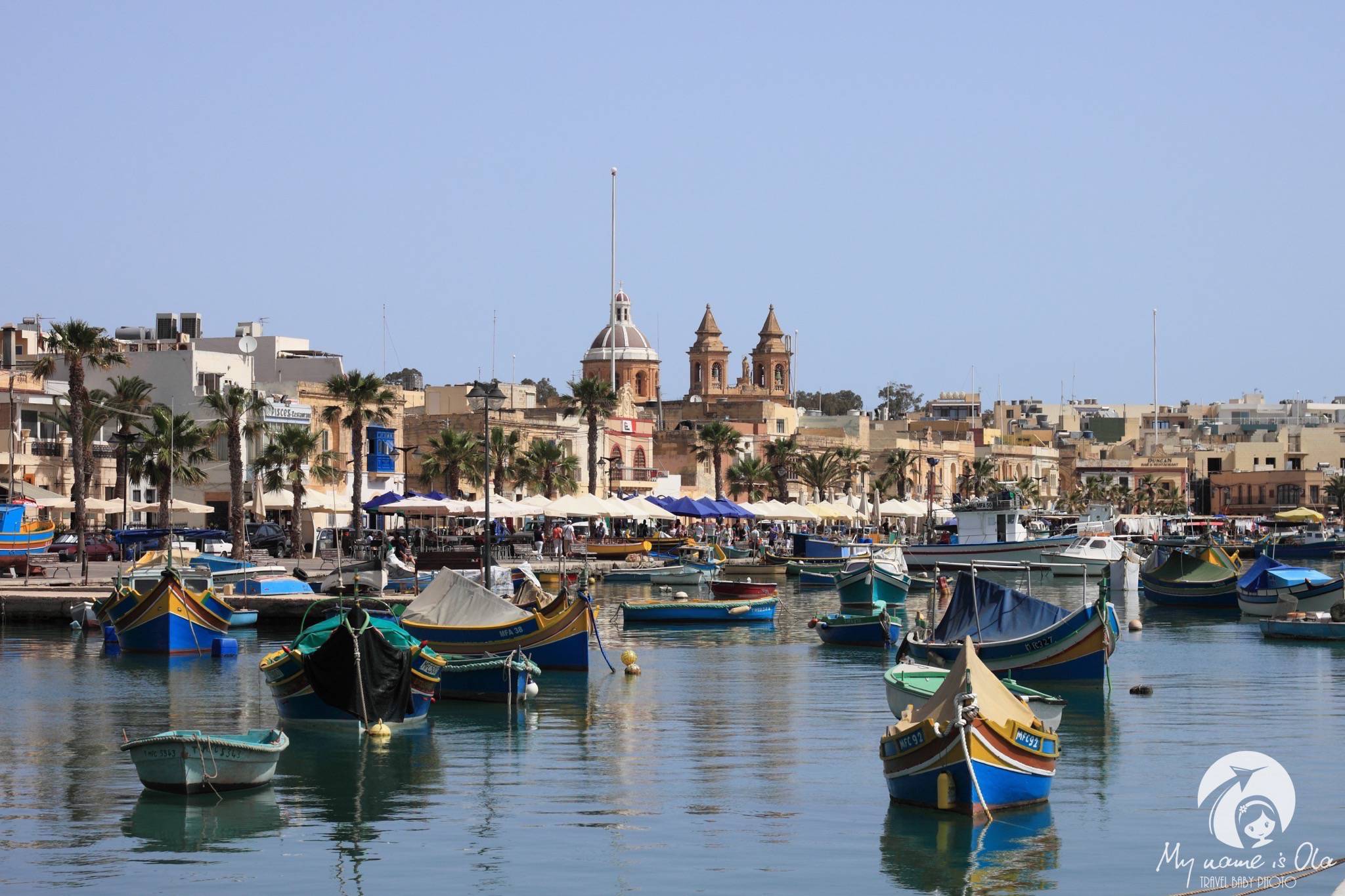
10. Marsaxlokk beach is located in the town which is visited by tourists mostly on sunday because of the famous fish market taking place. At that time beach might be packed with people. Neighborhood hard to be appreciated – power station nerby, view over the port. However the shore is rather sandy, waters are clear and calm. From the coast one can admire luzzo boats coming and leaving the port and this is main reason  to spend more time there.

OLA’S RATE: 4/10
PROS: crystal clear water, gentle descent to water
CONS: surroundings, view
INFRASTRUCTURE: none

[photosetgrid layout=”3″]Marsaxlokk, MaltaMarsaxlokk, MaltaMarsaxlokk, Malta[/photosetgrid]

Blog

Malta – a perfect place to retire

13/05/2015 — by Magdalena Kuźma3

malta-do-6022-960x640.jpg

We spent in Malta couple of days and realised that it would be a perfect place for retirement. It’s just a perfect country for pensioners, warm, not too expensive, rather small (it takes no more than one hour to drive accross entire island) and looks like life goes really slowly there.

It would have been much better to be a rentier but since none of us is, we will keep on thinking about Malta as a place for usual retirement. We imagined how a day of such pensioner would look like in Malta.

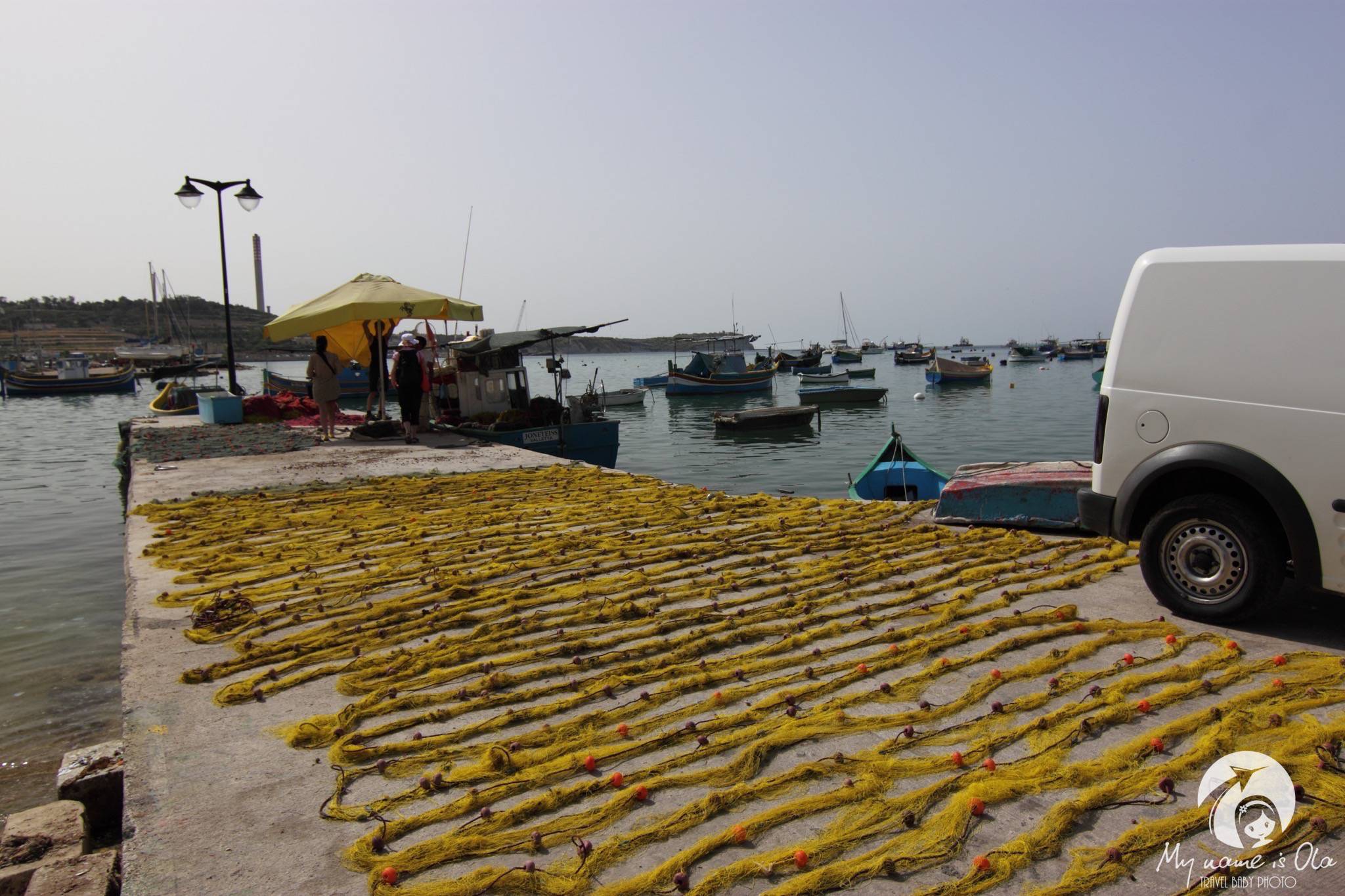
We get up not too early in the morning in one of fisherman villages Marsaxlokk. We chose this town because south of the island is less popular among turists and our town gets crowded only on Sunday when hundreds of tourists pop in to see the fish market. In low season morning streets are rather empty. First we are going on a walk on seaside boulevard and watch fishermen returning from morning hunting. After some time whole bay is filled with colorful boats luzzo. Boulevard gets crowded, parents and grandparents wait for their children to get back from the sea. Sun is rising higher and some tourists arrive.

[photosetgrid layout=”132″]Marsaxlokk, MaltaMarsaxlokk, MaltaMarsaxlokk, MaltaMarsaxlokk, MaltaMarsaxlokk, MaltaMarsaxlokk, Malta[/photosetgrid]

More and more chairs are occupied in many seaside restaurants and we keep on hearing Cisk i Kinnie being ordered. The first one is a beer – an international lager but Maltese production. Tastes exactly like like Russian, Spanish or African but being on Malta you have to try one. Children and drivers reach for Kinnie – another Maltese drink, non-alcoholic, of bitter – sweet taste, made of bitter oranges extract (chinotto) and some Mediterranean herbs. It’s a must to try one but it’s difficult to like it. We, pensioners, enjoy morning espresso together with our neighbors. When it gets really crowdy and hot, it’s time to leave.

[photosetgrid layout=”2″]Marsaxlokk, MaltaMarsaxlokk, Malta[/photosetgrid]

Today we planned to visit the capital city. Maltese distances are really small so we are wondering whether to take the car or to use public transportation. We choose a bus since tonight we are having a dinner with friends being on holidays in Malta. Recently old buses have been replaced with new ones and they seem to be somehow more punctual. The journey will take longer but the bus will take us directly where we want to. Maltese buses arrive everywhere.

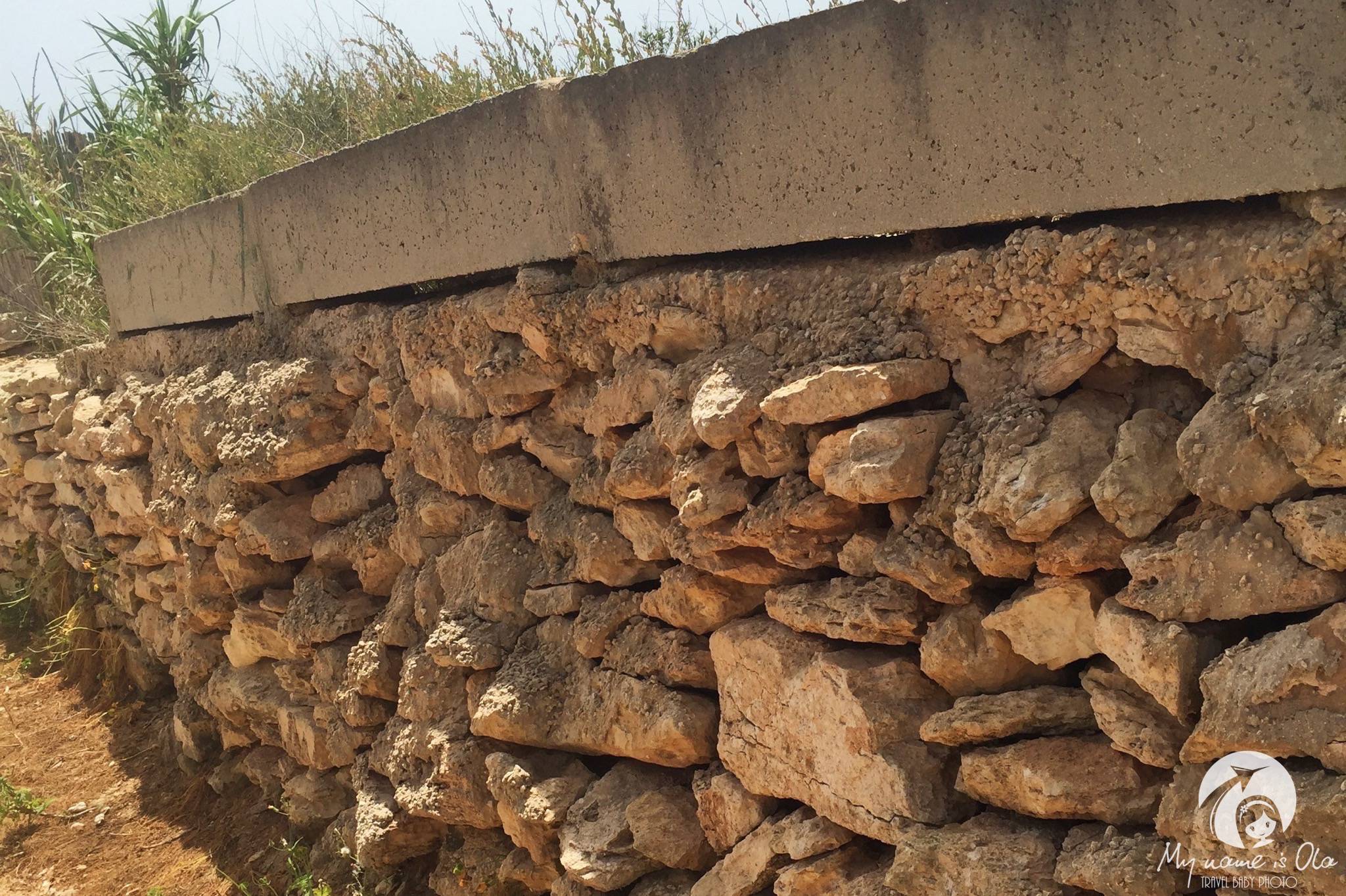
On the way we admire neighborhood. Stone fences separating fields, roads and estates are characteristic for the island. Built of loosely stacked rocks or stone blocks, very often overgrown with giant cactuses largely make up the atmosphere of the island. Whole Malta is covered with dense network of walls. They look especially charming in our part of the island where stone – gravel, narrow roads together with those stone walls create idyllic landscapes.

[photosetgrid layout=”13″]MaltaMaltaMaltaMalta[/photosetgrid]

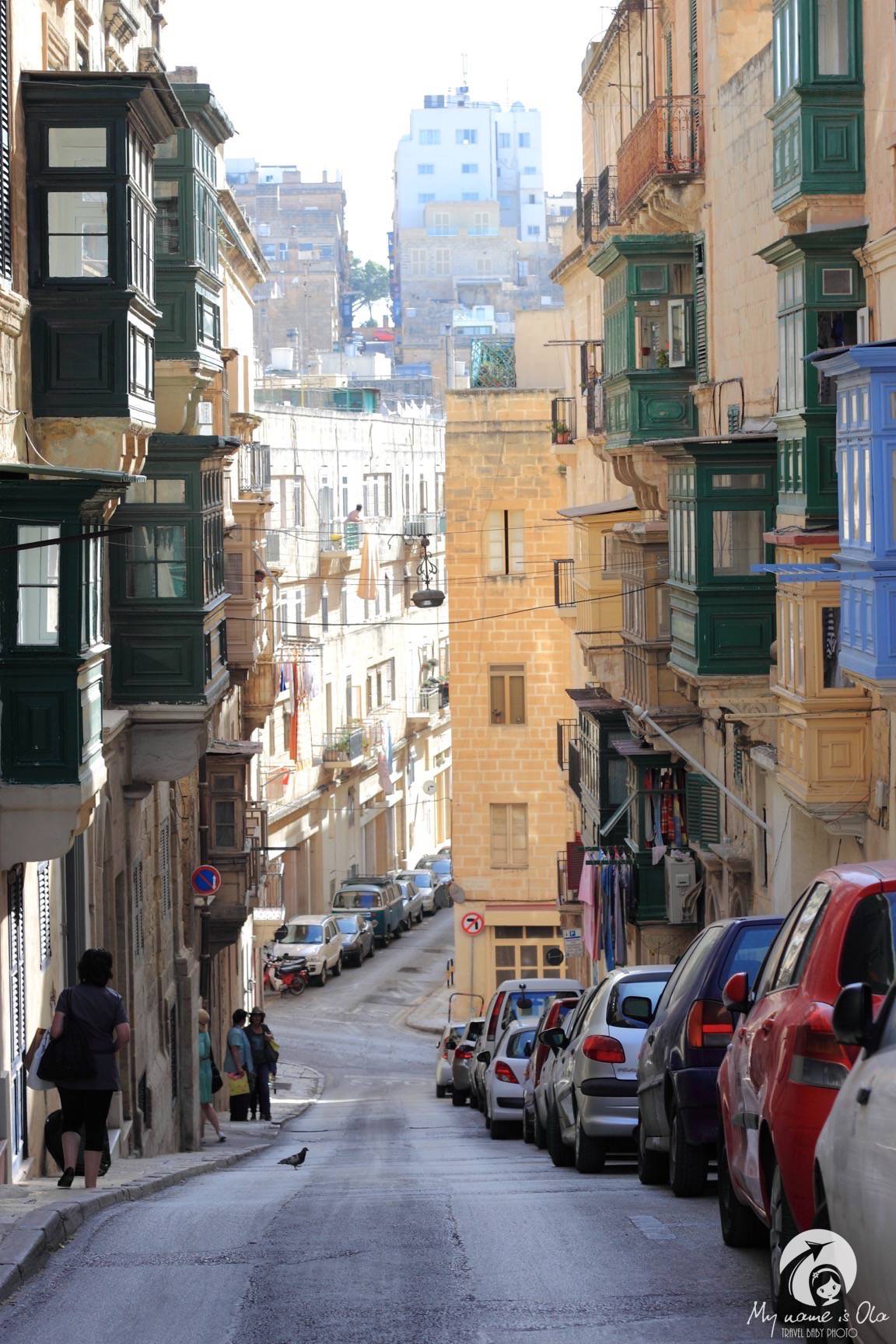
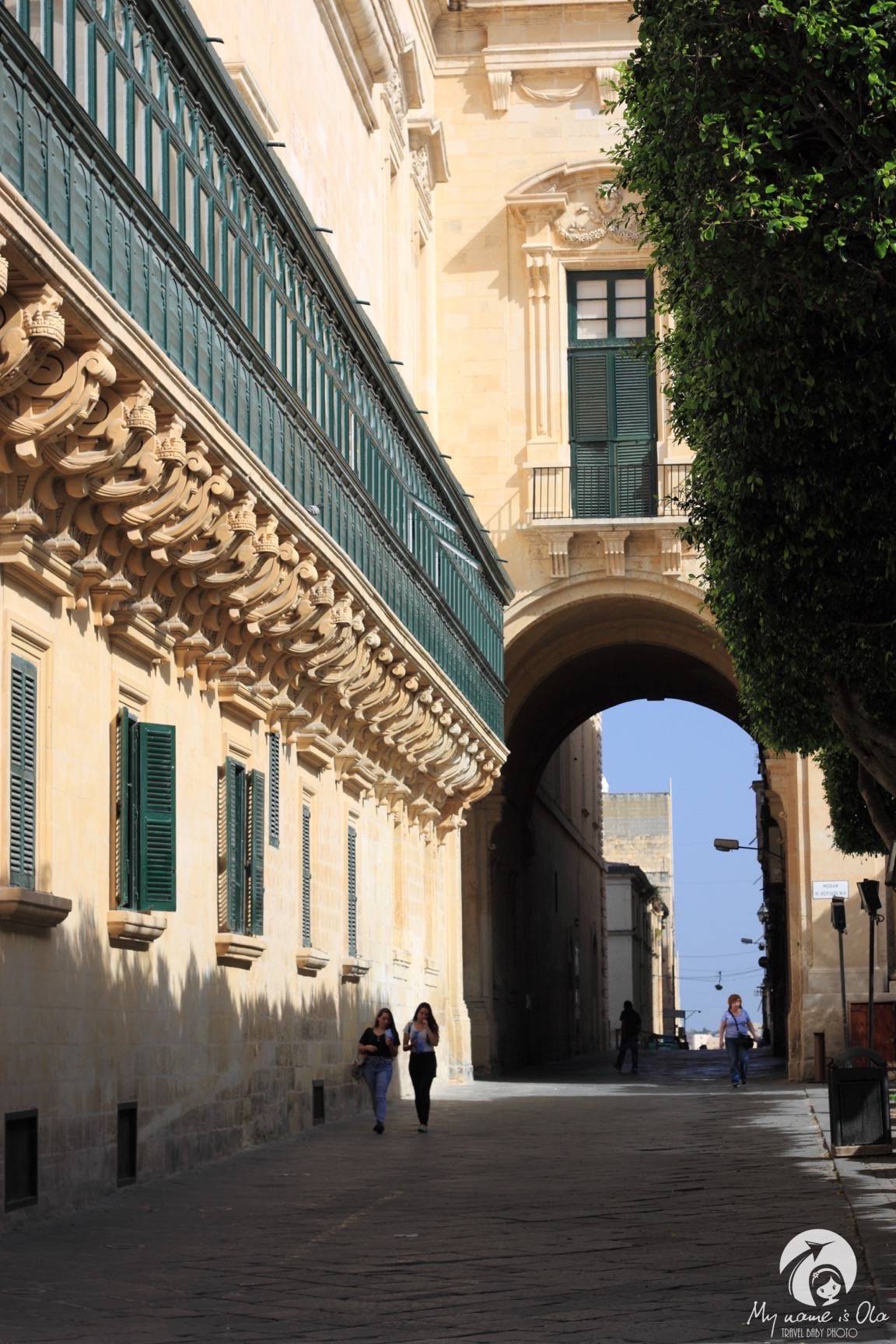
After several minutes of travel we are in Valletta. The city lives a lot faster than a sleepy south, you can easily see that this is the capital. “White collars” running the streets contrast slow moving tourists. Narrow, intersecting at right angles streets of the city, thanks to the high buildings give a little cool from the heat, but many stairs and high hills of the city do not encourage to walking. Most of tourists direct stright to St. John’s Co-Cathedral, than to Grandmaster’s palace, only few reach the end of peninsula to see Fort Saint Elmo. Here and in 16th century the battle of Lepanto Ottoman Empire suffered the greatest loss what initiated it’s downfall.

[photosetgrid layout=”32″]MaltaMaltaMaltaMaltaMalta[/photosetgrid]

Coming back to the reality – we are finally getting to the main point of our visit in Valletta. As pensioners we often visit the doctor. Pleasent chill of the waiting room lets us admire drawings evoiking glorious tradition of Maltese healthcare: from the times of Military Hospitaller Order of Saint John of Jerusalem, whose members while ruling the island organized here one of the best hospitals in Europe till the times of  World War I, when Malta was called the Europe nurse (its hospitals provided help to 20 000 wounded people). The medical visit as many things on Malta went really quickly. We still have some time until our evening meeting with friends, so we decide to visit our favourite places in the capital. Barrakka Gardens give us a little cool. An afternoon coffee we drink watching amazing views over Maltese Three Cities, alled also “The Cottonera”. Those three cities: Birgu, Bormla and Isla are located south east from Valletta. Panorama of the Grand Harbour is dominated by the roofs of churches and fortification walls which defended the country during Ottoman invasions. Fort Saint Angelo is the most interesting one. Together with Fort Saint Elmo was the main defence against Ottoman attacks. Today it is one of three extraterritorial properties of the Sovereign Order of Malta. Maltese Knights resided on the island since 16th century. Although Napoleon made them leave the island, remains of their activities are to be seen not only in the capital. We come accross numerous churches, forts and observatory towers everyhwere on the island.

[photosetgrid layout=”23″]MaltaMaltaMaltaMaltaMalta[/photosetgrid]

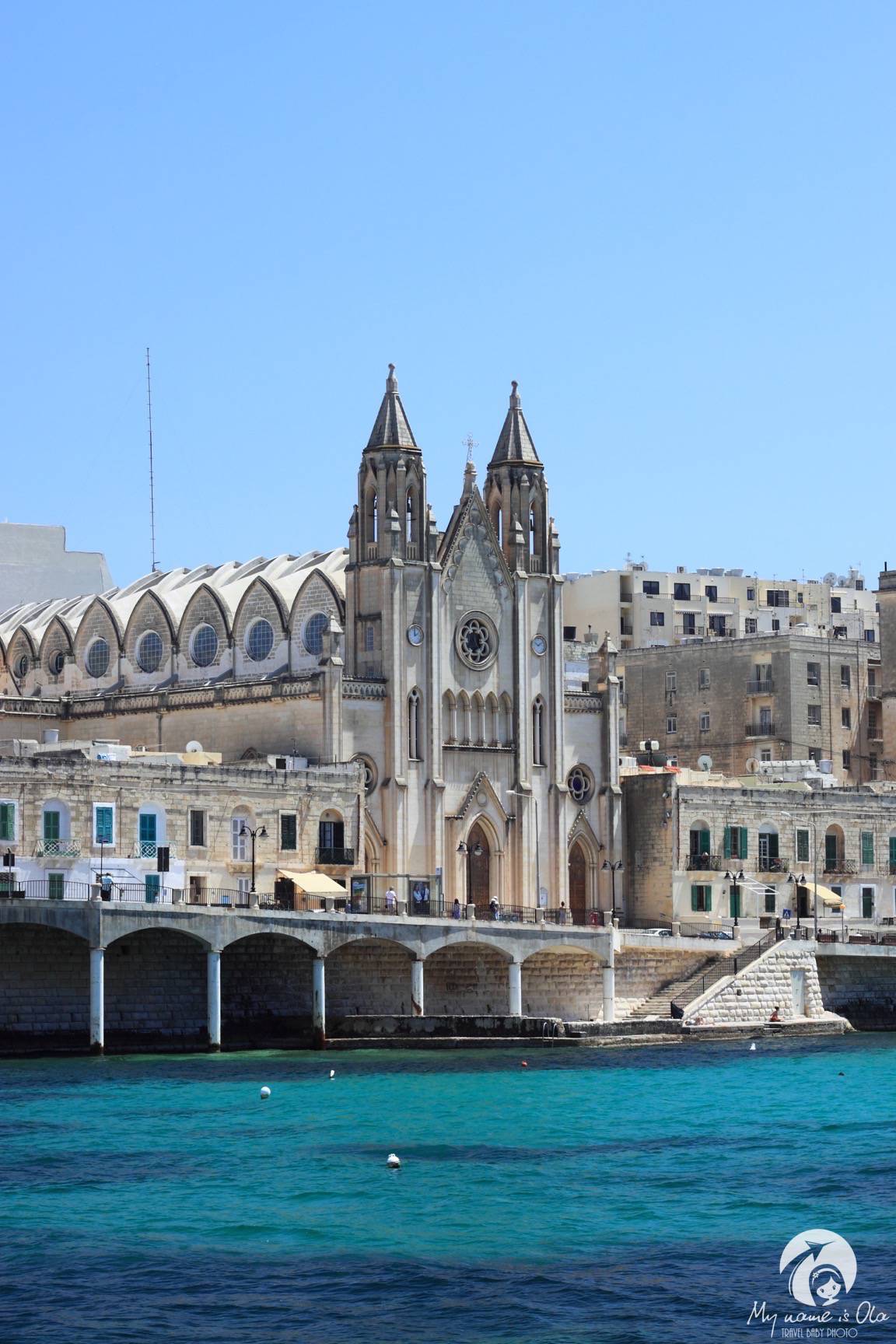
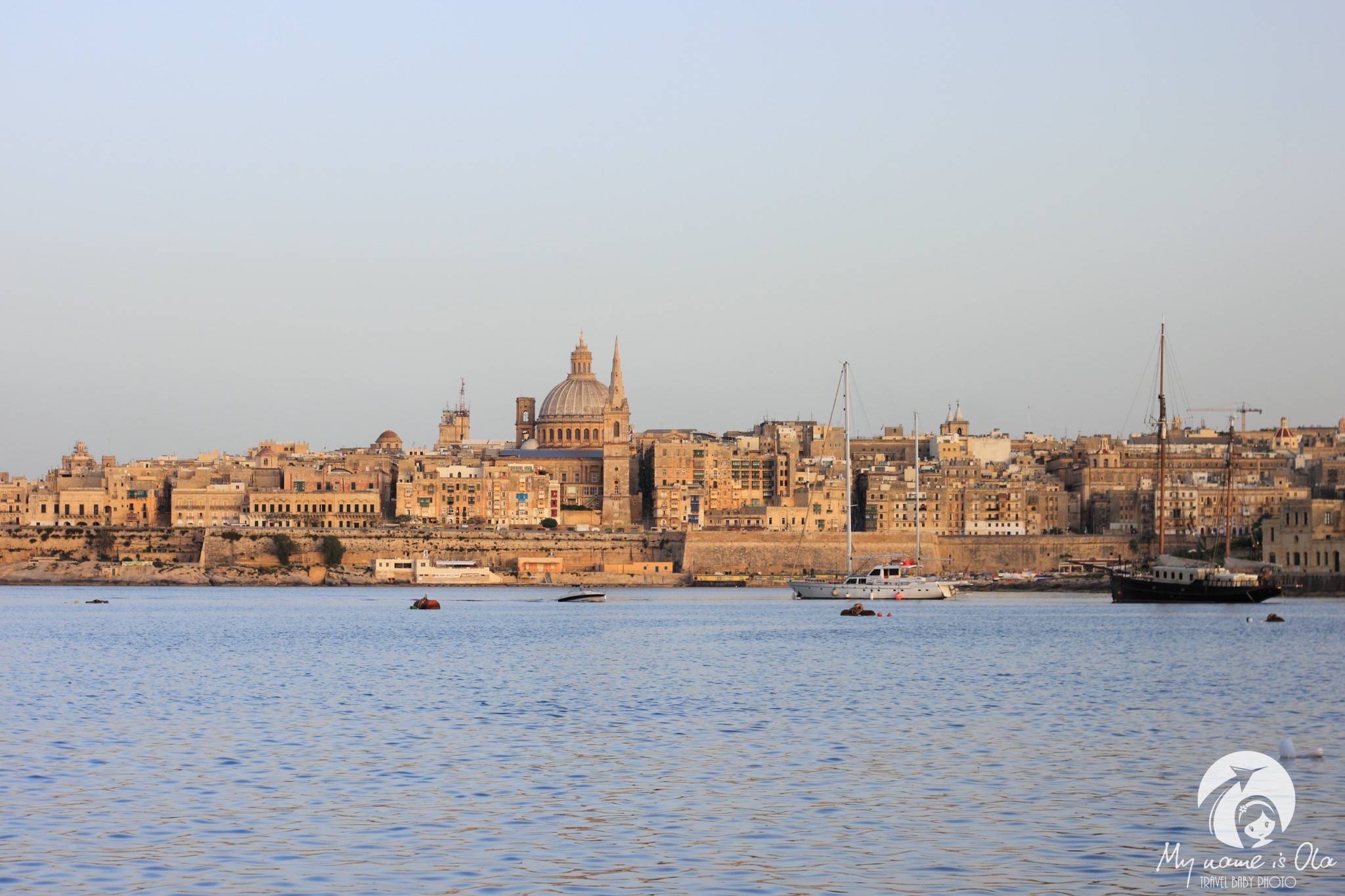
We still have some time so we decide to get to our meeting by water. We take the ferry from Valletta to Silema. We turn around to see how setting sun beautifully illuminates the peninsula. The postcard view with church towers and dome of the Basilica of Our Lady of Mount Carmel is well known to all tourists visiting Malta.

Malta

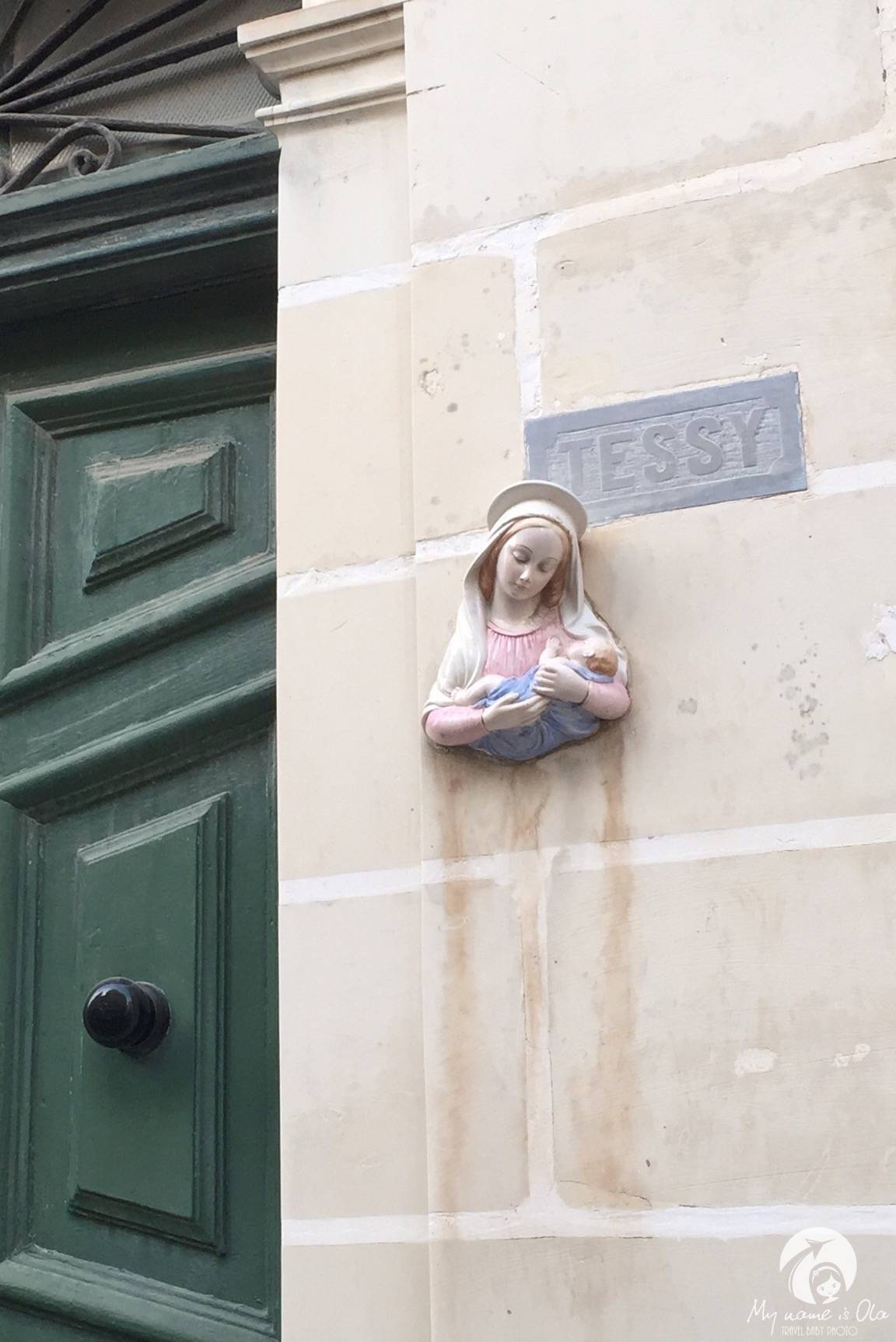
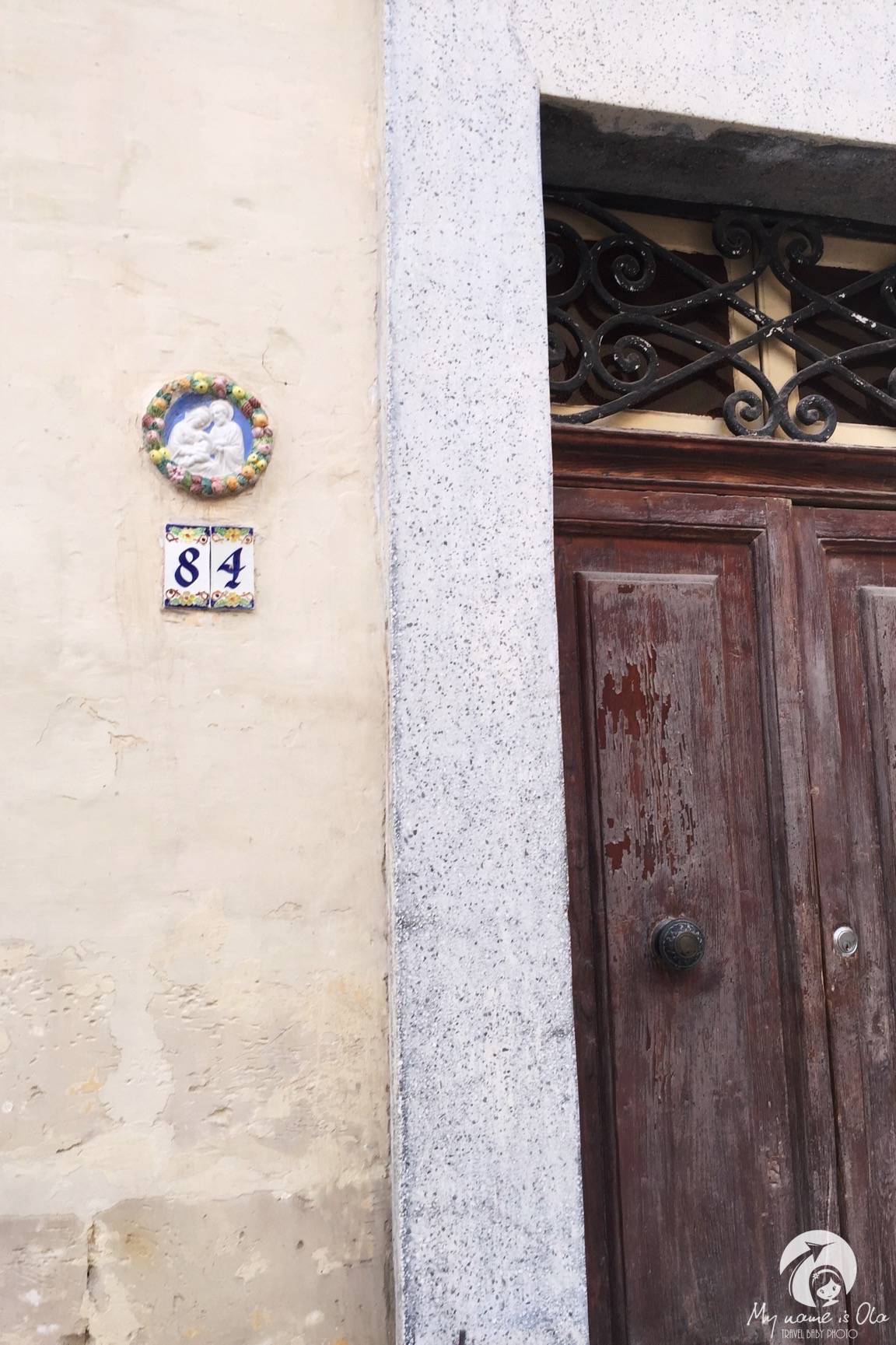
Short trip accross Silema ends up in St. Julian’s. Walking the streets we follow changing character of the island. Numerous, typical for Valletta wooden balconies covering building facades disappear. Townhouses become smaller, less decorated. We notice more ceramic figures or reliefs of home patrons right next to house entrances. Once every Maltese house had its own patron. What is more, sometimes above door or on the roofs, one can notice bull’s horns, which are supposed to scare away evil spirits.

[photosetgrid layout=”212″]MaltaMaltaMaltaMaltaMalta[/photosetgrid]

Finally we reach Paceville, part of St. Julian’s. Here classical Maltese buildings give way to modern hotel buildings. The neighborhood full of restaurants, bars, discos is the center of Malta’s nightlife. It’s time for dinner – we can choose from divere Maltese cuisine. Currently it is dominated by Italian and British influences. We can choose from pastas, pizzas, seafood, through staks till standard fish and chips. There are also distinctive Maltese dishes, the most famous are beef meatballs and cooked many ways rabbit.

While waiting for our friends we order some wine, Maltese wine. In this warm climate grapes grow nicely and wine production is a must.

Malta

We are wondering why Ola and her friends are getting late. Maybe they havent changed the time? Or maybe they looked at the wrong clock? One of Maltese legends says that on two church towers, two clocks should show different times. One correct time for prayers, the other one wrong to confuse Satan. Enjoying good wine in the rays of setting sun, at finally bearable temperature we can wait as long as it takes…

Malta, Valetta

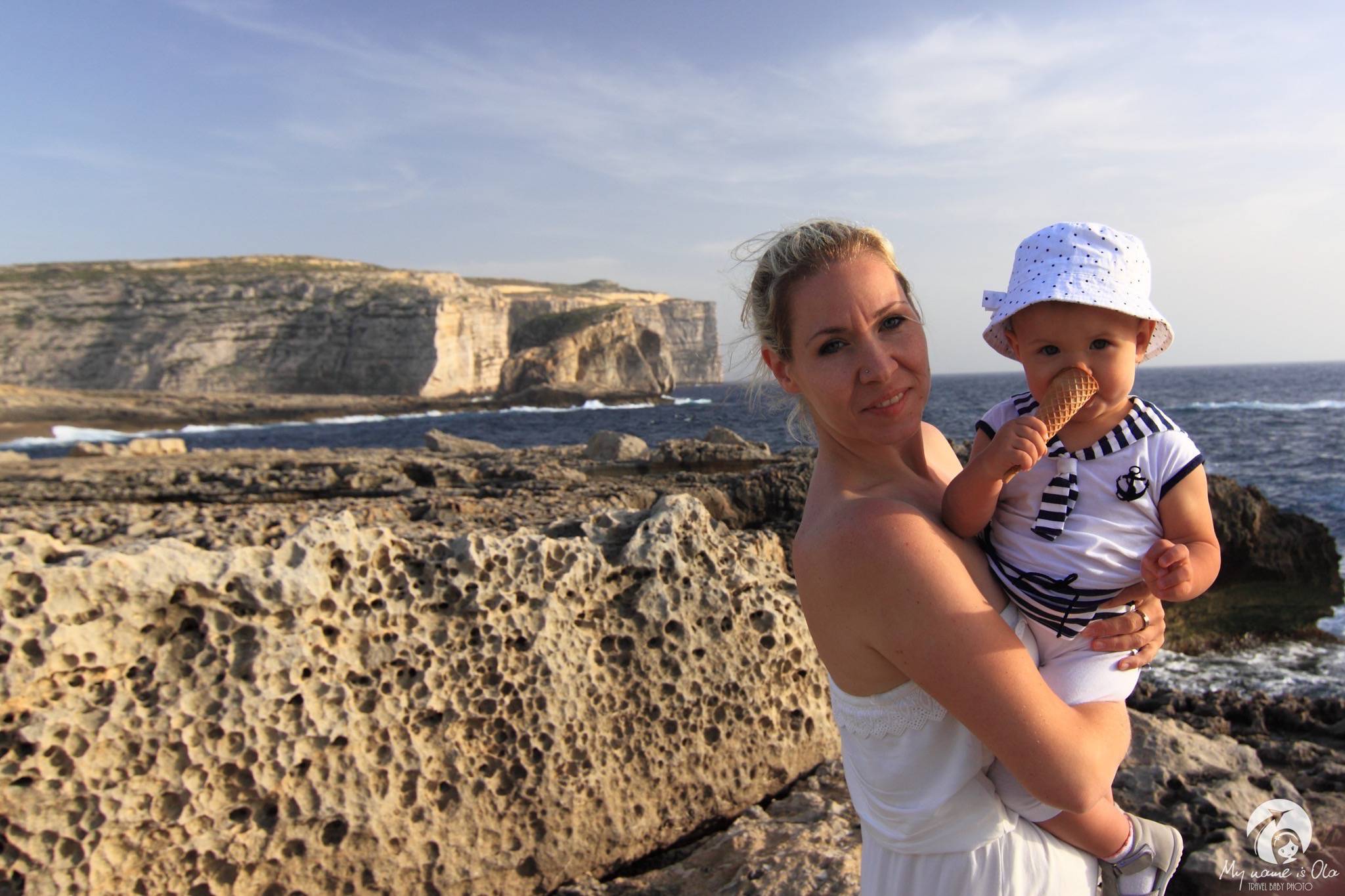
Doesn’t it seem like a perfect day in perfect conditions in retirement? While our pension is still far away and Ola just takes her first steps, we visit the island together getting to know its most interesting attractions.

[photosetgrid layout=”4″]Ola na MalcieOla na MalcieOla na MalcieOla na Malcie[/photosetgrid]

In our next posts we will tell you about our Maltese wine experiences and will guide you to best beaches on the island.

Blog

How to get to Livigno from Bergamo

12/05/2015 — by Magdalena Kuźma0

liv22-960x640.jpg

In fact: how to get to Livigno from Bergamo Airport not paying 60 euro per person.

For those who are willing to spend 60 euro and well tolerate long long trips by bus there is a good solution – Livigno Express which straight from Orio al Serio takes skiers to Livigno slopes. The journey takes 4 hours and costs 55 – 60 euro per adult plus 44 – 48 euro for a kid below 12 years. All that one way and depending on the time and day of the journey (on Saturday prices are more friendly: 40-45 and 32-36 euro; information from 2015). To use this bus our family of three would have to pay, at best 154 euro one way. Quite a lot so we decided to look for some cheaper option. It of course is not a direct connection but it seemed more like an advantage for us.

Bergamo

Here is what you have to do to get from Bergamo airport to Livigno:

1. At Orio al Serio take the city bus going to railway station for 2,30 euro per person. Children smaller thatn 1 meter travel for free (their strollers as well). To get to the bus stop turn right after leaving the airport. Tickets are to be paid only cash in the machine at the bus stop. The bus goes every 20 minutes and it takes 15 minutes to get to the train station. Theorethicaly the train station is the first stop but as it is a city bus it can be stopped on request somewehere before the train station.

Bergamo train station

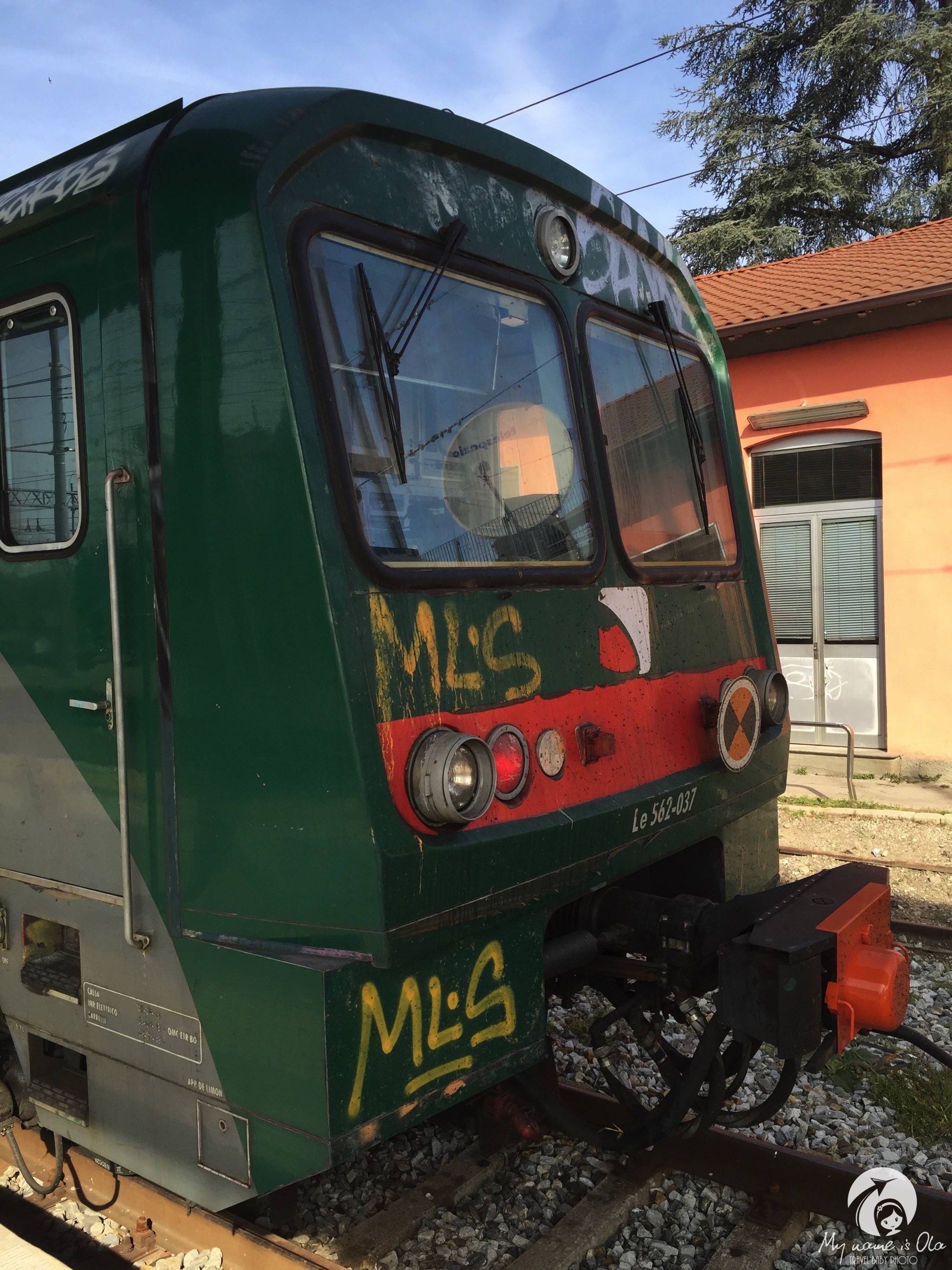
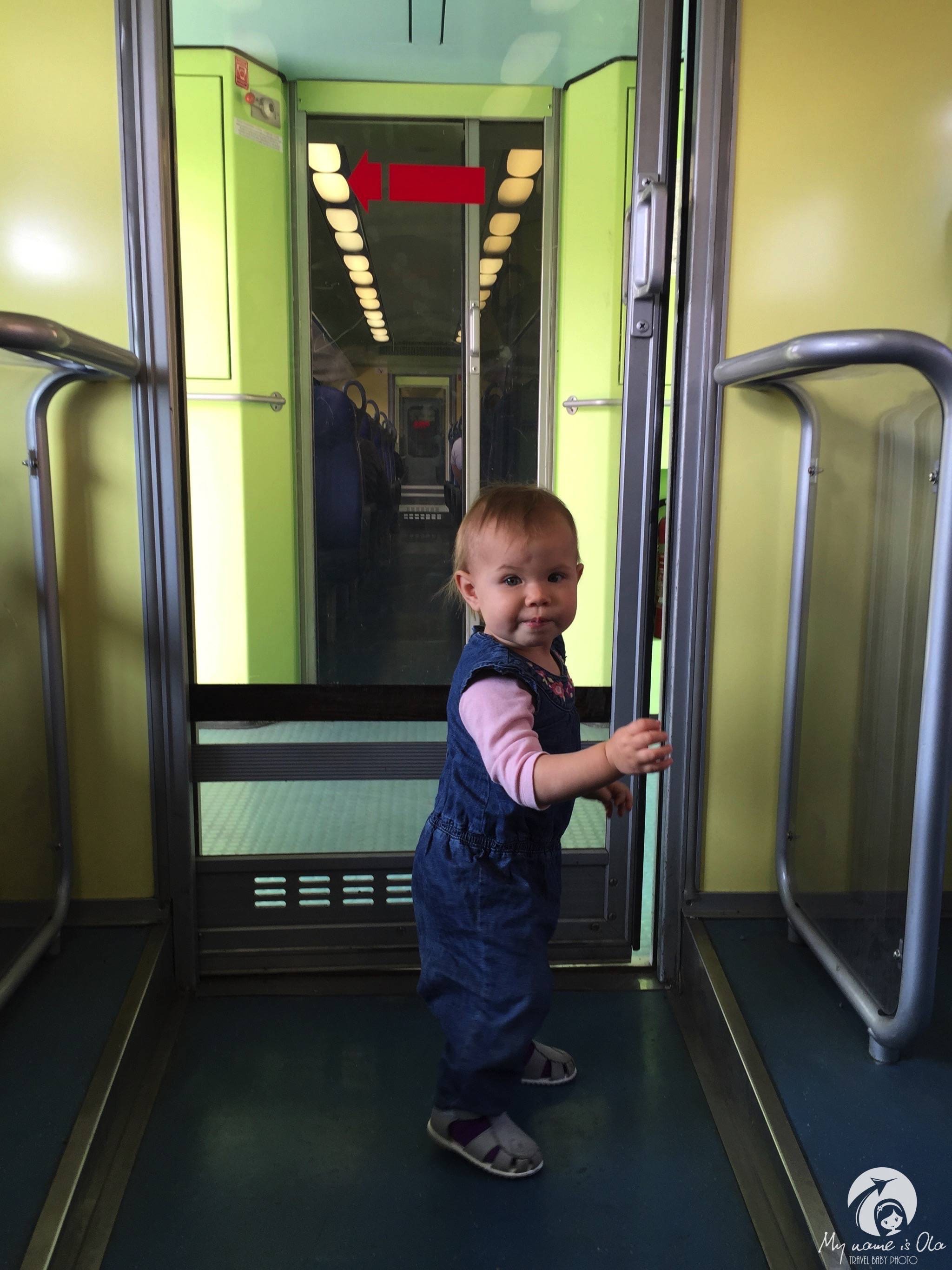
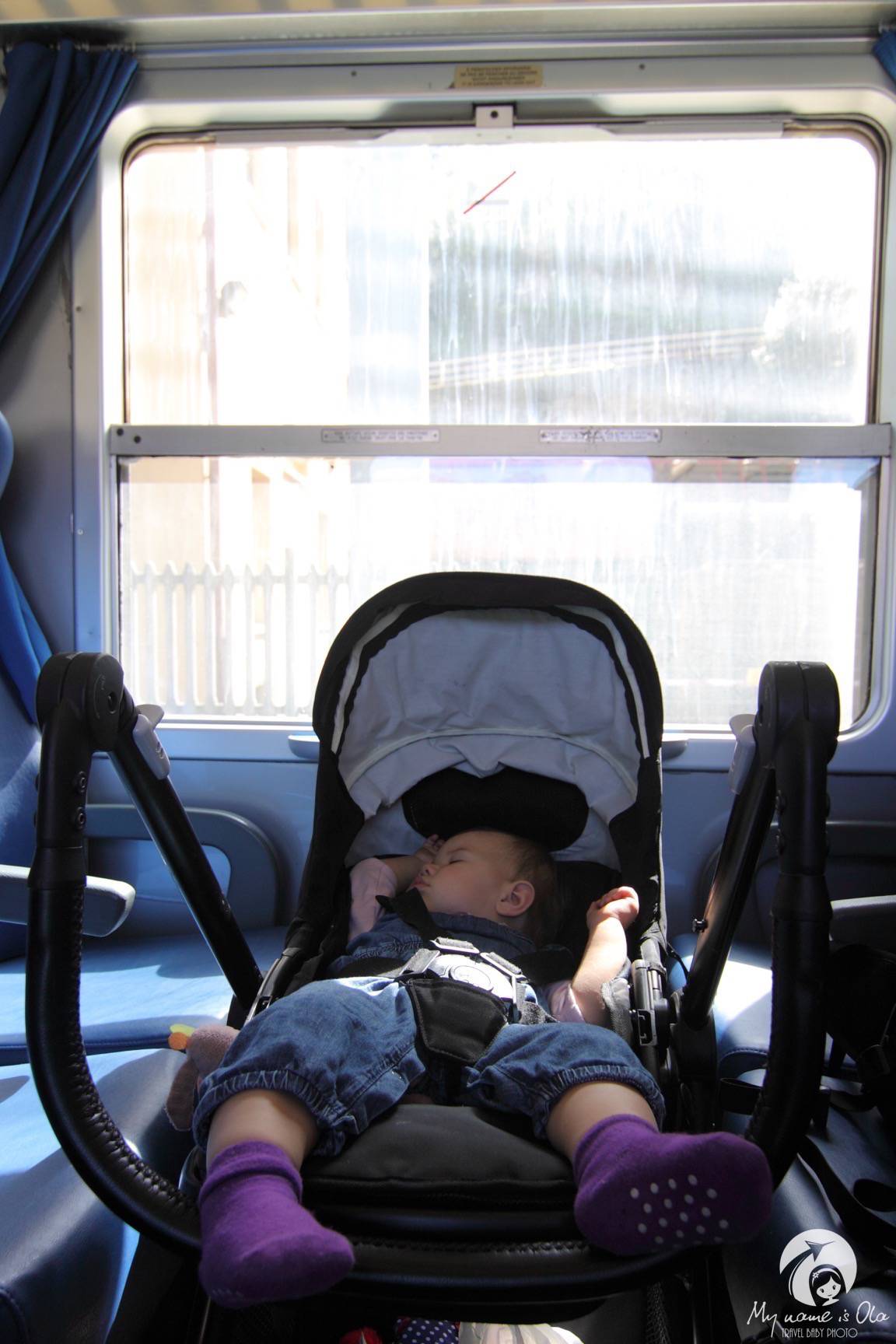
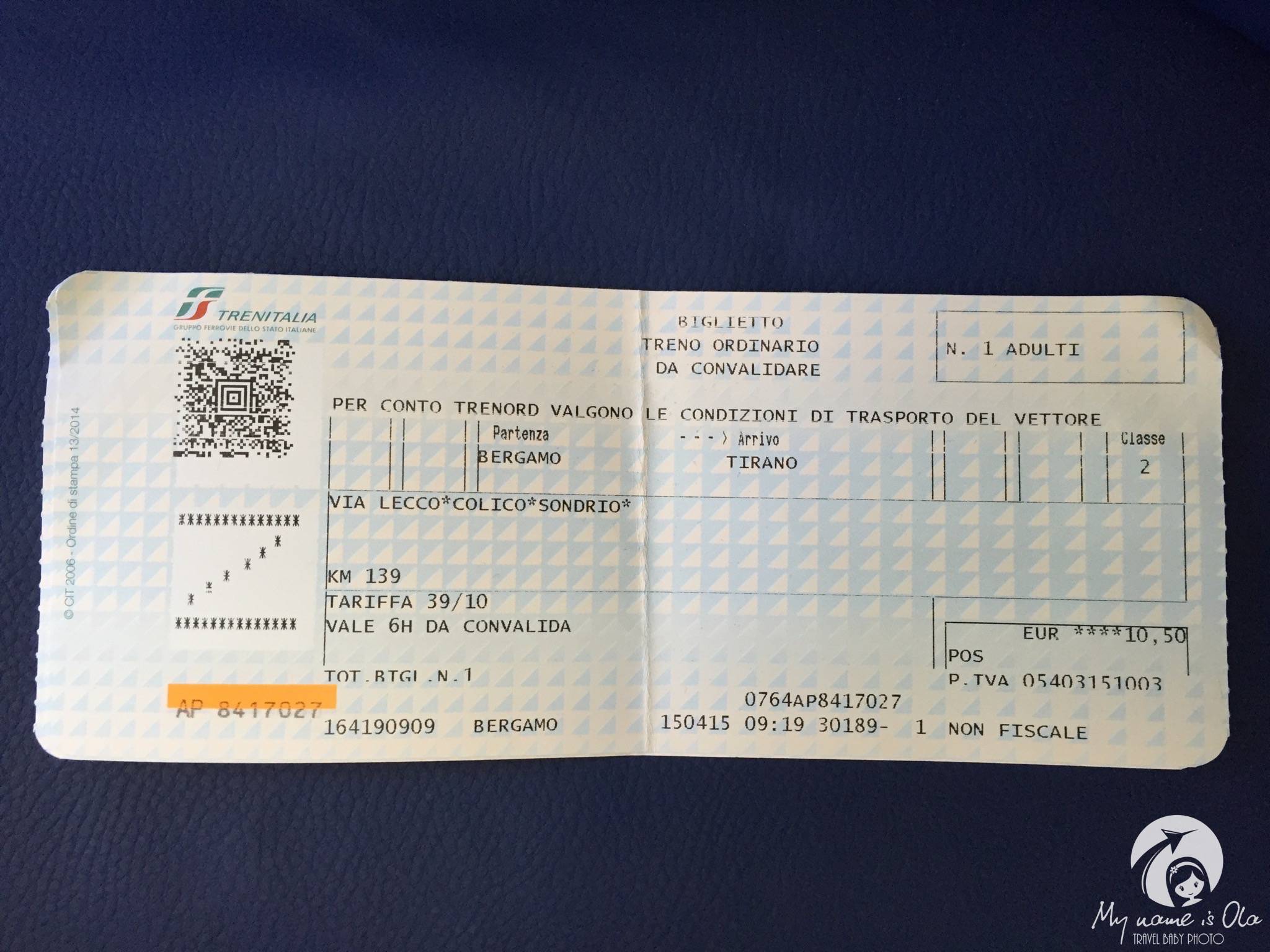
2. At the train station get the ticket for the route Bergamo – Lecco – Tirano for 10,20 euro. Look for the train to Lecco, within 40 minutes it will take you to its last station. There you have to change the train. Look for the one going to Tirano. It leaves from different platform so you have to use underpass to get there. Of course you will have deal with lots of stairs. If you have a baby stroller or bigger luggage it’s quite inconvenient. There might be a ramp or even lift somewhere but since we had just a few minutes to change the train we looked around and not seeing any of those we just carried Ola down and up the stairs in her pushchair. On the train you can take some rest since it takes almost 2 hours to get to Tirano. Some will even take a nap. In regional trains in Italy children under 15 travel for free. One more thing about the ticket: the one that you bought at the train station doesn’t show any date or hour so it needs to be validated in a machine before getting on the train. If you fail to do that conductor on the train can make you pay fine. You might also come accross such a nice one as we did who will simply validate your ticket with his pen.

[photosetgrid layout=”4″]TrenitaliaTrenitaliaTrenitaliaTrenitalia[/photosetgrid]

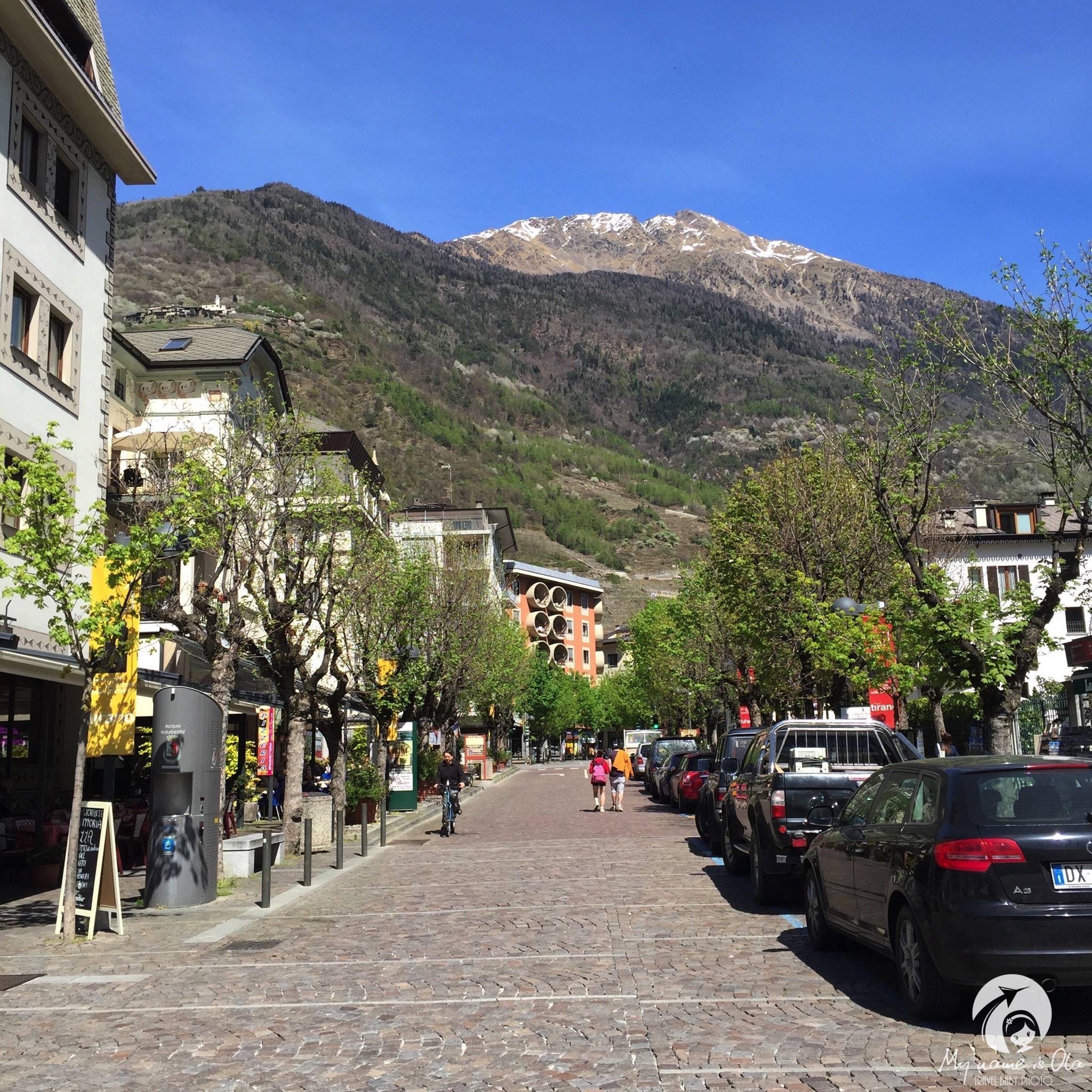
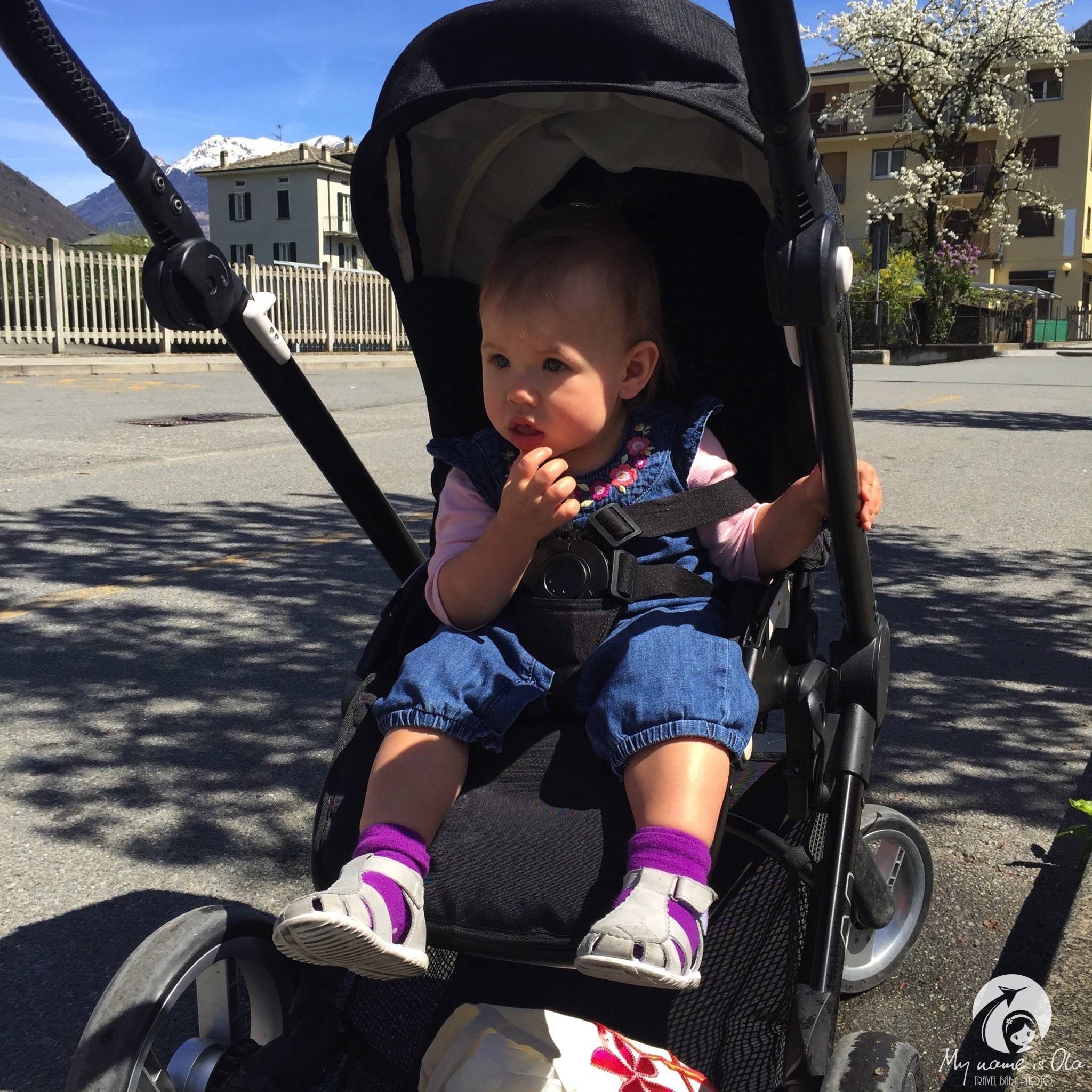
3. In Tirano change the train for a bus. An underpass will take you on the other side of railway tracks to the bus station where you get a ticket on a bus to Bormio for 4,50 euro. On a bus you can “enjoy” another hour of your journey. This distance could probably be covered within much shorter time but the bus stops in many little villages so be prepared to spend an hour there. 

[photosetgrid layout=”4″]TiranoTirano, BormioTirano, ItalyTirano, Italy[/photosetgrid]

4. From the lovely town of Bormio take another bus. This will be the last stage of your journey and will take a little over one hour (1:10). The destination – Livigno – is at your fingertips. Just another 4,50 euro and you are there.

Bormio, Italy

Comparing the time on the train or on the bus it will be similar to the time you have to spend on a direct bus. But if you take into consideration total travel time, with changing the trains and buses you will need some more time than going directly. The advantage of this journey with changes is its price: 20 – 40 euro per person less than the direct option. If you get bored by the travel you can stop for some longer in one of those picturesque mountain towns like Bormio or Tirano, grab something to eat and stretch your legs. But if you hurry up at changes and catch the soonest train or bus whole time of the journey will not be that long.

Baby in travel

First trip with a baby – infant in a hotel

20/05/2015 — by Magdalena Kuźma7

hotel211-960x640.jpg

FIRST TRIP WITH A BABY

It is obvious that first trip with a baby is associated with some stress for parents. Young parents feel the best at home where surrounded by all the necessary equipment are safe and well prepared for all the baby’s daily rituals. Finally that day of first holidays or a weekend getaway will come. How to handle everything, how to plan the trip to have everything under control and make this time be pleasure for everybody? Based on own experience we gathered few tips what to pay attention on, apart from price and location, while choosing a hotel for our family trip. Check what you can expect and what you can demand from the hotel when visiting together with a little one.

Hotel

GENERAL ASPECTS

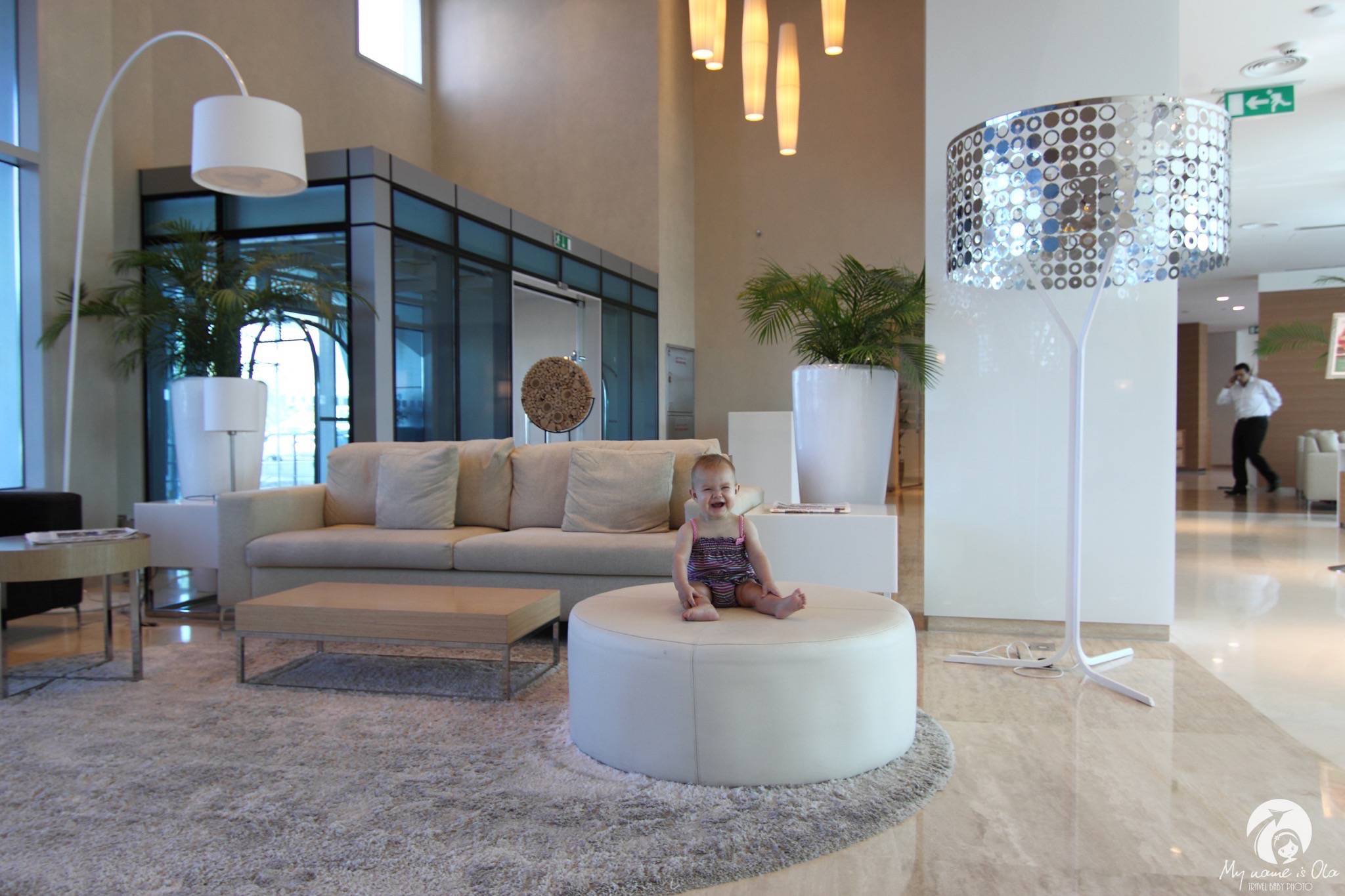
Whether going on an organised trip or traveling on your own when choosing the hotel you should make sure that the hotel you want to book welcomes babies at all. When looking for accomodation on the internet rember to check the box to search for hotel ready to host babies. When booking the room add to the reservation your baby’s name – that will be useful in some countries for example when applying for visa. Some countries demand hotel booking in the procedure of getting a visa. Eastern countries require also all guests to register their stay in a hotel so don’t forget to give at the front desc your child’s passport as well. But the most important is that the hotel can simply prepare for your arrival and have the baby cot already brought to your room.

To make your stay a good time and arrange your baby conditions to get peaceful sleep you can kindly ask for a room away from hotel bar or a busy street. Don’t forget to use „Don’t Disturb” sign when your baby is asleep. Sometimes during the day hotel staff comes not only to clean the room but also to deliver newspapers or check and fill up the minibar, so have “Don’t disturb” sign on hand and use it whenever you want to be sure you will have silence. If you do not wish staff to come to your room at all you can make such a request at the front desk.

hotel

BASIC EQUIPMENT – BABY COT

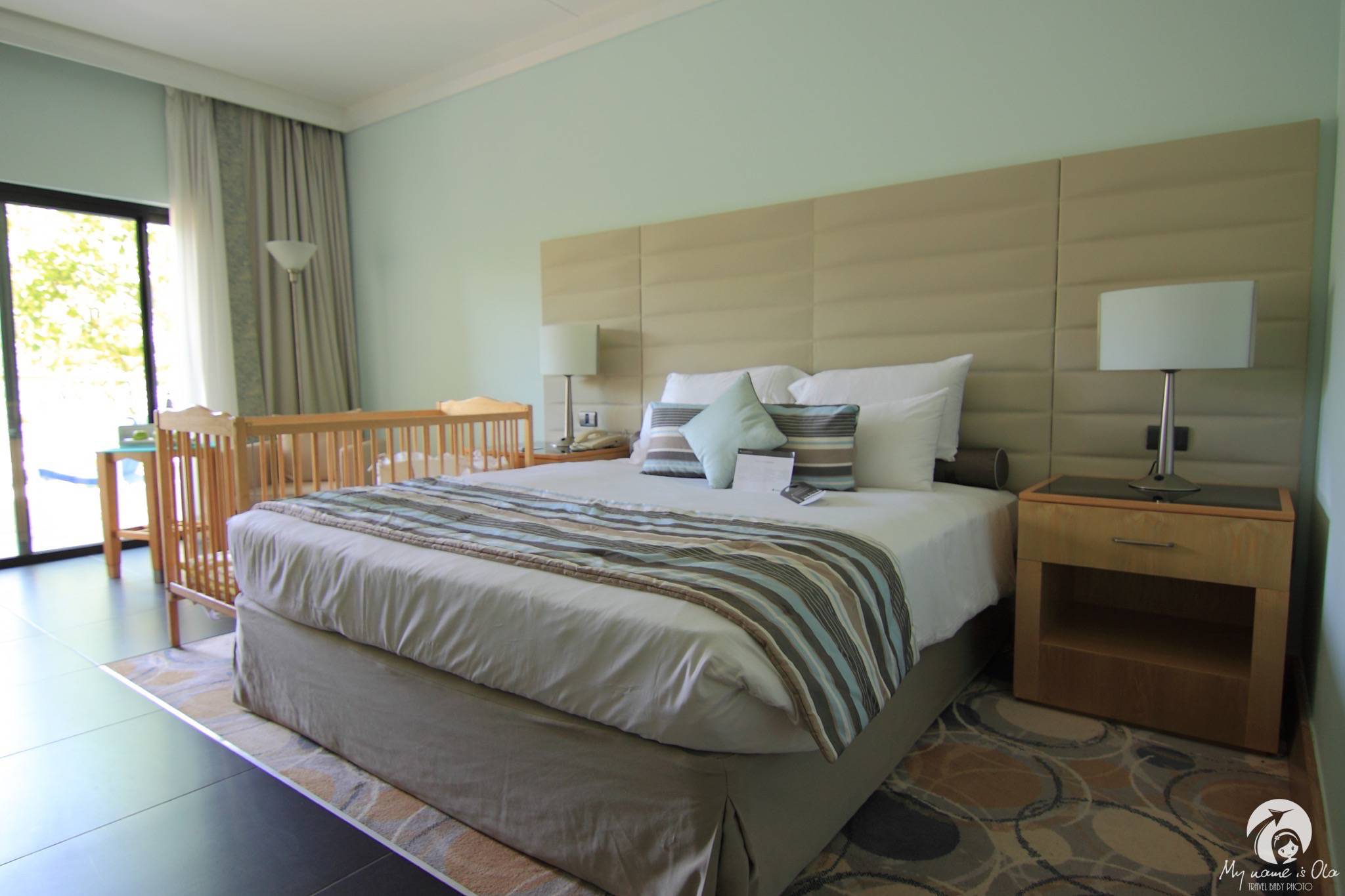
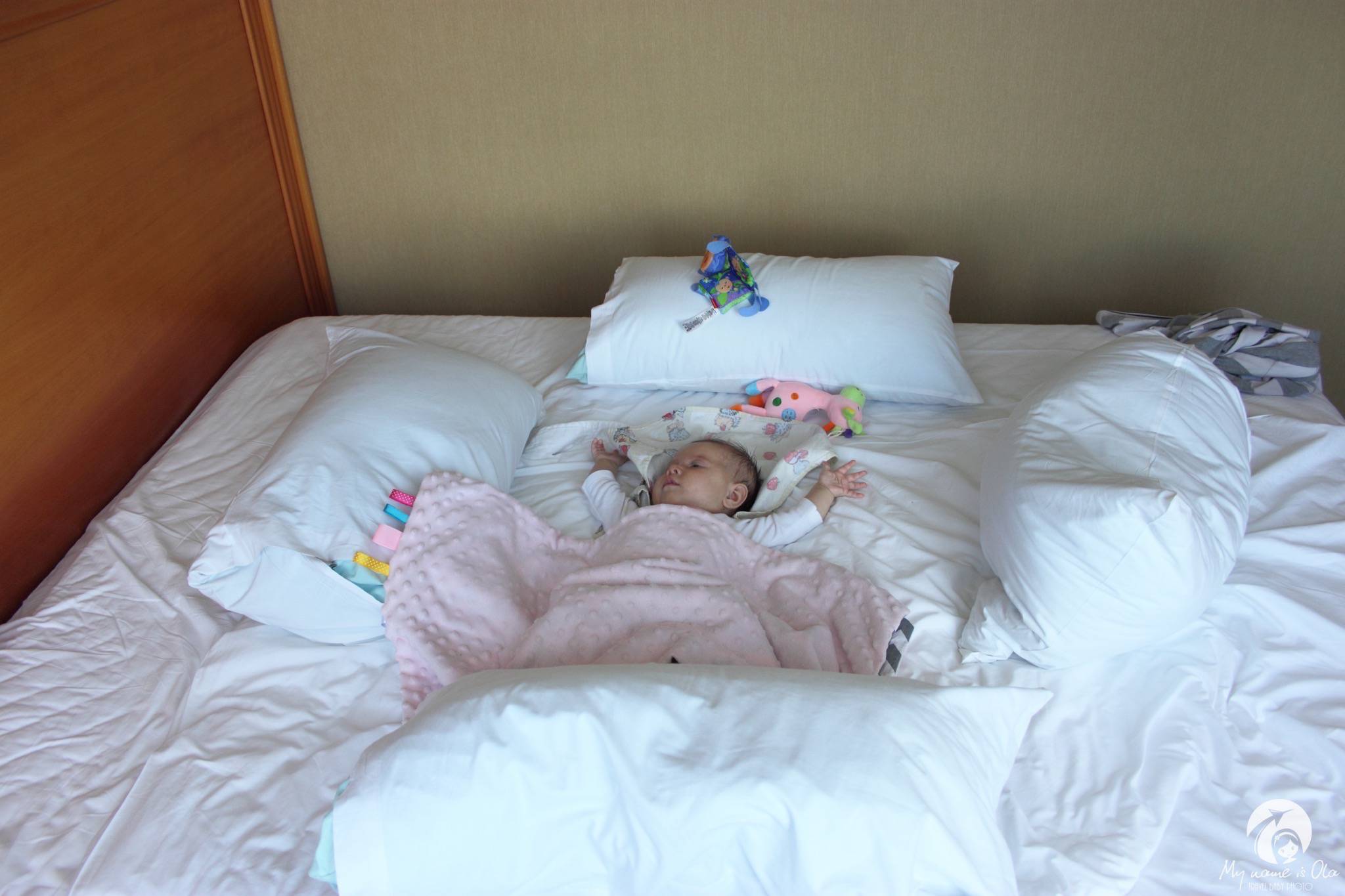
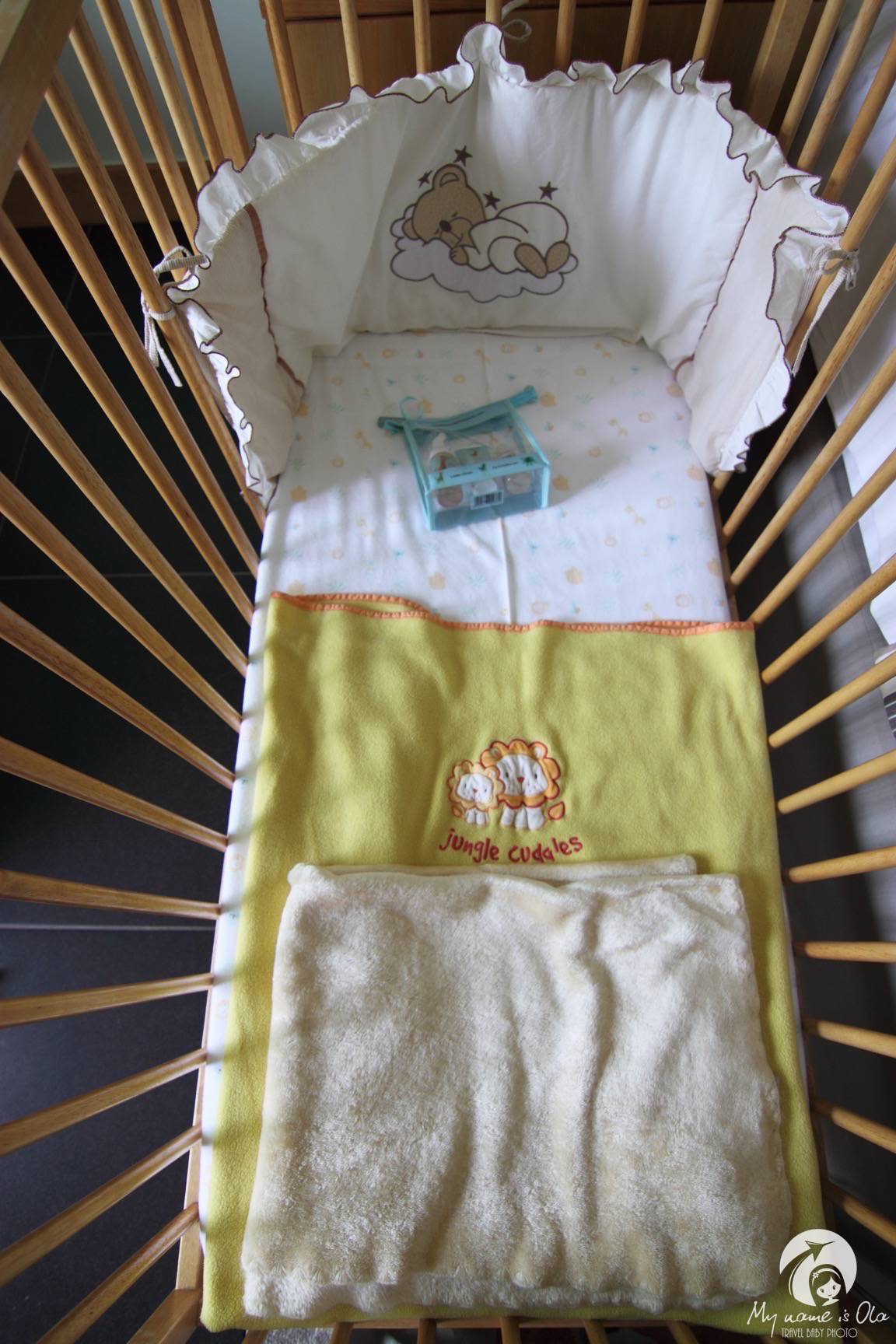
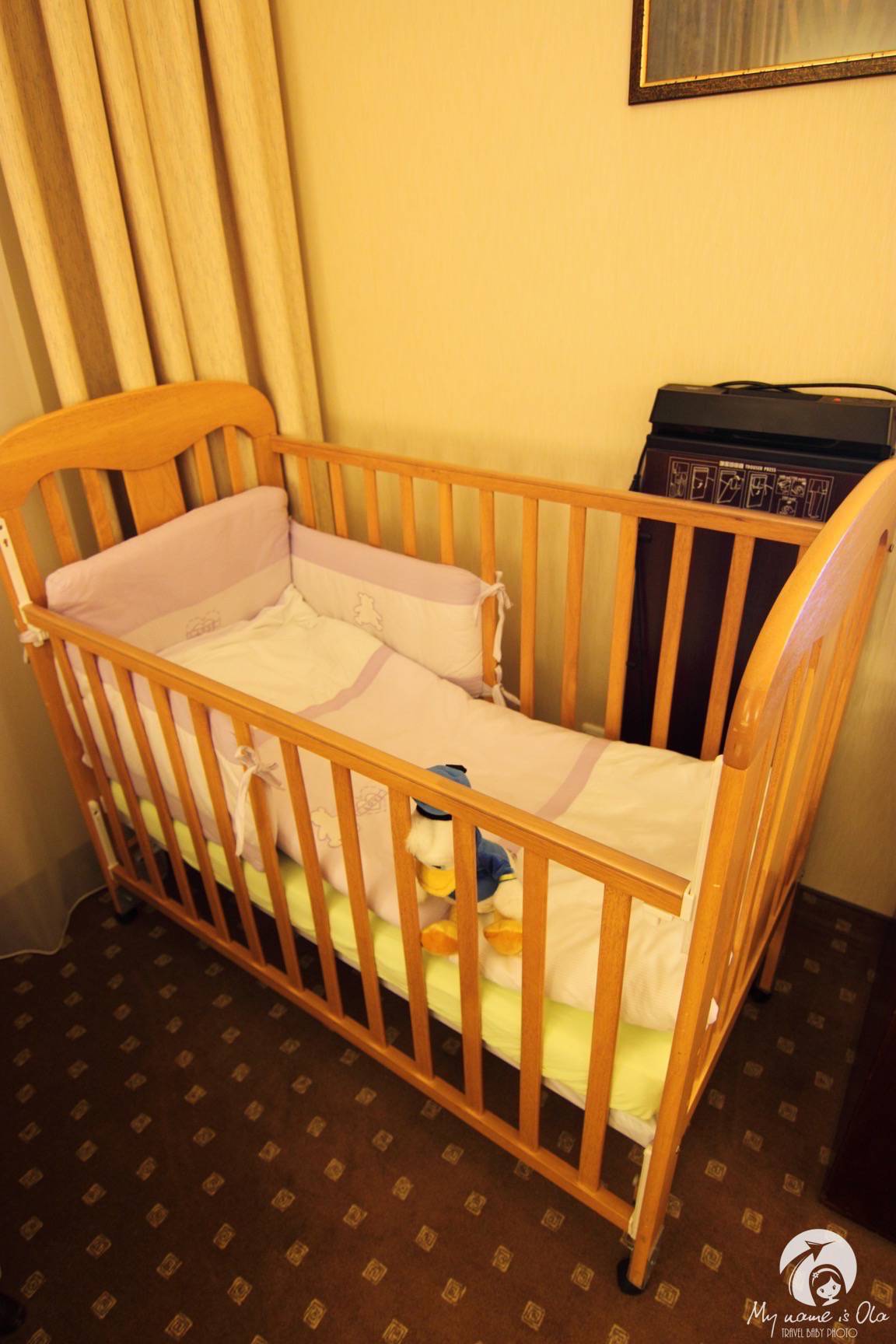
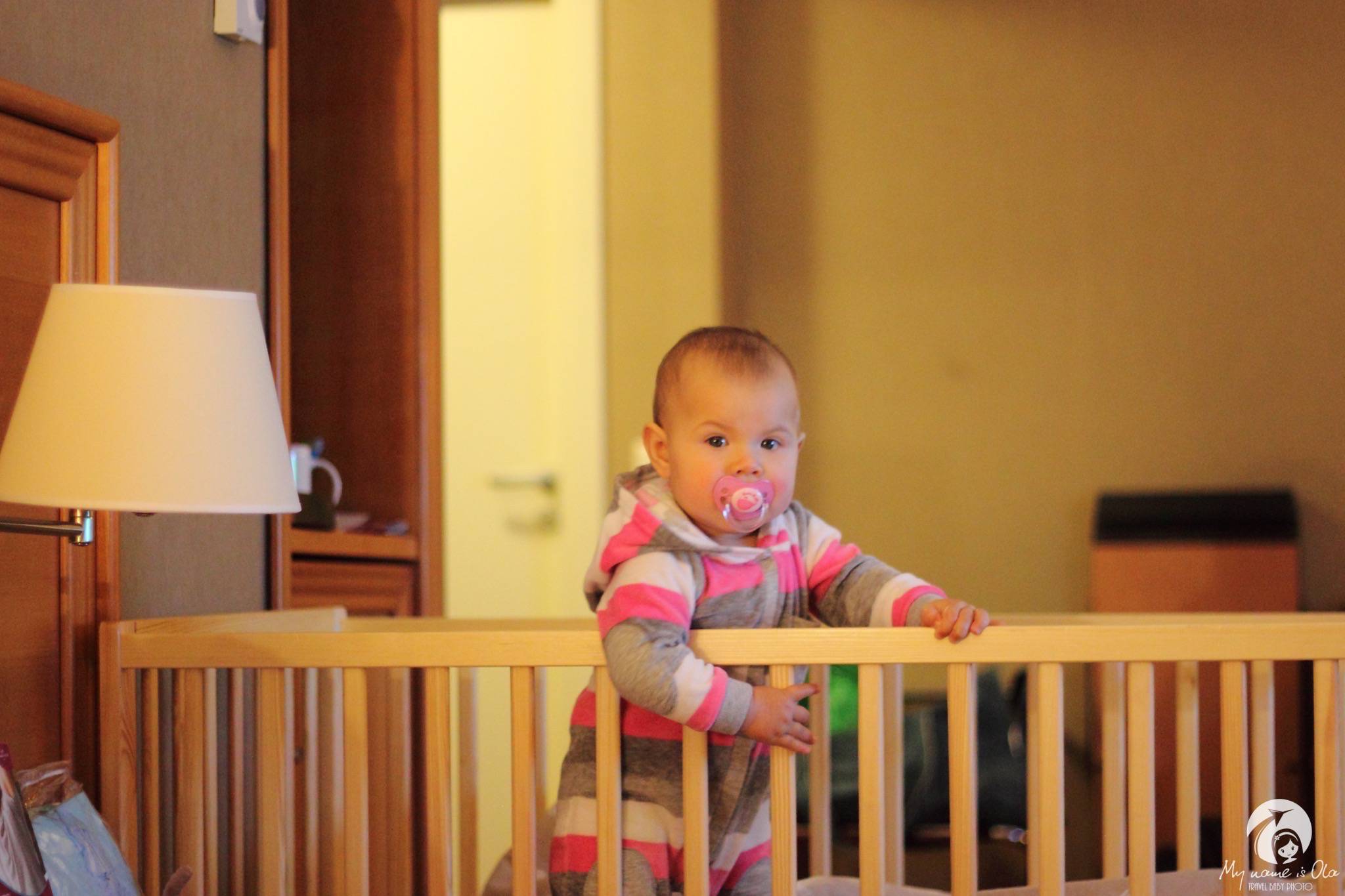
Basic and the most important equipment that parents should expect from the hotel visiting with a little child is a baby cot. Usually hotels indicate in their offer whether they are able to provide a crib to the room or not. This service is in most cases free of charge but it’s worth to make sure. Right after booking a room you might want to contact hotel to inform them that you will be coming with a little one. Although hotels usually have more than one baby cot in the peak of the season or in places popular among people with children it might not be enough for everyone. We faced such situation in Oman, in Sur where in the seaside hotel they ran out of baby cots and Ola had to sleep together with her parents. Next day she was the only one fresh and rested in our family.

Together with the crib you should expect a pillow and a blanket for the baby. However it happens that hotel staff forgets about it and you can get only a cot. Feel free to ask for some bedding for your kid, even if they don’t have one they will try to find something that will let your baby sleep comfortably. Before leaving home you have to know that different hotels prepare different beds for children and their quality does not always go hand in hand with hotel level and room price. Going on holidays you can expect for your baby beds starting from regular plastic travel cot up to really sweet, wooden professional crib. Hotel staff might ask you about your child’s age, in order to properly prepare the crib – with two or three months old you will need a crib with mattress at the highest level and with one year old the lowest. However in most cases you will get the lowest option what with an infant will make you exercise taking and puting him or her to bed. So far we havet seen anything worse than the cot delivered by Belarussian hotel. Beautiful wooden white cot turned out to have so high sides that to easily put Ola inside we would need hands half a meter longer. After first night we put the crib to the corner and put Ola to sleep on the mattress between two “adult” beds.

Hotel

If you are affraid that your hotel will not be able to provide a baby cot or its quality will not be satisfying (internet forums are great source of information) you can always consider taking your own travel cot with you. However the name travel cot is kind of mistake because those things are totaly not suitable for travel – usually those are big and heavy packages. But if you are travelling by car you will surely fit it somewhere. What if you are flying? It depends. All airlines allow babies to take their pushchair free of charge but some of them let also some additional accessories. Ryanair, comparing to other airlines, looks very favourable – they allow two pieces of children stuff: a pushchair and car seat or travel cot. But I think it’s obvious that it’s better to relay on the hotel in this matter and not to carry unnecessary things accross the world. Even if provided cot will not meet your requirements, don’t worry, you will handle it somehow – creativity of parents  for the sake of their children is limitless and remeber: the less things you take with you the easier your travel will be.

[photosetgrid layout=”4″]Baby cotBaby cotBaby cotBaby cot[/photosetgrid]

Knowing how much space a baby cot needs it is very important to pay attention on the size of the room you are booking. Even the sweetest crib will make you go crazy if you will not have space to move in the room or play with your child. Imagine what will happen if you in addition come to the room with the pushchair! Some hotels’ loyalty programs are very useful in such situations – sometimes even at the first levels of participation you can count on upgraded room standard and thus bigger size of it. You should pay more attention when choosing those charming hotels in historical buildings in the cities oldtowns. Hotels in such locations have more difficulties to arrange big rooms and adding a baby cot might not be possible at all.

BABY IN BATH

Very important thing when leaving your home with the baby is providing him or her the necessary hygene. Although there is a hundred ways to bathe the little one without the baby bath tub, some people cannot imagine handling without it. If you are one of them you might ask at the front desc, some institutions are equipped in baby bath tubs. It’s avaliable very rarely so you should rather pay attention if the room you are booking has shower or bath tub and choose where it will be more convenient for you to do all the hgenic procedures.

As for the issues related with bathing, we were nicely surprised when in one of the hotels we recevied a set of baby cosmetics together with a sweet washcloth. A set of shampoo, body foam and body butter made us really appreciate the hospitality of that place. Arriving to hotel with the baby you should of course expect additional towel.

[photosetgrid layout=”2″]BathroomBathroom[/photosetgrid]

Last thing connected with an infant that sometimes is avaliable in hotels is changing table but in our opinion it is not really useful. Some places offer delivering one to your room however you will surely handle diaper changing for example on the bed. Remember that such table will take space in the room!

ADDITIONAL EQUIPMENT – WHAT MIGHT BE USEFUL

There is something more that you might apprciatie when staying out of home. It is not indispensable but can be useful and it doesn’t come to mind right away. This is an electric kettle. It will be appreciated more by people feeding their babies with infant formula milk. Thanks to the kettle in the room you will prepare the meal, clean the bottle and teats with boiling water or heat up dinner in the jar. Hotels that win chid-friendly rankings offer also bottle warmers, humidifiers and outlet plugs but the chance that you will happen to stay in such is very little so you’d better just pay attention on room equipment in regular hotel.

Hotel

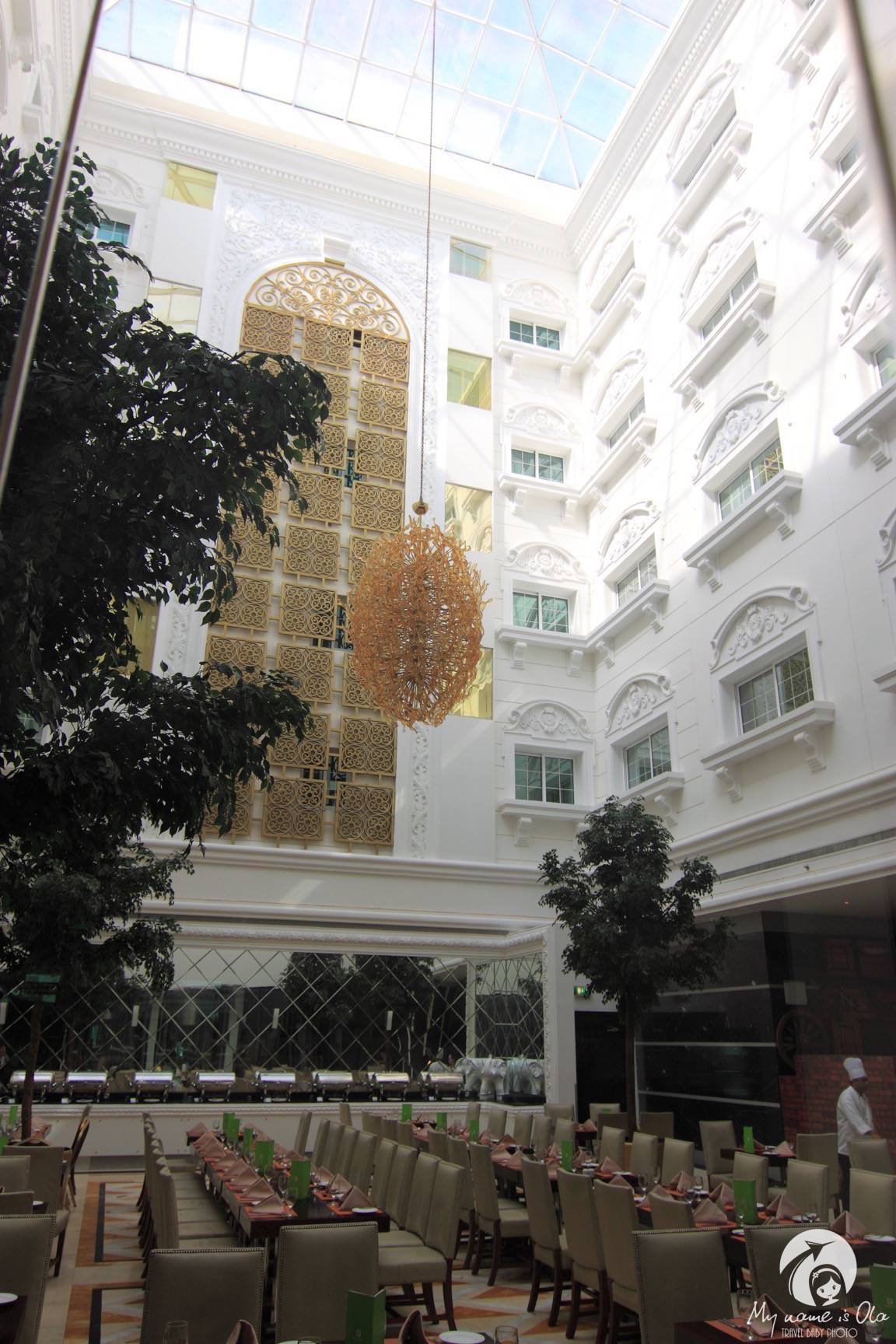
BREAKFAST IN HOTEL RESTAURANT

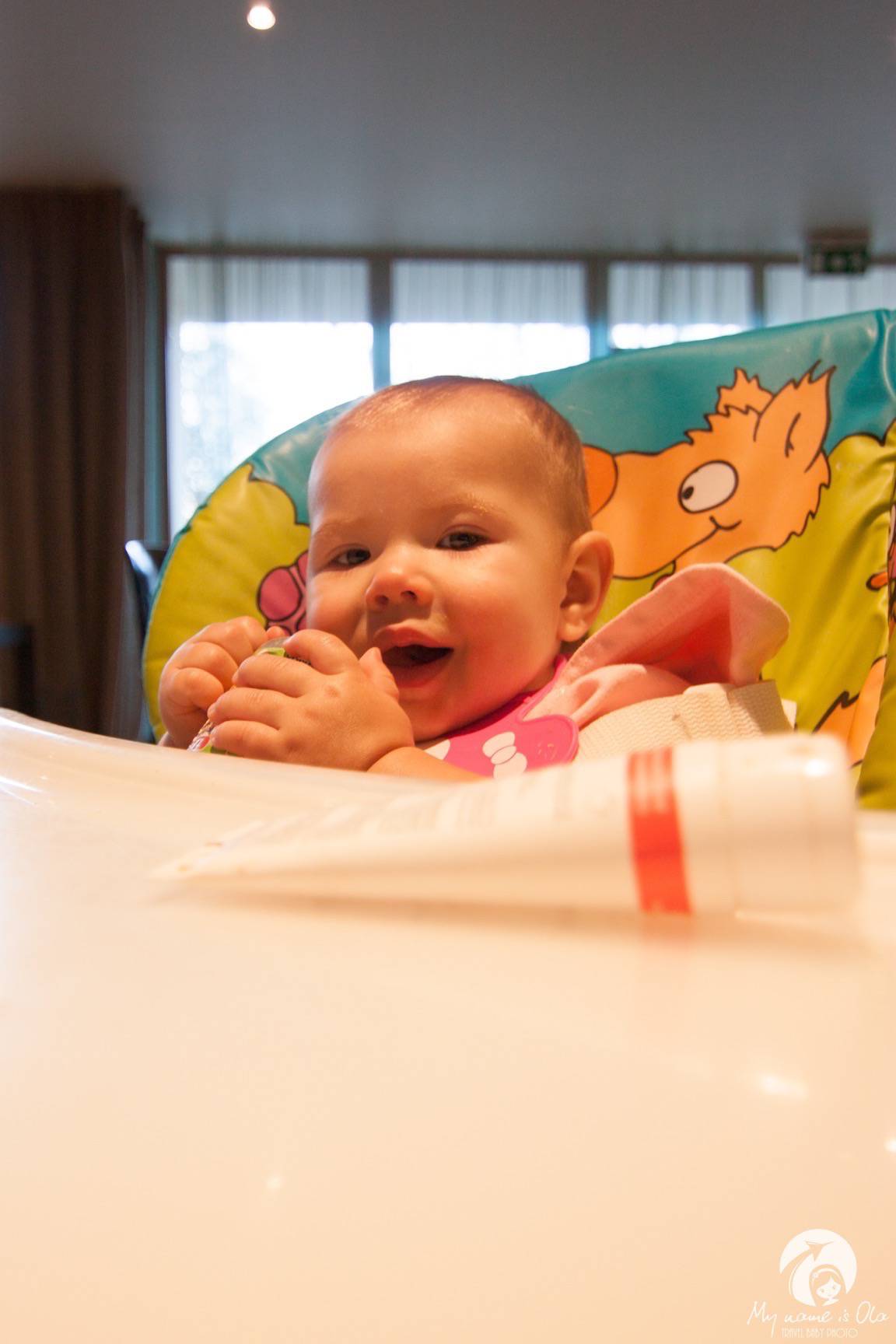
We usually eat only breakfast in the hotel restaurant but still the most important for us is the fact if they provide a baby high chair. Booking the room you will usually not be able to check that but if you happen to find one in the restaurant once you’re there before you put your whole world in it make sure it is stable and has seatbelt. Using the high chair you will feed the baby and have your meal with pleasure but only after you check it is safe! In case of longer visits in the restaurant you might want to look around for a room for changing the diaper or breastfeeding.

[photosetgrid layout=”3″]HotelHotelHotel[/photosetgrid]

HOW TO GET AROUND IN THE HOTEL

After choosing that perfect, well equipped hotel, located exactly where you need it, either at the beach or in the city center check one more thing. Even the prettiest place you will be leaving sometimes so make sure the building has such a great invention as lift. Imagine only having the room on the third floor and the necessity of carrying the stroller each time you want to leave the place or come back. Downstairs at the reception they might not have enough space to keep the stroller there. Besides your baby might suddenly decide that she or he will now be falling asleep only in the pushchair. Than what? After even few days back pain guaranteed.

CHECKING IN AND CHECKING OUT

Traveling with an infant we can often count on hotel staff not being so strict with check in and check out hours. After all, children do different tricks in the least appropriate moments and leaving the room on time is sometimes, despite the best intentions, impossible. Apart form courtesy of the personnel good help in early check in and later check out are the loyalty programs of hotel chains. Often being a member allows us to stay on the last day in the hotel a little longer than standard 12:00 and lets your son or daughter finish a nap and parents pack all their stuff.

Most of above described things can be expected in international hotel chains. Small local objects, not being a part of any chain, have their own standards of customer service, including the service for the smallest ones and very often there you can get the basic option – only a travel cot. However even in the smallest places you can find nice people with imagination who will do their best to make your stay a good memory.

hotel