main

Blog

Belfast – walled city

24/03/2015 — by Magdalena Kuźma2

belfast39-960x640.jpg

Being in Ireland we couldn’t miss the opportunity to pay a visit to Northern Ireland. Specificly United Kingdom because Northern Ireland is it’s part. Main point of our interest was of course Belfast – second largest city of the island, capital of the province. It has the population of almost 300 000 people and is mostly known for the conflict of Catholics with Protestants and its remains which are the walls crossing the city, separating opponents from each others.

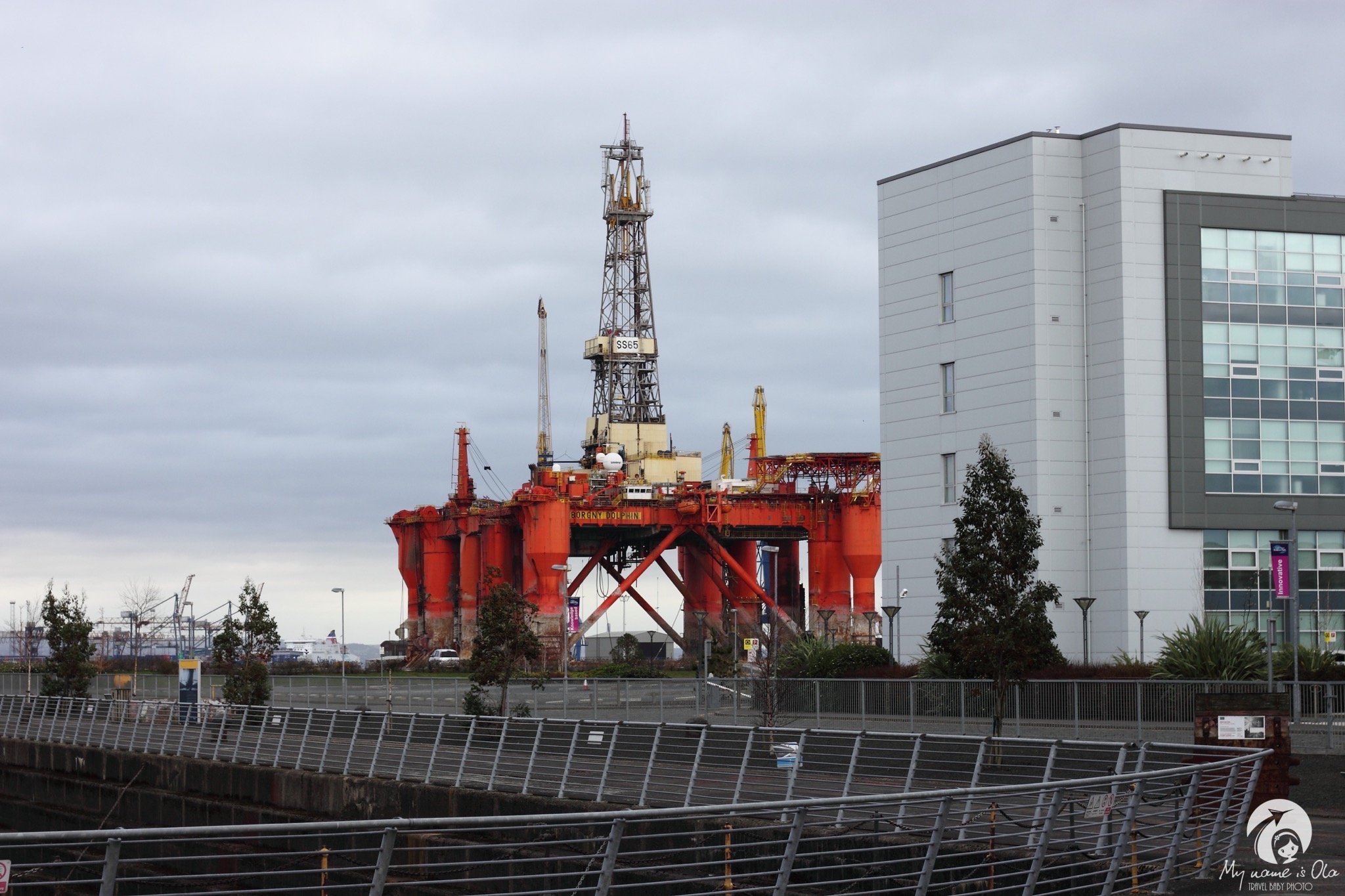
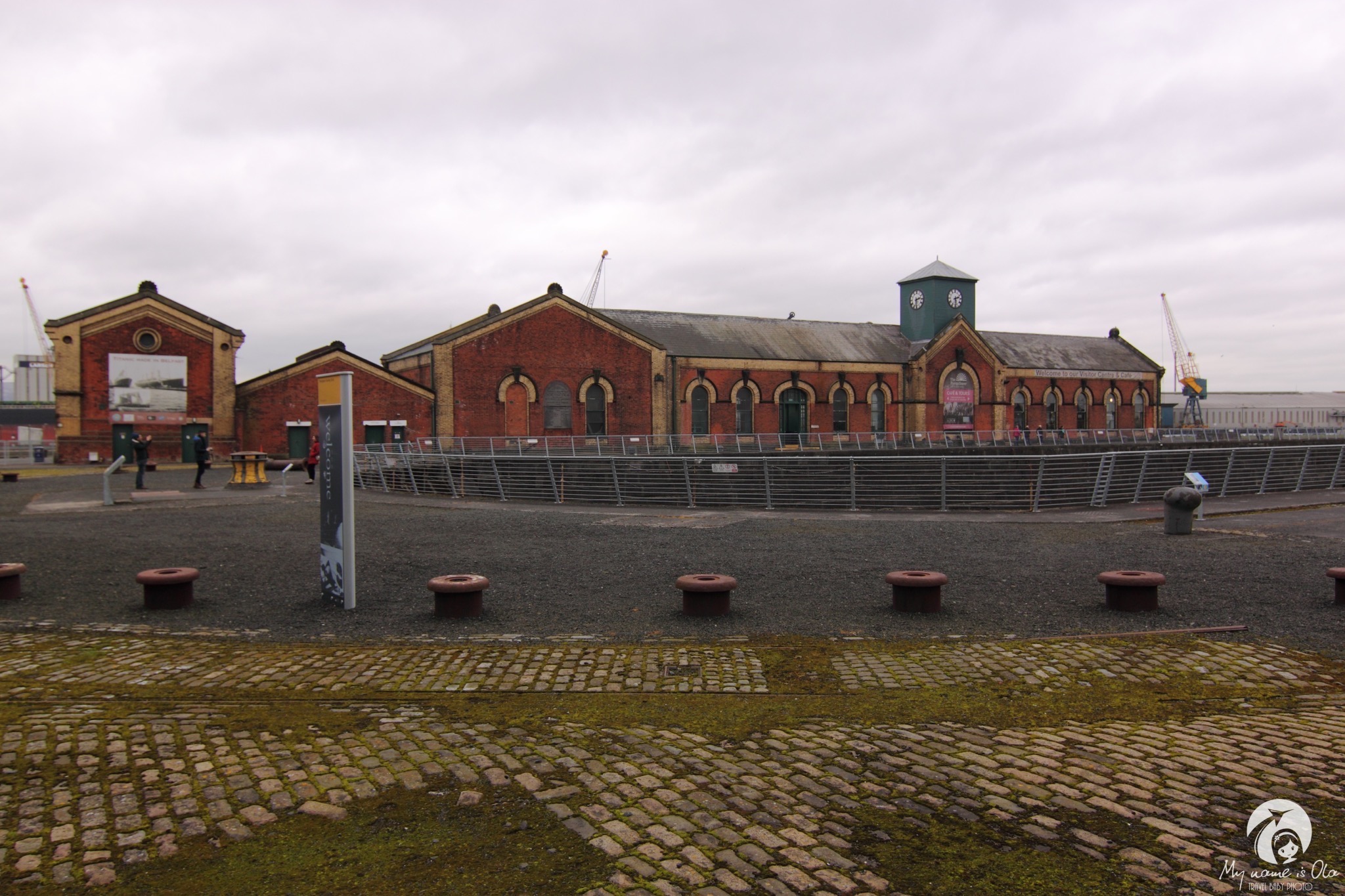
If only the history was different, Belfast would have been known for something else. Not everybody probably know that it is the origin of the most famous transatlantic ship – Titanic. At this time it was second biggest passenger steamship. For sure it was one of most luxorious ships because the aim of the owner was to outshine the competition with Titanic and his two sisters. Titanic had four chimneys but what is interesting, only three of them were real. The fourth one was dummy. At that time the number of chimneys was thought to reflect the power of the ship. It took Harland & Wolff, located near the city center, 3 years to build the ship. Today areas around the shipyard are being revitalized. Large scale projest is conducted to recover  the areas for citizens. In the quarter, taking its name of course after the famous boat, there are film studios, technological parc, education institutions and high-standard apartments located. There is also a new museum facility showing the history of Titanic’s short life but apart form the museum we recomend seeing the dock where the vessel was built. Here one can realize what size was this built at the beginning of 20th century steamer. Of course we told Ola the whole story of Titanic and showed her the dock where it was built but we don’t really know if she was impressed. Certainly not that much to keep her awake. She fell asleep right after getting back to the car.

[photosetgrid layout=”3″]BelfastBelfastBelfast[/photosetgrid]
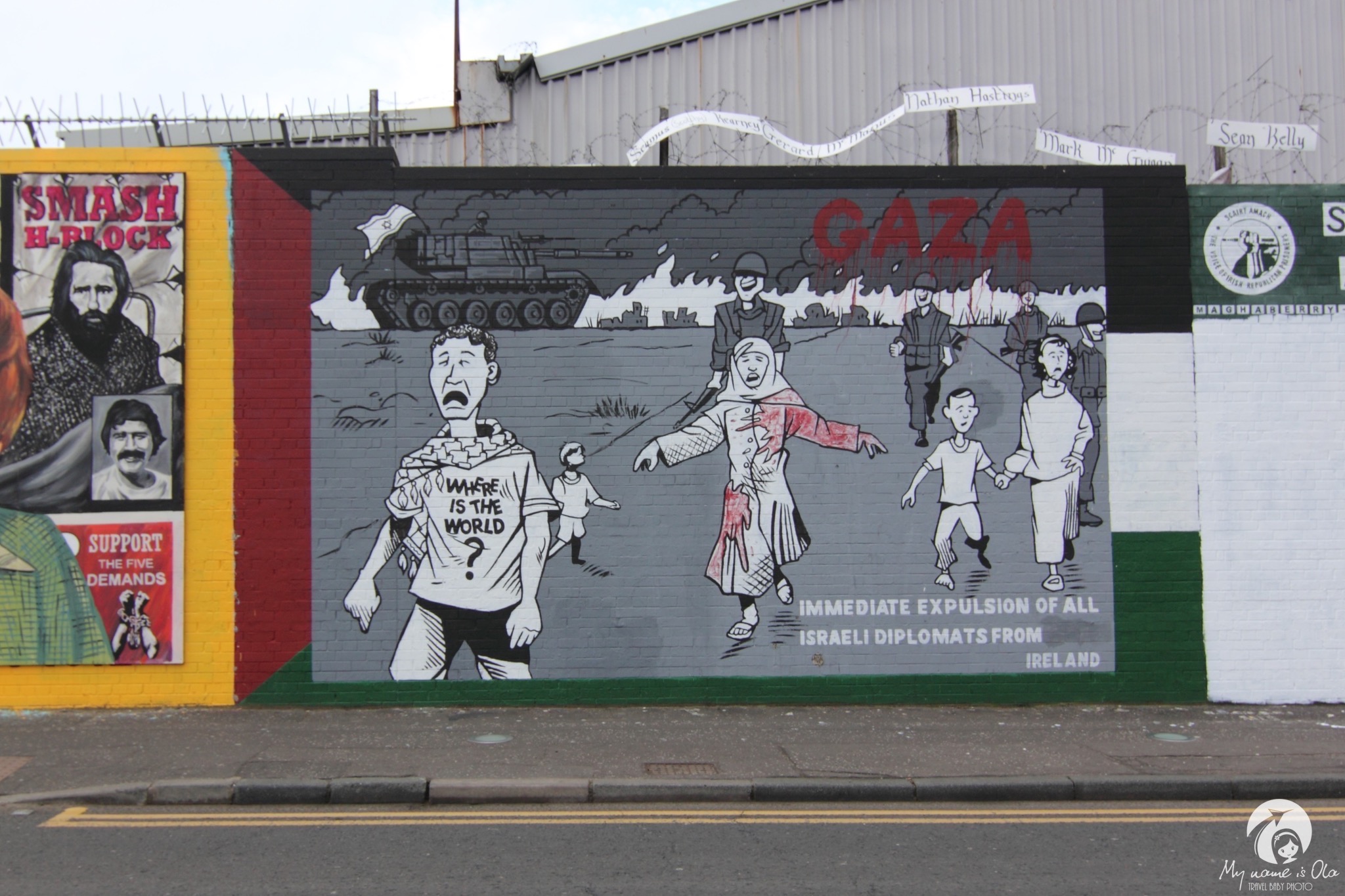
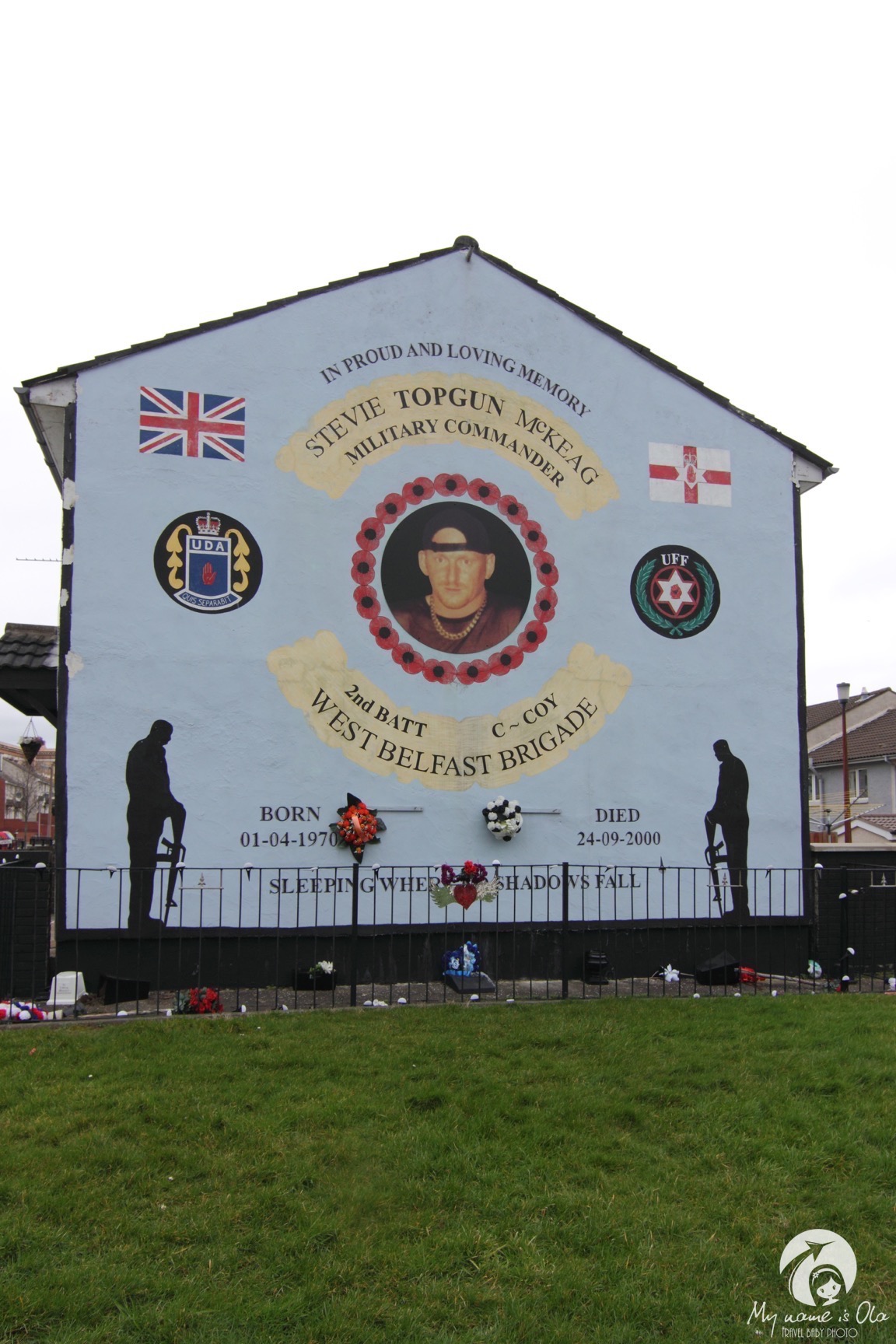
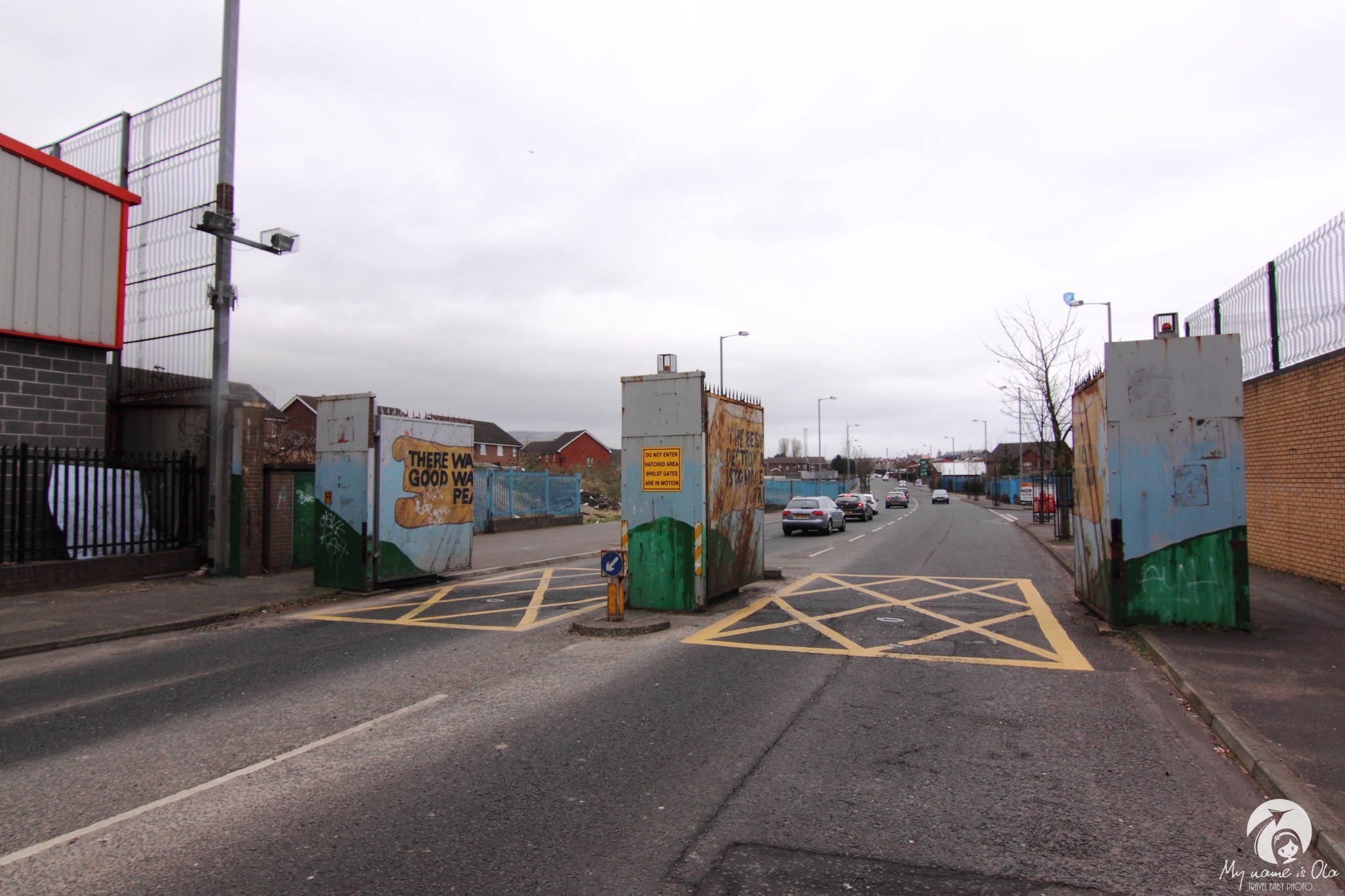
But since the bloody conflict took place we have to come back to this history as it pretty much defines Belfast. Character of the city is dominated by the conflict, which despite its termination in 1998, is still visible on the city streets in the form of wall and different graffitis made by both parts of the conflict.
BelfastBelfast

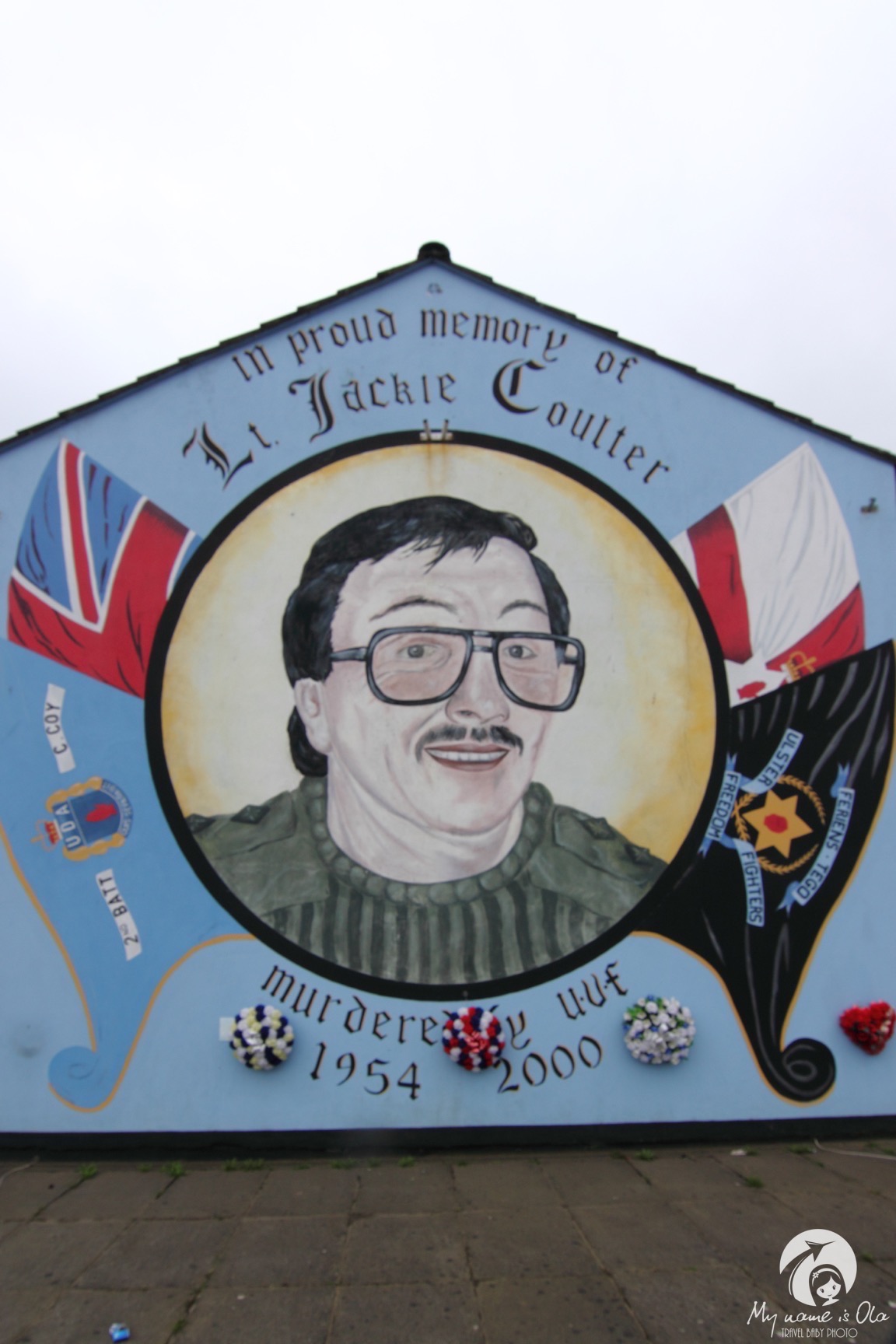
But let’s start from the beginning – religious and nationlistic struggle started in medieval times when Irish lands were the part of England. Incoming to those lands British, with different culture and religion were not well received. In 1921, after years of efforts, independence from Great Britain was recognized. But part of the country – Northern Ireland, remained in United Kingdom and at the same time became the subject of dispute and arena of ethnic, political and religious struggle.  The dispute was intensified in the 60. of  20th century when the fights started for next 30 years. The battle of Catholic republicans, aiming to unite with Ireland and Protestant loyalists, supporting of the union with Great Britain, cost life of 3500 people. Most of people is probably familiar only with one of the organisations taking part in fights – Catholic IRA while similar organisations were also on the other side of the conflict: UVF i UDA. All of them, because of the type of their activities, were given the status of terrorist organizations.

Irish Republican Army (IRA) got famous mostly thanks to its terrorist attacks on politically engaged loyalists but also on Protestant civilians. Apart from Northetrn Ireland they conducted their activities also in Great Britain. Bombing, arson, riots were main methods used by IRA. Organization was financed mostly by Irish immigrants in the US and rich arsenal of weapons came mainly from Libya. At the time of disarming they submitted 150 tones of weapons.

[photosetgrid layout=”34″]Belfast BelfastBelfastBelfast Belfast BelfastBelfast[/photosetgrid]

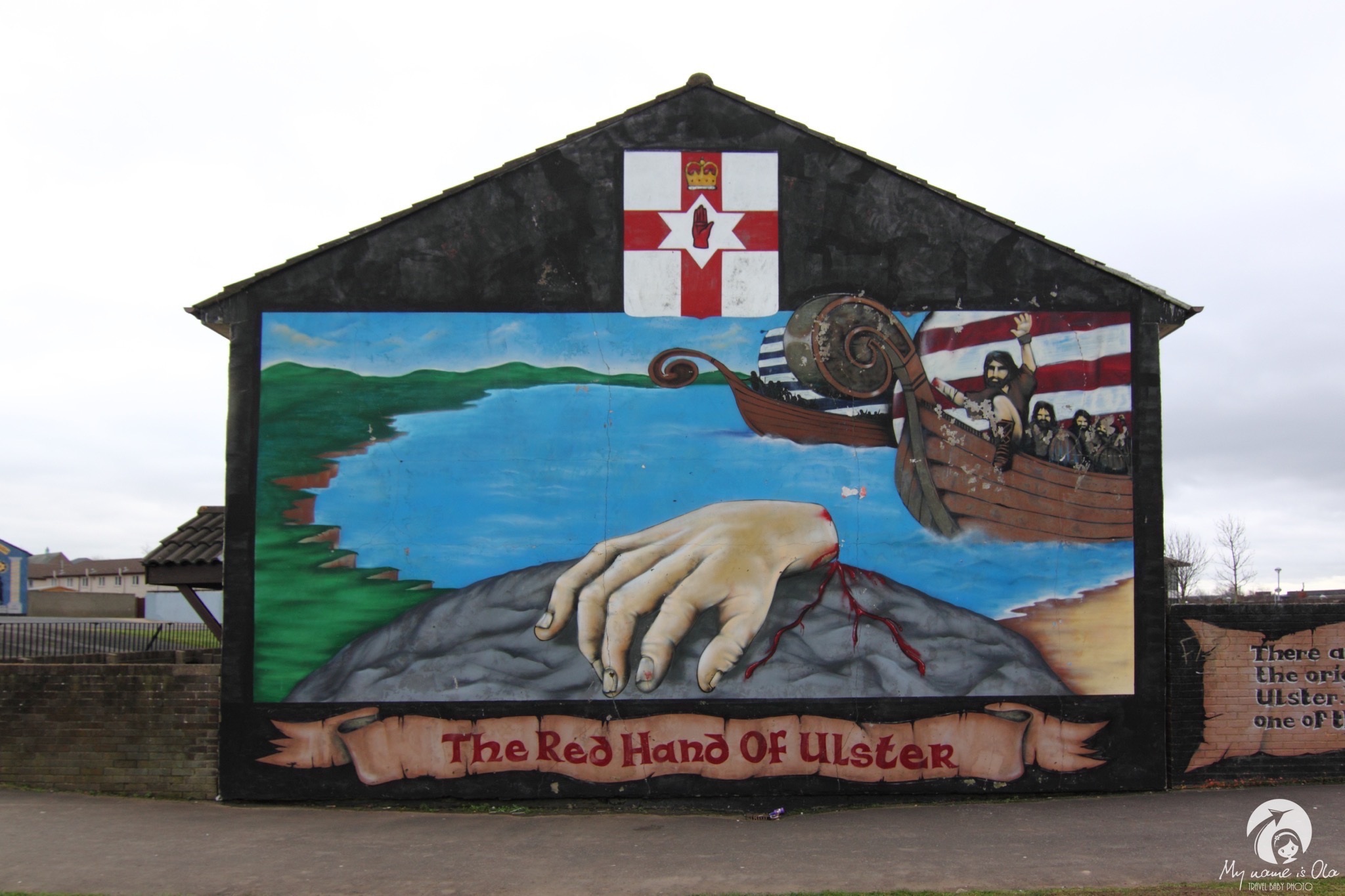
UDA (Ulster Defence Association) is a paramilitary organisation supporting the idea of staying Ulster – Norther Ireland within the borders of the Kingdom. It’s symbol has been the red hand of Ulster and the aim of activity was supposed to be the defence of Protestant areas from IRA actions. Meanwhile, in addition to the defence of the areas, they were also involved in attacks on Republicans and from their hands very often died Irisch Catholics. Their actions spreaded outside Ulster, to Ireland grounds. Despite the peace made in 1998, UDA continued its military activities until 2007.

[photosetgrid layout=”32″]Belfast Belfast BelfastBelfast Belfast[/photosetgrid]
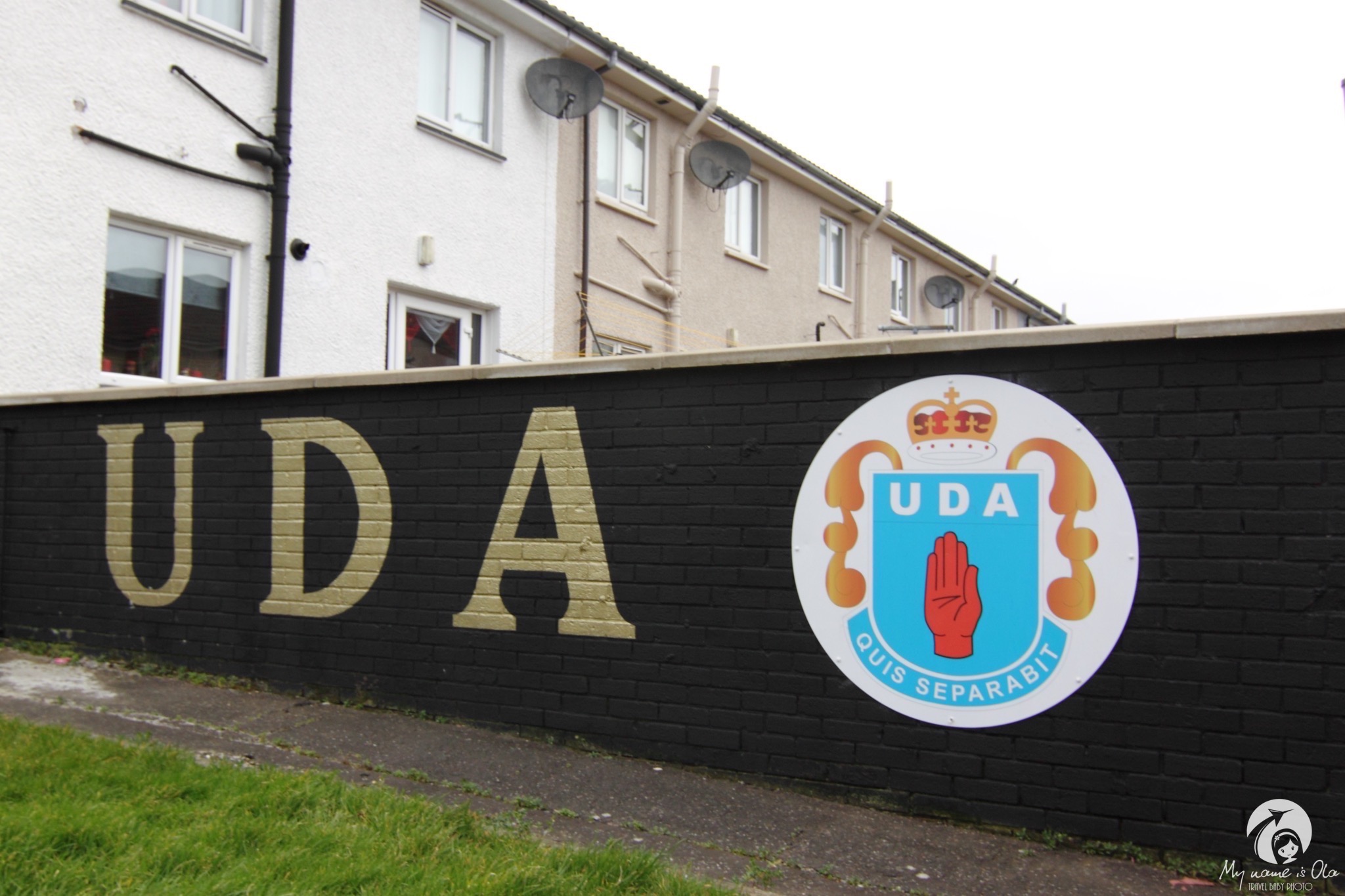
Another important force supporting the unity of Northern Ireland with Great Britain was UVF – United Volounteer Force. Just like the two other, above mentioned organizations, it is considered to be a terrorist group. Their targets were exactly the same as UDA’s and they caused the death of around 500 people, most of which were Catholic civilians.

BelfastBelfast

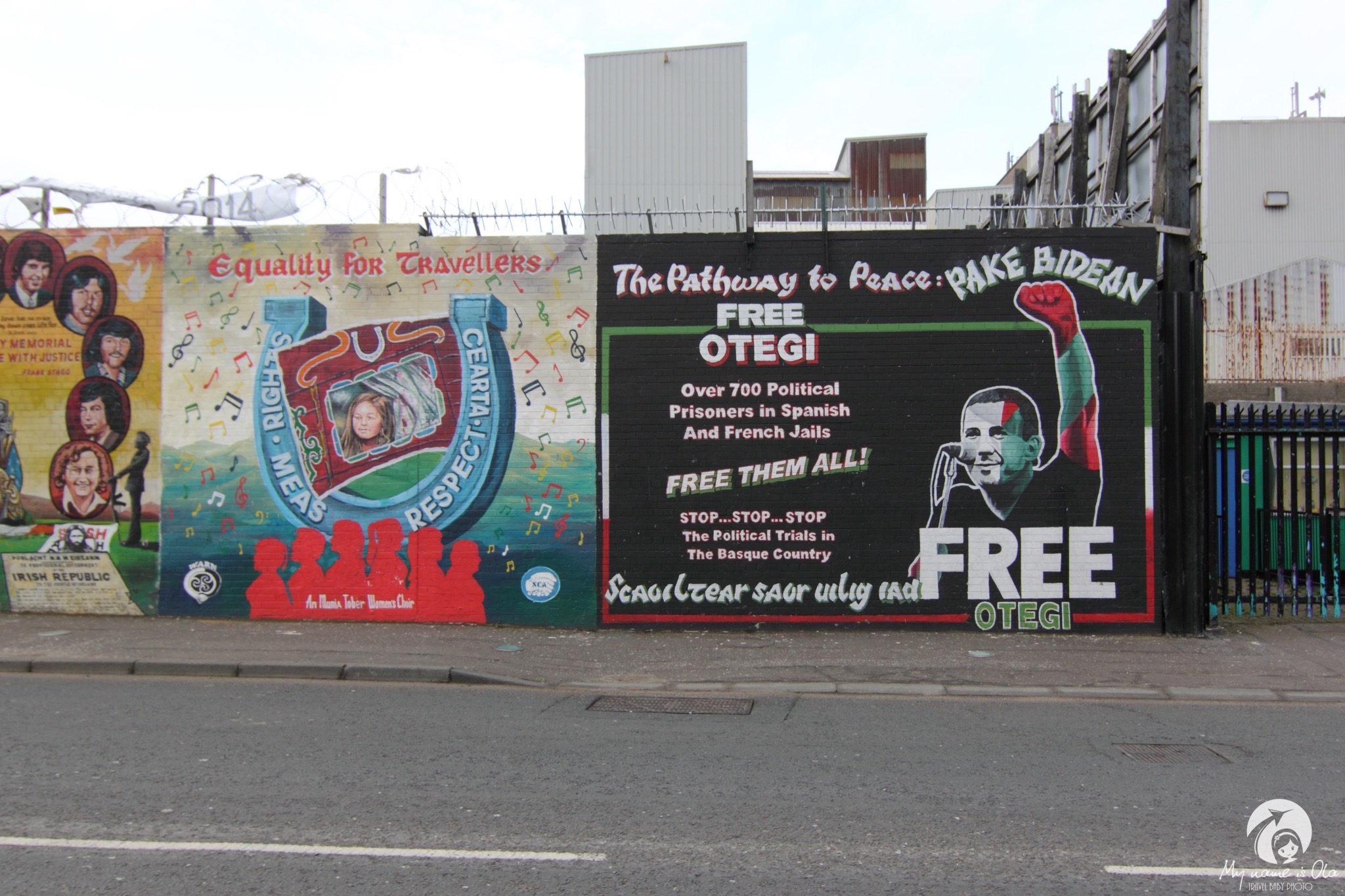
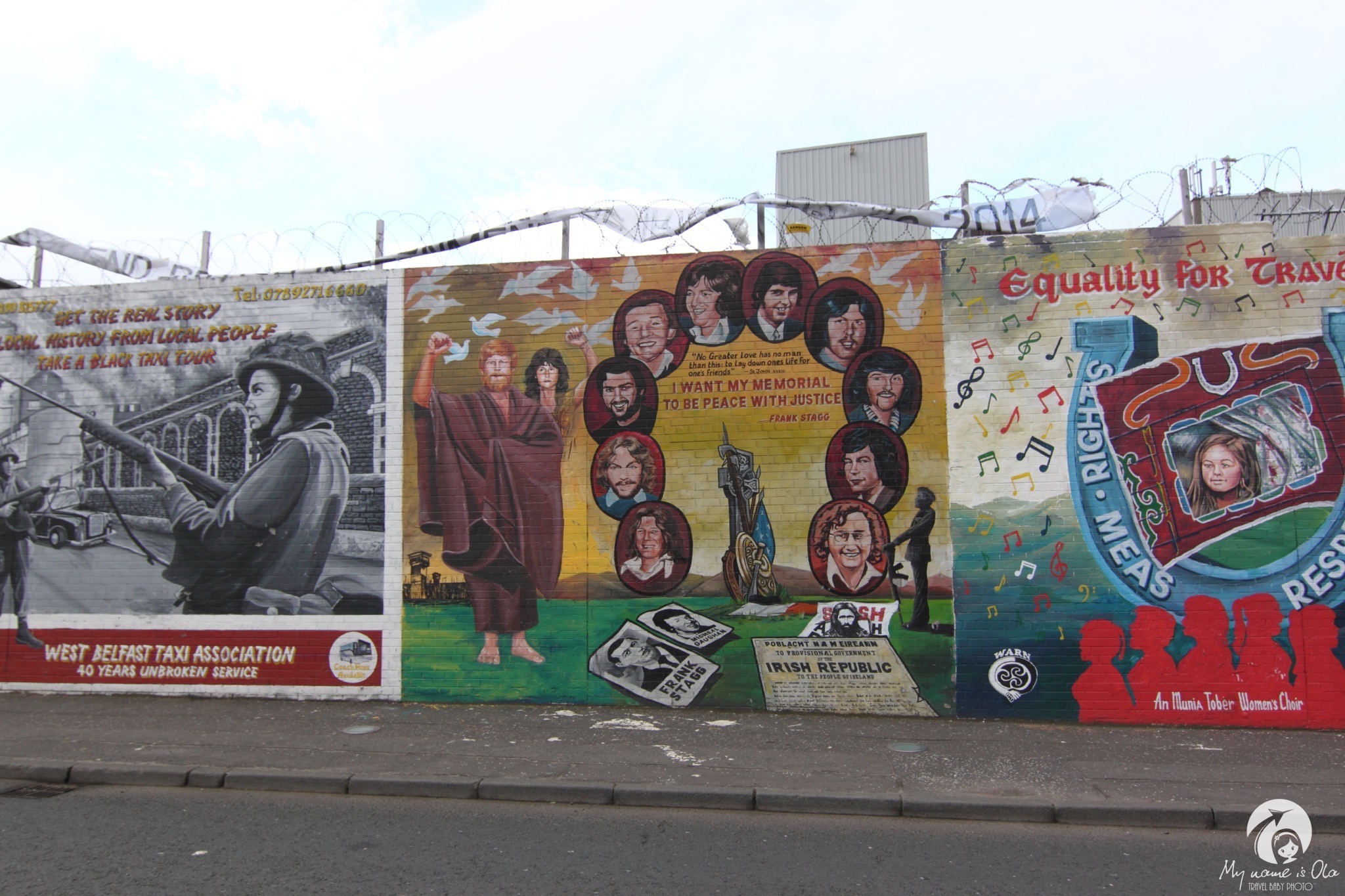
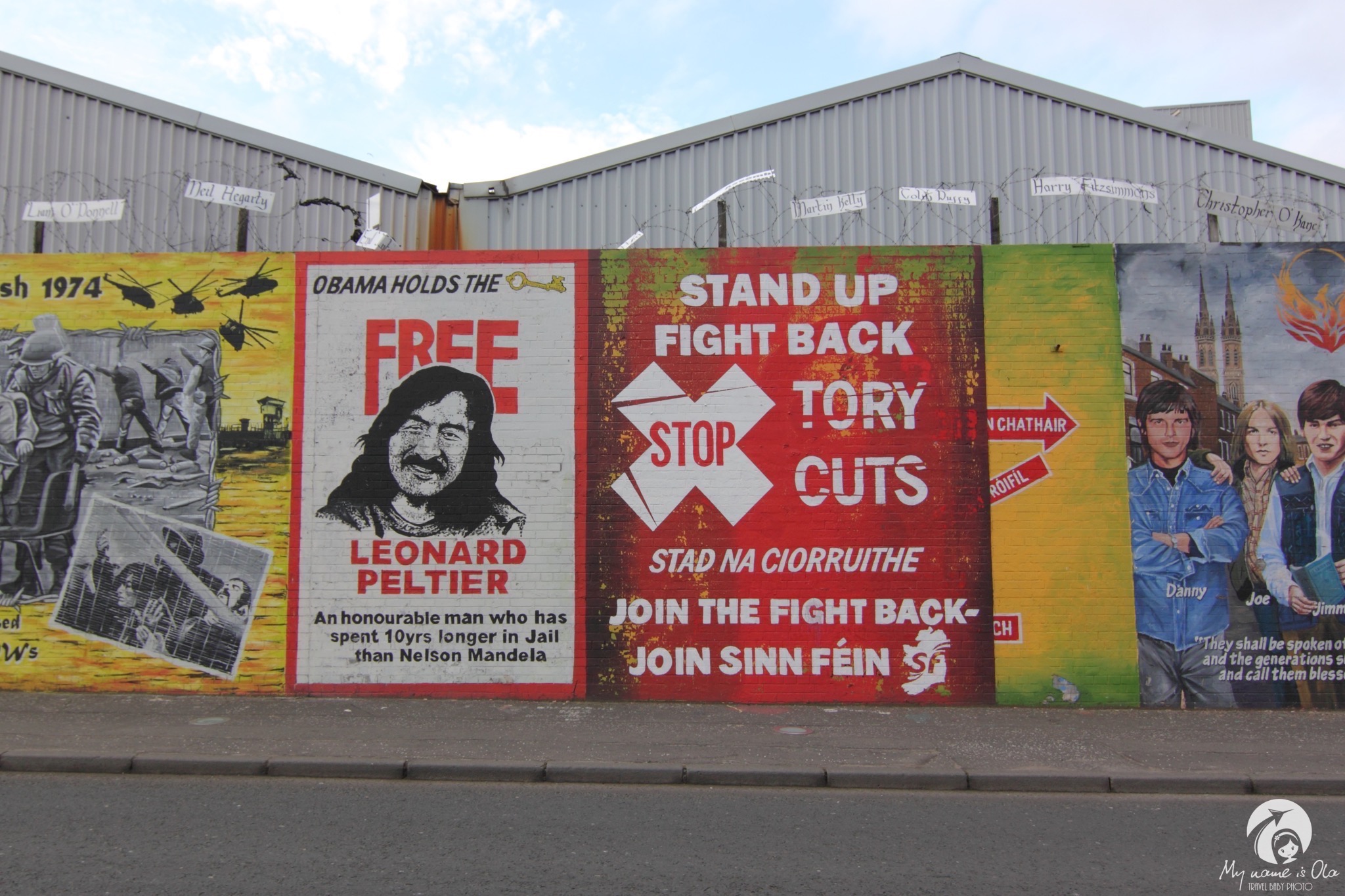
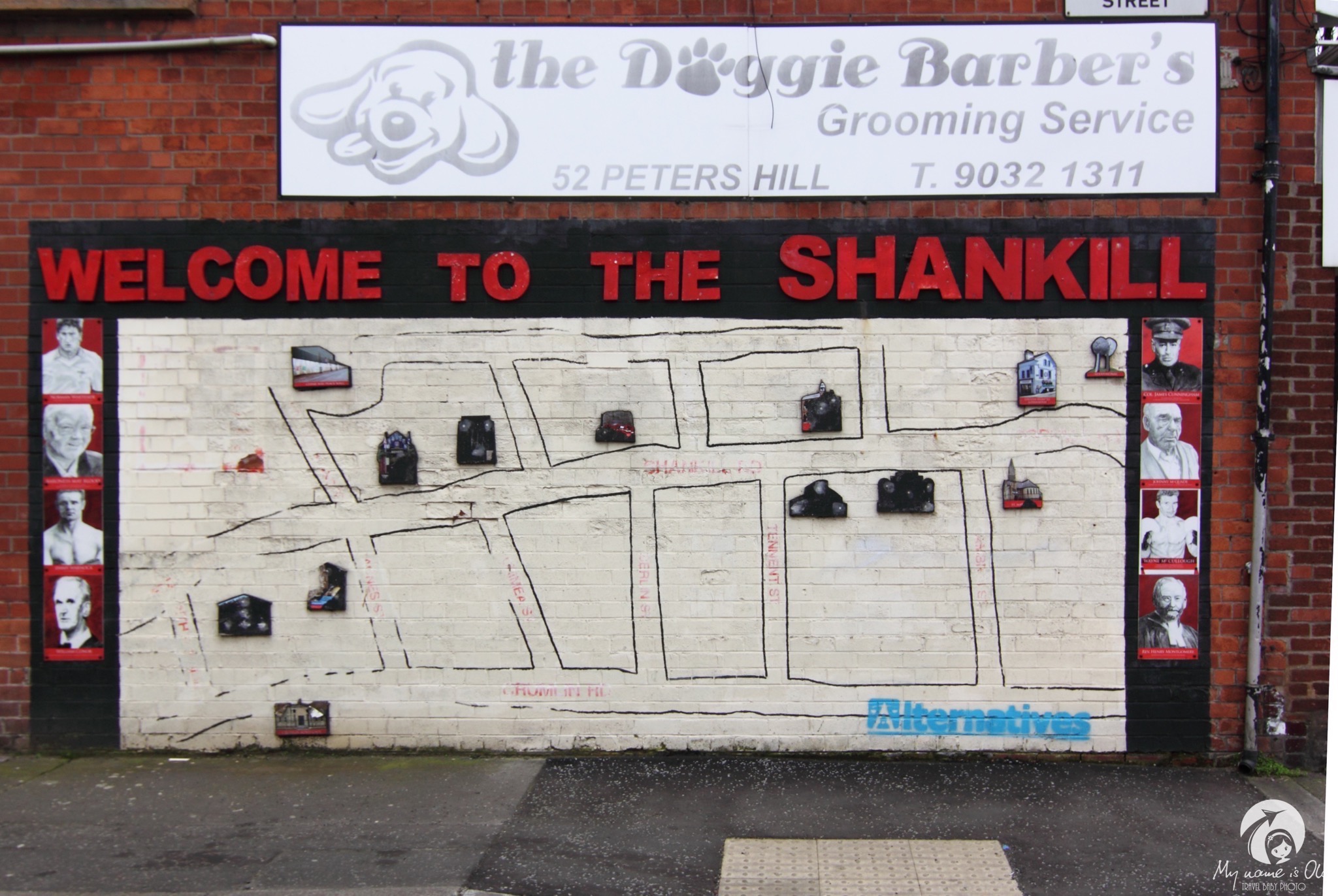
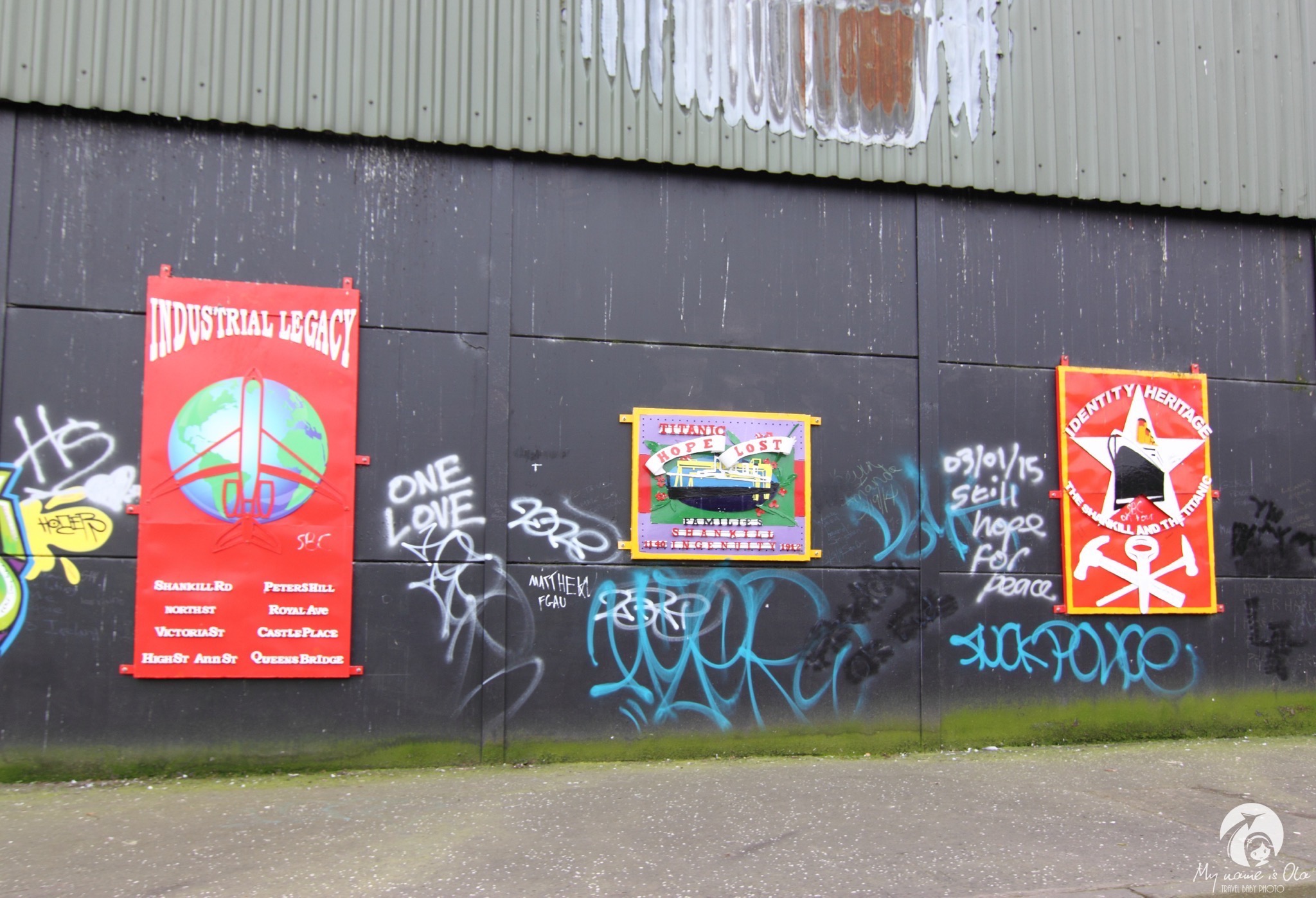
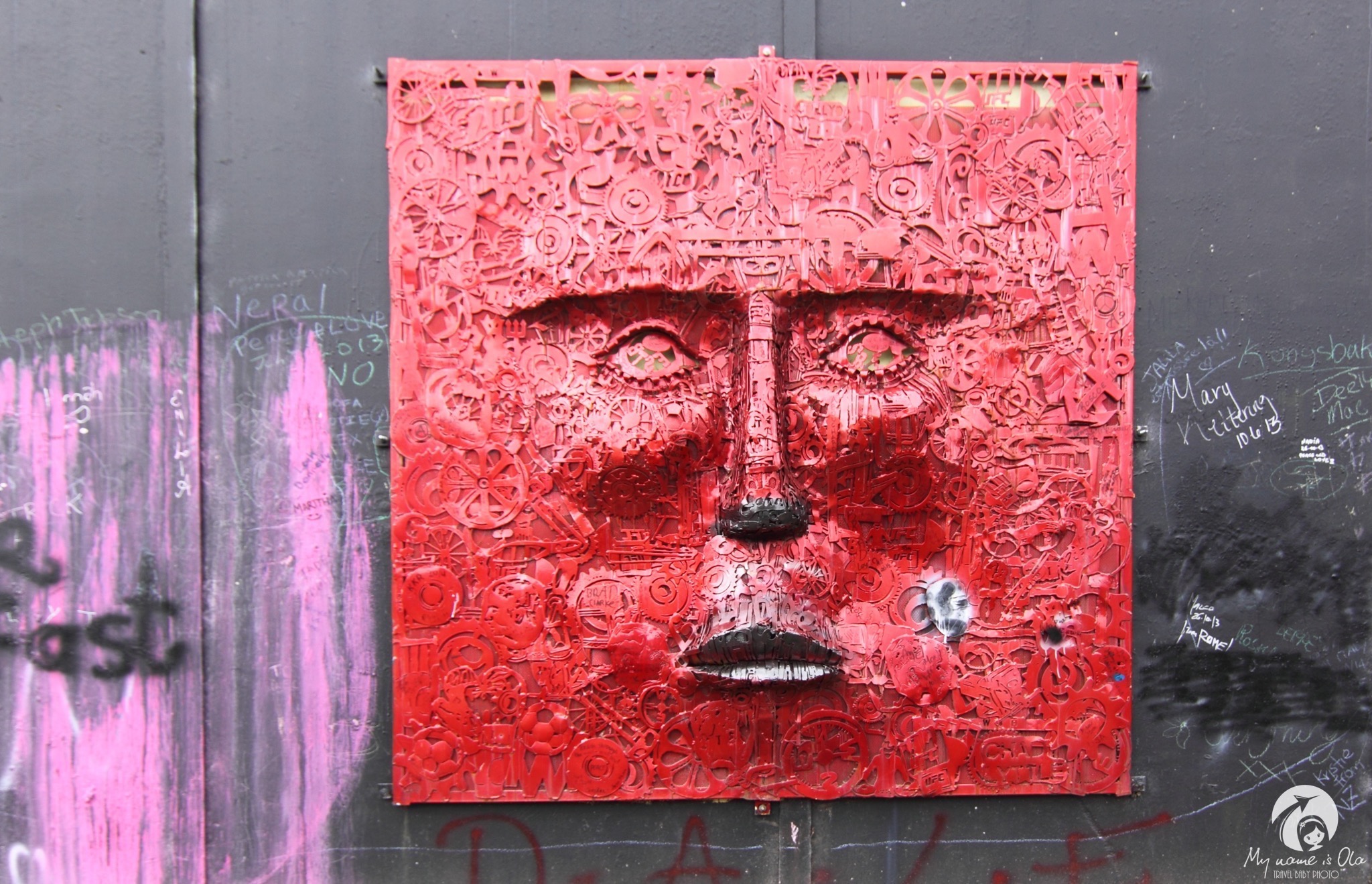
In order to phisicly isolate fighting people from each other, Catholic and Protestant neighborhoods were separated, most often by high wall or fence reaching over 7 meters. First walls were built in 1969 and last even after signing the peace in 1998. Belfast and its surroundings are cut in 48 locations and total length of the walls is 34 km. The most famous part separates nationalistic areas of Falls Road and Shankill Road of unionists. The trandition of locals became to decorate walls with political graffitis, from one side those that  promote IRA’s successes, from the other those glorifying victims from the ranks of UDA. Graffitis spreaded  over whole neighborhoods where the side walls of the houses are totaly covered with murals.

[photosetgrid layout=”32″]Belfast Belfast Belfast Belfast Belfast[/photosetgrid]

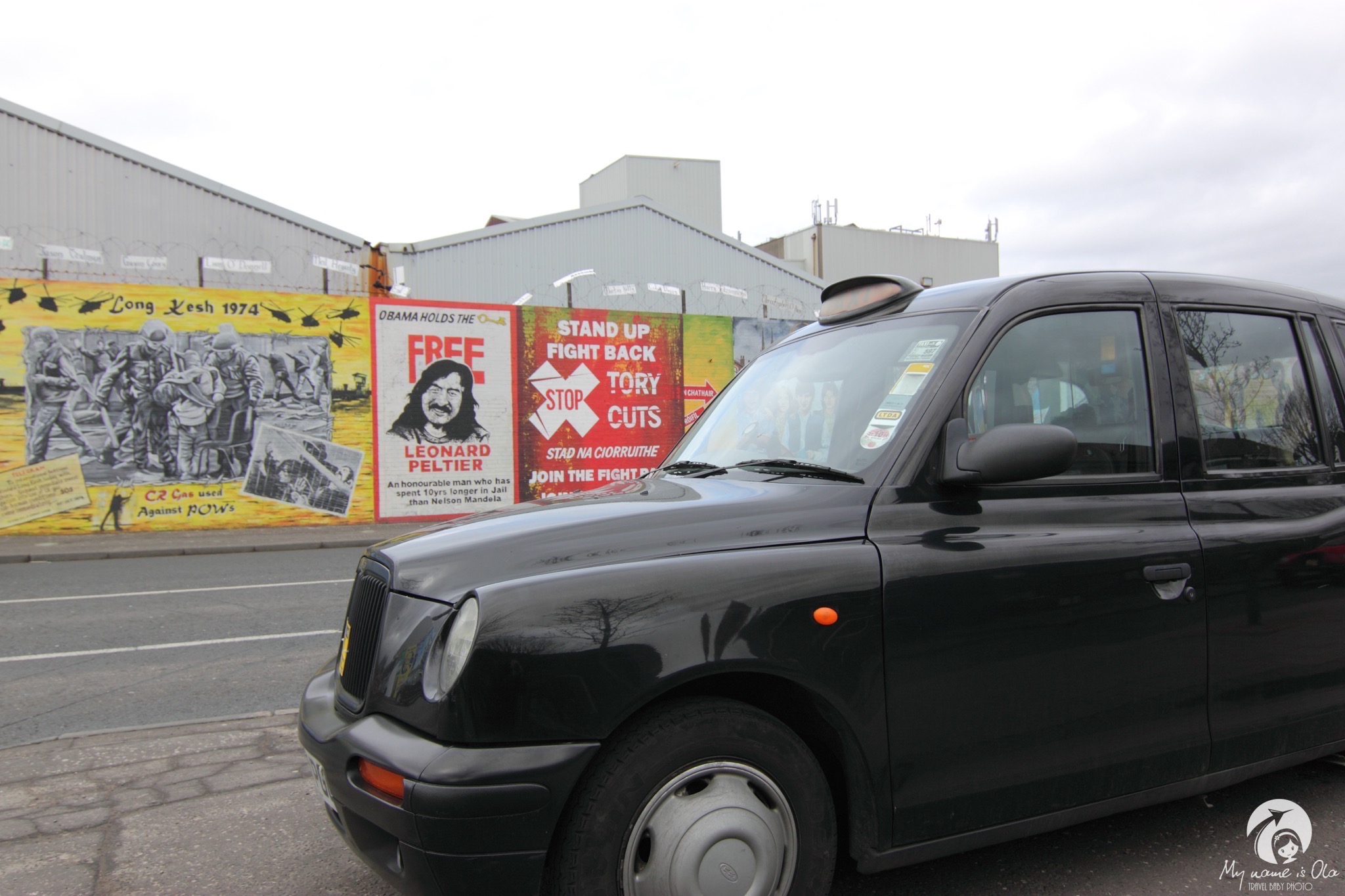
The Troubles finished in 1998 and today we can safely visit Belfast. During the fights public comunication buses were overturned and used by the fighting as barricades so authorities have given up the idea of using buses. They were replaced by black taxis. Today black cabs willingly take tourists to walled areas and the drivers as guides tell them different stories connected with the wall. Public transport came back to its previous form.
Belfast

See our movies from Shankill Road and Falls Road:

Blog

Crown Liquor Saloon – the pearl of Belfast

26/03/2015 — by Magdalena Kuźma0

Crown-Liquor-Saloon2-960x640.jpg

It seemed that pubs became the keynote of our trip to the Irish island, so being in Belfast we had to check the offer of local public houses, because this is what the word “pub” comes from. In the very center of Belfast, right accross the street from famous Europa Hotel, we found a real treasure. Nothing like that we have seen during our pub crawl in Dublin. Crown Liquor Saloon is an unusual place. Seeing it only from the outside one can expect entering some kind of a special place. The tradition of pub in this place reaches the beginings of 19th century but the name Crown Liquor Saloon appeared only in 1885. Facade of the building is richly decorated with ceramic tiles and the most important element made of them is the crown on the floor right at the entrance. History of the crown is connected with pub’s first owner, who was an Irish nationalist  and put the crown in this position so that everyone who comes in could trample it.

[photosetgrid layout=”3″]Crown Liquor SaloonCrown Liquor SaloonCrown Liquor Saloon[/photosetgrid]

The saloon is like a time machine. It is owned by National Trust which invested huge amounts of money in restoration. Thanks to that we can admire inside all the finest elements perfectly maintained.  Pub was hurt many times during The Troubles, because it is located exactly opposite of main IRA’s target –  Europa Hotel. The institution had to spend huge amounts of money since the place was bombed many times. The whole concept of the interior is very interesting – it is consists of separate little rooms, kind of compartments, which provide total intimacy to their guests. When the doors of smaller and larger wooden boxes are closed it is totaly not visible from the outside who is inside. Pretty good solution for visiting with the baby. We just close the door and the little one can freely play under the table. Another thing is that it’s pretty dark there, one would rather say – romantic. Windows are dcorated with colorful stained glass, so there is no chance to see from the outside what is going on inside and the amount of light which enters the room is very small. And inside it’s usually full. We stepped in there in the early afternoon and were lucky to find one box available. Right after that the place got full of tourists and locals. All the seats at the bar were occupied and the main room got crowdy. At the same tme Ola was familiarizing herself with all the cards of menus behind closed  wooden doors.

[photosetgrid layout=”23″]Crown Liquor SaloonCrown Liquor SaloonCrown Liquor SaloonCrown Liquor SaloonCrown Liquor Saloon[/photosetgrid]

Some say that inside saloon more looks more like a church, with its marvelous stained glass windows and wooden boxes resembling confessional booths. This comparison is not so senceless as the pub was decorated by Itaian architects who came to Belfast to build Catholic churches. Whole floor is covered with mosaic. Long bar with marble top is lit by gas lamps. Below the marble it is tiled with colorful ceramic plates and interesting solution we find at the bottom – there is a heated foot rest. Eye-catching wooden constructions, nicely ornated, with built-in mirrors separate people sitting at the bar. It seems that none of interior’s elements has been overlooked by decorators, wooden panels with floral motifes are just above the heads of pub visitors and each of columns looks like covered with scales.

[photosetgrid layout=”3″]Crown Liquor SaloonCrown Liquor SaloonCrown Liquor Saloon[/photosetgrid]

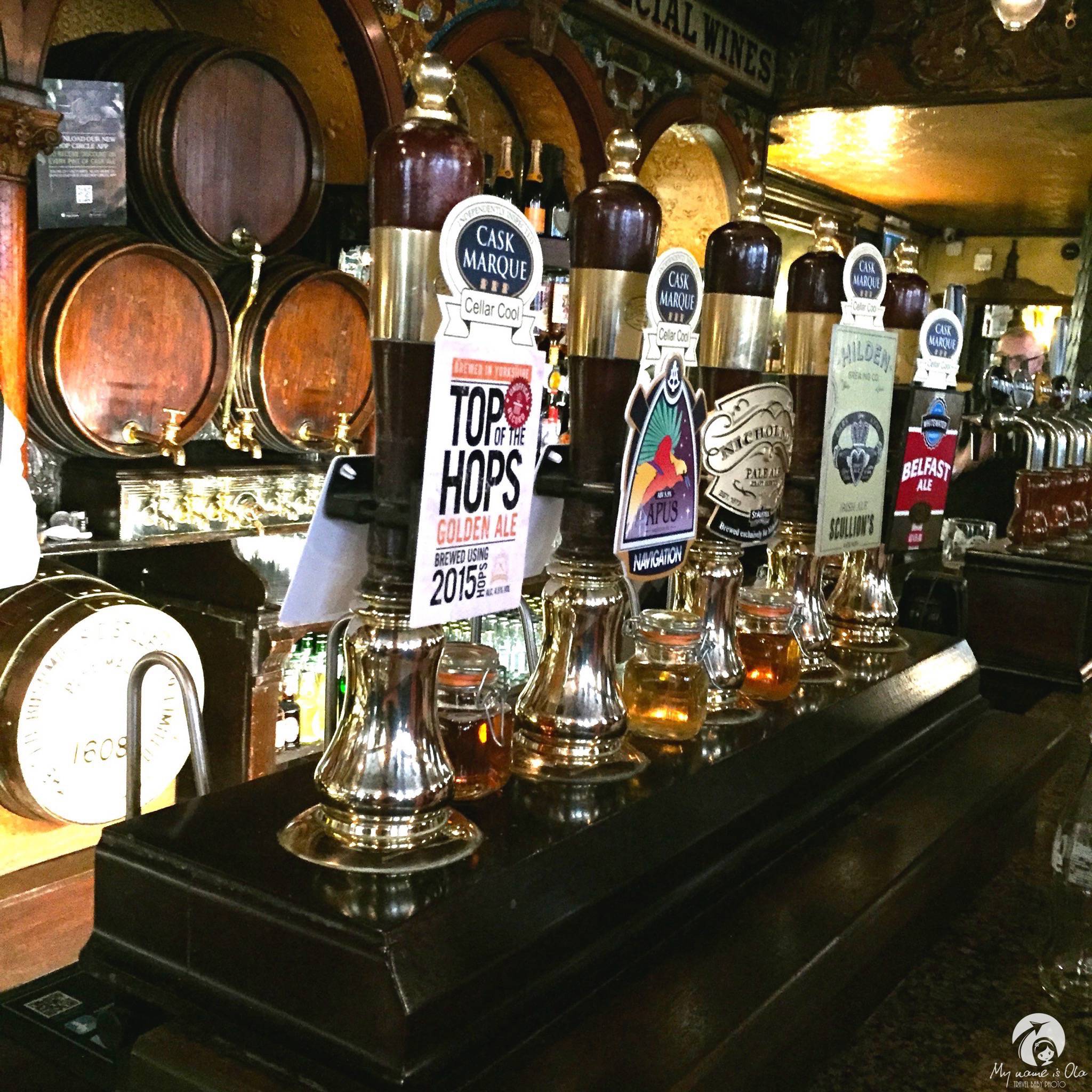
Behind the bar guests will find rich offer of all liquors, from Guiness, through craft beers, on different kinds of whisky finishing. They have craft beers from casks served under their own name of Nicolson’s with different kinds for different seasons. As every decent Irish pub Crown Liquor Saloon offers food as well. We were positively surprised by non-meat burgers. Besides that they offer of course fish and chips, different kinds of burgers, sandwiches and the choice of differently cooked meats. The atmosphere is relaxed, cheerful and of course loud and happy and the little one immediately gains the interest of stuff and other guests causing wide smiles on their faces.

[photosetgrid layout=”3″]Crown Liquor SaloonCrown Liquor SaloonCrown Liquor Saloon[/photosetgrid]

Being in Belfast one has to necessarily visit Crown Liquor Saloon and grab at least one beer. And finding it  won’t be difficult as it is located in the heart of Belfast, in the area called Golden Mile which gathers most of city attractions: Europa Hotel, Grand Opera House or City Hall.

[photosetgrid layout=”3″]Belfast, Town HallBelfast, Hotel EuropaBelfast, Grand Opera House[/photosetgrid]

BlogNa stole

5 best craft pubs in Dublin

17/03/2015 — by Magdalena Kuźma0

pubs18-960x640.jpg

Ireland is not only Guinness although it might seems so after a short walk around Dublin. All the pubs in the city proudly announce having it in their offer. It turns out that its probably only the lure for turists. Once they get inside they can discover another world of different kinds and types of beer. In Dublin there is a pub at every corner but before choosing one it’s worth to check which are the best of them and not to waste time for others. Hope that knowledge will be particularily useful now as St. Patrick’s Day is just around the corner.

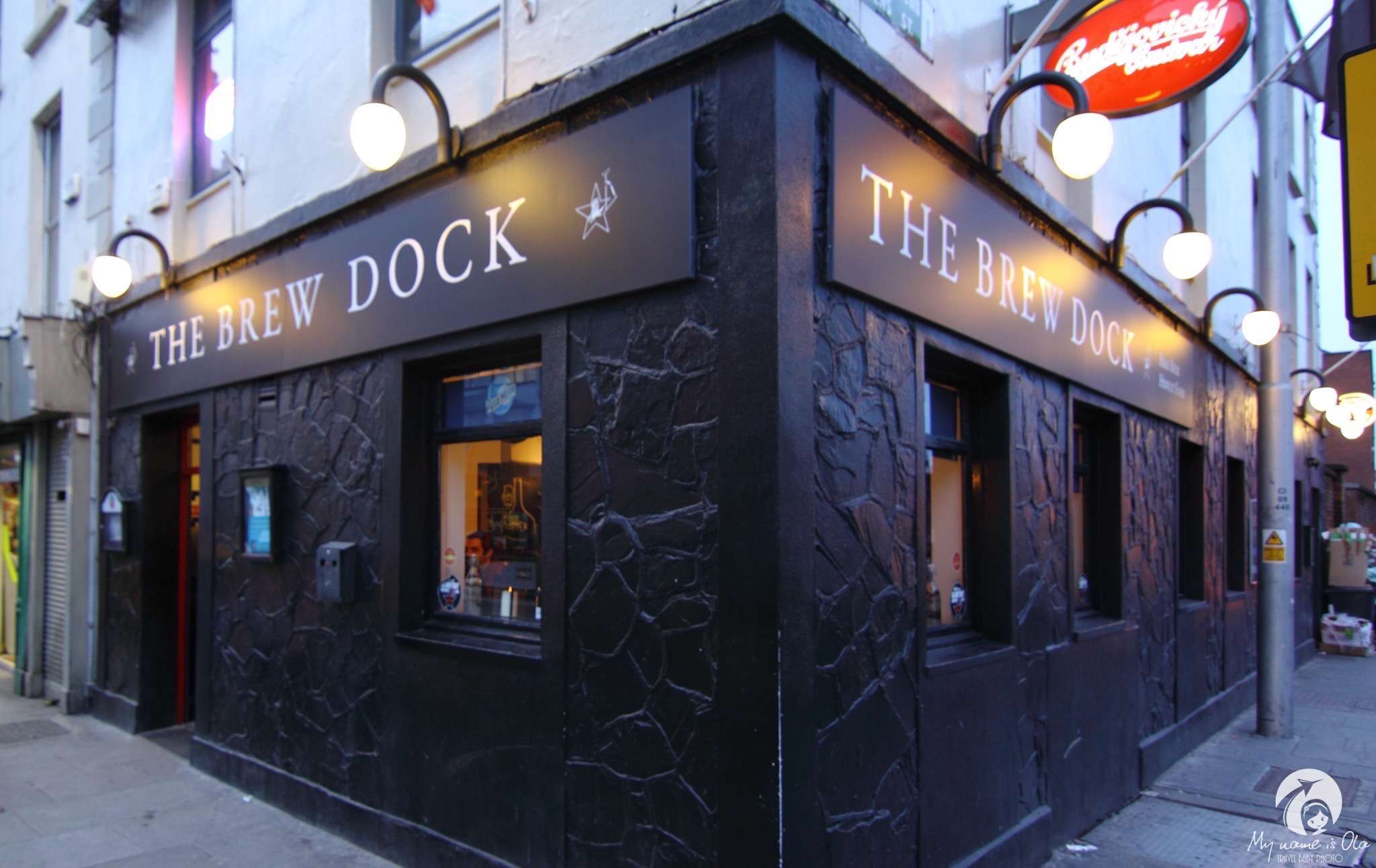
1. The Brew Dock is considered by beer drinkers to be the best pub in Dublin. And indeed the amount of people on Saturday afternoon seems to confirm this opinion. The small place barely fits all the people interested in getting in. Although it’s not located in the very heart of the city, it was really crowded. The place has over 20 taps and 100 beers in bottles. They offer their own craft beers, brewed in Galway Bay Brewery as well as some bottled beers of other producers from Ireland and outside. Galway Bay Brewery is a small craft brewery, where the beers are produced in traditional manner. Their popularity in Dublin is growing and they already have couple of pubs in the capital city. All of them are the top rated Dublin pubs. No wonder since the brewery became no 1 in Ireland in 2014.
If you get dizzy of the great choice of beers there are beer experts behind the bar ready to help you make the right choice. Friendly stuff will find something right for you, either of your favourite tastes or something that will surprise you. For a visit with a little on we recommend some early hours when all the beer enthusiasts are not there yet. All others – do exactly opposite.
The place is located near Connolly Train Station at 1 Amiens Street in Dublin.

[photosetgrid layout=”42″]Brew DockThe Brew DockThe Brew DockThe Brew DockThe Brew DockThe Brew Dock[/photosetgrid]

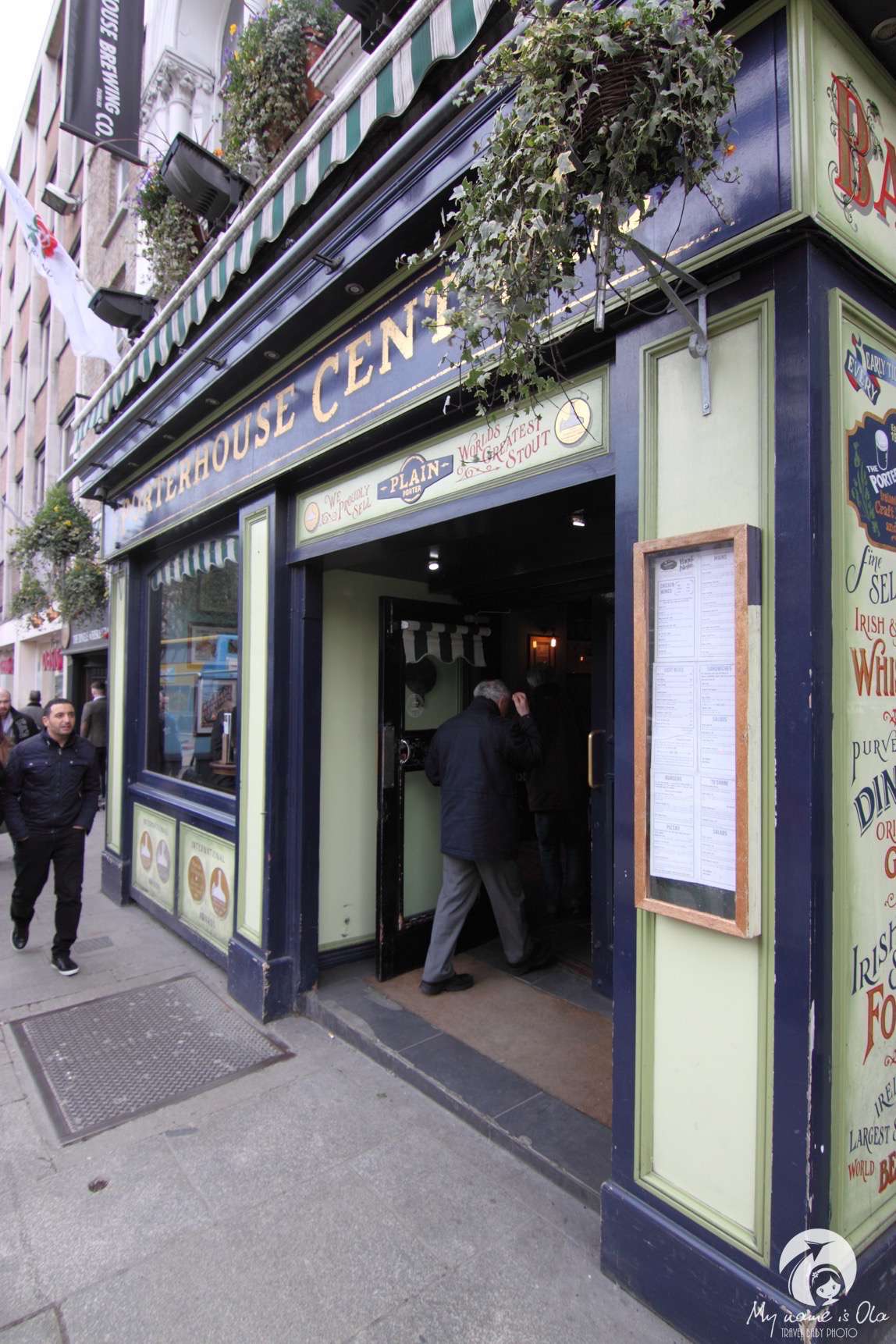
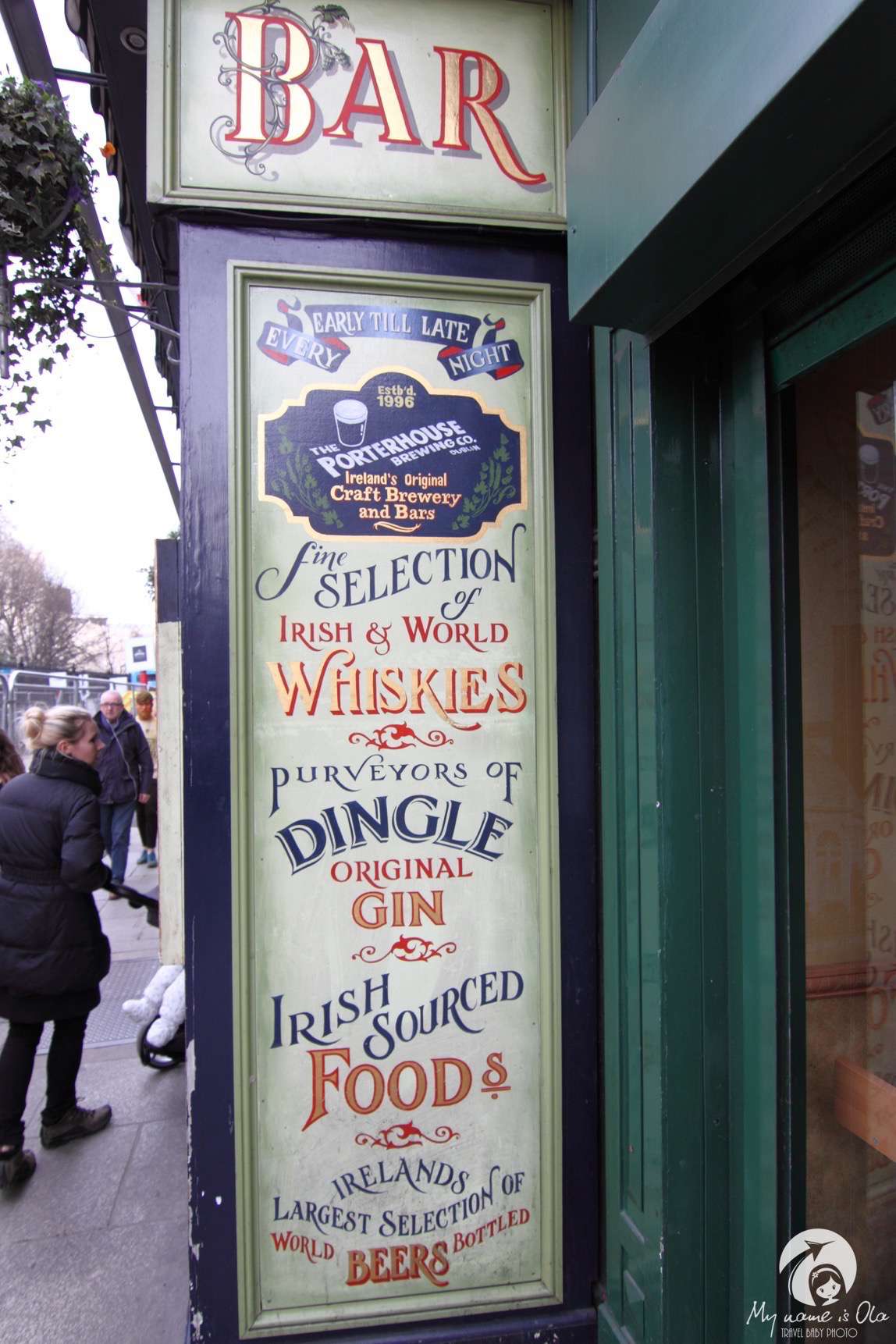
2. The Porterhouse Central – the pub with the longest bar in Dublin but also with rich selection of beers. Run by Porterhouse, a craft brewery. They have couple of pubs around the world and Central is one of their latest. It was opened in 2004. The pub is very big; small entrance doesn’t indicate that but the bar goes deep into the building. The decoration resembles traditional Irish pub and it’s full of people even during the day. The view of the outside made us think that the place is hundred years old. Atmosphere we would describe as cheerful and fun. Besides beer produced in their own brewery they offer wide range of beers from outside Ireland. Apart from many of taps they also serve some beers from casks. As every decent pub, they have serve some food and live music in the evenings. Draught beer prices start from 5 euro and 5,50 after 11 pm.
It’s located near the important Dublin landmark – the Trinity College, at 45-47 Nassau Street.

[photosetgrid layout=”42″]Porterhouse CentralPorterhouse CentralPorterhouse CentralPorterhouse CentralPorterhouse CentralPorterhouse Central[/photosetgrid]

3. Against The Grain – another pub run by Galway Bay Brewery with an incredible range of beers and friendly, humorous staff. Decoration of the pub is not rather simple, nothing impressive, although it became our favourite one. Walls are hung with different beer-connected posters. Bar is filled with taps; hard to say how many of them are there. Chalk board above lists 30 different tempting beers but we advise checking their degustative sets. Fantastic stuff will choose something interesting for you if only you tell them what you like. The set is three kinds of beers 150 ml each. That gives the possiblity to try some new tastes and either choose what pint to order or encourages to continue looking for new flavors. It’s a very good idea especialy that prices are fair – for that sample amount they charge appropriate part of the regular beer price. So you are not paying anything more and get to try different variations. Look for such offer in other multitap bars! It’s really a good way to experience the most. Prices start from around 5 euro for pint, the upper limit doesn’t probably exist. We visited the place early afternoon and beside couple drinkers at the bar the whole space was for us. Ola of course had to inspect every corner and luckily she didn’t disturb anybody. She was happy to run around the place. She even tried to get behind the bar but we held her up in the last second.
Location: 11 Wexford Street, Dublin.
[photosetgrid layout=”34″]Against The GrainAgainst The GrainAgainst The GrainAgainst The GrainAgainst The GrainAgainst The GrainAgainst The Grain[/photosetgrid]

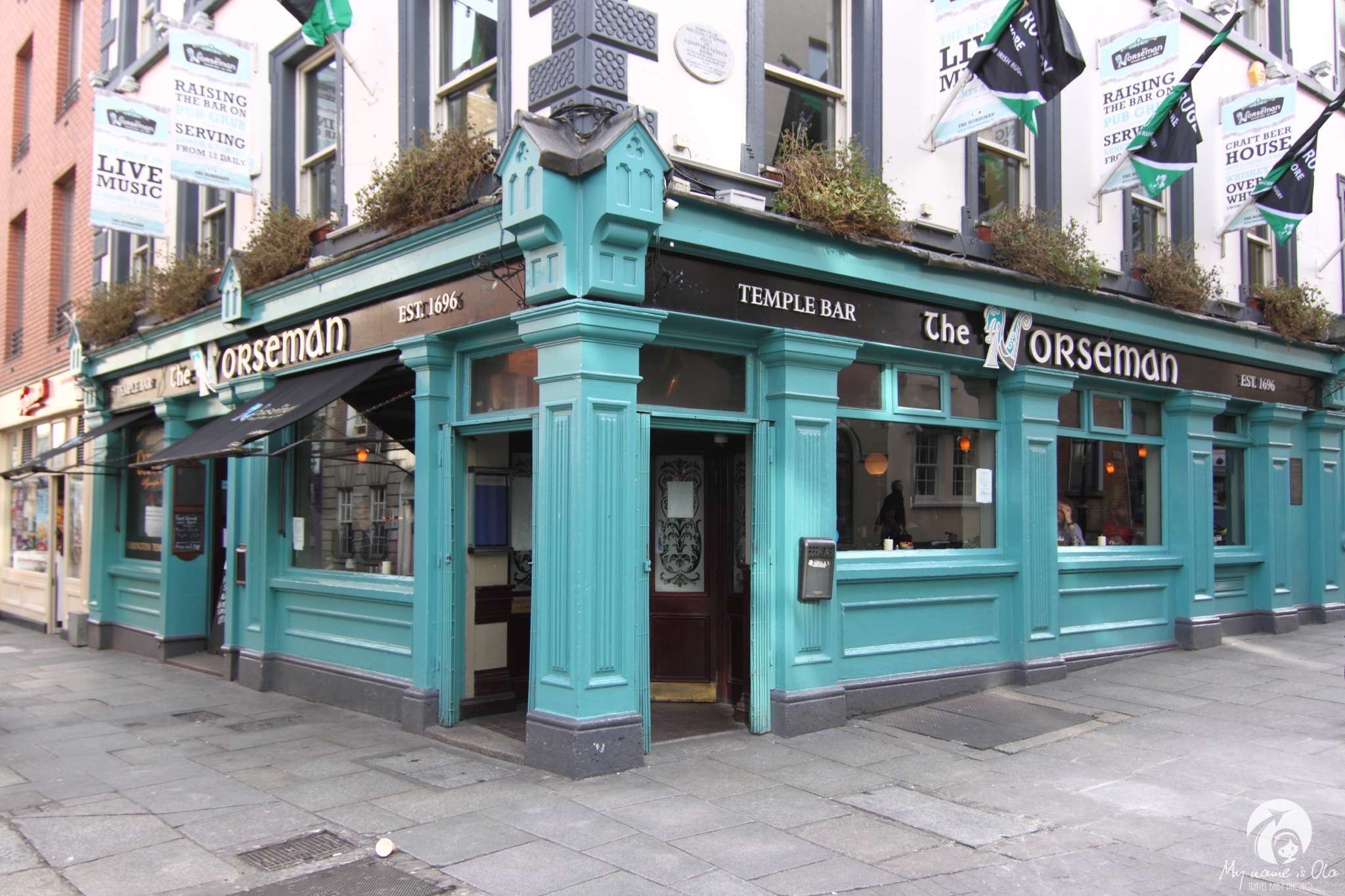
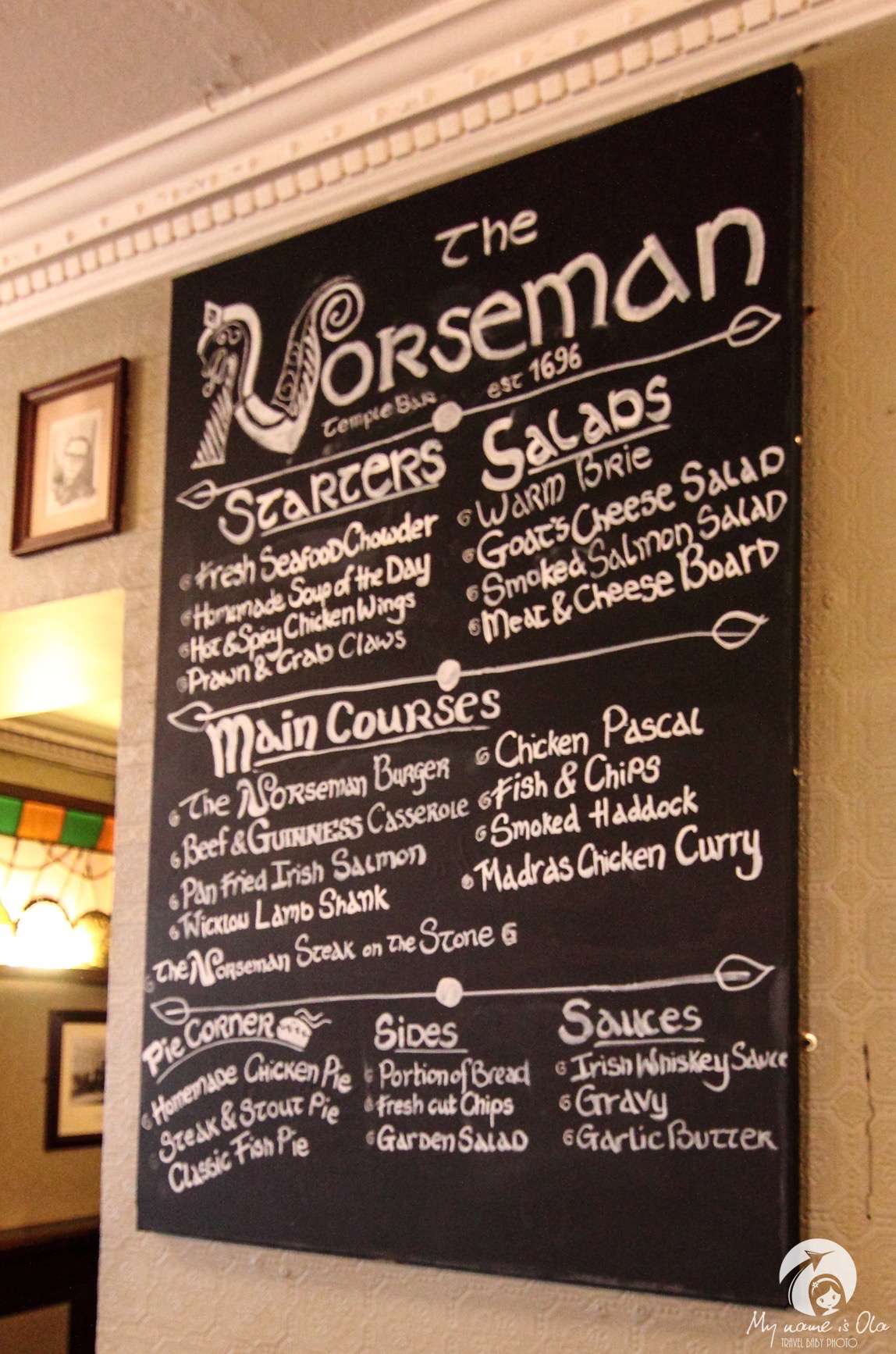
4. The Noorseman – they claim to be the oldest place in the Temple Bar quarter. Besides the bar they offer hotel rooms upstair. A good solution for those who like to party a lot – you are staying in the heart of entertainment district of Dublin and to start the party you just have to go downstairs! We made beer leitmotif  of our pub crawl in Dublin but of course Ireland besides of beer is the home of whiskey. Of course all the pubs we have been to offer both whiskey and beer but on this trip we decided to stick to beer. To describe the bar it’s necessary to mention that they had a wide range of whiskey, not only Irish but also Japanese, American, Lowland, Highland, Speyside. For whiskey tasting they have even developed the special routine but again we decided to choose something from rich offer of craft beers. In Norseman we also tried some of their cuisine and the thing that we really liked was a seafood chowder. It’s a thick soup made of milk and seafood. It was invented by Irish people and is a really popular option for lunch in Dublin. It is served with some homemade porter bread.
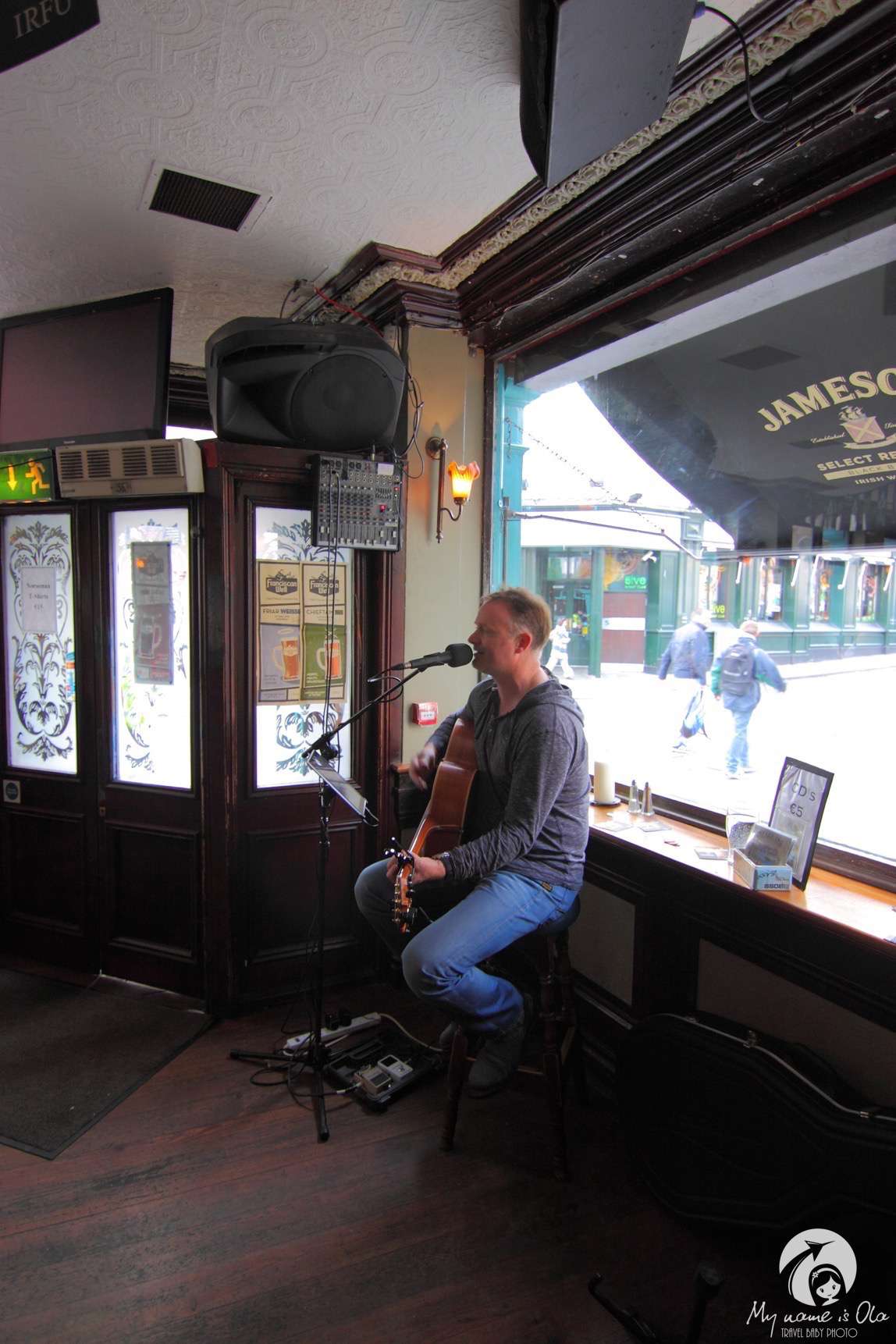
The place has classic, traditional Irish design and kitchen open all day long. Live music on weekends starts from early hours.
[photosetgrid layout=”34″]The NorsemanThe NorsemanThe NorsemanThe NorsemanThe NorsemanThe NorsemanThe Norseman[/photosetgrid]

5. The Black Sheep – another place run by the Galaway Brewery that is in the top rated Dublin pubs. Again, place full of craft brews. Outside decorated with traditional Irish wooden cover but inside the place is, we would say, rather in hipster style. Different chairs at the tables, people playing some table games, chalk board with their seasonal and rare beers. For undecided there is an interesting proposal to spin the wheel and let the fortune start their evening. Multitap offers plenty of beer types starting from 4.00 euro for pint; in addition, just around the corner, at the opposite end of the bar they have a cask corner. There is a choice of 3 or 4 beers from the casks. The difference between tap and cask is that from the cask the beer is pumped out mannualy, using just air without carbon dioxide. Beer experts say that only some kinds of beer are to be poured that way because beers of higher bitterness do not taste as the should when pumped from cask. Place offers some simple food to beer.
The bar located on the other side of the river Liffey than Temple Bar area, 10 minute walk from O’Connel Street. Address:  61 Capel St. Dublin.
[photosetgrid layout=”34″]The Blask SheepThe Blask SheepThe Blask SheepThe Blask SheepThe Blask SheepThe Blask SheepThe Blask Sheep[/photosetgrid]

Enjoy St. Patrick’s Days! Cheers!

Blog

“Ulysses” – second attempt. James Joyce’s Dublin

22/03/2015 — by Magdalena Kuźma1

Dublin203-960x655.jpg

Probably everybody has some day tried or at least planned to read James Joyce’s “Ulysses”. So did we. But we have to admitt that none of us finally managed to read the book. Maybe some day Ola will try and will be the one in our family who makes it. We believe in her. Until then she will be the witness of our second attempt to Joyce because we decided that “Ulysses” and his other works will lead us through the streets of Dublin.

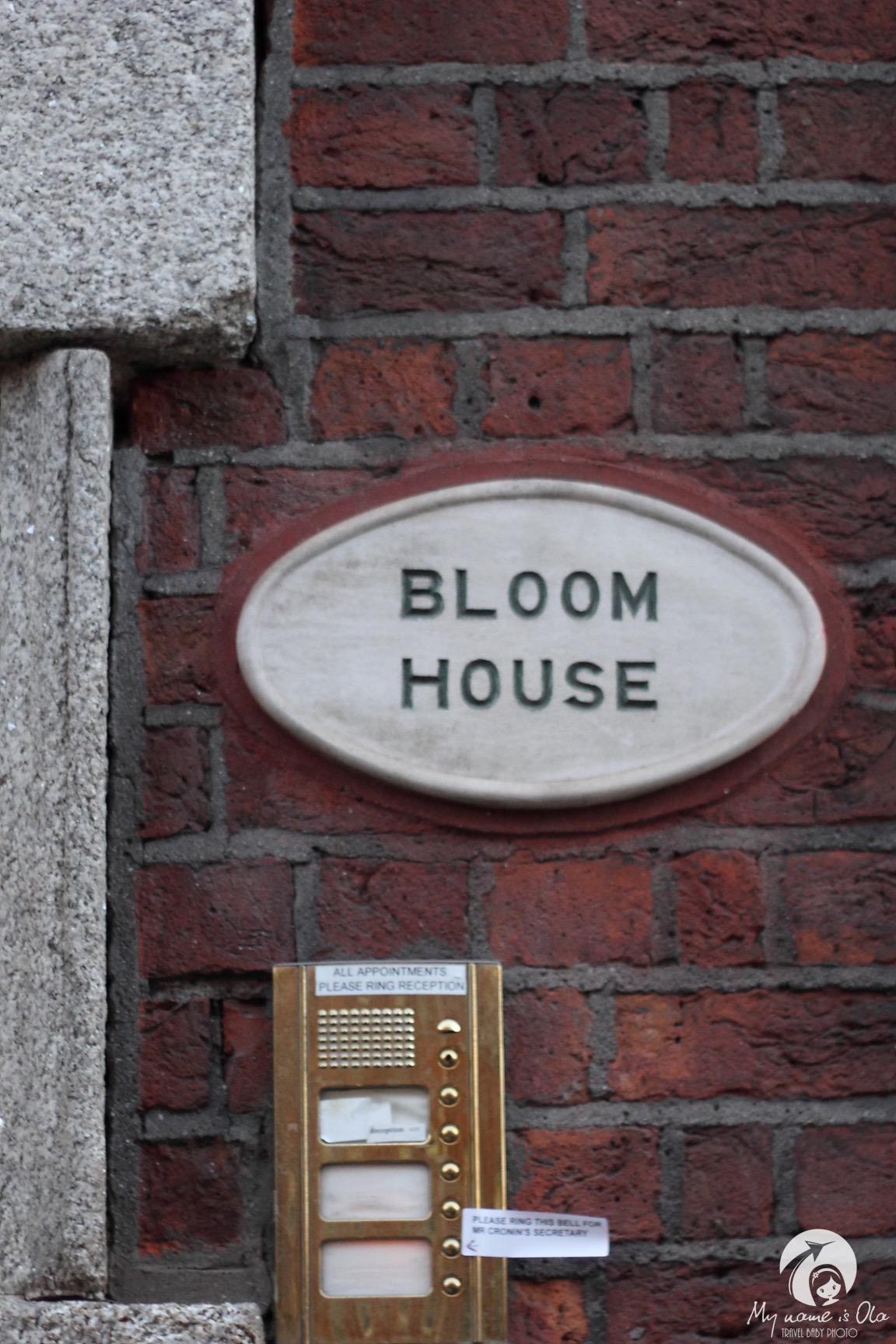
1. Our first point is located outside the city center at Eccles Street. House number 7, where Leopold Bloom, main character of “Ulysses” started his famous day, doesn’t exist any more. Under number 7 today there is a hospital. Main entrance to Bloom’s house was exactly where the sign Mater Private Hospital is today. Fans of the novel will probably be happy to hear that the doors were saved from demolishion and today they are exhibited at James Joyce Center at North Great George’s Street. Accross the street from the hospital, private clinic at 78 Eccless Street has decorated their building with details from “Ulysses”. Don’t let that trick you – this is NOT a real Bloom’s house.

[photosetgrid layout=”2″]Not Bloom's HouseNot Bloom's House[/photosetgrid]

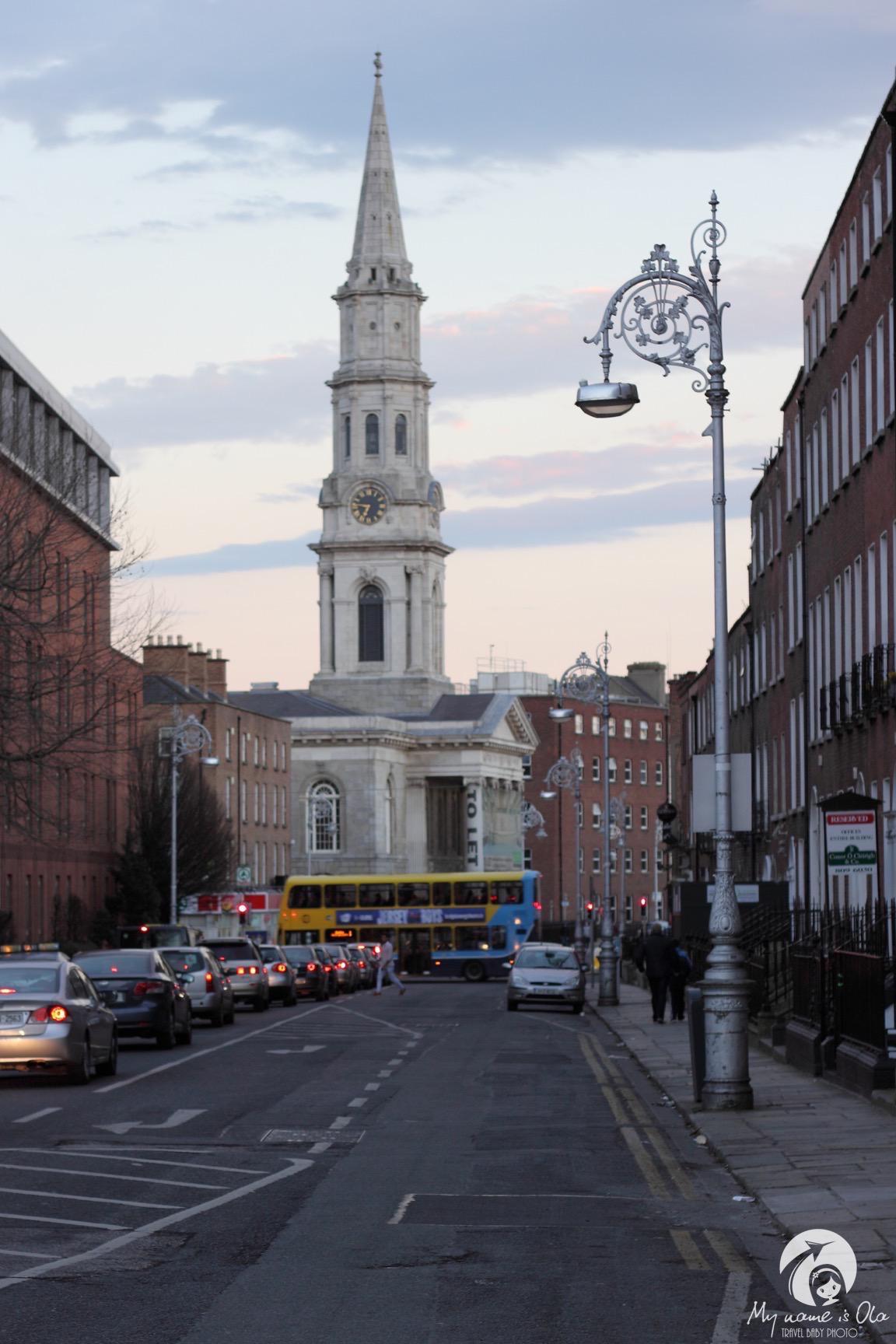
2. Located nerby, St. George’s Church has also appeared in Ulysses. The bells that Bloom heard being  in his home at 7 Eccles Street, were those of St. George’s Church. The church was built at the begining of 19th century.  60-meter high spire and four-column portico are the most important features of the building. In 1991 the church was deconsecrated and since then it has had many different functions. It used to be for example a theatre. Today it’s being renovated and the bells, that Bloom has heard ringing, were moved to Taney Church w Dundrum.

St. George Church, Dublin

3. We moved quickly to O’Connel Street where we found another object, this time refering to the person that appers in Joyce’s works. Writer was influenced by ideas of Charles Stewart Parnell, a 19th century politician, leader of the movement for Irland’s autonomy. His monument closes Dubin main artety – O’Connel Street from the North. It shows the figure of Parnell with a 17-meter high obelisk of solid marble behind. Parnell in  his efforts almost succeeded in the 80. of 19th century, 30 years before Ireland in fact declared its independence. In Joyce’s works we find Parnell in “A Portrait of the Artist as a Young Man” – during Christmas dinner at Stephen Dedalus’ house the discussion about Charles Parnell becomes a family quarrel.

Parnell Monument, Dublin

4. Going down the street we arrived at General Post Office – the headquarter of Irish Post. This is a very important place in Irish history – during the Easter Rising in 1916 it was a headquarter of the rebel’s leadres and it’s here, on the steps of GPO, where the independence of Ireland was declared. This is a monumnetal granite building constructed in 1818. It is characterised by six-column portico and what is interesting originally tympanum was decorated with the royal arms, removed during renovation in 1920.
In Joyce’s works GPO did’t play any significant role. For example in “Ulysses” it was mentioned as a place where bootblacks provided their services.

General Post Office, Dublin

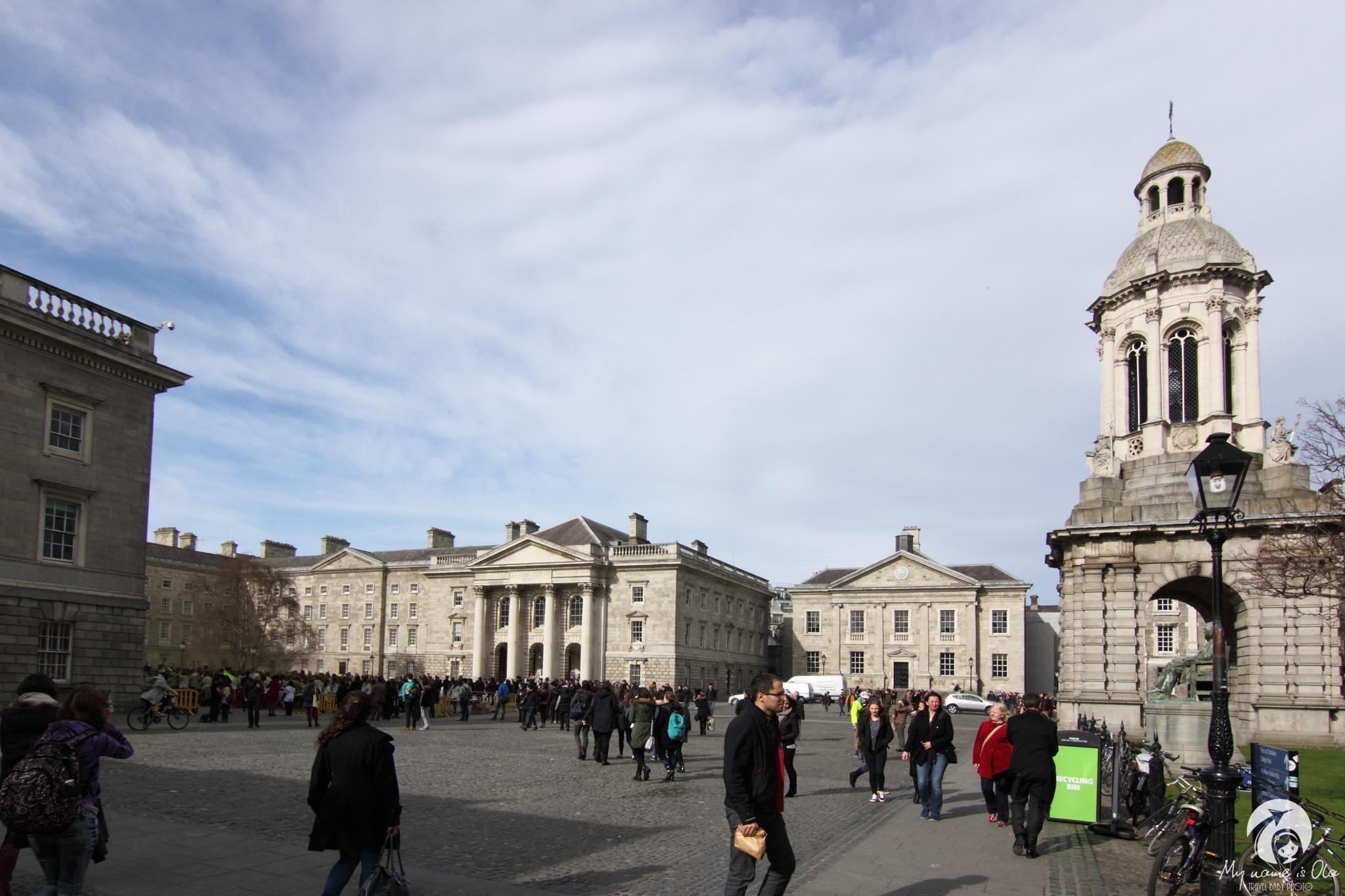
5. On the other side of the Liffey we find Trinity College – 16th century protestant University of Dublin. Catholics were not accepted there until 1793 and only until 1873 some restrictions in their functioning on the University remained. That refferes for example to scholarships and professorships which were not achievable for catholics. If there were some catholics, who despite that, wanted to study at the Univeristy, first thing they had to do was to ask their bishop for permission. Until 1970 catholics were forbidden to attend the University without such permit. One object of Trinity College definitely worth attention is the Library. It has around 5 million books and some important manuscripts like Book of Kells dated back to 800. The Book and other manuscripts they exhibit in the Library museum, part of which is the famous Long Room. It’s an impressive room where part of collection is kept. It’s definitely worth visiting.
James Joyce was a catholic and that might explain why Leopold Bloom passing the Provost house says that he wouldn’t lived there even if he was paid.

[photosetgrid layout=”52″]Trinity College, DublinTrinity College, DublinTrinity College, DublinTrinity College, DublinDublinLong Room, DublinLong Room, Dublin[/photosetgrid]

6. Following Dames Street to the West looking for Dolphin house, another place connected with Joyce, we passed among others the Town Hall, Dublin Castle, and not knowing how and when we arrived at Christ Church Cathedral. Admiring the medieval cathedral we realised that the point that we were looking for we have surely already passed.

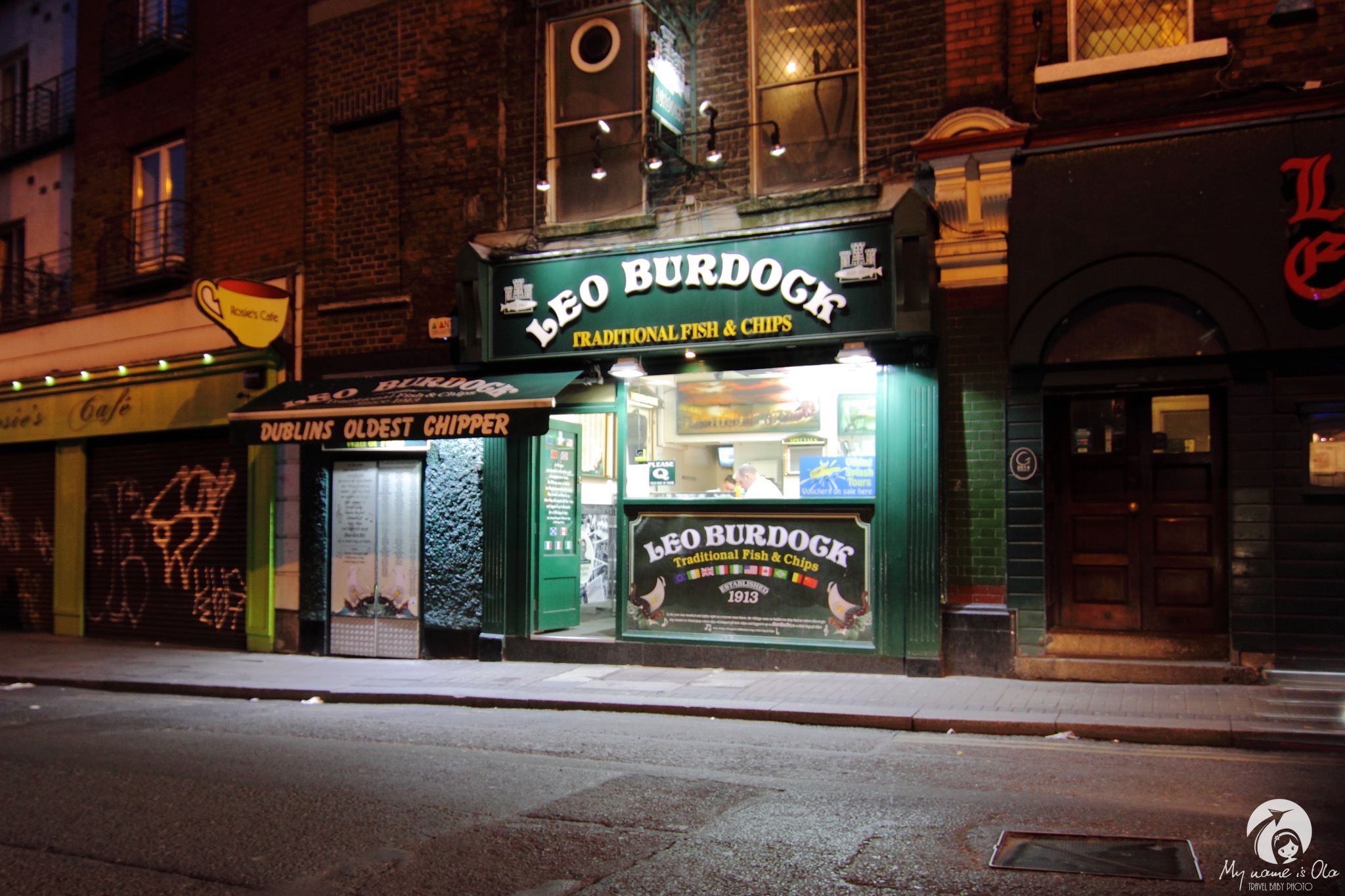
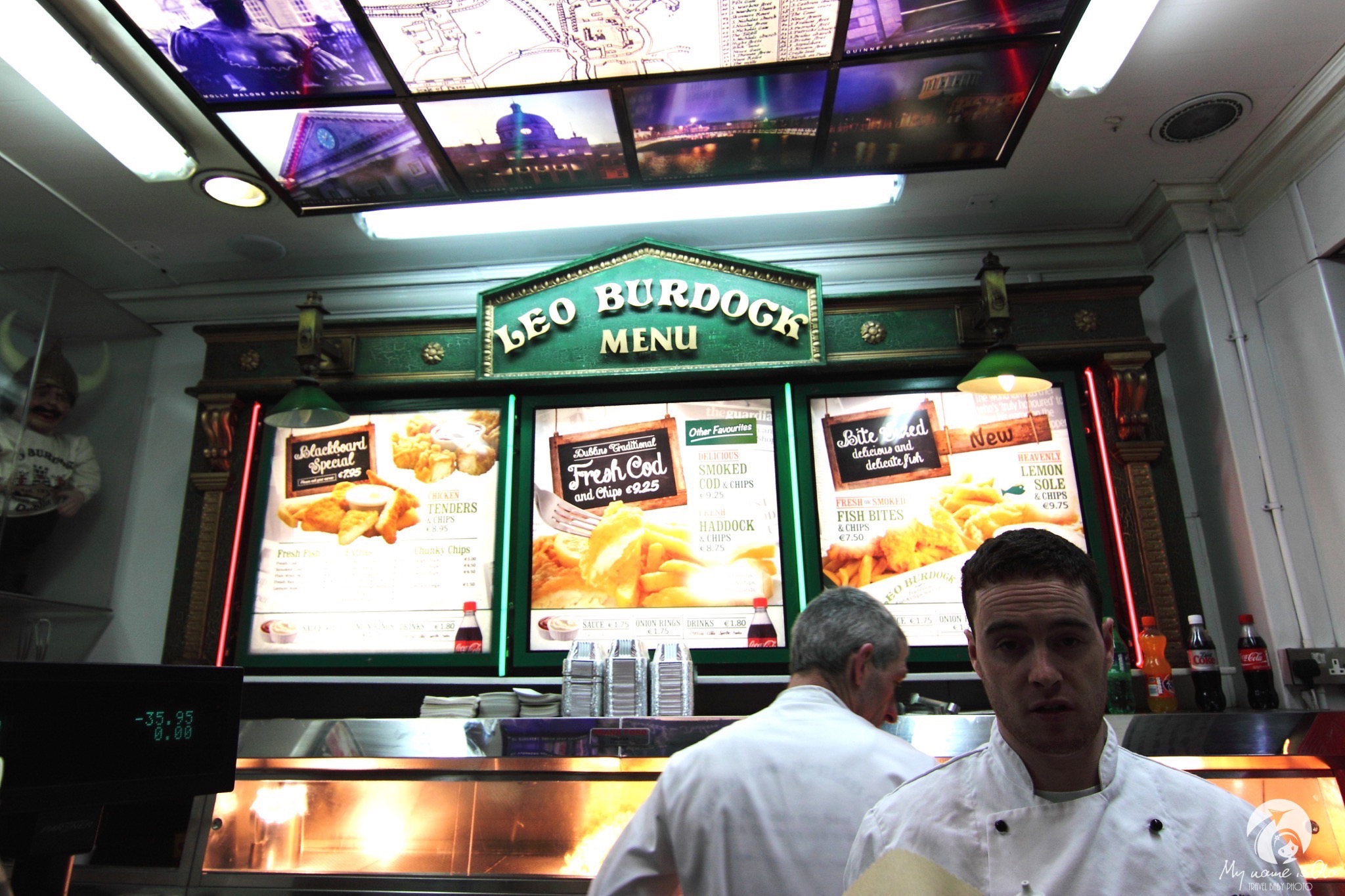
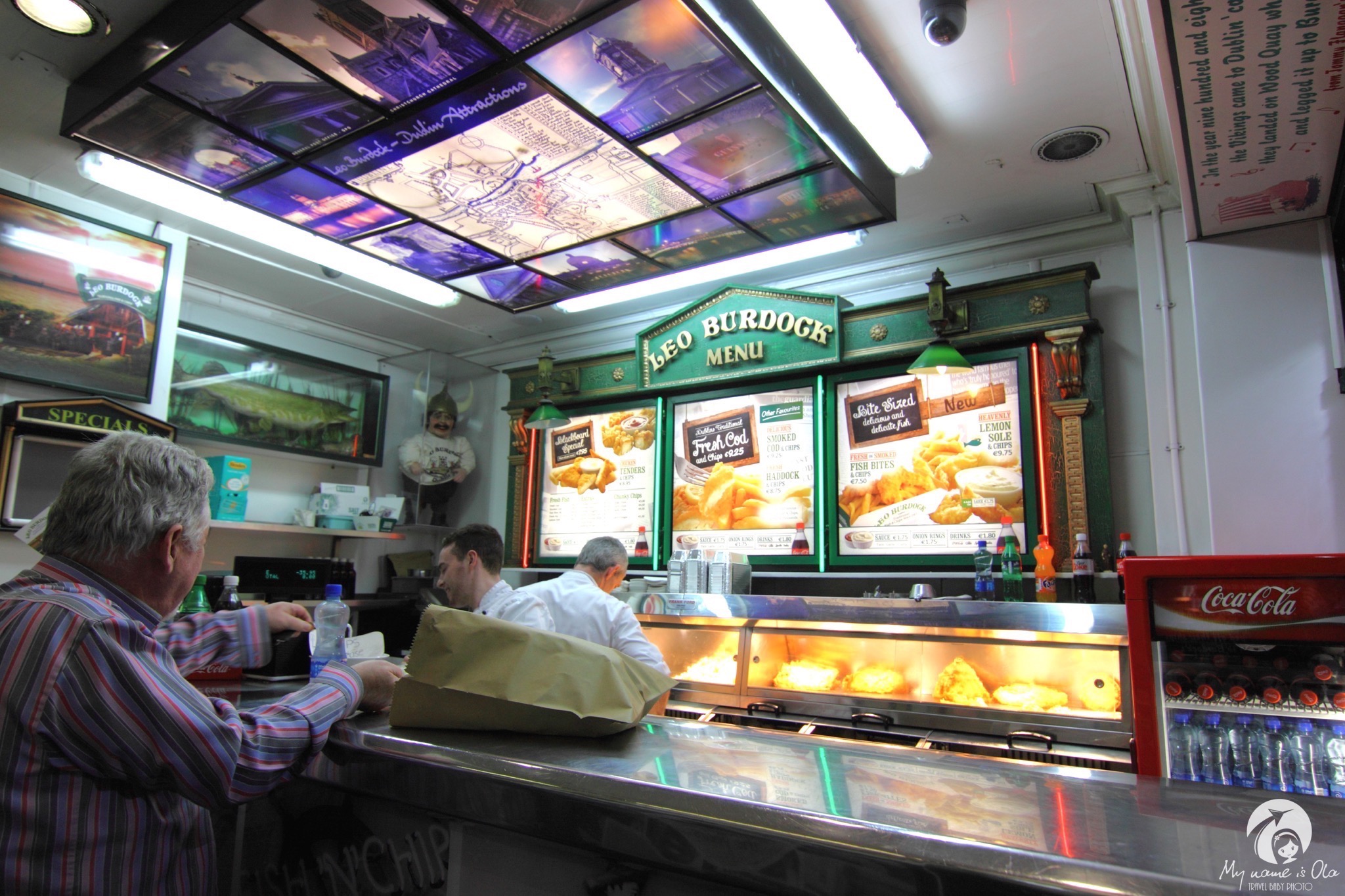
Dublin CastleDublin  Christ Church Cathedral, DublinChrist Church Cathedral, DublinWe had to admitt we were lost, we found ourselves somewhere else than we expected. But the situation wasn’t that bad. Right next to the Cathedral there is a place we have planned to visit anyway – Leo Burdock, a bar that has served traditional fish&chips since 1913! That is probably the most popular such bar in Dublin. They used to wrap fish&chips to go in one day old newspaper, today it’s just a plain grey paper.

Leo Burdock, Dublin Leo Burdock, DublinLeo Burdock, Dublin

Although at Leo Burdock it went really fast, within few minutes it got dark outside and Ola lost her patience for runing around the city so we had to give up the idea of continuing our walk. We pushed the stroller towards the hotel. So just like with the book – we didn’t manage to finish our walk through Dublin with “Ulysses”. The novel on the shelf will be reminding us that it might be a good idea to come back to Dublin some time and try to explore the story of Leopold Bloom and the city as well. Maybe some day Ola will do better than us, with the book and with the city.

BlogNa stole

Guinness – the pride of Ireland

17/03/2015 — by Magdalena Kuźma0

Guinness34-960x640.jpg

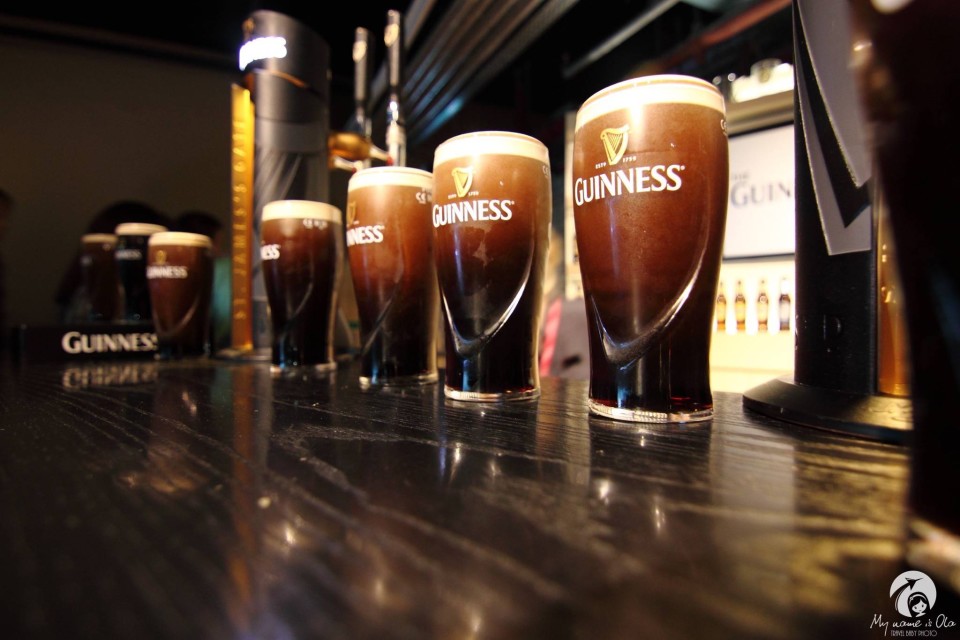
There are couple of things that Ireland is commonly associated with. These are shamrock – the four-leaf clover, St. Patrick, the harp and of course beer. Out of really big variety only one got popular all over the world. Guinness is probably the most recognisable Irish brand but in fact it is only one example of Irish dry stout. There are dozens of stout beers avaliable in Ireland but it’s Guinness that got famous. What is the reason for it? Is it really the best? Or is it the marketing? We decided to check it visiting Guinness Storehouse in Dublin. Ok, that’s fun for parents but wht about Ola? Don’t worry she was more than happy to run around, climb the barrels and pose for photos. See for yourself.

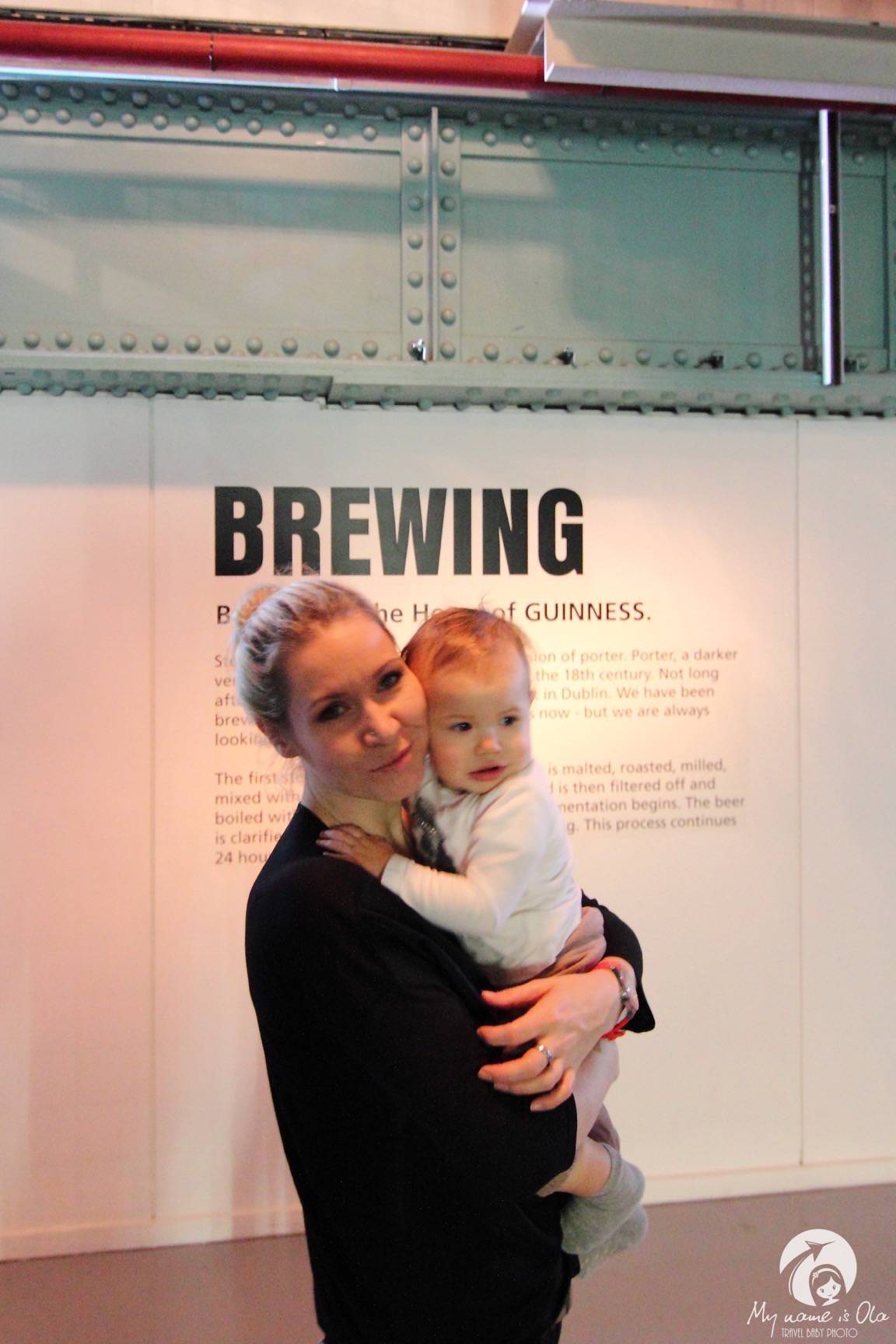
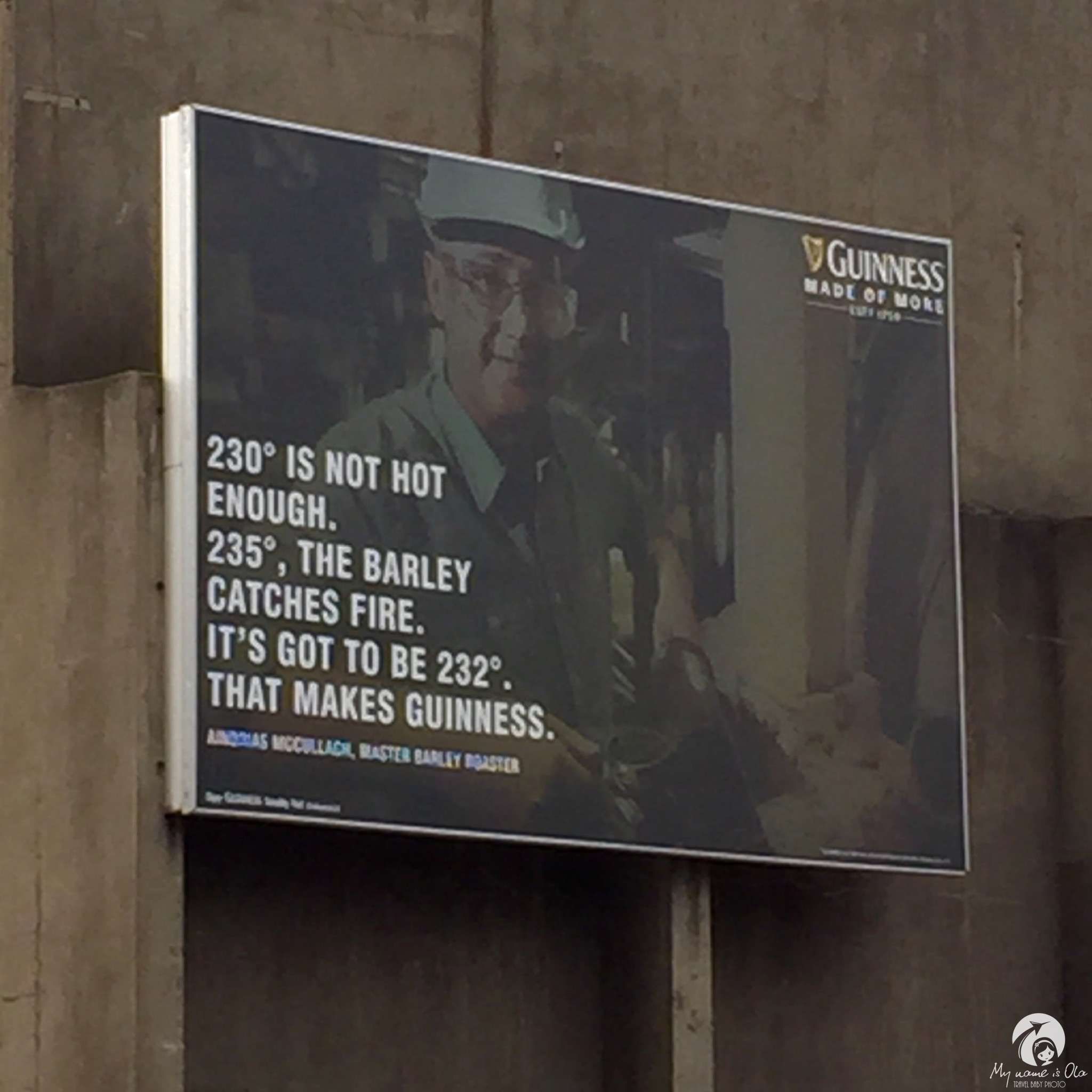
Guinness StorehouseGuinness Storehouse is a seven storey presentation of most importants for the company facts. Unfortunately they don’t let visitors actually see the brewery. On the first floor we start with raw ingredients they use for beers manufacturing. Of course all of them are the finest selections of their kind. First of the fundamental ingridients is barley. It’s the roasted barley that gives Guinness its color. And you have to know that it’s not black but deep ruby red. It’s underlined at every occasion so every ignoramus will leave the exhibition with that knowledge. 100 000 tones of barley are used only by this factory every year, malted, unmalted and roasted.
Another important ingredient is hop. The one used by Guinness is grown all over the wolrd: in Czech Repiblic, Australia, Germany, UK and US. What is interesting hop plants grow up to 4,5 meters.
And the most important component, here called the trasure, is the yeast. It’s so precious because it’s the yeast that does all the job – it makes alcohol from the sugar and nutrients in barley. Thanks to its work we are able to enjoy the liquor. Ginness claims that since 19th century some yeast from each brew has been transferred on to the next to ensure consistency. All before mentioned ingridients are supplemented with the best quality water.

[photosetgrid layout=”23″]Guinness StorehouseGuinness StorehouseGuinness StorehouseGuinness StorehouseGuinness Storehouse[/photosetgrid]

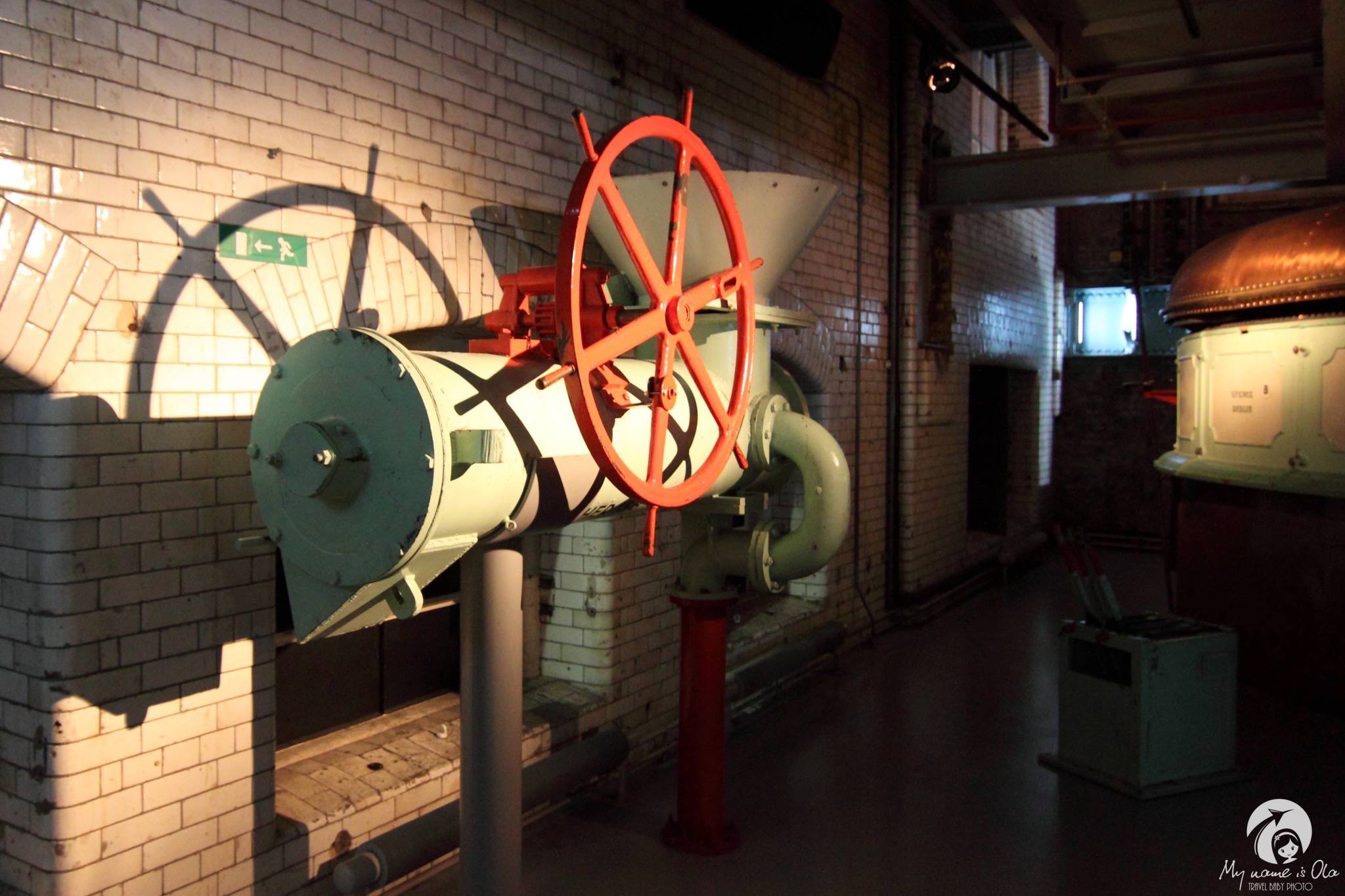
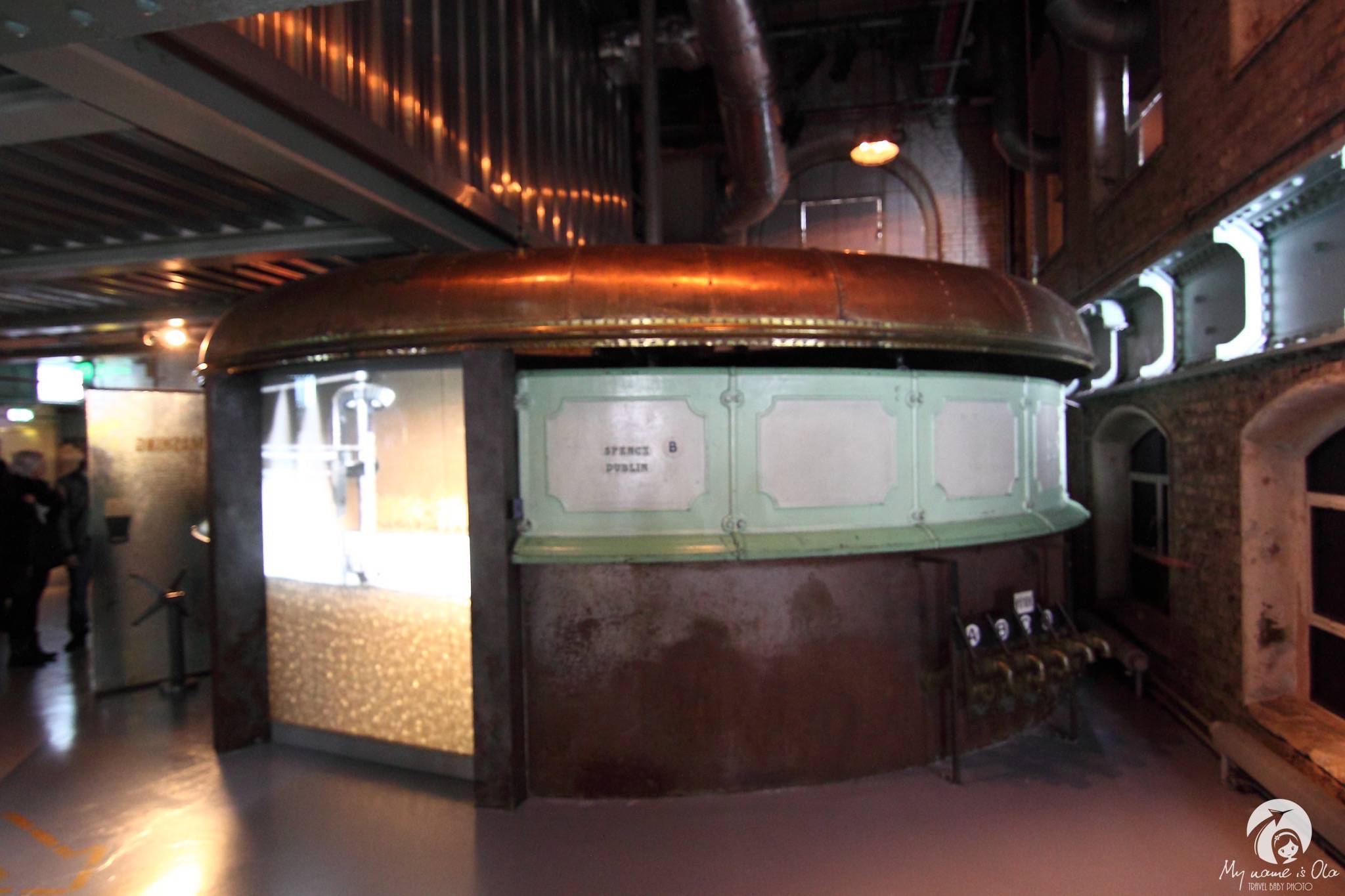
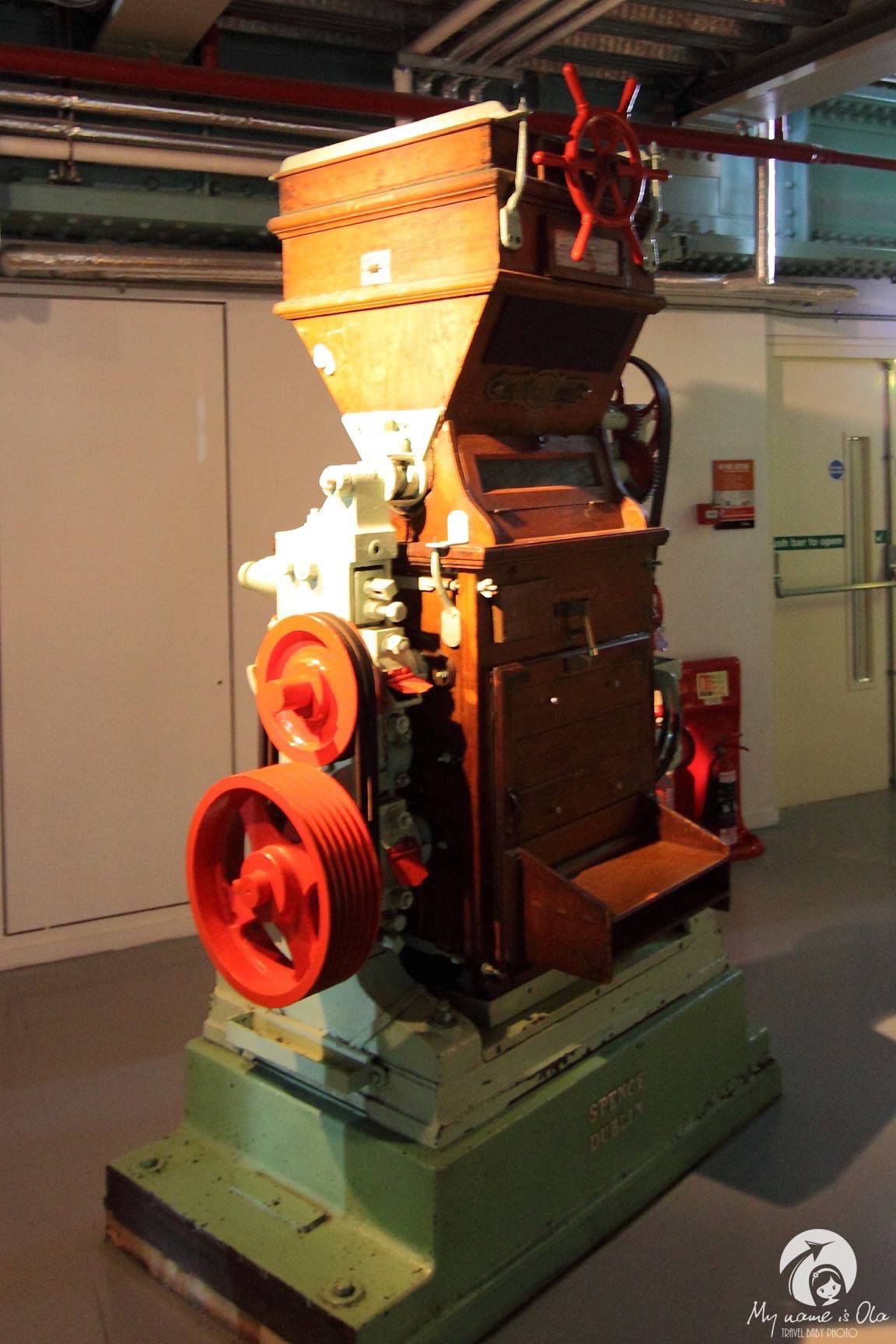
Next floor shows us the whole process of brewing, beginning with mixing milled barley with water, mashing and sieving. The process is probably more complicated but here it is presented by showing the most significant steps. The mixture recieved as a result of processing the barley is called the wort. In next step hop is added to the blend and it is boiled in 100 degrees for 70 minutes to extract as much flavour as possible. Afterwards they add their treasure – the yeast – and here the liquid becomes beer. Fermentation takes two days and the product is provided with alcohol and carbon dioxide. The beer is almost done. It only requires one more stage – maturation, which allowes the distinctive flavour to develop. To finish up the beer is filtered to make sure none solids remain and blended. Whole nine-day process is finnished by multiple testing to make sure the quality level is reached.

[photosetgrid layout=”33″]Guinness StorehouseGuinness StorehouseGuinness StorehouseGuinness StorehouseGuinness StorehouseGuinness Storehouse[/photosetgrid]

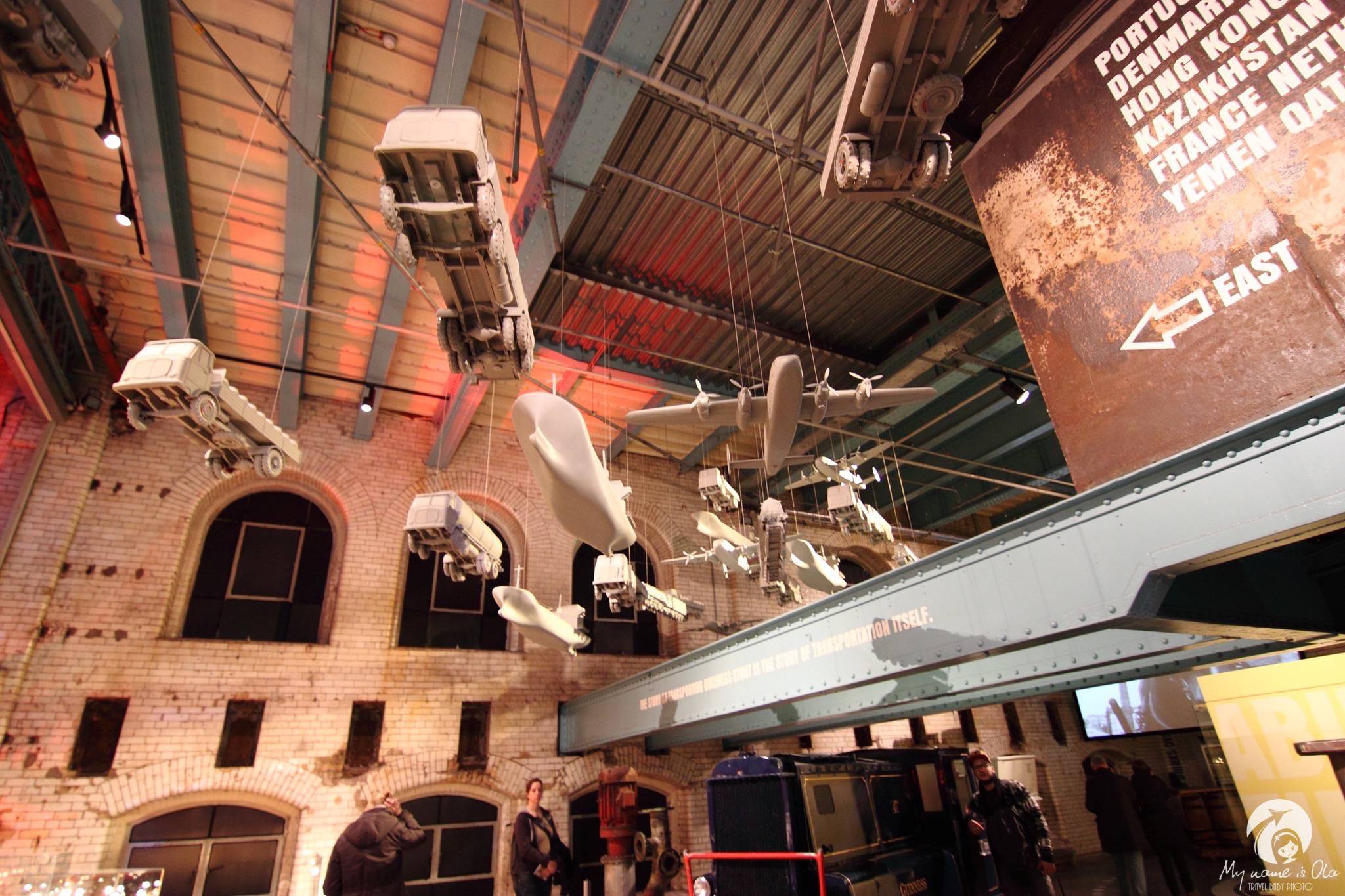
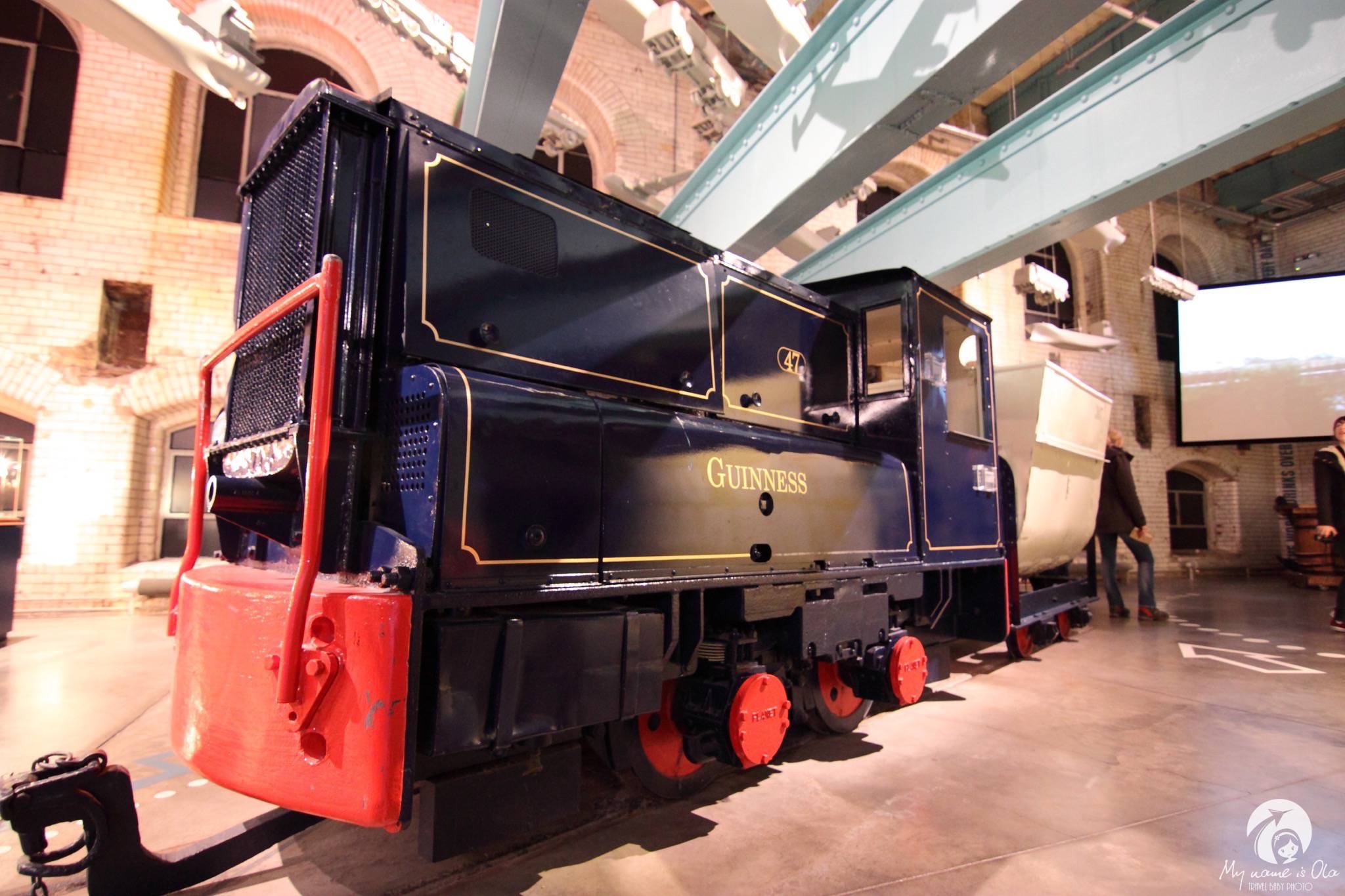
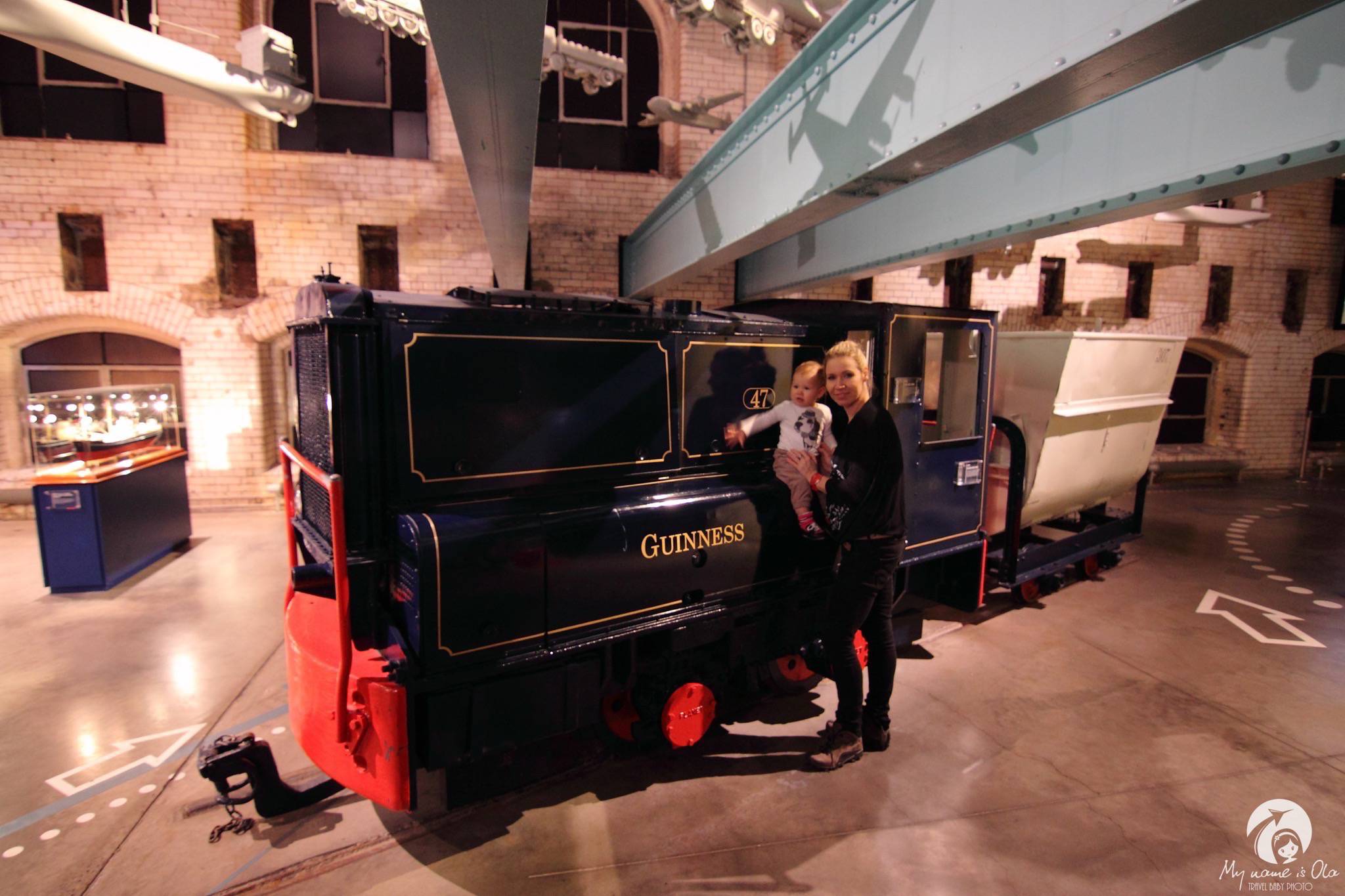
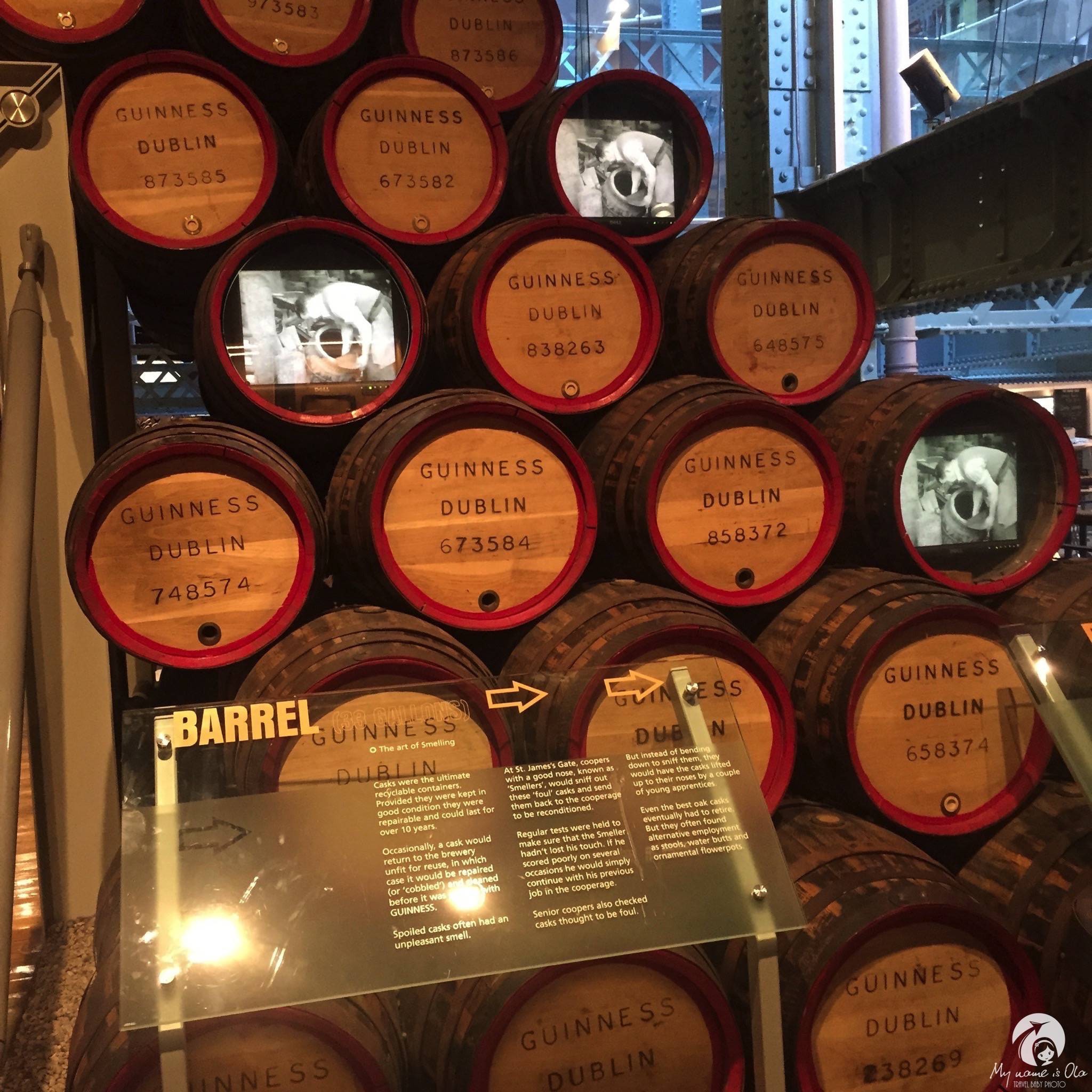
When the beer is already produced next thing we need is to deliver it to customers. Guinness claims that the history of the company is the history of transport itself. And indeed, looking back to the beginnings of this beer production, we see the wooden barrels, carefuly produced by brewery coopers, and we can follow all means of transportation like horses, trains, barges, ships and road transport. Here Ola couldn’t stand sitting in the stroller when there was so many interesteing things around her. She had to get out and start running around; thankfully there was not too many people there so she didn’t disturb them too much.

[photosetgrid layout=”34″]Guinness StorehouseGuinness StorehouseGuinness StorehouseGuinness StorehouseGuinness StorehouseGuinness StorehouseGuinness Storehouse[/photosetgrid]

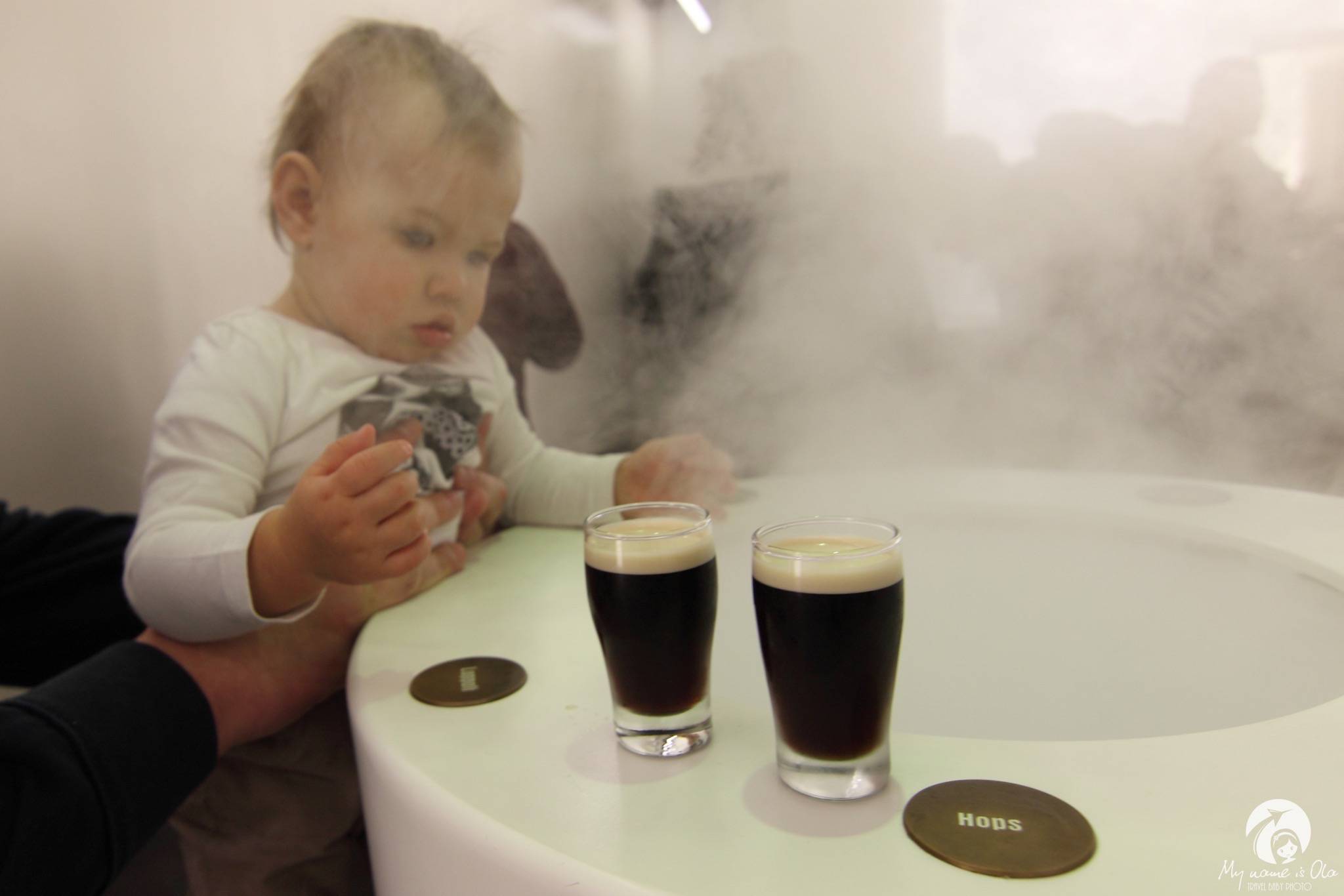
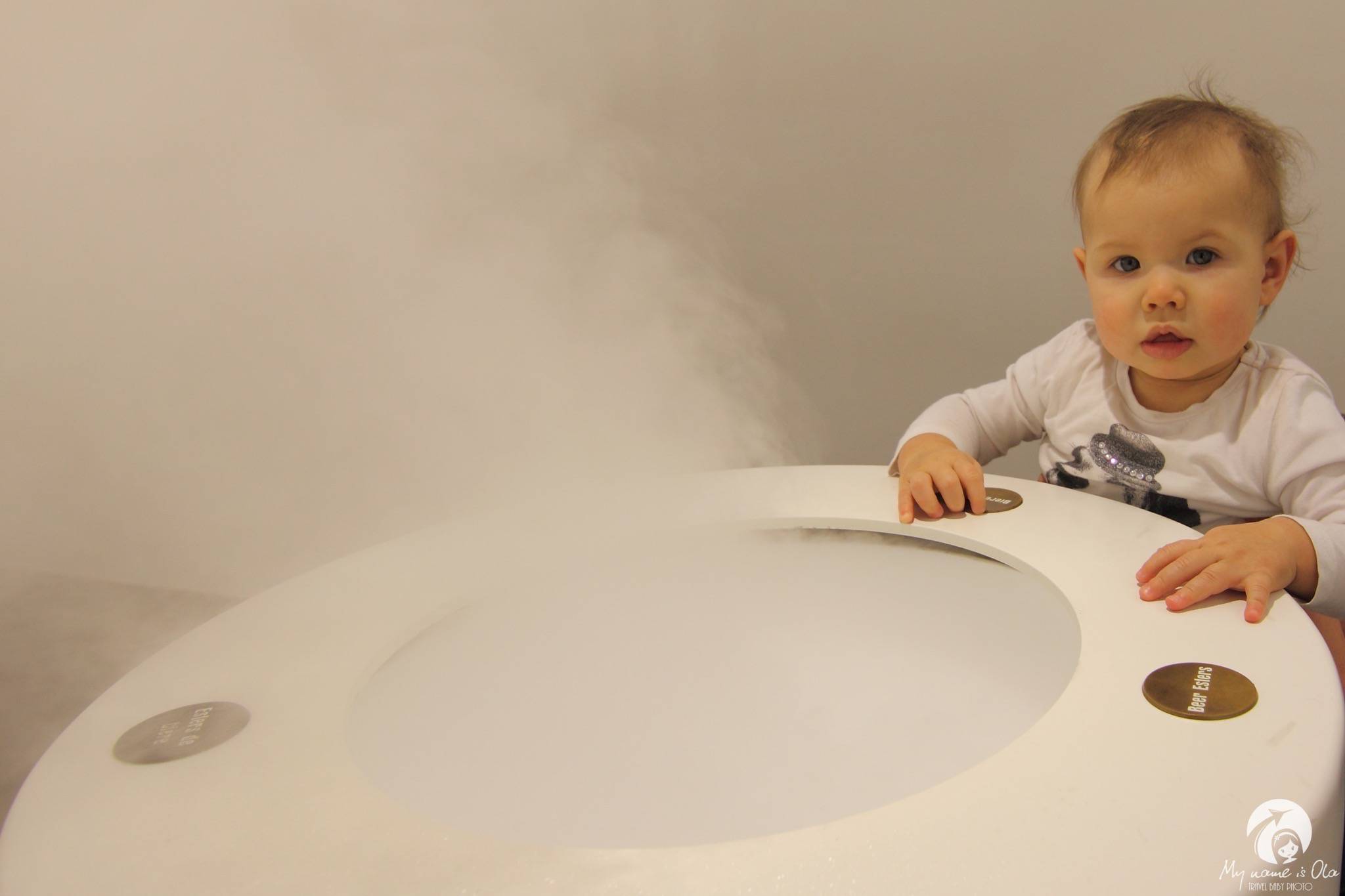
For their visitors Guinness prepared a special training of beer tasting. The aim of the training is to make sure every visitor gets the full taste of beer with every sip they take. It’s all nicely arranged. In the first room there are four columns producing steam with different aromas characteristing for the stout. And here we recieve the miniature glass of beer that we’re going to taste in another room. Ola seemed very interested in as the glasses were in just perfect size for her. Of course she could only watch it through the aromatic steam. Next room was a great performance, the show given by a professional taster was supposed to deepen our sensations. Honestly speaking – the “revolutionary” way of drinking did not knock us down with some newly discovered richness of taste.

Guinness StorehouseGuinness Storehouse Guinness Storehouse Guinness Storehouse

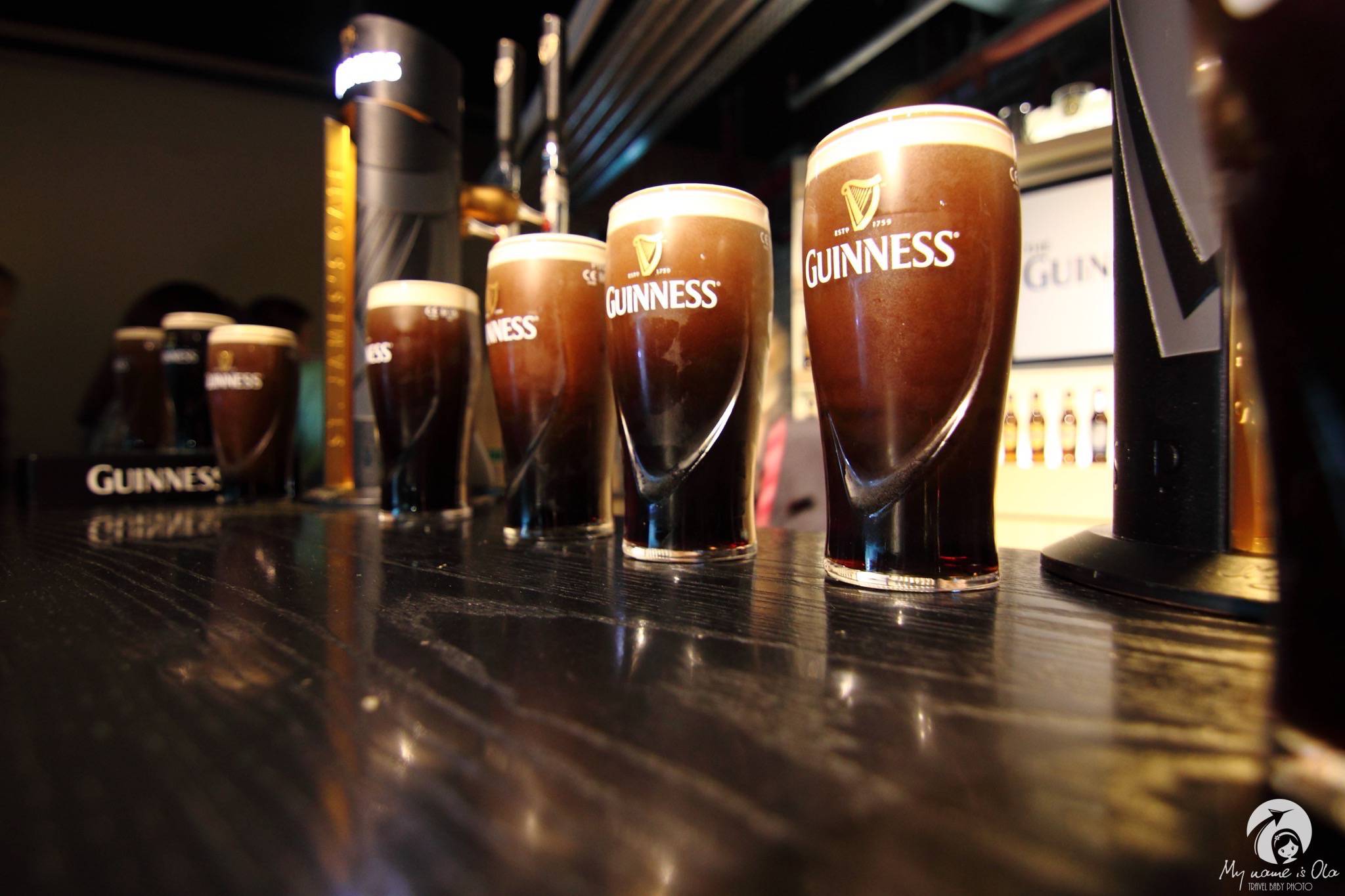
Having already first sips of beer from those little glassed we moved on to next level. Since now we are sure how the beer should taste it;s time to find out how to pour ourselves a pint of Guinness. The instruction of pouring a perfect pint says that it should take neither more nor less than 119,5 seconds. It describes six steps we need to perform to reach the perfection.

See the movie with the instruction of pouring the Perfect pint of Guinness.

Mom was designated to give it a try and fill an excellent pint of Guinness for Dad. After short training glasses and taps were given to visitors. Whole group following the instructions did a good job and deserved a certificate and a souvenir photo. The best reward was of course the possibility of drinking that perfect pint of beer. Just to remind: a pint is more than half liter – it’s exactly 568 ml and pint of Ginness gives us 196 calories.

[photosetgrid layout=”31″]Guinness StorehouseGuinness StorehouseGuinness StorehouseGuinness Storehouse[/photosetgrid]

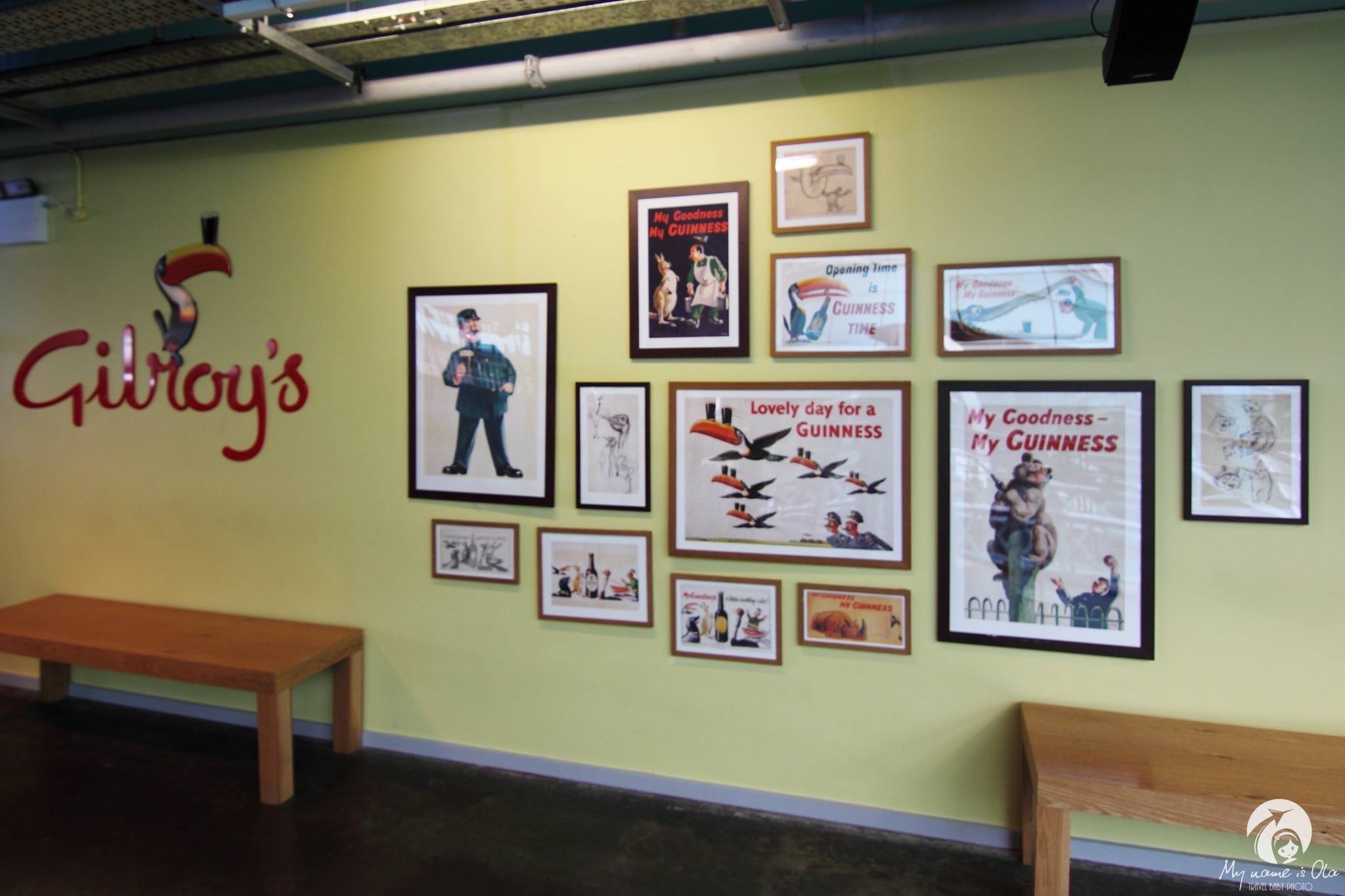
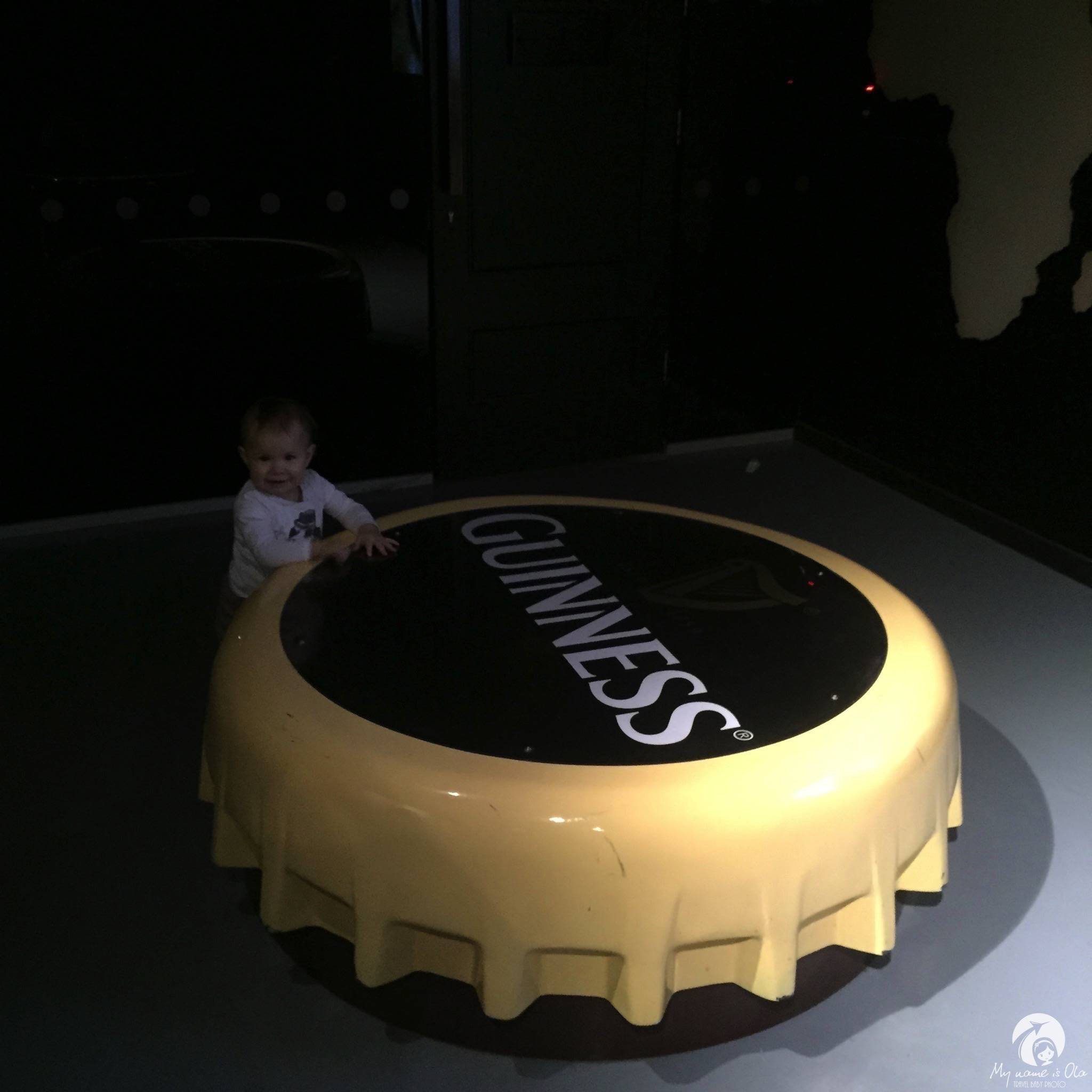
Quick overview of company advertising history since 1929, meeting the well known symbol of Guinnes beer – toucan bird and we were taken to the tv room with huge beer cups where we realised that Guinness is not only that one Guinness draught sold in widget cans that we know. The variety of Guinness beers is way bigger than we expected. Beside different kinds characteristic for different countries there are three basic types of beer they produce: Guinness Draught, Extra Stout, Foreign Extra. Foreign extra is the oldest type they have produced. They claim it has been made with extra hops to preserve freshness. The extra hops are supposed to result in floral overtones throughout the beer. Extra Stout’s bitterness is allegedly great company for smoked seafood. In Draught we  should taste the sweetness of caramel and the coffee aroma so using it to create dark desserts would be a good idea. Running between big bottle caps was Ola’s favourite play. They were perfect size to become huge drums for her.

[photosetgrid layout=”32″]Guinness StorehouseGuinness StorehouseGuinness StorehouseGuinness StorehouseGuinness Storehouse[/photosetgrid]

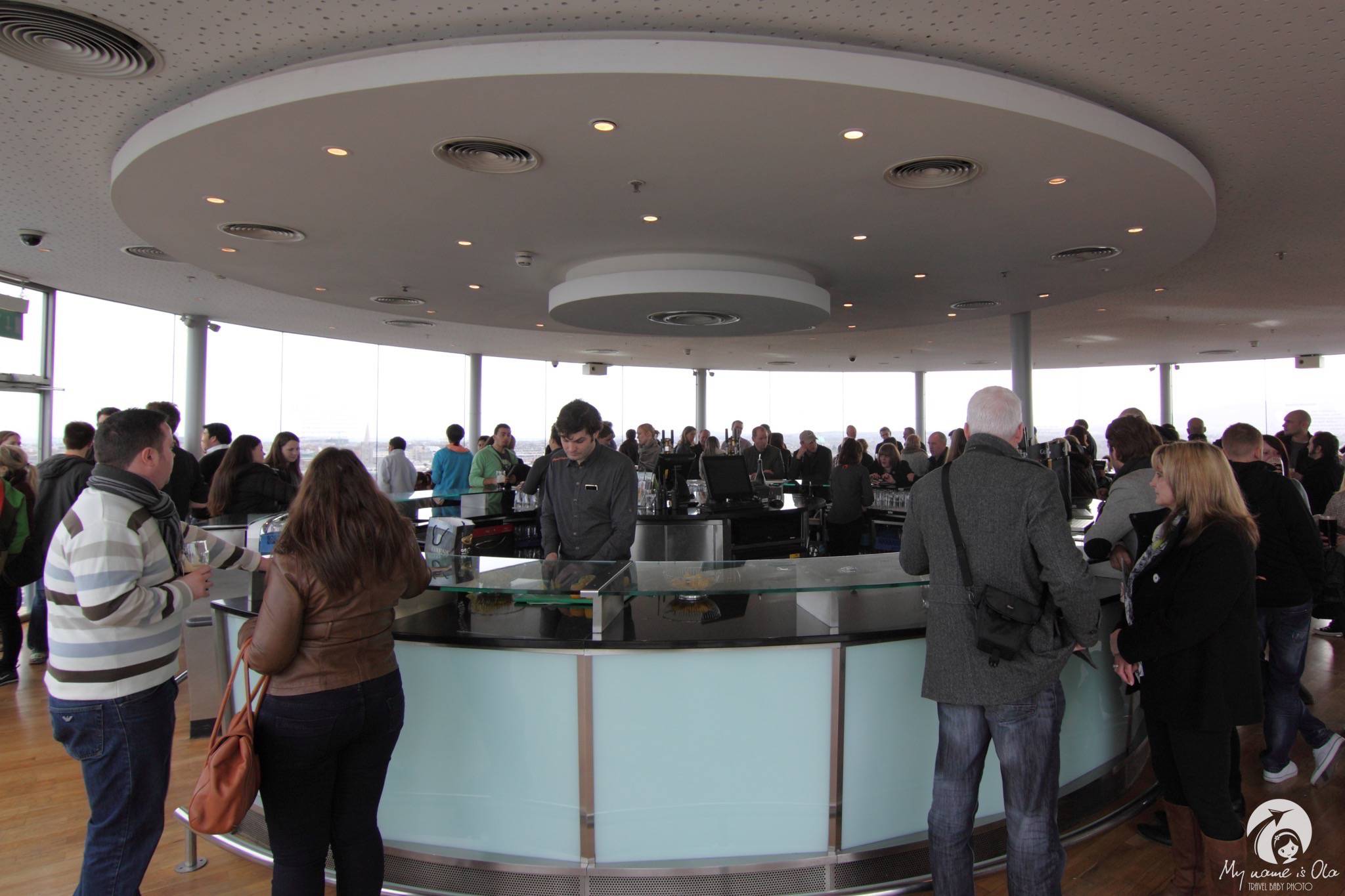
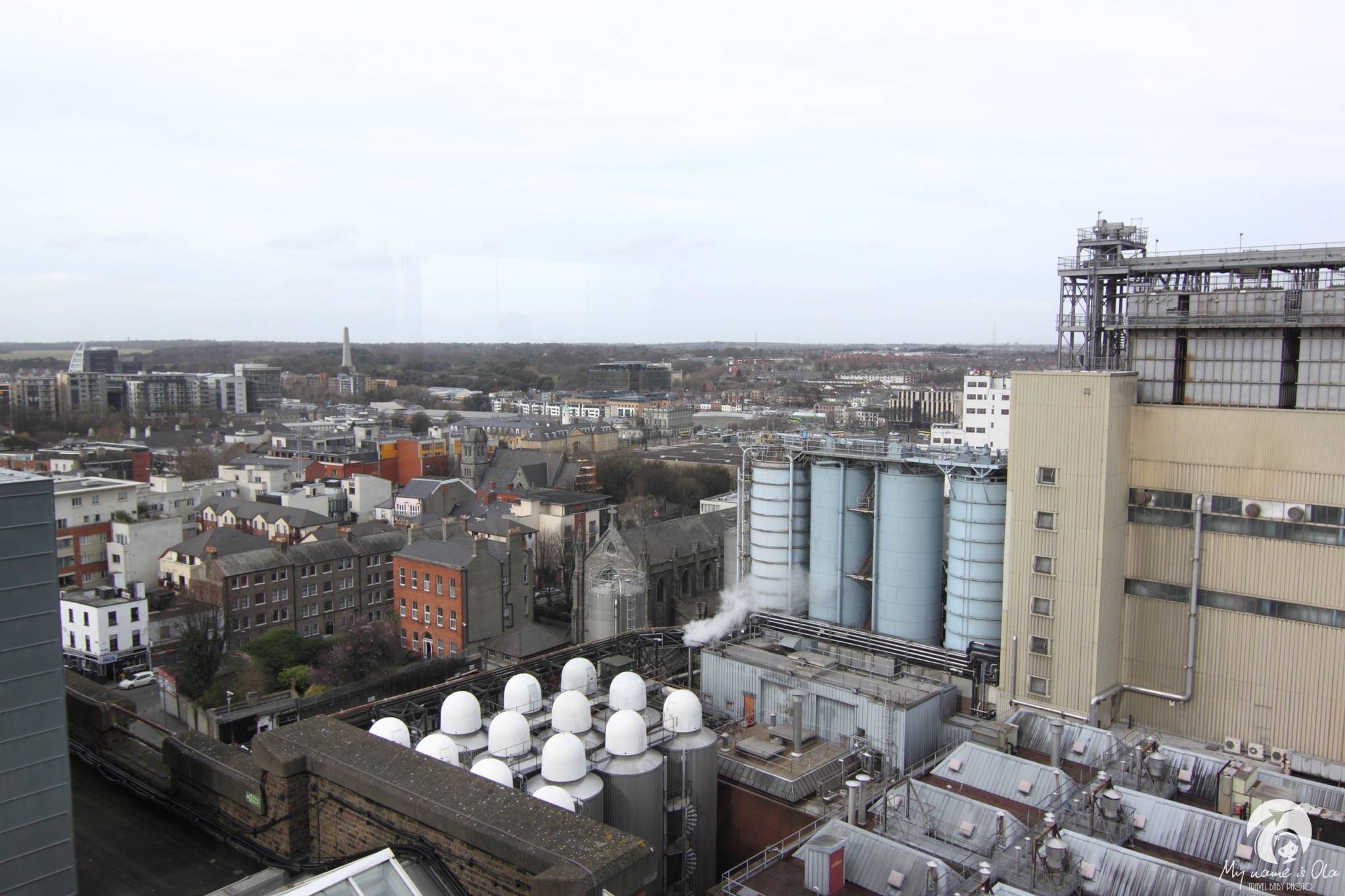
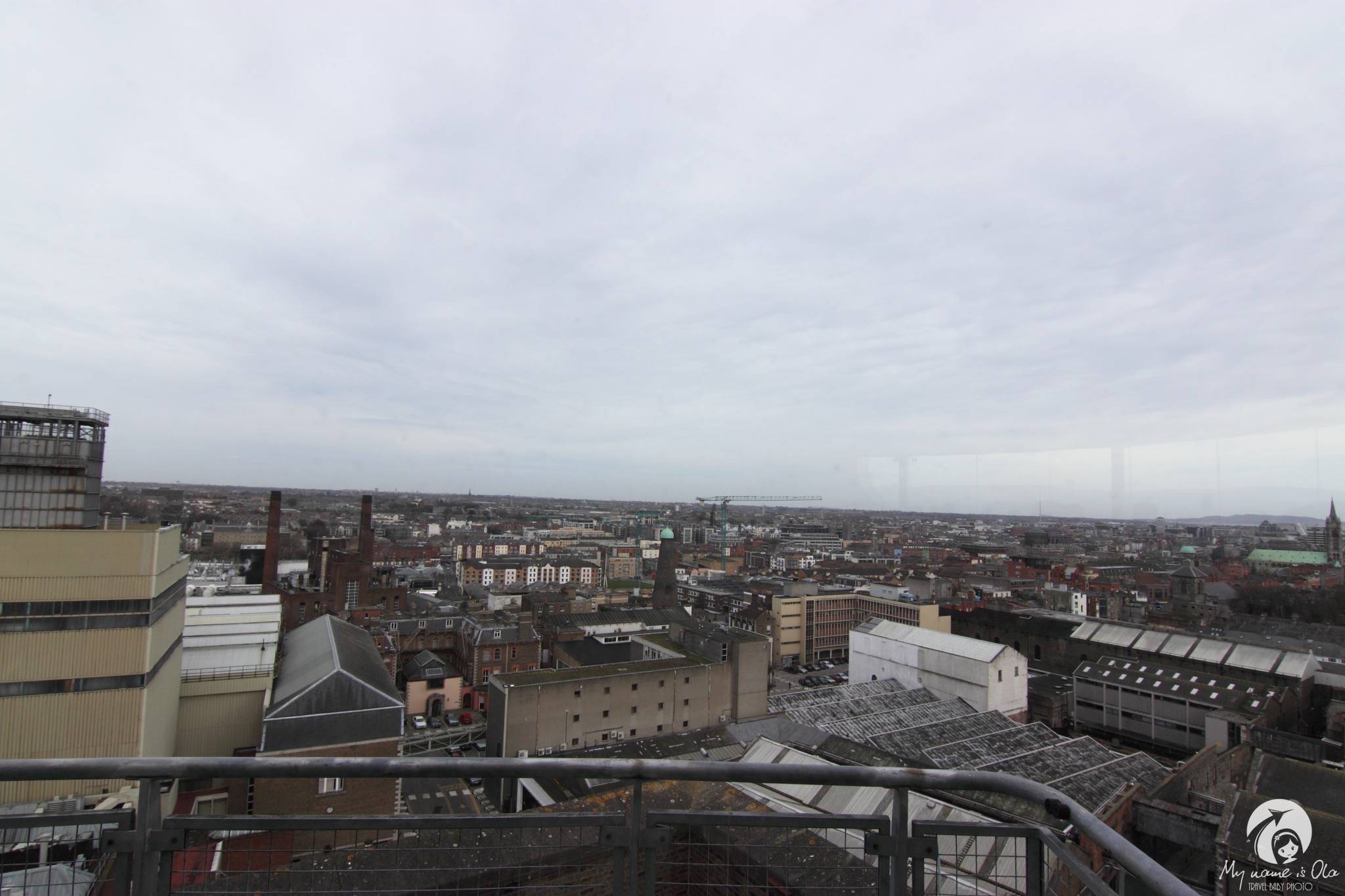
Finally we got to the last floor to grab one, included in the ticket price, glass of beer. With a pint of stout one can admire the view over Dublin – the Gravity Bar is located on the 7th floor and with its glass walls round room becomes a good observation deck. They indicate on windows the most important landmarks for the city and the company as well. There are not too many of them so atmosphere upstairs quickly focuses on beer again. Only upstairs we found out that Ola wasn’t the only kid visiting the storehouse. There were couple more kids in their strollers.

Guinness StorehouseGuinness StorehouseGuinness StorehouseGuinness Storehouse

Practical info: there is an entrance for wheelchairs and strollers before the main entrance when going from the parking lot. Buy the tickets online, that lets not only you avoid queuing but also save some money – it’s 10% off online. Ticket price includes free on site parking. There are few restaurants inside, they all have high chairs.

Guinness Storehouse

And remember:Guinness Storehouse