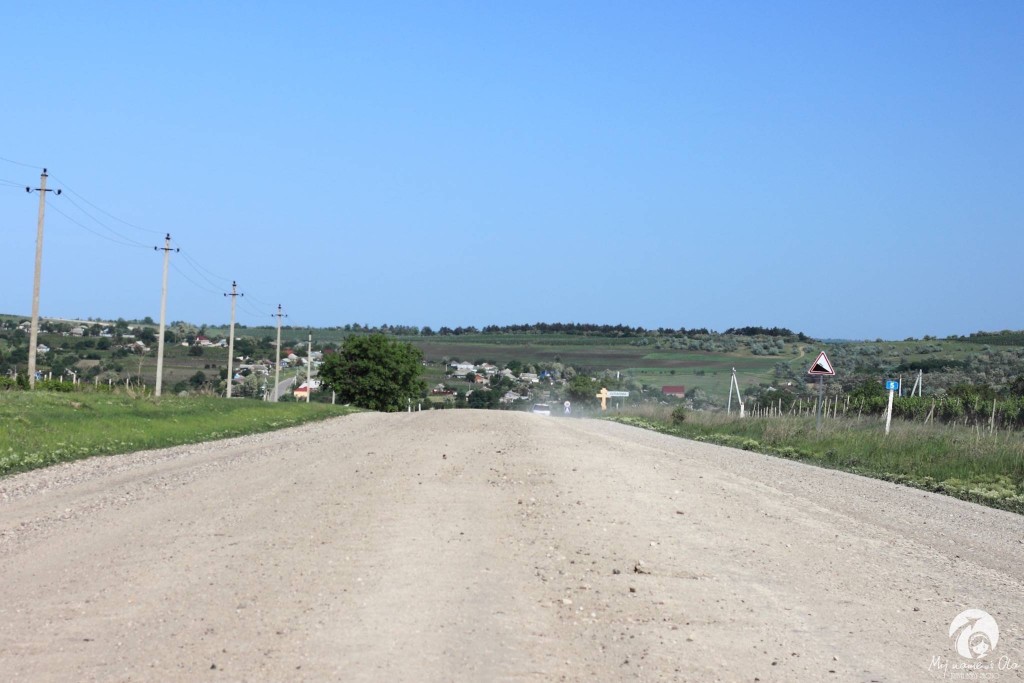
Transnistria is the country that welcomes foreign visitors although there is still not too many of them to be found there. However their number keeps on growing and that is why we decided to write this post. Maybe you will have a chance to visit this country once and thanks to us you will know exactly how to corss Transnistrian border. The prcedure is similar to the procedures on every Russian or Belarus border.
TRANSNISTRIA BORDER CROSSINGS
Let’s start from a good information that EU and USA visitors do not need to have any visa. That saves you not only money but also time you would spen’t on applying for it. If you are from the country that needs to apply for visa to Moldova, do it because it will be necessary for you to enter Transnistria. Even if you enter and exif from Ukranine.
There are several border crossings in Transnistria. There is one with Ukraine in Kuchurgan-Pervomaysk and many on Moldovan border: Bender-Chisinau, Dubassari-Chisinau, Rabnita-Rezina plus one with both Ukraine and Moldova – Camenca. So far we have had a chance to use two of them Bender-Chisinau and Kuchurgan-Pervomaysk.
PROCEDURE AT THE BORDER CROSSING
As we said the procedure is similar to Russian so anybody who has been to Russia before will find it easy.
First thing you need to do after getting to the border is to fill in the immigration card. It is avaliable at officer’s desk. You don’t have to fill it in using Moldovan, use English but make it clear and readable. If you are visiting Transnistria for longer than one day you should put in the migration card the address where you are staying for the night. Present it together with your passport to customs officer, he will stamp and return you the part of this paper. Put it in your passport and keep it there for the whole time of your stay in Transnistria. You will be asked to return this immigration card when leaving the country.
Everything should be free of charge, crossing the border should not require from you any cash. Whatever money they request from you, don’t pay, it’s illegal. When we crossed this border in 2015 we have to admitt that everything looked very good, new booths for officers, nice people and nobody even thought about asking for any money. Another thing was in the same place two years earlier but it’s a long story. Maybe it’s because our little baby daughter Ola we got that special attitude this time….
TAKING YOUR CAR TO TRANSNISTRIA
All above reffers to crossing the border on foot or by bus. When you come up with an idea of taking a car to Transnistria it is not so easy any more. Personal procedure is the same but more paperwork for car is required. You have to import the car to Transnistria for the time of your stay. To do it you will need some more documents such as registration certificate, travel passport and of course have to pay the customs (0,18% of the car value) plus 5 Euro tollage. We haven’t tried that as our Moldovan rental company did not allow us take their car to Transnstria at all but do not really regret that. There is no any special parking at Bender-Chisinau crossing, we just left the car smoewhere before the customs booths and looked around for the taxi.
REGISTER YOUR STAY IN TRANSNISTRIA
There is one last thing connected with customs procedures – registration. Just like in the other Eastern state you have to register your stay in the country. It desn’t apply when your stay is shorter than 10 hours. For such time you don’t have to do anything but if staying longer you are obliged to do the registration. If staying in the hotel don’t worry about anything, they will do all the paperwork for you but when you want to stay at private people’s houses you will have to visit migration department in Tiraspol with your pasport and register your stay.
That would be it as far as formal sides of visiting Transnistria as concerned. Now you know everything and can pack your backpack and get on your trip to Tiraspol.
And exactly what not to take with you for the weekend or longer trip with one year old or little older and little younger too. We are not going to prepare a long list of things that you have to take with you because it is really easy to gather huge amounts to things. We believe that the whole thing is to pack as little as possible and fit all that in hand luggage. Why hand luggage? I believe this question does not have to be answered at all. The less things you put on your back or have to carry with you, the easier it will be to cover all distances, to move around at the airport, in the city or even in your hotel room! And let me remind you that you will have sombody more important to take care about who will take most of our attention and energy.
All tips you will read below for some of you might seems banal, be obvious for the others, some of you have probably already read somewhere about that (there are hundreds of such advises on the web already) but maybe we will give you some ideas and inspire some of you to more convenient traveling.
1. Because in hand luggage each centimeter of space is important and each kilogram is so valuable pay attention to the smallest things. Even wet wipes that are a must have equipment for baby maintnance can be an arena of saving space and weight. The thing is to leave home that beautifuly decorated box for wipes or the plastic case for them you got buying tens of packs. Planning a short trip we even try not to take the full pack with us but the one half full to save some room in the luggage. Such an advise seems to be completely obvoius but since we have seen parents doing exactly opposite we decided to write about it.
2.Formula milk – our way for travel time is to replace formula milk with milk pudding. This instant one. Thanks to that we supply Ola with necessary daily amount of milk and at the same time have a good breakfast and supper for her. It is a very useful solution if we happen to stay in a hotel where we do not have breakfast. A bottle of mineral water allows us to make our daughter tasty breakfast before even leaving the room.
3. Don’t think that you have to take the bowl for the pudding with you! It stays home and waits until you get back. Usually in the hotel room you will find some glasses that will allow you make appropriate amount of food for the baby. And for the evening you will probably go out somwehere to eat anyway so just ask for a little bowl for the baby food there.
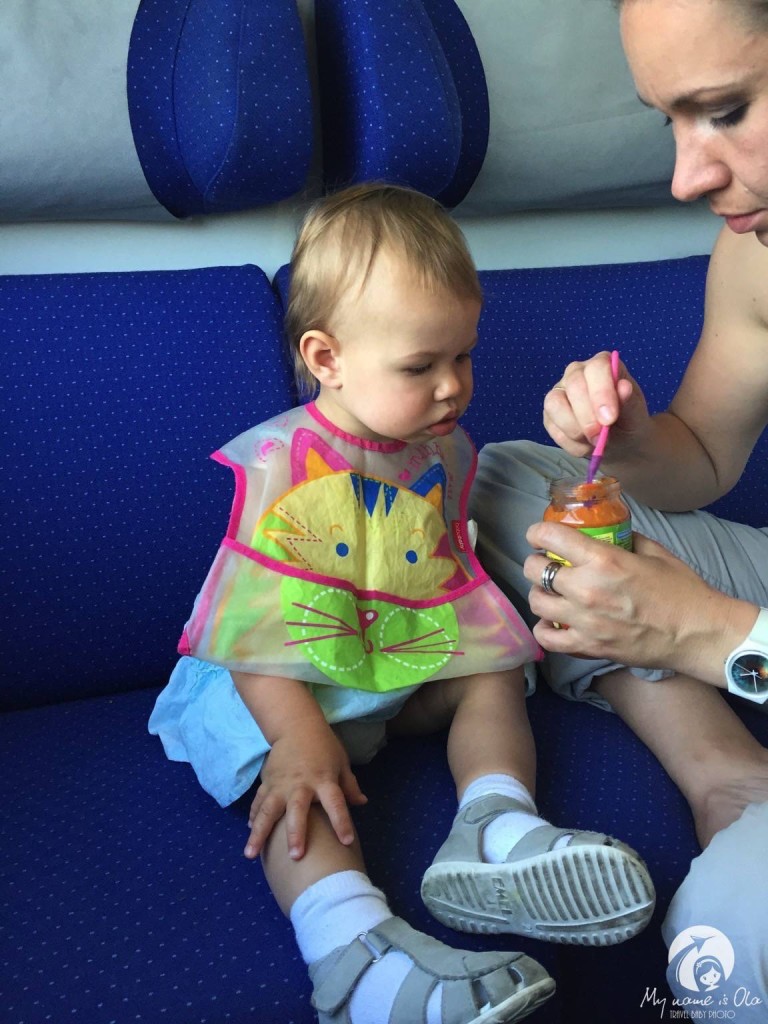
4.Cotton baby bibs. A one year old eating his or her meal is like little tornado signs of which we can find not only on the walls but sometimes even on the ceiling. That’s at home when sitting in her own high chair. Now imagine trying to keep her in one place and make eat somewhere outside! Normal cotton bibs won’t help, but we suppose that you already know and use at home (as we do) those plastic or silicone ones which are asy to wipe or even wash in the tap. We use ours every day but especially appreciated them going somewhere. They are wide and washable. What to more do you need? After the meal you just wash it in the tap and you are done.
5. Favourite 50 centimeter cuddly toy! I am sorry but that is definitely a thing that has to stay home. The idea of carrying it accross the world will never let you fit in the carry-on. Instead of this big teddy bear out of huge amount of toys that you probably have at home choose something more effective in terms of size and its possibilities of attracting baby’s attention. We advise books! They are easy to fit in luggage and keep Ola’s attention for a longer while.
6.High heels. Yes mommy, your high heels and sandals and sneakers and flip flops… Sit down and think which shoes to take, choose those the most comfortable ones, wear them and forget about all the others. With tears in the eyes look at high heels you planned for the romantic dinner staying home and let’s be honest with a little one you can rather forget about those romantic dinners too… And actually we believe this is this crucial point that will save you the most space in your luggage
7.Baby bathtub! Even this inflatable that takes reletively little place has to stay home. Don’t you even try thinking that bath tub is something necessary. Maybe when you travel by car you can put it somewhere in your trunk but when flying forget about it. But don’t cry over it too much, thanks to leaving it at home you will learn how to bath an infant in any conditions and reduce whole process of evening bath from half an hour procedure to five minute shower!
8.And since we are already talking about bath make sure to leave the towel at home. In case your baby has a very sensitive skin which gets irritated by anything that is not washed in baby washing liquid you need to take one with you but at least choose the smallest one of all those you have. But if the baby is not that sensitive use those provided by hotel and your luggage will become your friend.
And now short list of what we cannot skip and have to fit in hand luggage: diapers (plus those for swimming), medicines (at least painkillers and rehydrating ones), cosmetics in those little bottles – for Ola at least some baby body wash and a toothbrush, sun lotion with big factor when needed, a spoon, dinner in jar for the time of travel. All those obvious things like clothes we will not even mention because each one of you will know the best how much of them to take. And what are your experiences with packing? Are you able to fit all you things in hand luggage?
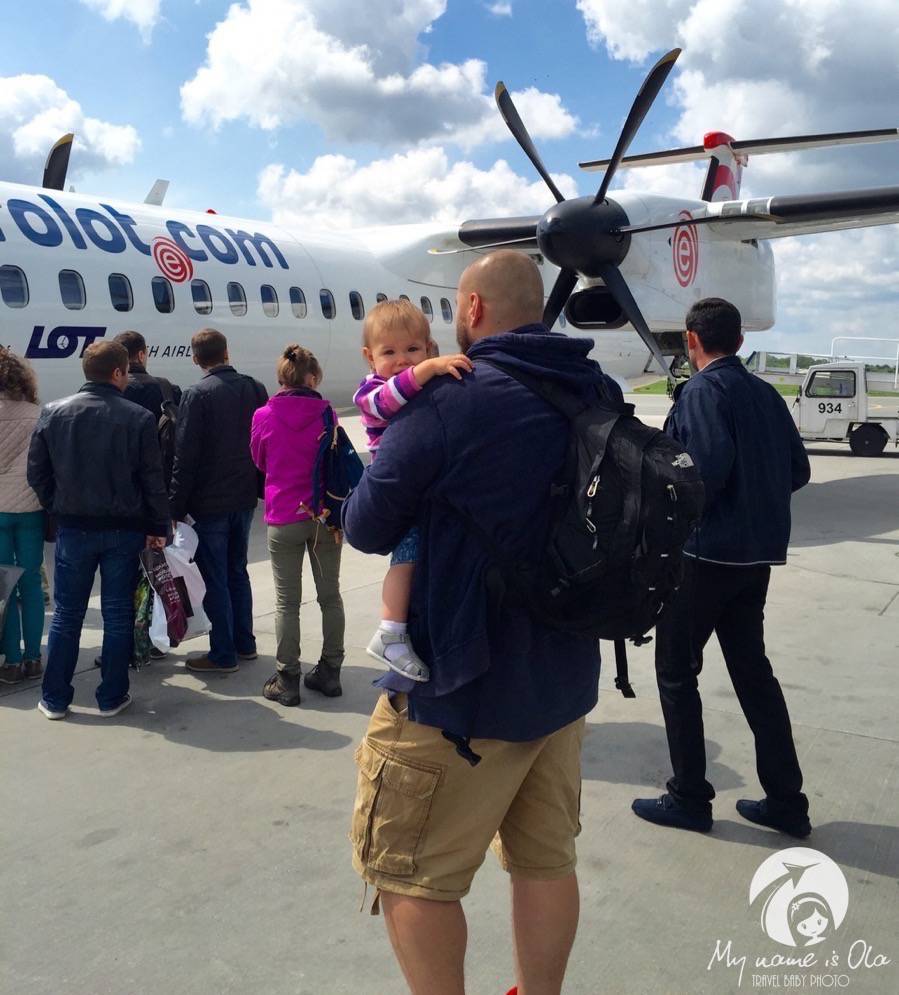
The youngest travellers can start their adventure with airlines’ loyalty programs in fact only when they will be old enough to have their own ticket which is after they celebrate their 2nd birthday. Before that time an infant, because an infant according to airlines is everybody below 2 years old, travels on parents’ laps paying for the ticked only reduced fare. So he or she is not able to collect any points at all. Because our Ola gets closer to this limit every day we decided to go through the most popular airlines’ loyalty programs and check what they can offer for the youngest travellers.
1. Lufthansa offers a special loyalty program for kids and teenagers, everyone from 2 untill 18 years old. It is basicly the same as an adult Miles&More program where main aim of the participant is to collect miles which later on can be redeemed for airline tickets. You can join JetFriends program here and get welcome present of 2000 miles. On program account your baby child will acummulate miles, which will stay valid until he or she turns 18. Besides the possibility of earning miles joyning the program kids will also become club members and which through a special webstie will teach them some information about aviation. It’s actually a very interesting site. Definitely not for infants but for little older ones. The program does not work only onboard of Lufthansa but also all other Star Alliance members (Air Canada, Aegean Airlines, Austrian, Brussels Airlines, Croatia Arilines, LOT Polish Airlines, Scandinavian Airlines, SWISS, TAP Portugal, Turkish Airlines, Air China, Air India, ANA, Asiana Airlines, EVA Air, Shenzhen Airlines, Singapore Airlines, THAI, Air New Zealand, EGYPTAIR, Ethiopian Airlines, South African Airlines).
2. Wizz Air is an airline which does not offer their passengers any loyalty program of collecting points but for the youngest they prepared something special. It seems that this is the only airline that does not have any age mimits for kinds. That might be because their program is something different than the standard one. The thing is to print Captain’s Pass from Wizzair website and collect the stamps on your every flight. When you fill in all 6 charts after landing your child will be invited to cockpit to see the inside and meet the captain! Stamps can be collected even for the infant and since it takes some time to collect 6 stamps it is worth to join the play as soon as possible.
3. Emirates airlines have that Skysurfers program, where children from 2 to 16 years old collect as their parents miles that they can redeem for airplane tickets, games, accesories, electronic devices or admissions to Wild Wadi Water Park in Dubai. In those airlines miles expire within 3 years so you should rather hurry to spend them. Same rules apply in other carriers of OneWorld group such as S7, American Airlines, AirBerlin, Finnair or Qantas.
4. British Airways do not have any special program for kids but instead they have an offer for whole families. This is Household Account – one for whole family. In general it is about collecting point by all family mambers on one account managable by the head of the family. The advantage is that all accumulated miles can be redeemed by any of family members living at the same address. One household can count up to 7 people vining together. What is more members of Executive Club can add to the household 5 other people not living with them. Avios, as they call them, do not expire if only the account is actively used at least once every three years.
5. Loyalty progrem in KLM and Air France is called Flying Blue, and anyone older tha 2 years can join it. Apart from traditional miles earning they do not offer anything else for the youngest travellers.
6. Scandinavian Airlines welcome to their program every child younger that 18 years old. It is called Euro Bonus and comes down to the same as all other programs – collecting mileas which can be used for tickets or hotels purchase. The only advantage for kinds is a 50% discount on purchasing tickets using earned points. Same rules apply not only to Scandinavian Airlines but also other companies from the group such as airBaltic, Wideroe, Estonian Airlines i Atlantic Airlines.
Whether to join the program or not you have decide on your own but since it is completely free of charge we advise to do it. Maybe one day you wil find on your account anough miles or some nice surprise.
Flying different airlines kids can count on some privilages no matter if they join any program or not. Some airlines have small gifts for them such as little mascots, baby bibs or other gadgets and almost always they have baby food in jar available on board.
Every day we do not realize how quickly time passes. We did not notice when it happened but we recently foun out that Ola is not an infant any more. We don’t know when but suddenly she became a little girl. The time from her birth until the moment when she stopped being a newborn passed extremely slowly. But in turn the period of her infancy passed so quickly we do not know when. Fortunately, we have the feeling that we really took advantage of it, first of all because of the time we spent together. And if in addition we managed to visit several places together, the more happy we are. Thanks to those trips we gathered some experience in traveling with an infant and until we totally forget how it was to pack, get around and visit new places with such a little baby we want to share this knowledge with you. All you need to know about staying in hotel with a baby you already know.
We want to start today with the question: what to take with you for the city break to Paris, Moscow, Barcelona or any other beautiful place, a woven wrap or a baby stroller?
We put the question that way mainly because all different types of baby carriers or other backpacks for babies do not have the best reputation among physiotherapists and doctors because they do not necesarily correctly shape our kid’s spine. There are of course some type of those that will not hurt our baby but we were never sure if the one that we are looking at was really safe or it was just marketing. So as an alternative for the stroller we chose woven wrap which has very god opinions of all experts. We have to admit that this necessity of proper carrying for the babys spine became the priority for us and made us choose the woven wrap to carry Ola.
So let’s get to the main question: what to take for the baby for holidays when you will fly by plane, plan to do some sightseeing visit restaurants and so on, woven wrap or a stroller?
Each of this option Has its pros and cons. The most simple answer is: take both! But who will fit in addition a woven wrap to the carry on luggage? Surely nobody! You’d better spend few minutes on Reading this post and take the well thought decision before you leave.
Let’s start from the woven wrap.
It is actually quite a smart way of carrying babies. It allows in comfortable for mom and baby way cover different distances but it is not perfect in 100%. Pros go first:
Taking woven wrap gives us the possibility of wandering the city for unlimited amount of time. If in different baby carriers experts suggest to keep infants as short as, possible. In woven wraps you can walk with the baby as long as you wish. Of course until you don’t get tired yourself. Although the weight of the child is not something that you feel that much, after some time of walking you will get tired anyway.
And when you get tired it comes the time for break. Nowhere to sit? Just untie you wrap, fold it in half, put it on the grass and you will have a place to sit and rest for the whole family. Thanks to that you will easily change the diaper everywhere and let the baby and yourself rest.
Rome or New York, Paris or Bejing, sooner or later you will want or have to use some kind of public transportation. Will it be subway, bus, a taxi cab or trolejbus it will be very easy to jump on it having your baby attached to your own body. You will be able to forget about uneven pavements or huge curbs in eastern Europe cities.
Some will surely notice that baby tied to the parent (yes, dad can carry it too!) will seem to be more calm. It will be either the result of of being close to the parent for such a long time or simply the view. Imagine to suddenly get the possibility of watching everything from above! You would be speechless too!
Althought it is quite nice to carry your baby stick to you for whole day, we have to be honest and say that such solution has also some cons.
First of all you have to remember that woven wrap means another layer of clothes on your and baby’s body. In the middle of the summer when it is plus 30 outside the necessity of wraping yourself with some fabric seems like entering sauna. You and the baby will sweat as much even if you choose a „summer version” made of some lighter material. Such are of course available but an additional layer and this little heating device of 37 degrees will make you sweat anyway. On the other hand in winter it will be an advantage.
As we already mentioned winter – you will surely be happy to get that additional layer in winter but together with your coat and baby’s winter suit, it will become rather uncomfortable. We cannt say impossible to use but definitely uncomfortable.
Hot or cold, winter or summer, you can tie the baby to yourself and go exploring the city. But what about all the stuff? That is pretty clear that you cannot leave home for at least half a day without diapers, milk, water, other food toys, some warm clothes and so on. So you pack all those things to your backpack or a bag, put it on your back and start leaning like the tower in Pisa. Even if you share some of it with the other parent, it still means the necessity of carrying that by one of you right next to your usuall stuff that you used to carry only for yourself. But let’s not exagerrate, you will surely fit all that in one bag, and will be able to hold the camera in your hand that thanks to using woven wrap is free!
Since you are already packed, all things are ready, all you need to do is to tie the wrap. I believe that after few attempts you will be able to mount it in a minute but at the beginning of your experience it is the biggest thing to fasten it right. Not only that the strains and layers get confused but also when you pull one part, the other stays unmoved. Ehh… let’s start from the beginning. Only the proper mounting means safe for the baby position! When after at least three attempts you finally manage to do it right you are free to go!
And right after you leave, start looking around for some interesting sights suddenly you smell something… That’s right – the diaper needs to be changed. And whole prodcedure starts over again. Unwraping, doing what you have to do and tieing again, wraping, tightening…
Not easy, isn’t it? But nobody promissed it will be.
Let’s check if taking the stroller will be more convenient:
Folding it and packing to the car’s trunk you probably do perfectly already. Now imagine taking it out at the airport and right after that putting it apart into pieces to fit it the security scanner. That’s when you regret taking it with you for the first time. Once you are done with dismounting all you need to do now is to mount it again on the other side of the scanner. The scanner of course has to be that small otherwise you might fit your stroller there without disassembling it!
We all know what is the biggest terror for the people with baby stroller – stairs. Being on a trip with the stroller will definitely not encourage you to use metro. Seeing so many stairs you will sweat immediately and start looking for some lift that will take you to the platform. Oh, it’s not right platform? Wrong lift? And where are all the others who took the stairs? Grrrr…
Even entering the bus will require from you some more physical activity. Especially in some eastern cities where still to some buses leads nothing else than stairs.
Finally there comes the time to get something to eat. Maybe some nice local restaurant? Perfect, if only tables are far enough from each other to fit the stroller between them. Right away you can forget about those little restaurants on Rome’s piazzas or Paris’ places, where tables are almost one on top of another. So maybe inside? Oh, hope the door is wide enough to drive the stroller through. It isn’t? You can always take the baby on your hands and leave the stroller outside. Outside? It cost almost as much as an old car!
It’s not easy to be the parent with the stroller. But you have appreciate the comfort your baby gets in his or her own stroller. He or she can freely stretch, turn around and sleep when they want to. Even if you want to stay somewhere till late your baby can fall asleep anytime and anywhere.
There is one more advantage of the stroller: you can pack all the baby stuff there and easily push it in front of you instead carrying it on your back. You won’t even notice that there is something more in the stroller and your back will not get wet from carrying the backpack.
And what is more you will easily change the diaper, feed and entertain the baby in the stroller.
As you see, each of those options has it’s advantages. Now you should think which of the disadvantages seem the most annoying for you and choose the other option. The truth is that you hardly ever travel alone with the baby and there will always be somebody who will help you carry the baby, backpack with the diapers and all other stuff and you won’t have to carry the stroller by the stairs yourself. Even if you are planning a weekend only with your baby remember that in every corner of the world there are other people who will be happy to help a parent with the baby.
And remember that stroller travels by plane for free and usually it’s the same way in public transportation.
If you don’t hold your military actions, tomorrow I will have breakfast in Tiraspol, lunch in Chisinau and dinner in Bucharest – with those words general Lebied stopped Moldovan army in 1992 and de facto created a new country on the European map: Pridniestrovian Moldavian Republic, which officialy keeps close relationship with Russia and remains in their influence until today. Lebied threat was so powerful that resulted in ceasefire right on the next day. Situation has not changed over the last 20 years.
HOW IT ALL HAPPENED
It is not really the truth that Transnistria was created by Lebied in 1992 because the region announced its independence already 1990 hearing that the authorities of Moldova consider its reunion with Romania. At that time their decision was recognised only by countries such as Abkhazia and South Ossetia who remain their exclusive suppotrers until today. In 1992 Moldovan authorities tried to do something with this difficult issue but Russia stood up for it in person of above mentioned general Lebied. It is when those famous words were said; thanks to them ceasefire was agreed and Russian troops located in Transnistria were not send to fight. Strong Russian influences in the region may proove the fact that right after self-styled Republic of Crimea decided to join Russian Federation, Transnistria parliament turned to Kremlin with similar proposition. So far it remains unanswered. We will see for how long.
Today officialy unrecognized republic occupies 10% of Moldova’s territory to the east of River Dniester. Its citizes are in almost even parts Russians, Moldovans and Ukrainians, who all together opt for Transnistria independence. Although the country officialy does not exists, it established border controls, has its own government, president and even their own currency. The capital of Transnistria is Tiraspol – a small city located in southern part of this narrow stripe of land occuppied by Transnistria.
Because the republic remains in Rusian influence area, everyone and especially people with western point of view, see this place as nothing more than one big relict of communism. As a country that in fact does not have any relationships with others besides Russia, Transnistria indeed is in a kind of isolation form the rest of the world. But we have to admitt that the level of socio – economic development is not lower than neighbouring Moldova’s. We would even dare say that it is better. Because we had a chance to visit Transnistria for the first time already couple years ago, in the times when we did not have Ola yet, we are able to tell you how republic had changed, developed over the years and how it looks in comparison to Moldova. Right after crossing the boarder we noticed some differences. That was the roads. They became wider, more even and without those hundreds of holes that we had to struggle with in Moldova.
Car rental company did not allow us take their car to Transnistria so we had to leave it at the boarder, cross the boarder on foot and look around for the taxi. Boarder crossing went smoothly this way just like the other time but we kept on remembering our negotiations with officers on our way back. Our main thought was how not leave the boarder as soon as possible without paying extra for it. Taxi driver we caught happened to be Moldovan, probably just visitin Transnistria, but as a taxi driver could not deny himself making some money on tourists and took us to Tiraspol for some crazy money.
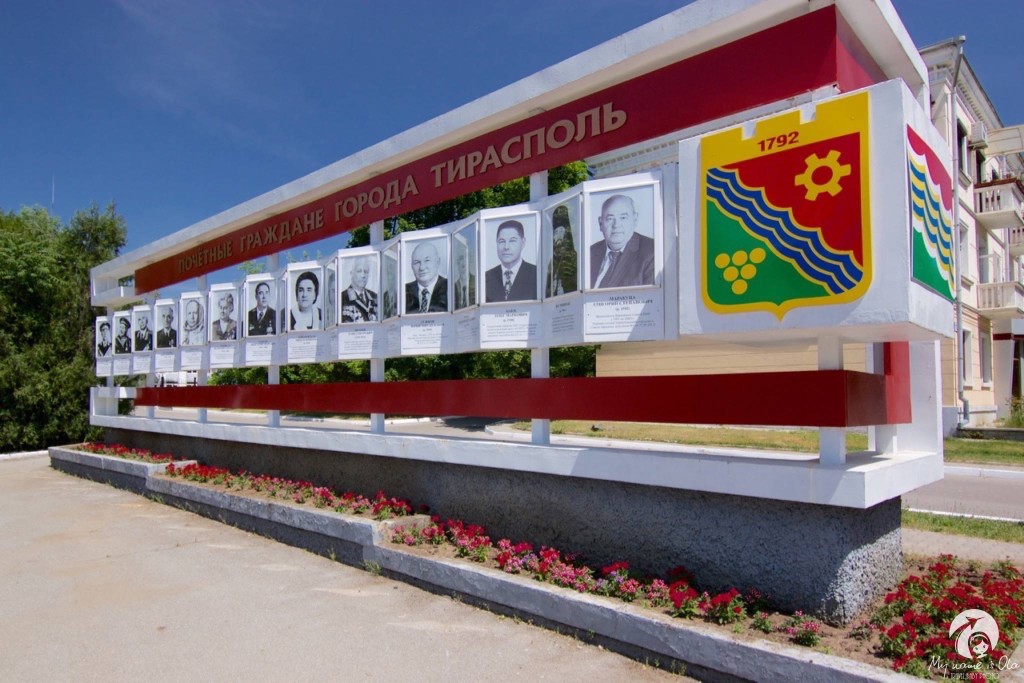
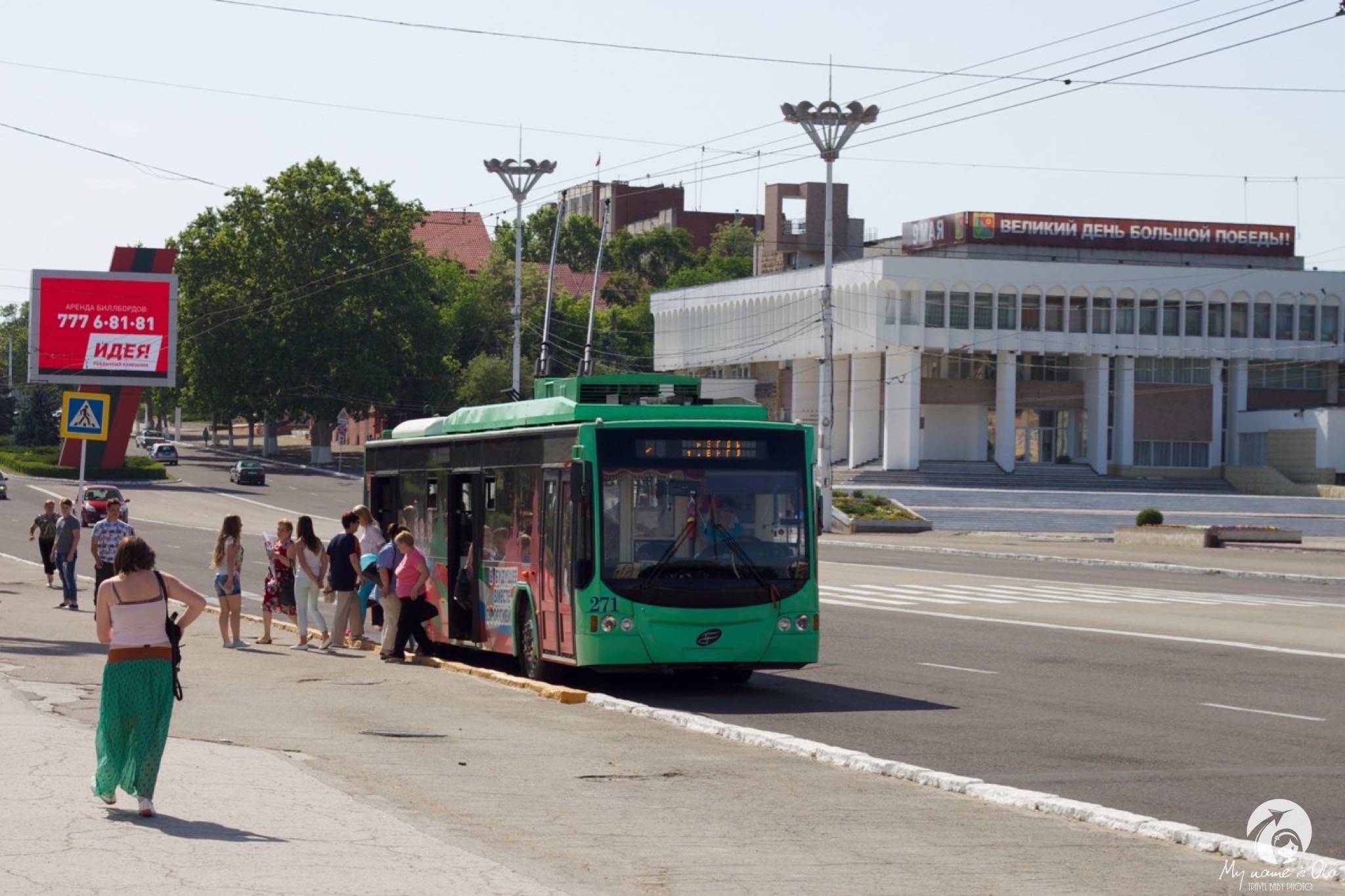
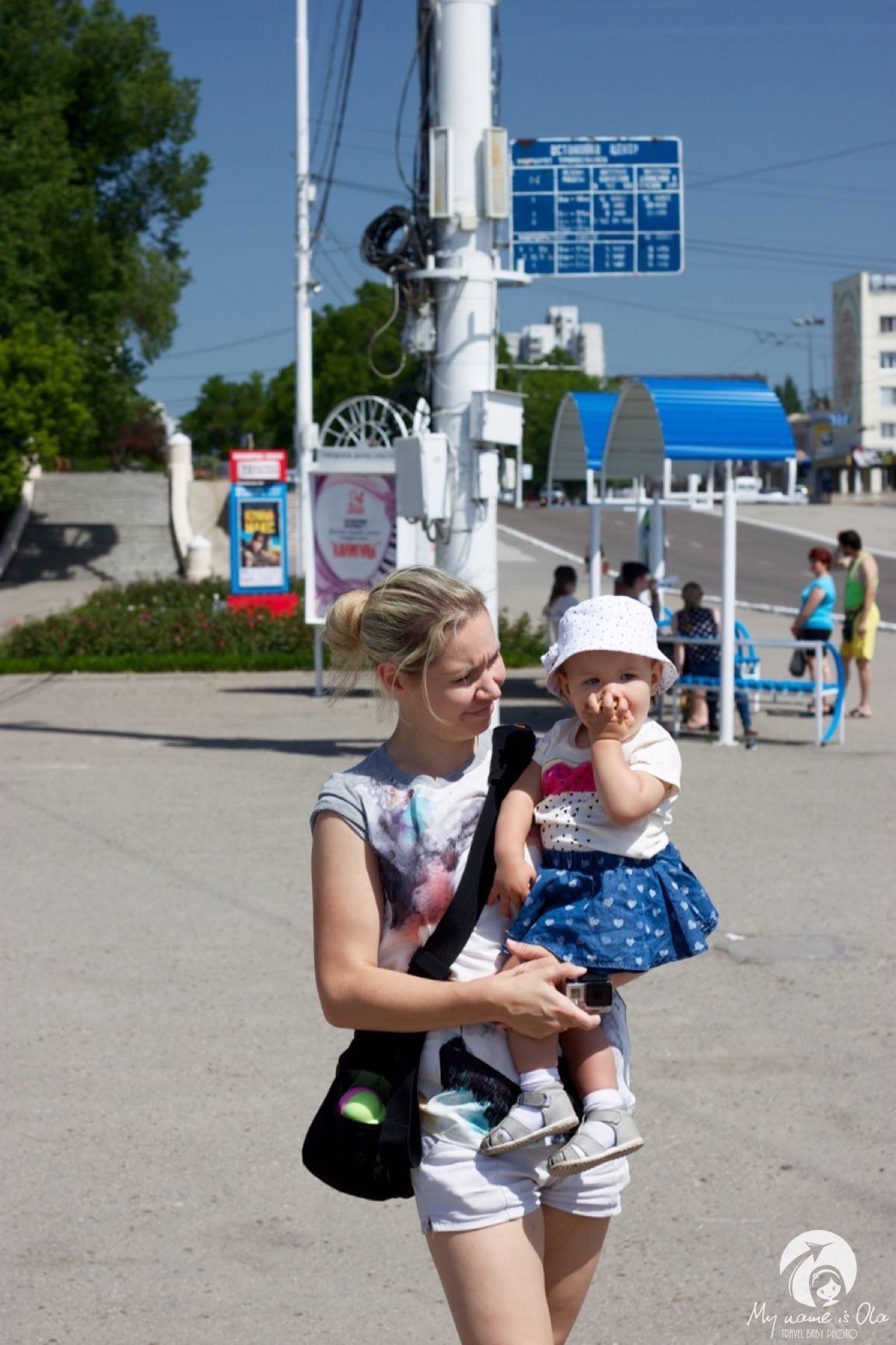
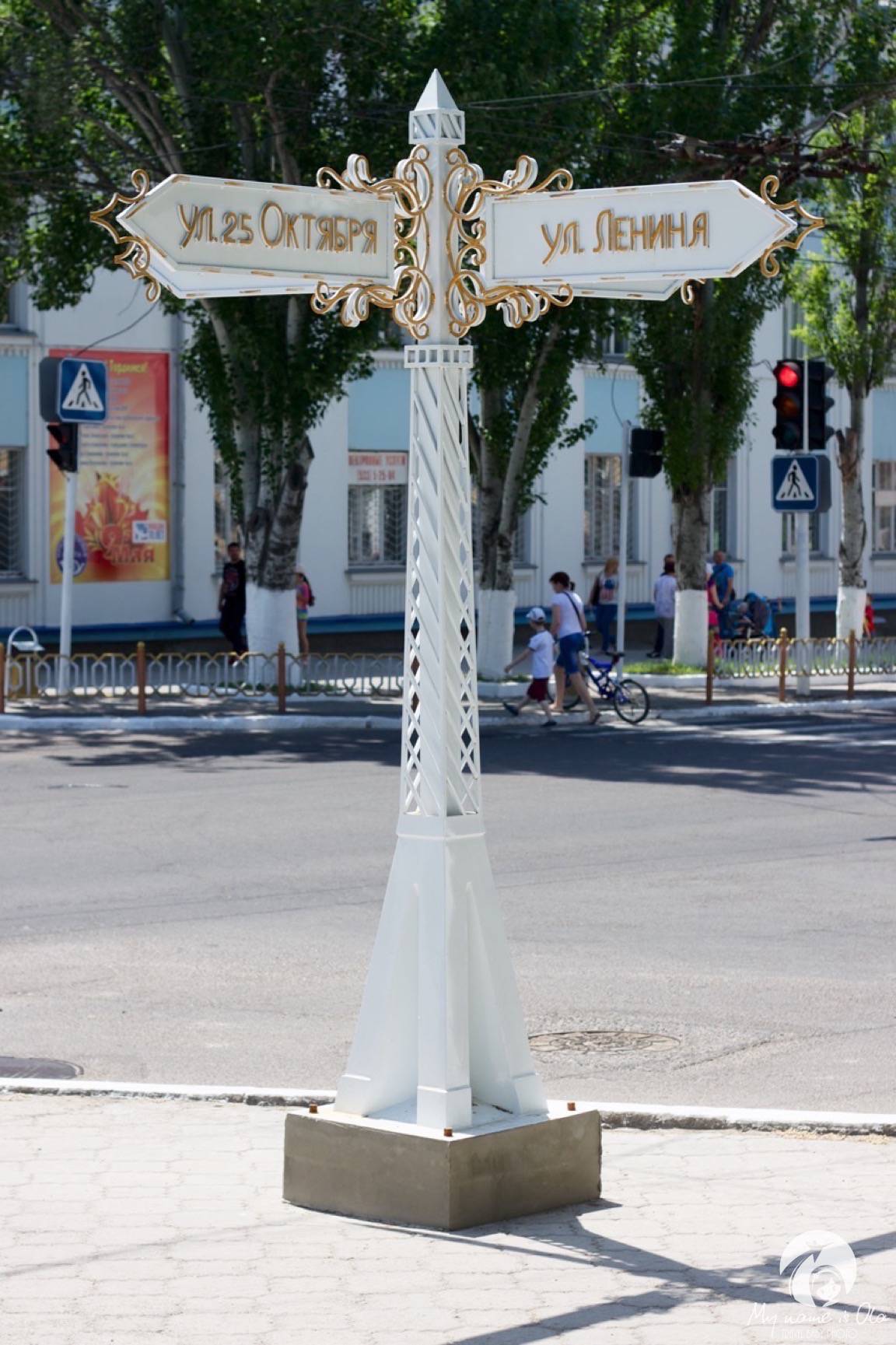
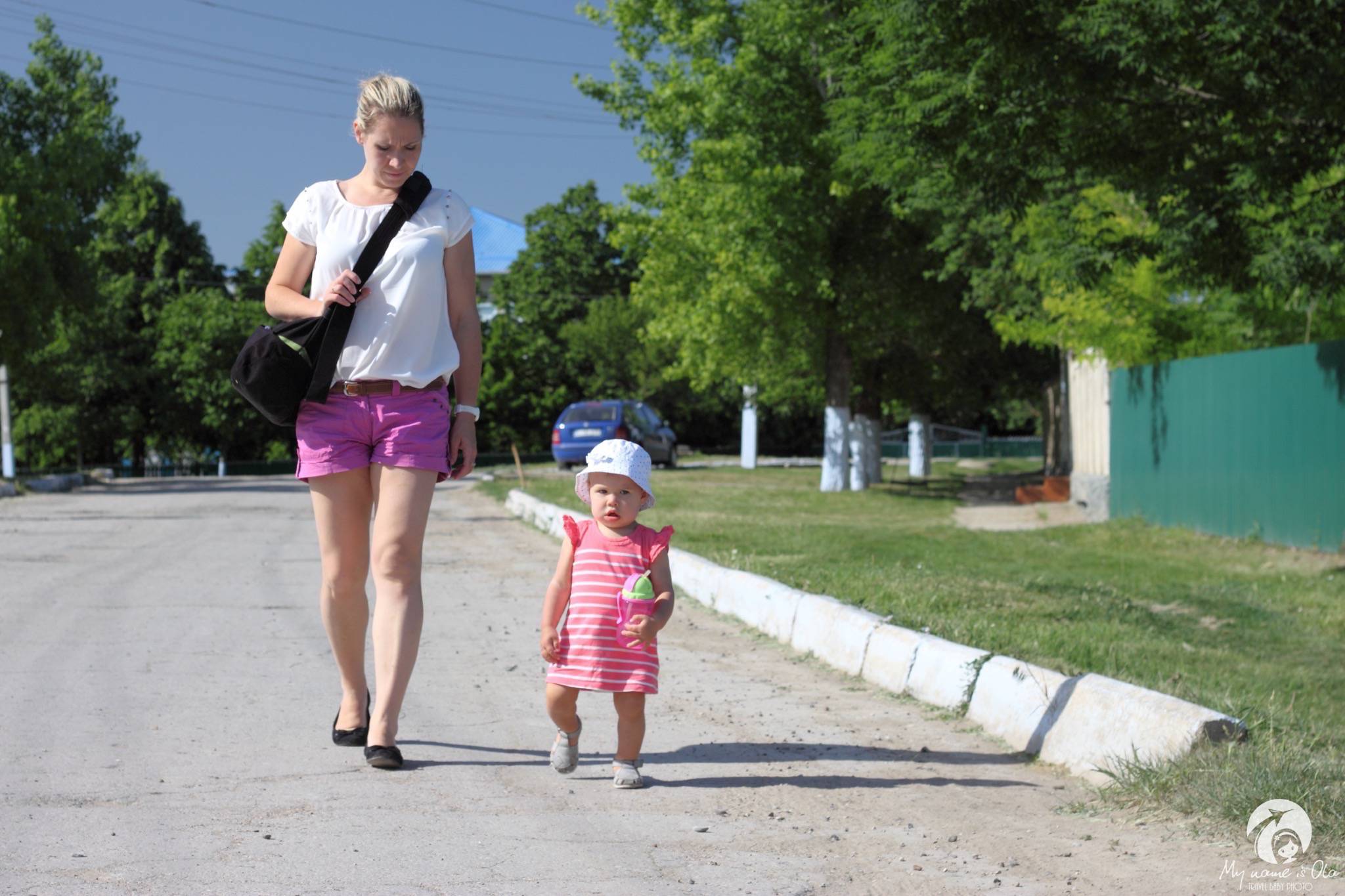
150-thousand-city of Tiraspol for the tourists comes down to the main street and maybe couple of other points around. Main artery is wide, sometimes very wide reminding a square or an airport belt. Road is almost even, no holes and curbs high, indeed of this socialist style – white painted. The walk through the main street took us this time a little longer than before as Ola’s little feets were not able to walk fast in this burning sun.How it was going you can see here:
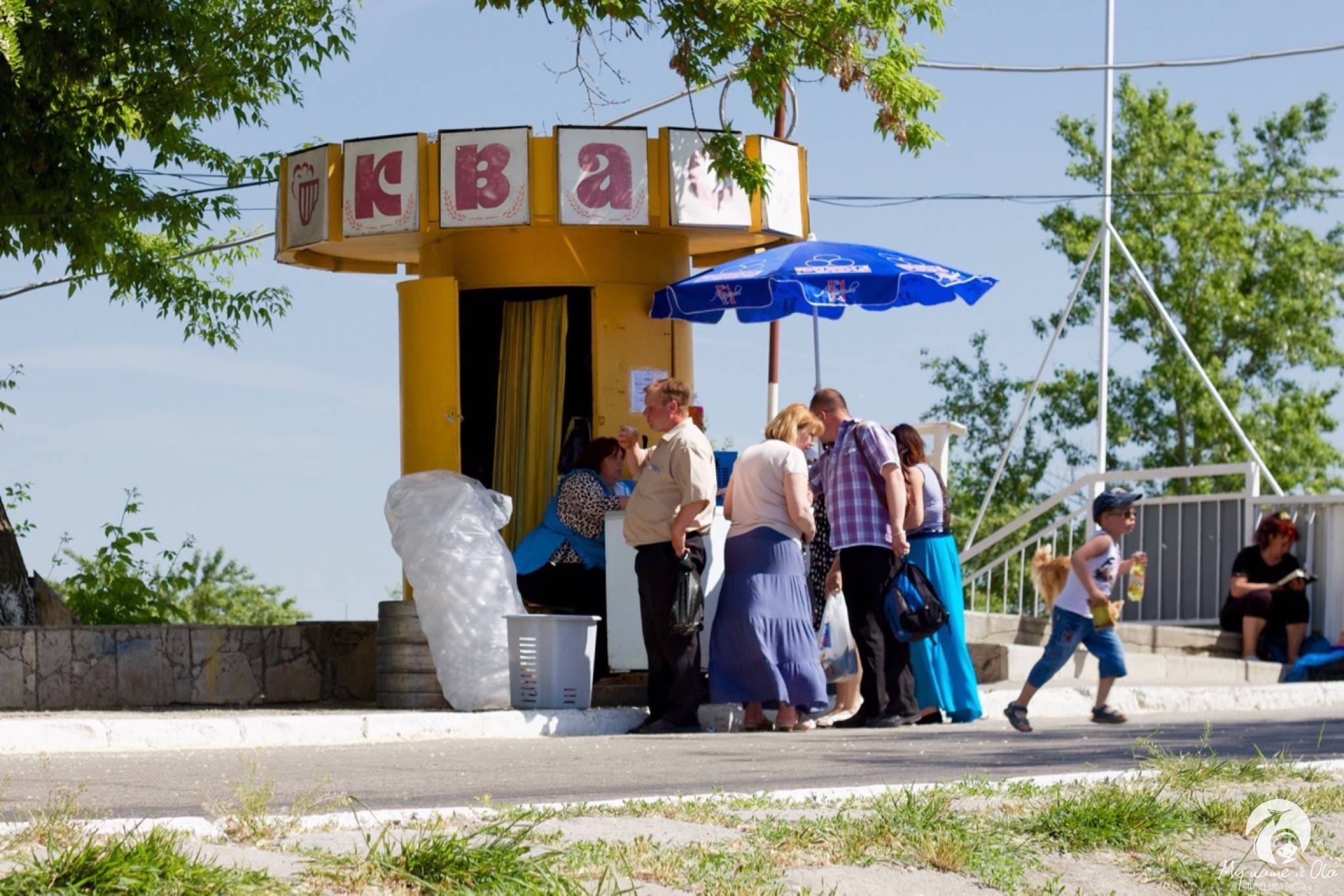
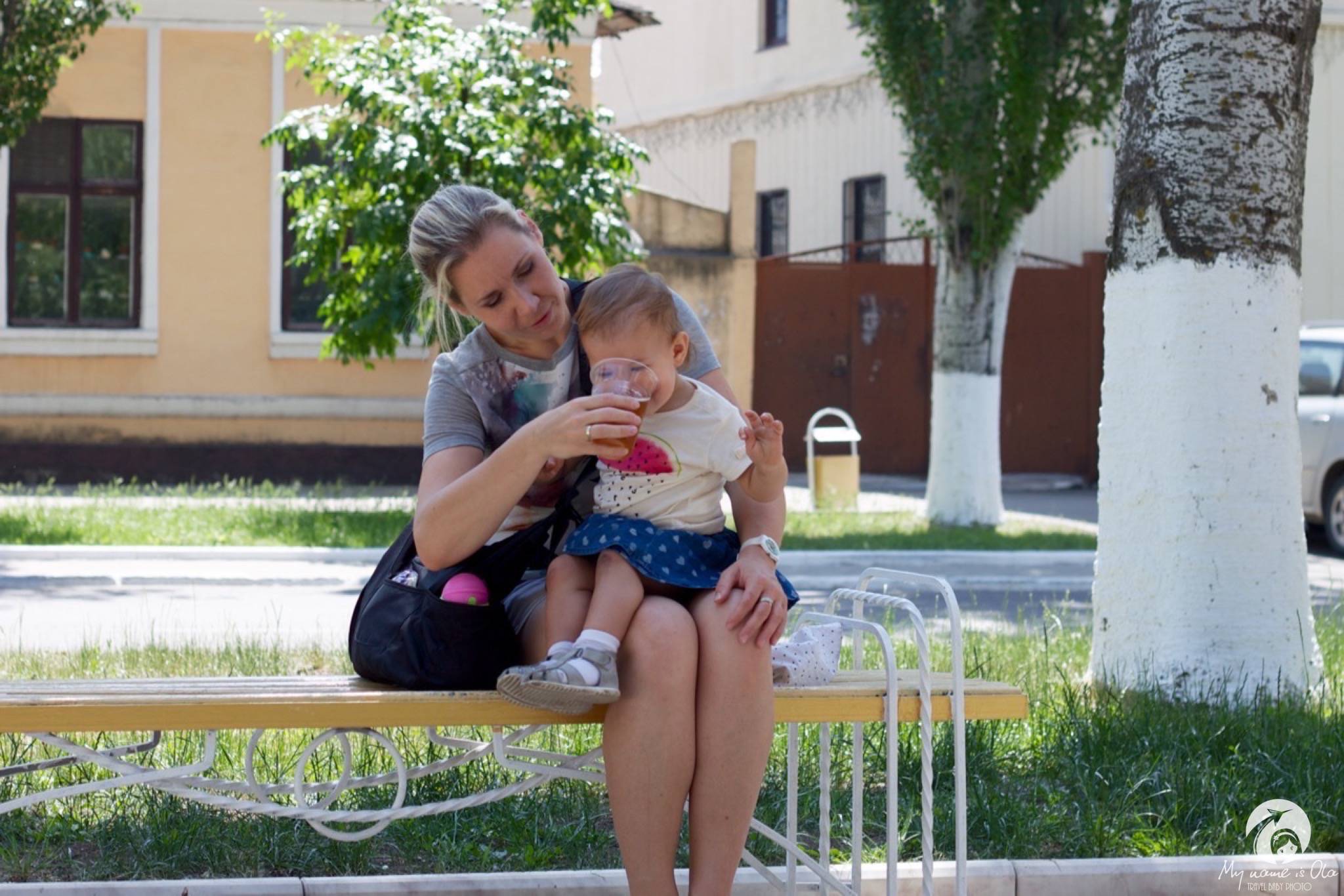
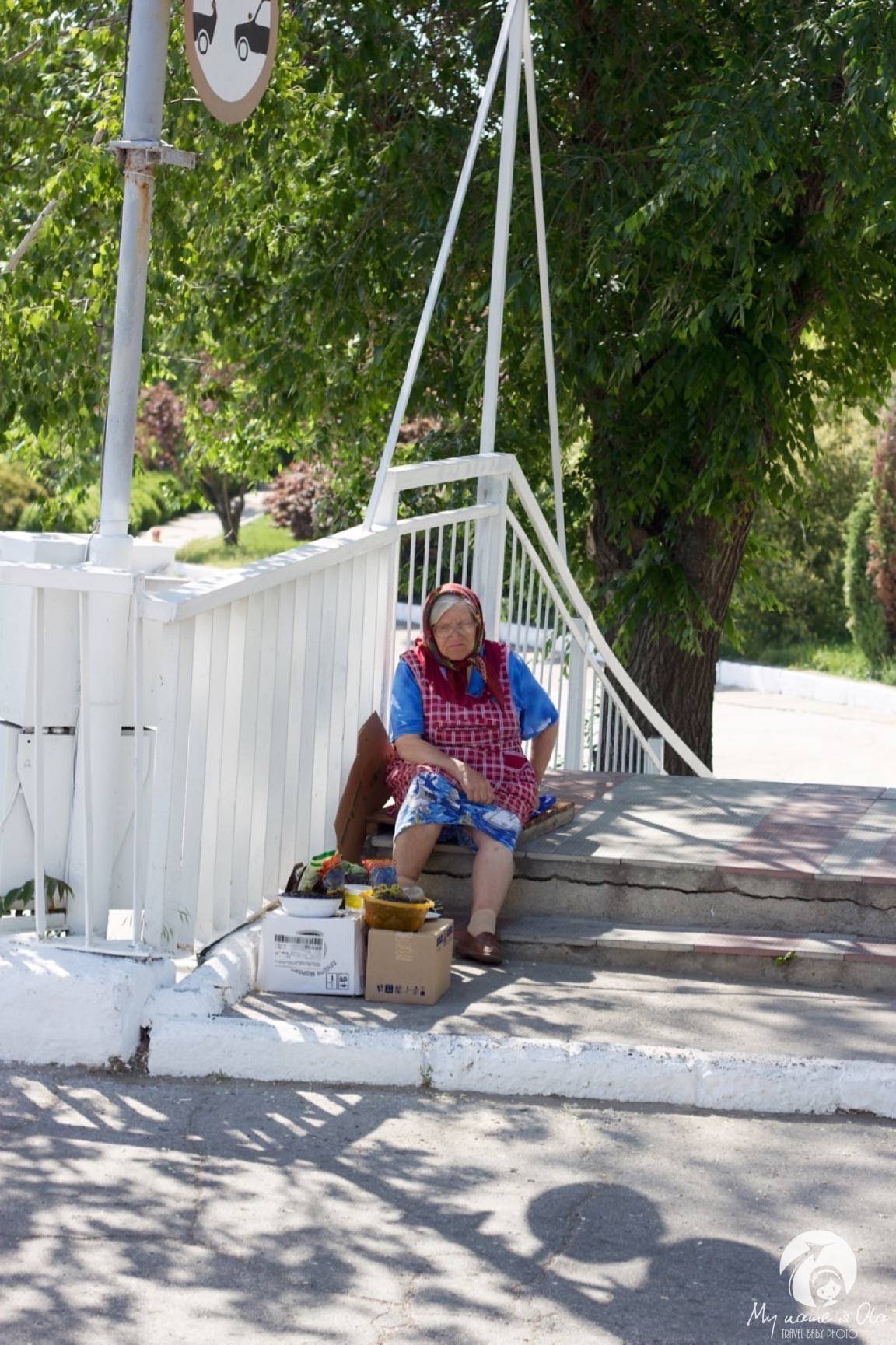
Thankfully on the streets of the city there are many booths selling kvas – refreshing, cool beverage sold from draught. Having a glass of it is a perfect way to cool yourself. Although its prices are rather advantageous it is not that easy to get it. You will not receive it for your euro or dollars, nor for Russian rubels or Moldovan leis. Every very welcomed tourist has to present local currency – Transnistria rubels and use them to do any transaction in the country. There are money exchange on every corner so after a while we could enjoy a glass of cool kvas. Even Ola, encouraged by the seller, has tried it and at our suprise liked it a lot. The walk down 25th October street we started from the building of Drama Theatre, located right next to Victory Park, and headed west.
[photosetgrid layout=”12″][/photosetgrid]
Right at the beginning of the alley it is worth to already step off and visit the factory of the most famous Transnistrian brand Kvint. They produce decent quality cognac and wine, which in most cases goe straight to Russia. Factory tour is possible only on weekdays but souvenir shopping – everyday. But only to visit the souvenir shop you don’t have to go to factory because Kvint has its store on the main street, where in advantageous prices you can get all their products, such as wine straight from the barrel and other alcohols.
PECUNIA NON OLET, OR WHO WILL PRINT THE MONEY OF THE COUNTRY THAT DOES NOT EXIST?
Passing by the first in the country ATM we are slowly getting to the central bank of the republic. We found out that our country had a chance to take part in their history couple years ago as their currency producer. That was one time cooperation as printing the currency of the country that doesn’t exist almost ended up with the diplomatic scandal. As we are already at financial matters it is worth to say that going to Transnistria you should be well equipped in cash. Currency as you wish. There is a lot of exchange points but the ATMs are of Russian banking system and the only money you will get there are Russian rubels, which you will have to change to Transnistrian anyway.
[photosetgrid layout=”12″][/photosetgrid]
Finally we reach the central areas of the city where we find more bars, restaurants and shops. The most popular restaurant seems to be Moldovan Andy’s Pizza offering mainly western cuisine, maybe with few local positions on the menu. American way styled place offers kids corner, menu for the little ones and maybe even high chairs. Prices are preferential but remember about having cash. This time looking for something more local we sat down in some other restaurant nerby, but because very poor non-meet options we dont’t even have anything to tell you about.
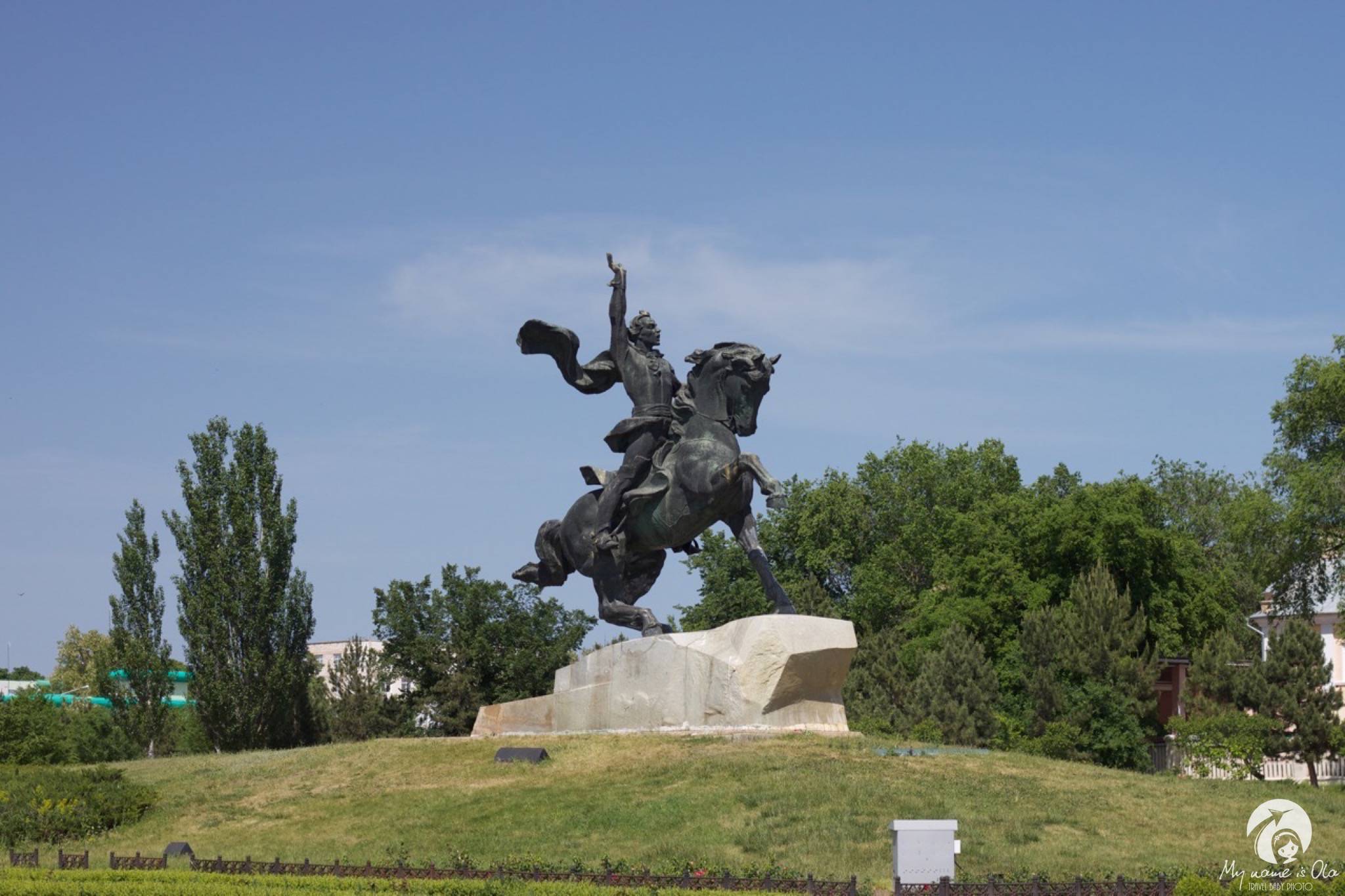
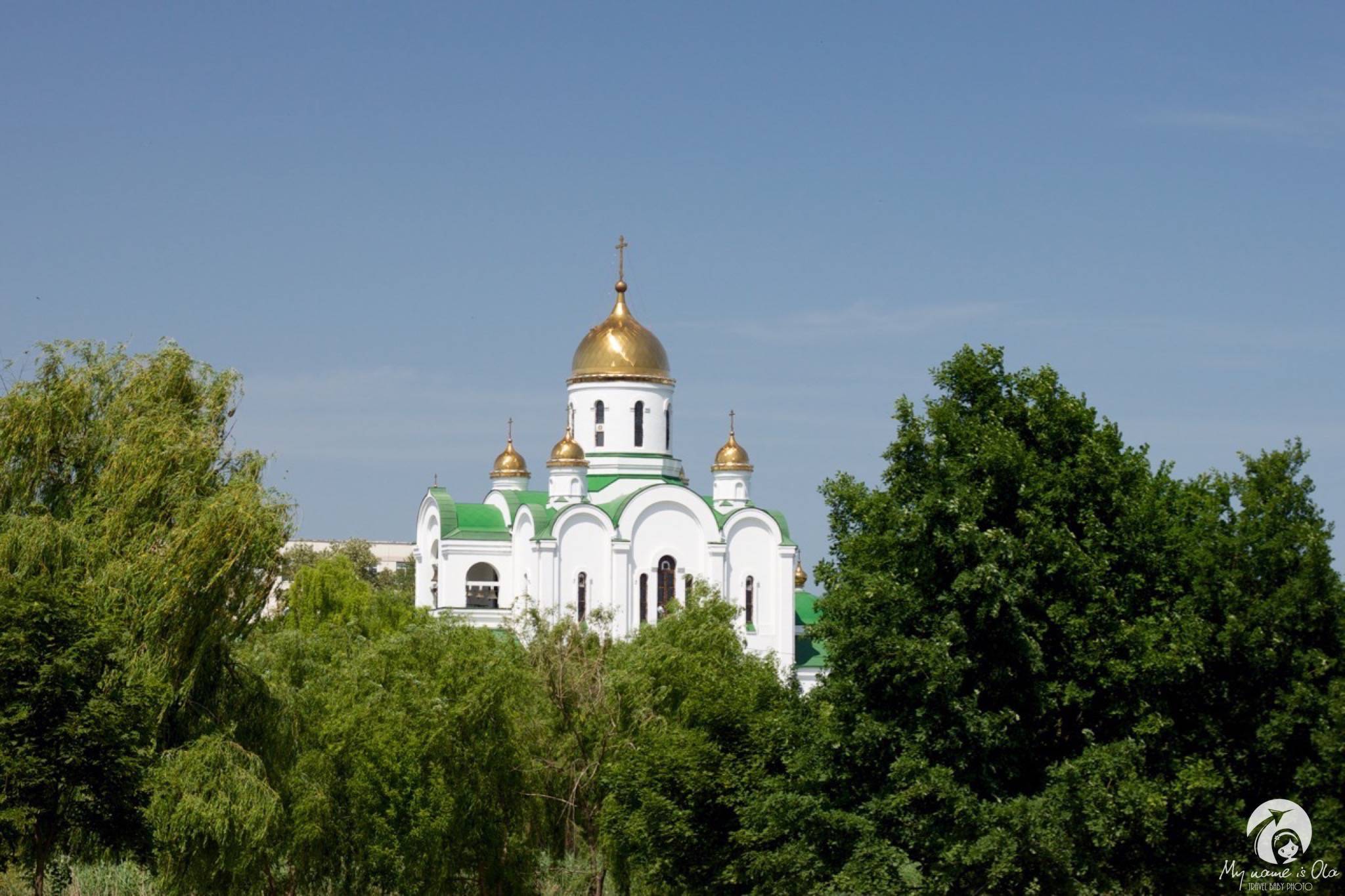
Ola couldn’t wait until we sit down in a restaurant and had hear dinner from the jar in located accross the street park by the cinema building. Behind the cinema there is a beautiful view over The Cathedral of Nativity. Snow-white walls carry green roofs and gold domes above the tree line. Central point of the park is the monument of Alexander Suvorov on his horse.
[photosetgrid layout=”12″][/photosetgrid]
Crossing the street we are coming closer to Dniester. The river in this area is quite wide and winding. For those longing refreshment there is a sandy beach on the opposite bank of the river. In hot Sunday afternoon we found quite a lof of people enjoying sun and water there.
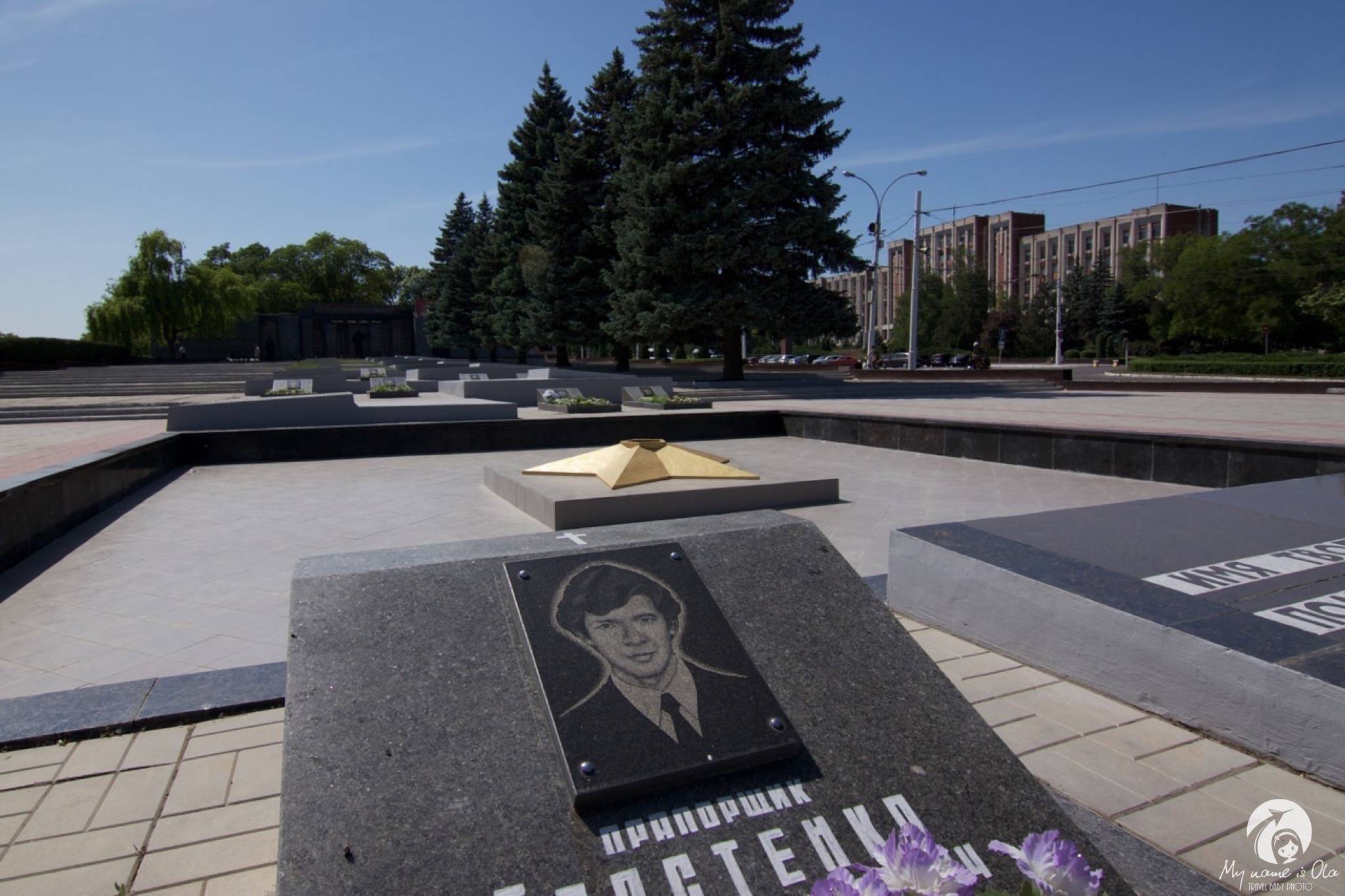
Just over a steep bank of the river, Tiraspol authorities arranged memorial complex for soldiers killed in 1990-1992 war, World War II and the war in Afghanistan. An eternal flame burns in honor of those who sacrificed their lives defending and liberating the city. The square is dominated by a tiny tower-shaped Orthodox church of St. George.
[photosetgrid layout=”1313″][/photosetgrid]
The memorial must play a significant role in shaping patriotic attitudes as even the groups of the youngest children have this place in their trips program. Seeing so many children Ola got extremely happy and was of course ready in a minute to run towards them and ruin their souvenir photo by T34 tank commemorating Soviet victory in World War II. Luckily we managed to stop her and save the souvenir photo of whole group.
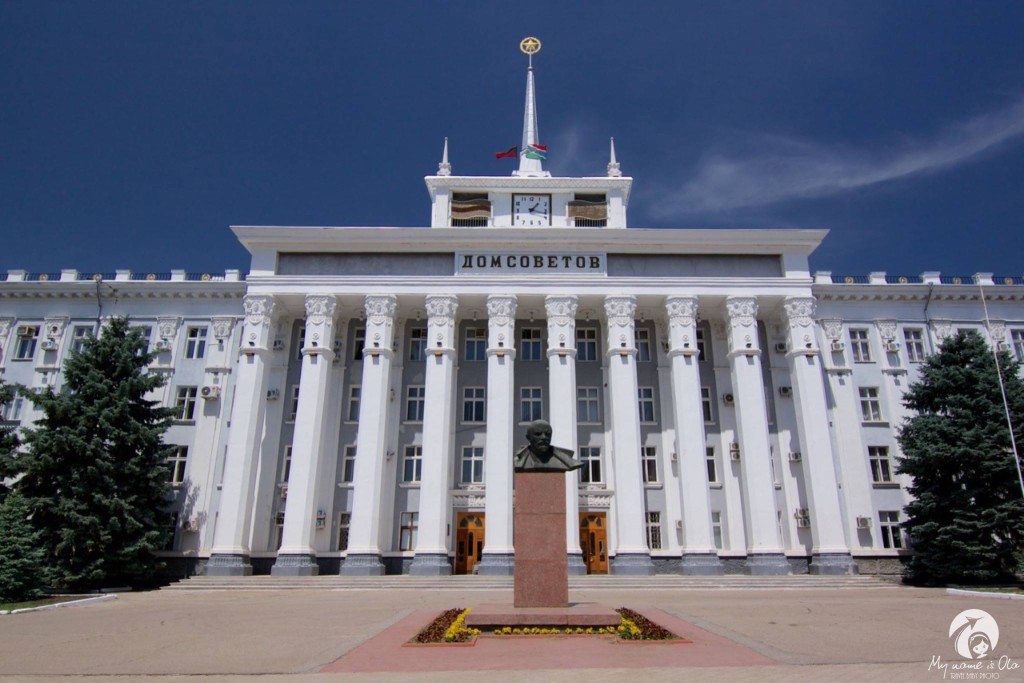
Last stop on our walk down the street was I think the most famous point of the city – the monument of Vladimir Lenin, the monument thanks to which the whole Transnistria is seen as live museum of communism. It shows the leader of the revolution in long cloak fluttering on the wind. Made of coopery red stone monument nicely composes with standing behind his back some military edifice. Be careful, no pictures of the building are allowed. You can take the photo of Lenin with the building in the back but not of the building itself. That rule reminds us the one in Minsk that says that taking pictures at the square by the Palace of the Republic with a tripod is not allowed.
When it comes to monuments and other tourist attractions, that’s probably all. Now you can return to the areas of Suvorov’s monument, eat something in one of the restaurants, go shopping on the main street or to the shopping center located a bit further, take a stroll along promenade by Dnieper River or sit on the beach and drink wine that you bought in Kvint straight from the plastic bottle.
LOCAL BERLUSCONI?
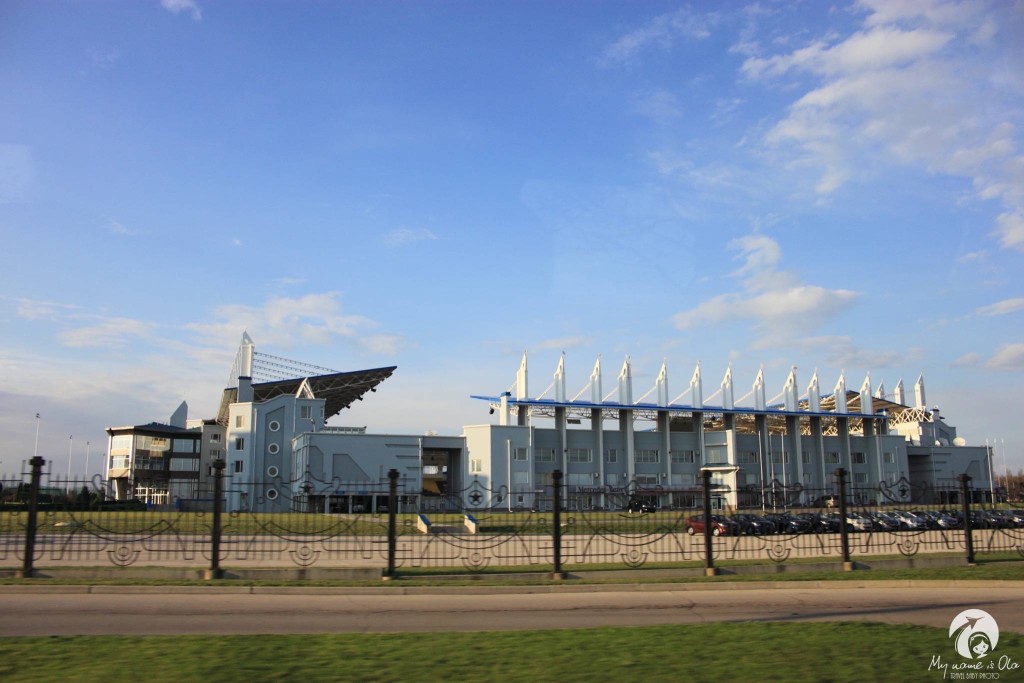
Our impressions about the city were very positive, we only wondered what local people can do there for living. There are few main options: work in Kvint, in textile company Tirotex or look for the job at Sheriff’s. Sheriff is, using western language, a corporation dominating all most important sectors of Transnistrian economy. Basically it is enough to look around to find the Sheriff’s starr everywhere. Gas station? Of course – Sheriff. Football team and city stadium as well. They are monopolist in most of profitable braches of business: shopping centers, construction, advertisement plus what is also the most important – media. Company owners are of course active also in local political life. It is obvious that without such activity building that big company would not be possible. Today political relations are not that much of Sheriff’s favor but the empire is still in working. So many businesses in one hand, political activity plus media – doesn’t that remind you Berlusconi’s empire a little?
TOURISTS IN TRANSNISTRIA
Tiraspol is a very calm city, life goes here a little slower than in other capitals in Europe or Asia but you can tell that the city develops, new buildings are being built. For example in the very center of the city huge apartment building is growing. Traffic is much slower than for example in Chisinau but besides standard in this area marshrutkas, passengers enjoy new trolleybuses. Streets are clean, wide, city architecture spacious; the city looks like a pleasant place to live. Comparing to our last visit we noticed increase of the number of tourists walking streets of the city. By that increase we mean that apart from the three of us cheerfuly wandering Tiraspol we saw at least one tourist with the camera hanging on his neck.
[photosetgrid layout=”13″][/photosetgrid]
The number of tourists must be growing as tourist agencies start to show up. We came acros a modern one run by young people selling different forms of tourist activities. Taking in consideration local conditions we have to say that their prices are rather high but should admit that they have some interesting options in their offer. Transnistria Tour offers among others tours following German or Jewish footsteps in Tiraspol, an excursion to the bottle museum somwehere out of town or a trip to shoe factory that includes plant tour and a 10% discount for transnistrian just made, brand new shoes! You see that there are many different ideas for Transnistria, all it takes is to dicover those curiosities in the city space or even in the area of whole country. Transnistria can offer more than just a walk down the main street of the capital.
[photosetgrid layout=”13″][/photosetgrid]
Progress in republic’s development, besides the main street, is visible also on the boarder. This time when we were leaving the country the issues of any “bakshish” never came up. We even had a pleasure to discuss with officials, working in brand new booths, the political situation in our country. The presidential election was at that time a hot topic.
Oh, and on the way back we recommend to stop in one more place – 16th-century Bendery Frotress and look down ot the valley of winding Dniester.
In 19th century living in Jezewo, a village located not far from Bialystok, Zygmunt Gloger, famous ethnographer and historian started brewing beer. The brewery produced until 1954 and enjoyed good reputation. Today it is only history and ruins of the brewery not far from Tykocin. Recently some people wanting to reach back to this glorious history showed up. They set up City Brewery Gloger in the city of Bialystok in north-eastern Poland. We decided to check how their first production went and what is its result.
Beer revolution is coming
Poland is floded with new wave beers, we already have over 100 new breweries, hundreds of beer premiers a year. The wave of the revolution got also to Podlasie. Next to already existing breweries such as Slodowy Dwor and Stara Szkola, City Brewery Gloger came up. In the era of beer tourism, very often beer becomes something that attracts people to the region. It was the same with us – although we are not beer sensors, during our different trips we visit some places only to see beer house or beer festival. When we heard about new beer house in our city, we were happy to have here some interesting production that might, next to the obvious natural qualities, become also a reason for visiting Podlaskie.
[photosetgrid layout=”12″][/photosetgrid]
City Brewery Gloger
Brewery is located outside the city center and together with the brew house there is a big restaurant. Inside it all looks very nice, minimalistic design, big garden. The only thing that surprised us was opening hours: in weekdays they are closing already at 9 pm. But thankfully practice shows that if only there are customers they are able to close later. Together with beer you can try some Polish cuisine with knuckle of ham and sausages. Vegetariand will have to watch the others eat bacause there in no offer for them in Gloger. We stayed only with beer. It is quite surprising that the brewery started with ten kinds of beers right away. It is pretty bold. On their premises they are available as draught and in bottles. We expected to find, popular in places offering wide assortment of good beers, some tasting offer of smaller volume glasses. Unfortunately they don’t offer such thing. We did not manage to try all the beers being there so we took couple bottles home.
Flat beer, or top fermentation
As new beers fans we started from India Pale Ale, which as we found out was one of their worst beers. It is unpasteurised of 16°Blg, 6,2% alcohol. Not in the restaurant nor on the bottle label we found information about what kind of hops and malts were used for production. We looked also for IBU, with no result. This lack of information refers to all Gloger beers. Plish IPA is dark, unclear, has a very poor foam and almost no aroma. Do not expect citrus ot other associated with American hops aromas. We were also disappoined by the taste, bitterness was very delicate. The same beer from draught seemed a little better than drunk from the bottle at home.
Gloger Herbowy is a wheat beer of top fermantation with 12,6°Blg and 5,4% alcohol. Our first impressions were positive, nice foam, interesting look. Label announced bananas in the aroma but we haven’t found them, however we can say that it tasted nicely. We mostly found there wheat. It is a very dry beer, refreshing, although dominating in flavour sourness might not be liked by majority of drinkers. It is worth to pay attention on the name Herbowe – before Kompania Piwowarska it was a top beer produced in Dojlidy Brewery in Bialystok. Although it was a regular lager its name is still very well remembered and appreciated in the city. But we do not expect that Gloger Herbowy will succeed on the same scale.
Another beer we tried was Rubinowe, Red Irish Ale with extract 12,5° and 5% of alcohol. Coppery color, nice but short lasting foam. Aroma is poor, malty, same is flavour. It is difficult to find any hop aromas, bitterness at our surprise was there but it disapeared very fast. Beer is flat. We moved on to the next one with no regret.
Brewery staff advised trying their Stout beer but we believe it is not the best option. Beer is not exceptional. Extract 14° and 5,7% alkcohol, it has dark brown color, tastes of roasted malts mild, even poor. Foam difficult to be achieved at all. The beer seemed for us to be poorly hoped, bitterness very delicate, general impressions negative. As we read on the label the beer was supposed to be full, with coffee and caramel aromas. It was hard or impossible to find those flavors in this beer.
Bottom fermentation, or classic types of the same quality
We started from Marcowe. Historically this type of beer was produced in the first weeks of spring and than cellared until fall. It is famous mostly thanks to Monachium Oktoberfest. Here the beer could not have been cellared for that long, however it tastes good. Godlen color, malty taste, foan unfortunately fast disapearing. Extract 13,7°, alcohol 5,8%.
Another bottom fermentation type we tried was classic pils. Golden color, nice but quickly disapearing foam, bitter taste. It culd have been quite a good beer it it wasn’t for its aroma. Beer experts would probably say that it is DMS, but as we are not experts, it will be enough to say that we didn’t like the beer, especialy its aroma. Extract 13,5°, alcohol 5,2%.
Golger Zlote we found to be the worst beer of this brewery (extract 10°, 4,1% alcohol). Light color, almost no foam, but the most important a kind rotten aroma reminding hydrogen sulfide. The smell was strong, repulsive. Because we had similar impression with Classic (12,5°, 5,2%) we gave it up and finished our adventure with Gloger beers. It’s a pity that those two beers, also with names referring to Dojlidy brewery, did not really worked out.
In their offer there are also two other beers: Brylant Jasny i Pszeniczne Ciemne. Brylant Jasny name was supposed to correspond to flagship product of the brewery in Jezewo Stare. You can check that on your own, we give it up already. Based on tested beers it seems to us that Gloger beers are not worth their to be honest very high price. The more that kraft beer market offers very wide selection of way better beers than theirs, in much better prices. For this money you can easily find something really good.
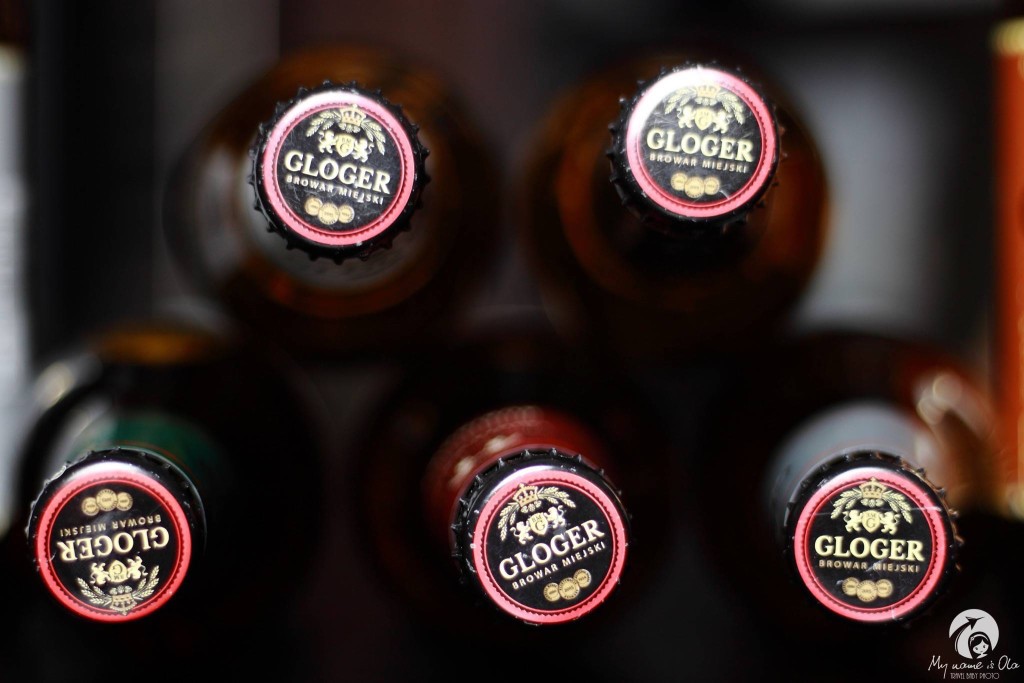
So as not to present everything in dark color we have to admitt that the visual aspects of the project are very good. Labels on the bottles are of classic style and make a good impression. We should praise also interesting caps with brewery logo. We hope that brewery will develope and in some time it will offer something better. Maybe it is just the matter of first brew and with each next one the quality level will increase. We will see. Maybe they should have focused on couple of kinds of beers and make them prefect instead brewing 10 at once? Who knows? They should also put some more information on the labels, such as used hops, malts and IBU.
We wish them good luck with next production and keep our fingers crossed for quality improvement because the initiative of recalling the tradition of local good beers is a very good idea but also a great opportunity to familiarize wider group of Bialystok residents with other than regular lager kinds of beers.
First three beers we tasted from draught and bottle, others from bottle only.
– But you know what the funniest thing about Europe is?
– What?
– It’s the little differences. I mean, they got the same sh… over there that we got here, but it’s just…it’s just, there it’s a little different.
– Example?
– All right. Well, you can walk into a movie theater in Amsterdam and buy a beer. And I don’t mean just like in no paper cup; I’m talking about a glass of beer. And in Paris, you can buy a beer at McDonald’s.
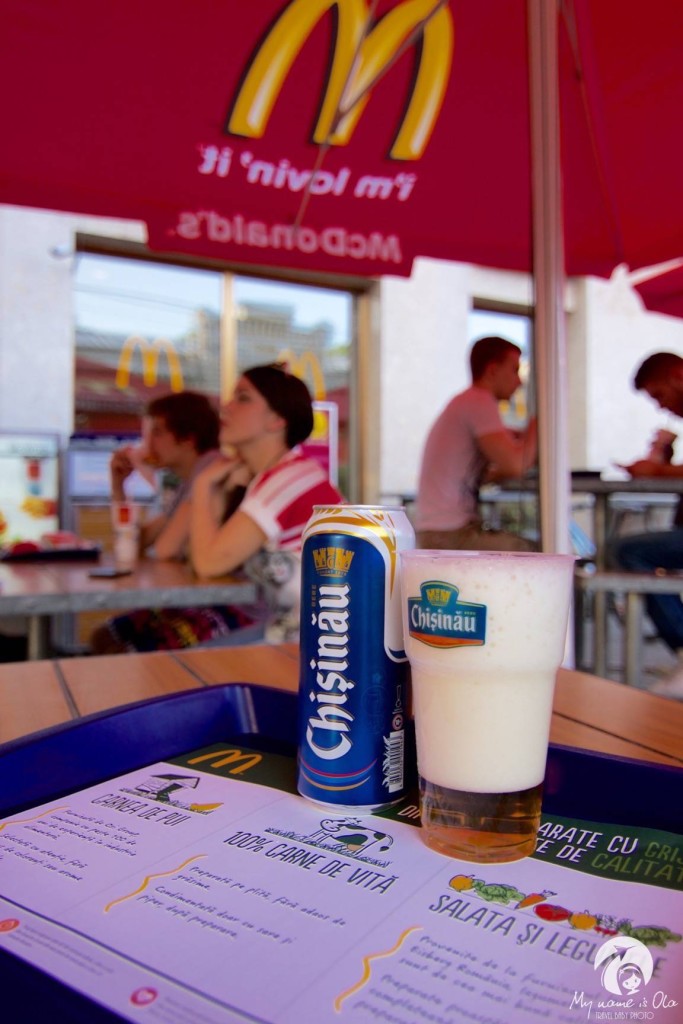
In Chisinau too! We found out about it when walking the main street of the city we came across McDonald’s restaurant. Instead of Big Mac advertisement we saw some banners with beer. Beer in McDonald’s? That famous dialogue from Pulp Fiction came to our minds right away. Because we wanted to sit somewhere to feed Ola anyway, we decided to do it there. Probably nothing else from their menu would make us visit this place. Beer that we bought was watery, poor, offering totaly nothing in its taste and aroma. What is more after opening it foamed richly. Taking in consideration the fact that it was nothi really special it was even good that it foamed like that.
To drink a beer in Moldova
We moved on wondering if tasteless international lager already has dominated the whole world and decided to check what Moldovan beer market offers. To drink beer in Moldova seemed a little like to drink vodka in Belgium or rum in Georgia. Well, since we already have decided we have to go on. Today Chisinau is full of bars and restaurants and finding some beer makes no problem. But if you are looking for some draught you keep on finding bottles and cans. In fact you keep on finding the same beer: Chisinau in can and bottle. This brewery completely dominated whole market.
Chişinău is a flagship product of Efes Vitanta brewery located in the city center. We headed there to find out that they do not offer any tours for individual tourists so we had to be satisfied by visiting only a small exhibition room. 10 years ago brewery was taken over by Turkish Efes Group and it was probably then when it stopped producing good beers. Most of today produced ones are regular lagers, reminding those available in whole world. Beer doesn’t impress even drunk in brewery restaurant. It is obvious that the brewery follows the path of other big world breweries. Besides basic Chişinău Blonde, Draft, Aoea and Chişinău Specială Tare they produce also different mixes of beer with lemon or coke. The only thing that distinguishes it from European lagers are fancy bottles and caps opened by pulling the pin.
We continued our beer adventure next day and checked local offer in stores. Shelves were also dominated by Chisinau. Besides it stores offered wide choice of Ukrainian and Russian beers. Since most of them we have already tried before nothing impressed us.
Looking for something special we chose Kellers beer. As we found out later on it was a good choice. Once again we did good job following what local people do. Looking at shelves with Kellers we suspected that Moldovans must like it.
This beer was unfortunately available only in plactic bottles. Such way of sales is popular in former USSR countries. To be honest we have to say that seeing plastic bottles we are not really encouraged to consumption. This time we made an exception for that beer produced by mini brewery Makler Plus in Budeşti. We tested two beers: light with extract 11% and 4% of alcohol and the dark one with 14% extract and 4,7% of alcohol. Both are unpasteurized. Light one wasn’t bad but it was the dark one which turned out to be an instant hit. Very nice color, almost black, rich foam with medium size bubbles, hoppy aroma, nicely crowning. Malty flavour with chocolate and roasted and mild bitterness. We can honestly recommend this beer.
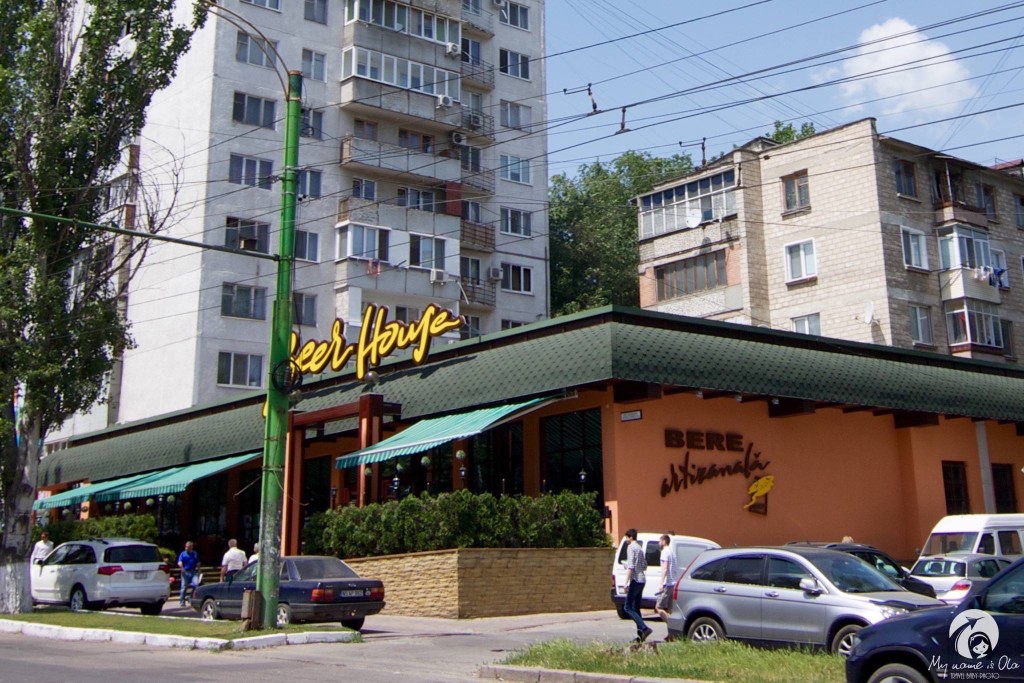
We decided to continue our beer tour but the Internet happened to be cruel – all decent what one can find in Moldovan breweries we have already tried. But we found an interesting little restaurnat – brewery located 500 meters away from our hotel. As it usually happens with things nerby we managed to visit it only on the last day of our trip.
Chisinau Beer House
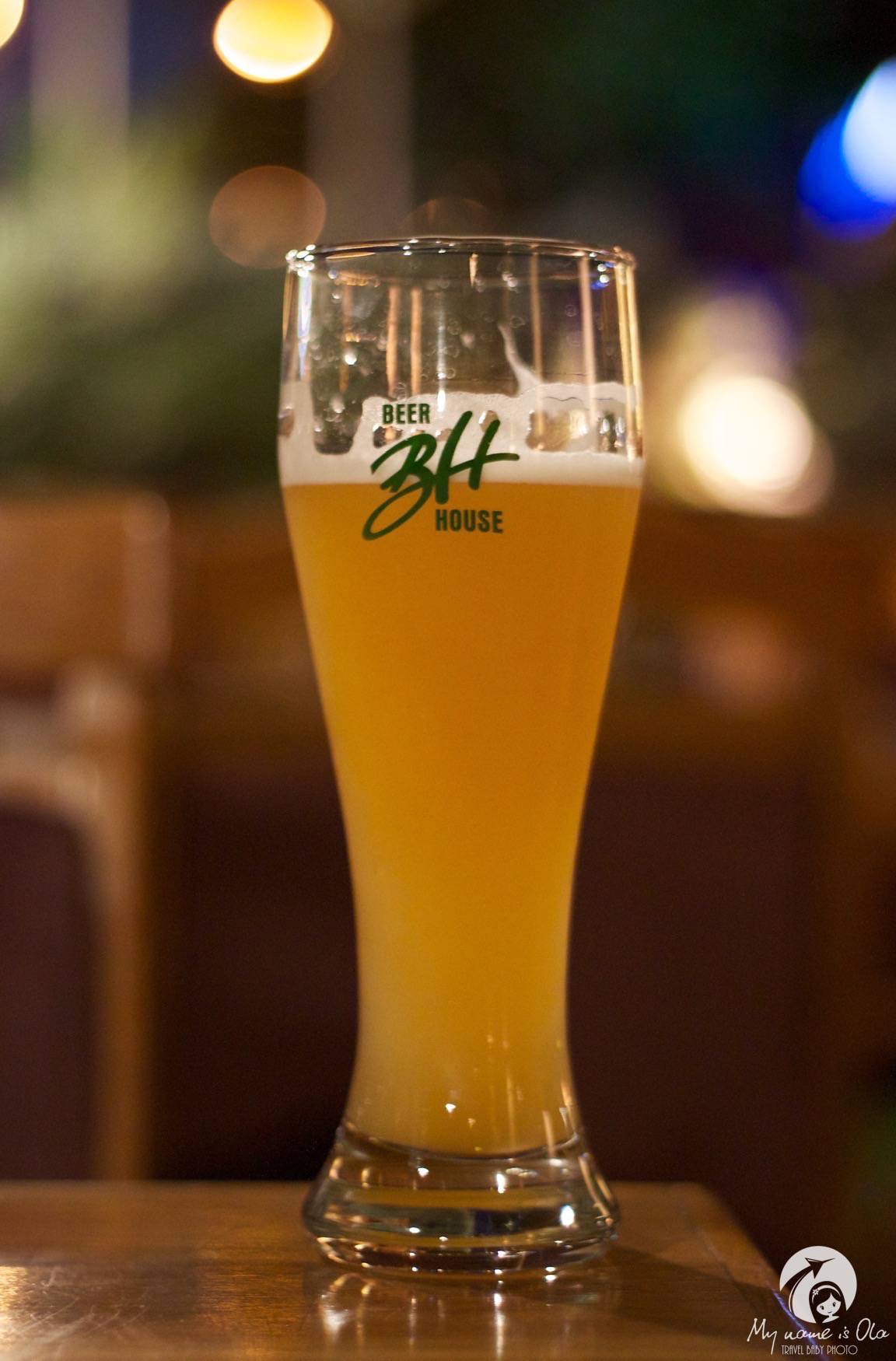
Beer House as for Moldovan conditions to, is kind of posh place what was reflected in prices level similar to other this kind facilities in western Europe. Customers seem to be western too, there is no local youth who at that time are crowded in other pubs downtown. Besides beer it offers also food choice but unfortunately with not too much of local cuisine. It seems a little as if Moldovans were ashamed of their cuisine tradition. The place itself makes a good impression: wooden benches and tables, walls decorated with stone. It is quite big but although we visited it on weekend night it was almost empty. Central point of the restaurant is a round bar behind which there is brewery heart – brewing vessel with annual production of 2000 hectoliters.
We took places on the big terrace where plants separated us from the bussy street and started checking their beers. One can order them in different volumes. The smallest tasting glass is 250 ml. When we found out that there are only 4 beers to choose from we gave up that tasting glassed and ordered large beers.
Avaliable beers, starting from light, to BH Blonda (unfiltered), BH Blonda (filtered), mixed BH Extra (unfiltered) and dark BH Bruna, also unfiltered. Beers did not seem to be bad, they were much better than the average Moldova level. All very drinkable, slightly bitter without major defects. Rich, thick foam, strong rasted aroma, light bitterness made us really like it.
[photosetgrid layout=”13″][/photosetgrid]
After a short adventure with the beer we came back to wine without any regret and made some supplies to take home with us. To sum up – Moldova is wine and wine is Moldova. But if you want to grab a beer you might find something good too. In general dark beers seem to be more interesting and of breweries we advise Kellers and Beer House in Chisinau. Beer is not rather the thing making people visit Moldova but being already there it is wort to try some local ones.
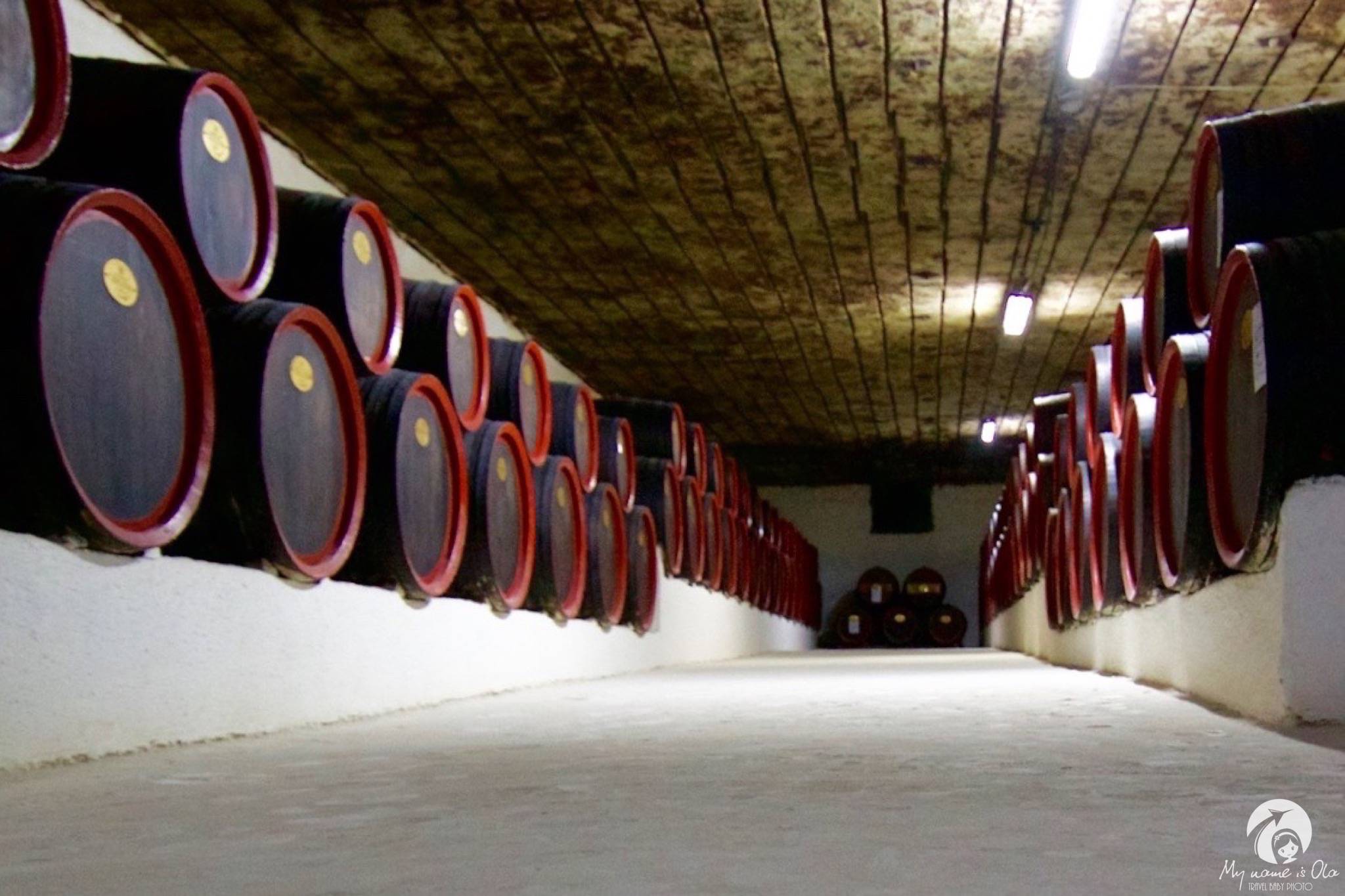
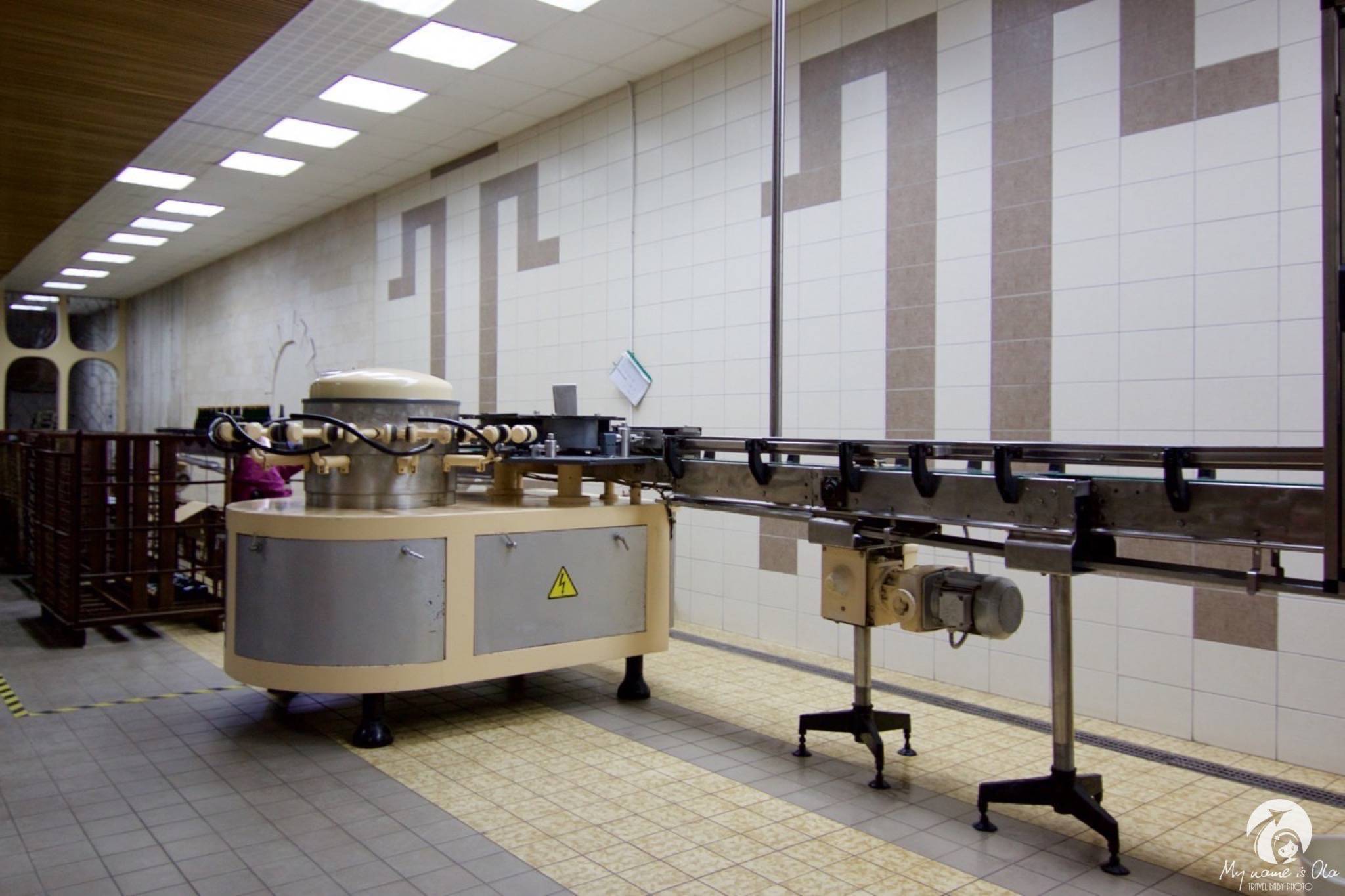
Cricova wine cellars is next to Milestii Mici most famous wine complex in Moldova. It’s not just hundreds of kilometers of underground cellars and corridors, where wine is produced and stored, but also more than 500 hectares of vineyards and more than 5,000 tons of harvested grapes per year.
Tunnels, which are used today for production and storage of wine are much older than the winery itself. Their story started few million years ago, when Moldovan land was covered with shallow waters where on the bottom some specific layers of limestone were formed of dead animals’ shells. Today this rock is a good building material and while its acquisition corridors and tunnels being are a part of Cricova complex were created.
1). Vine is one of the oldest plants in the world – it has more than 10 million years. Many varitetes, fertile land and sun are the secrets of Moldovan wines. Some of the local Moldovan varietes of grapes have gained worldwide fame and become widely known kinds. Nobody has ever stolen Moldova’s sun but the soil some have already tried – during the Second World War Germans exported it by trains from Moldova.
[photosetgrid layout=”12″][/photosetgrid]
2). Most people consider “the older the wine, the better” as the greatest truth in the world but the reality is different. Most of the wines should be drunk within few years after their manufacture, only a small percentage of really good ones you can store more than a dozen years and only the noblest ones may be aging tens years from the date of production. The key issue is of course the quality of the fruit used to make the liquor. Cricova is proud of their collection of century-old wines still good for consumption. What is interesting, many wines from their collection, which are no longer good for consumption change into jelly and slowly become solid. These surprising processes taking place in the wine are still being studied by oenologists.
[photosetgrid layout=”11″][/photosetgrid]
3). Perfect temperature for wine maturation is 12 – 14 degrees Celsius and humidity of 80%. Those are the conditions that are to be found in the tunnels of Cricova. But the biggest advantage of this underground environment is their stability throughout the year, because every change in the conditions of storage is much worse for wine than the mismatched constant parameters. Any fluctuations have negative influence on bottles tightness. The reason for it is different physical properties and reactions of cork and glass. For the perfect conditions it is very important to keep light or vibration out the room and this is why tourists are not admitted to cellars most precious liquor, neither on foot, nor by car. Those ideal for maturation conditions make even the greatest of this world store their liquors here. Not only Vladimir Putin but also Angela Merkel are said to keep their wines in Cricova.
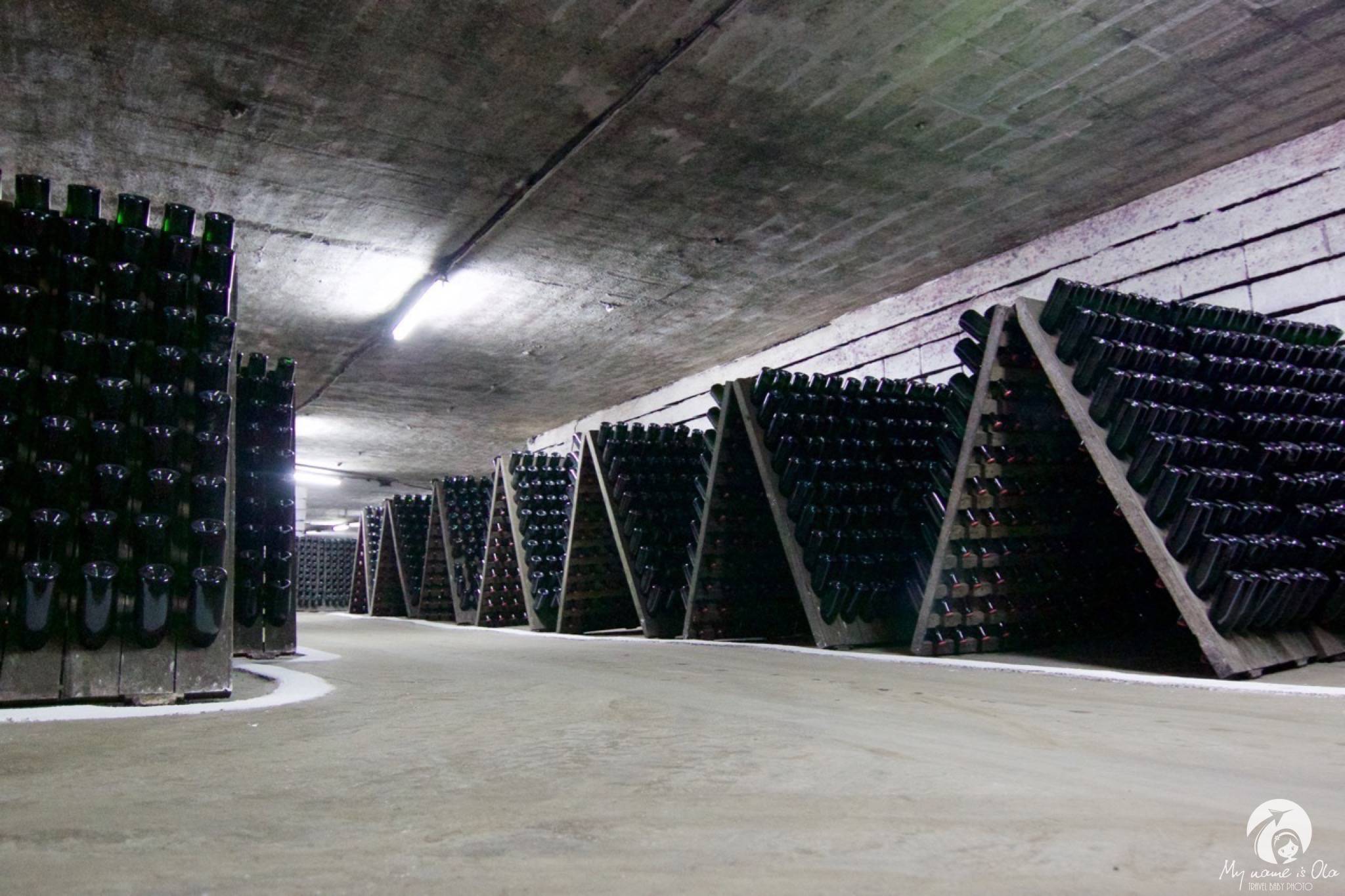
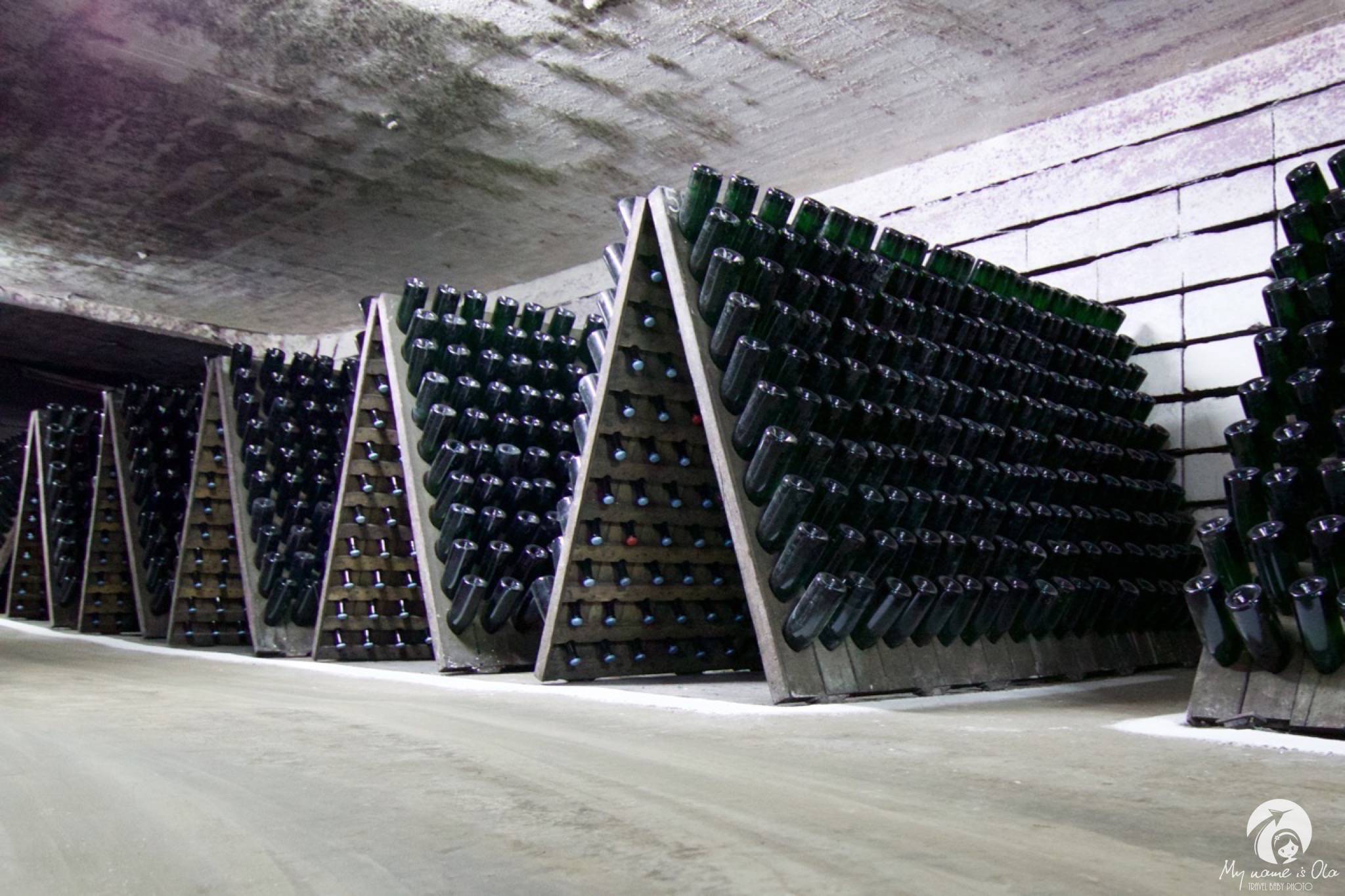
4). In Cricova we found also underground sparkling wines production, carried out by traditional champagne method. In special stands, in upside down position, bottles of wine are kept. Every two weeks winery employees come and turn them around so that any sediments were gathered at the cork. They keep on doing it for three years. After that time sludge is being removes and cork replaced all that by freezing the neck of the bottle. Of course this method is used only for the best wines, all the others are made by rapid maturation. Well known, budget sparkling wine Russkoje Igristoje is being made in this place.
[photosetgrid layout=”12″][/photosetgrid]
5). Wine collection in Cricova is slightly smaller than in Milestii Mici. It was initiated with the collection of nazi officer Göring, in whose cellars couple thousands of liters of best European wines were found. Collection was transfered to Moldova as compensation for war damage. Currently it is 1.2 mln bottles and 640 types of wine of the value hard to be estimated. The oldest wine in collection is a festive dessert wine produced on the areas of present country of Israel in 1902.
6). In addition to international varieties they successfully grow local vine varietes in Moldova. These are among others Feteasca Alba (white), Feteasca Regala (white), Feteasca Neagra (red), Rara Neagra (red), and Viorica (white). All that is being controlled by the Institute in Chisinau which even grows some frost and disease resistant varietes. There are quite a few sparkling wines produced in Moldova mostly of pinot noir and chardonnay – willingly used for the production of sparkling wine using above mentioned classical method of production.
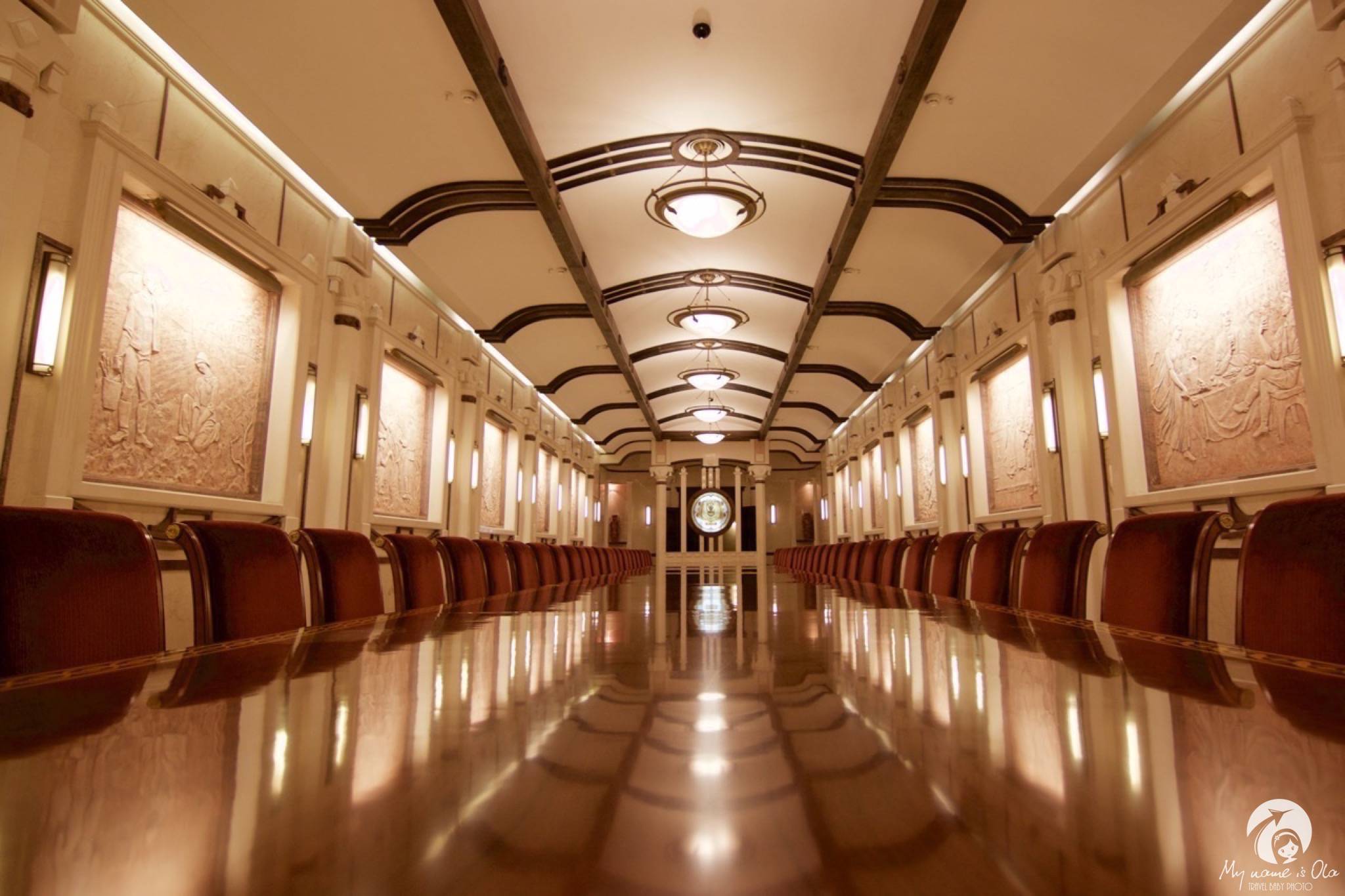
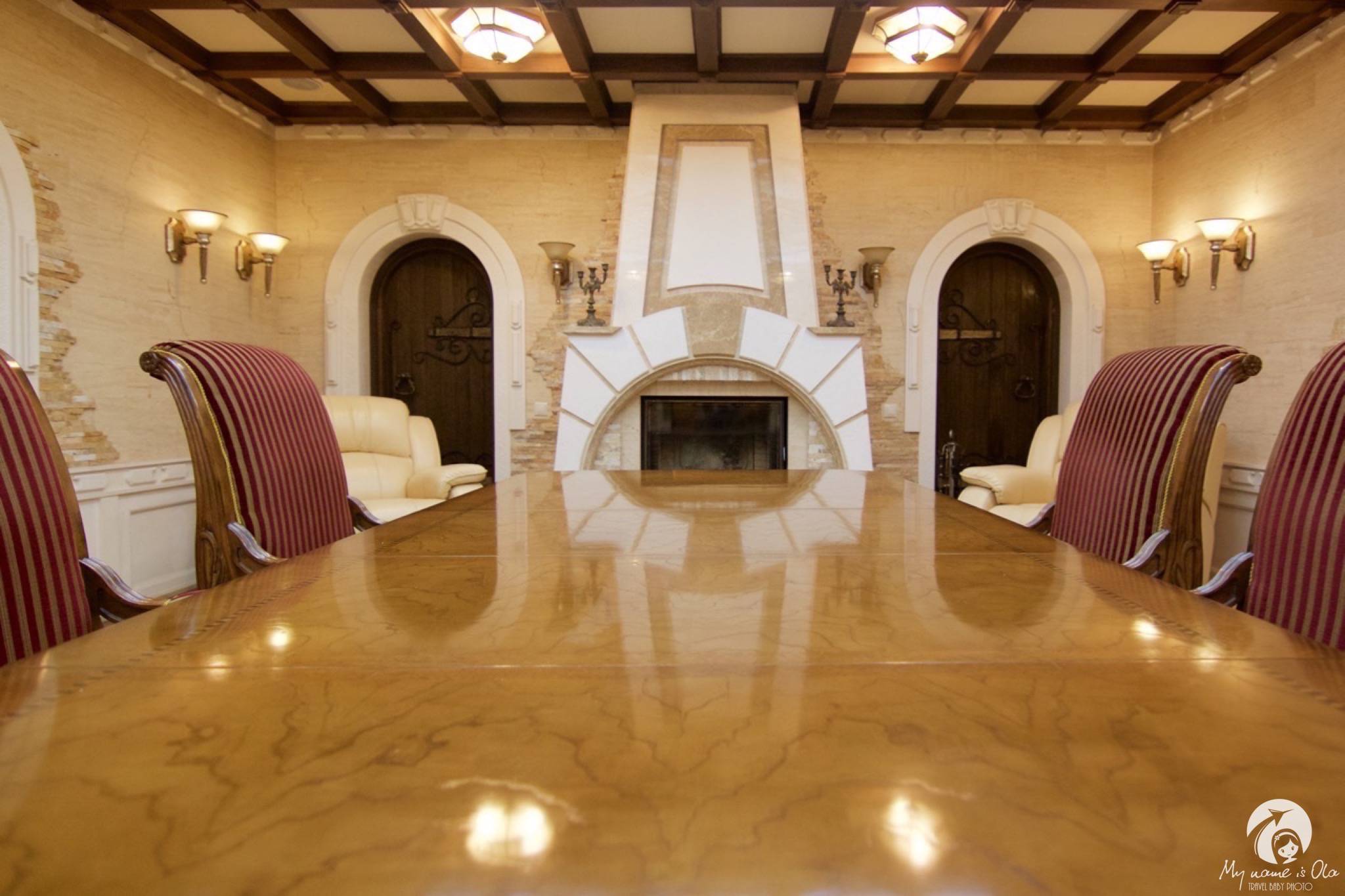
Cricova is an exclusive meeting place for Moldovan elite. The underground halls have even been a seat of Moldovan government. Imagine that in the complex located 85 meters below ground they have a room with genuine fireplace. That must be one of the lowest located fireplaces in the world. The legend says that Vladimir Putin celebrated his birthday here. Also Jurij Gagarin, famous astronaut, has visited Crocova and after getting lost in the cellars for few days when he found the way out he supposedly said:
It is easier to get off the ground than to get out of Cricova cellars
[photosetgrid layout=”12″][/photosetgrid]
Aby zdać sobie sprawę, jak wielkie są korytarze, jak potężne beczki w sobie kryją i ile butelek szampana jest przechowywanych w piwnicach zobaczcie film z naszej podziemnej podróży:
Gagauzia, small autonomous territory in southern Moldova, three cities, dozen of villages and no more than two hundred thousand inhabitants. Fields, meadows, garbage and fallow lands. What is interesting about Gagauzia? Can it offer anything for an average tourist? Monuments of nature, centuries-old sights? Not really. The reason for this region’s uniqueness is its geopolitical situation. It is one of the arenas where the powers of East and West collide and recently its the East who is taking the lead.
Way to autonomy
Gagauz are the small, strongly pro-Russian oriendted, nation whose culture and history we wanted to learn about. Their political choices can soon change the balance of power in Europe. But let’s start from the beginning.
Gagauz came to Bessarabia at the end of 18th century from Dobruja, a historic region by the Black Sea. Where did they come from? Historians have different opinions, main hypothesis indicates their Turkish roots but on the other hand they cannot exclude their Slavic origins. One thing is sure – in 14th and 15th centuries on their original lands there was an Oghuz Turks state, which hallmark was a grey wolf, recognized today as one of the symbols of Gagauzia. The country disappeared from world maps conquered by the Ottoman Empire. After arriving to Bessarabia Gagauz, despite many attempts, did not set up their own country. Most important events took place in relation to Russian revolution of 1905 and in 1906 the Republic of Comrat was proclaimed. Although uprising lasted only for 5 days, it is the basic event for Gagauz identity until today.
Further history of Gagauzia was a constant connection with USSR and the next turining point happened in 1988. They established a discussion club “Gagauz People” which later on turned into a political movement. Next it went really quickly and in 1990 they proclaimed the Republic of Gagauzia, still as a part of USSR but an independent of Moldovan SSR. After the Soviet Union collapsed Gagauz stayed within the borders of the Republic of Moldova but already in 1994 they created the Autonomous Territory of Gagauzia. Final shape was given to the region a year later, on the basis of the decision taken in referendum of Comrat being a capital city of this new formation.
Gagauzia today
Today we can easily reach Gagauzia. Road from Chisinau is full of craters, sometimes asphalt is missing at all, but in general the road is passable. Formal border does not exist and if you miss the sign, you might not even realise that you just entered the territory of Gagauzia.
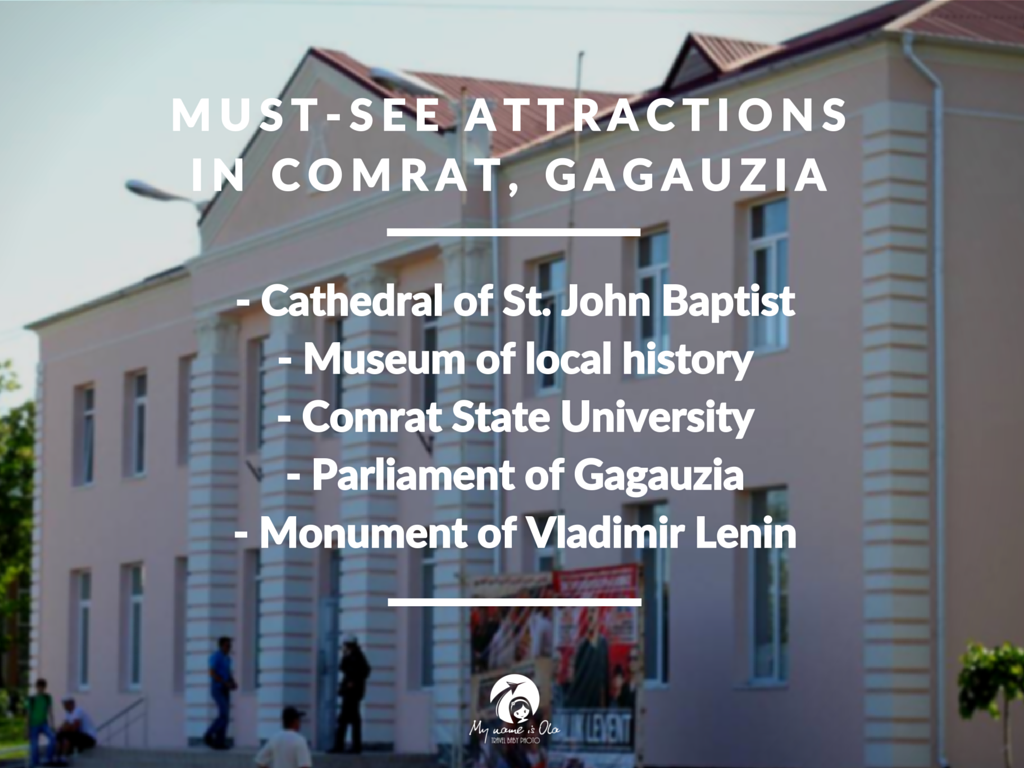
Finally we reached the capital city – Comrat. Here is located the Parliament of the autonomy and the Governor of Gagauzia has his seat. We have no idea how it happened but instead at the main street of the city we ended up near located aside Comrat State University. Quite sybmolic. The University is the pride of Gagauzia but although it is an important element of their identity, teaching language is Russian. Why not Gagauz? The reason for it is long-term russification during USSR era and the fact that the history of written Gagauz is very short. Until the end of 19th century Gagauz was only a spoken language. It changed in the 50’s of 20th century when Cyryllic was adapted for writing it and it’s teaching at schools started. Very quickly they came back to Russian. In 1993 Moldovan Parliament adopted for Gagauz new orthography based on Latin alphabet and currently Gagauz is obligatory in primary schools. Despite the fact that it is used by such small community, the language has two dialects.
Coming back to university – the building and in particular its campus is very impressive what is due to Turks who financially support its development and operation and send their students to learn in Comrat. Why Turks? Because the are the closest related nation to them. Although the fact that Gagauz are Orthodox Christians and Turks represent the Islam world the dialog between two nations is continued. After the collapse of USSR, when Gagauz were building the fundaments of their statehood, Turkey supported them not only politically but also in the matter of culture. Nevertheless the greatest sympathy of Gagauz is directed towards Russian Federation and Transnistria.
In the center of Comrat
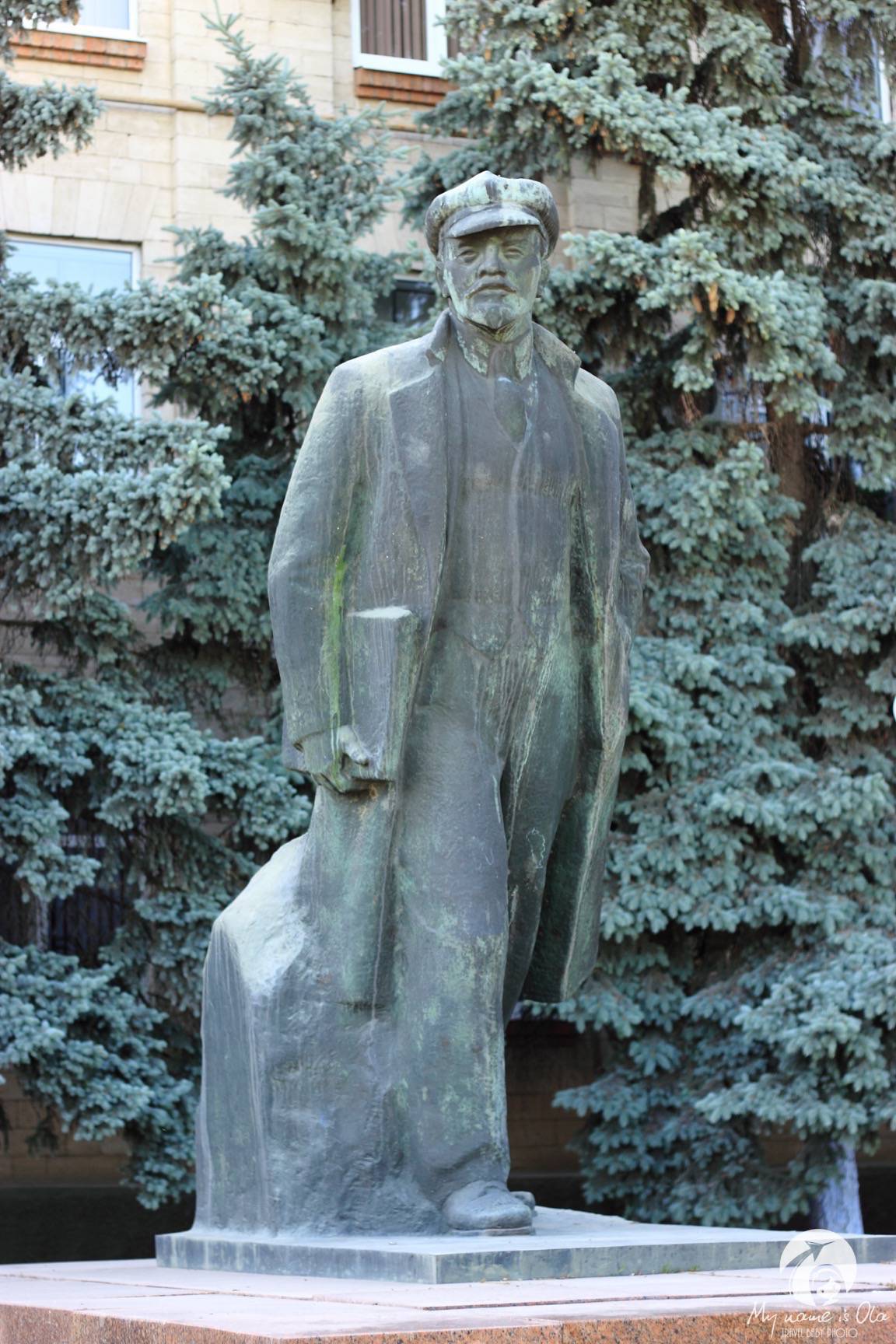
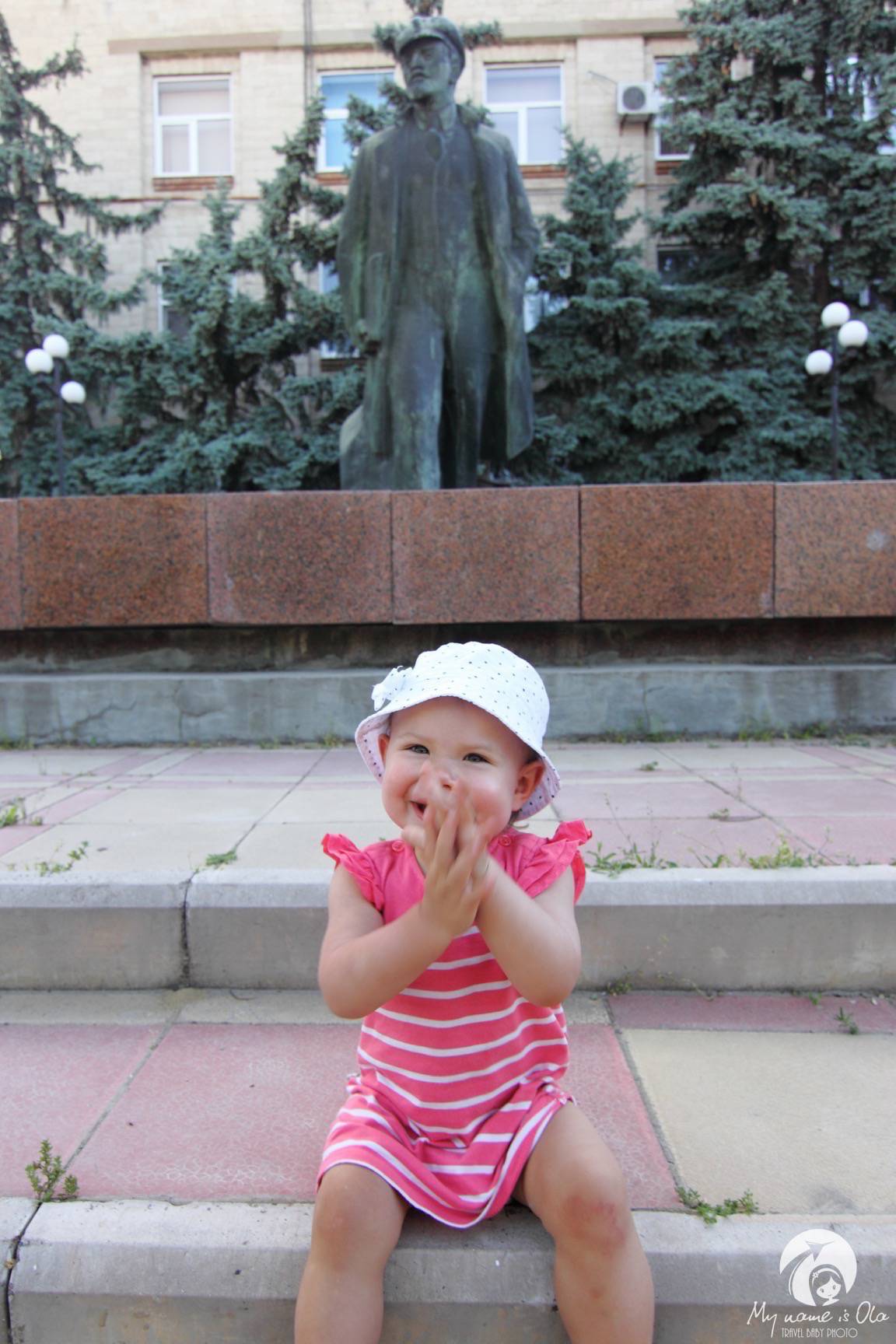
Central point of the city is the building of Parliament which actually did not impress us too much. The only thing that attracted our attention was located right next to it the monument of Vladimir Lenin. After a short stay in Bessarabia we were already aware that there are still many outward signs of this area’s previous belonging to USSR block. The seat of Parliament and Governor of Gagauzia office, are the center of statehood of the nation being in continuous conflict with Chisinau. Key decisions for autonomy were taken here in 2014. In opposition to the central government Gagauzia run the voting in which most of people decided that their land should aim for independence, integration within the Eurasian Union and separation from Moldova if it looses its full independence. Chisinau does not accept neither the fact of referendum nor its reslult. Situation is also strategically used by Russians – after Chisinau signed Associacion Agreement with EU Russia banned import of their fruits and wines excluding the ones from Gagauzia territory. It surely strengthen Gagauz relation with RF and their desire to secede from Moldova.
[photosetgrid layout=”12″] [/photosetgrid]
Our next steeps we turned to St. John’s Church, in fact the only historic sight in Comrat. Yellow structure is well visible in mostly grey colour of the city. It supposedly is richly decorated insight but since it was closed we did not get to see it.
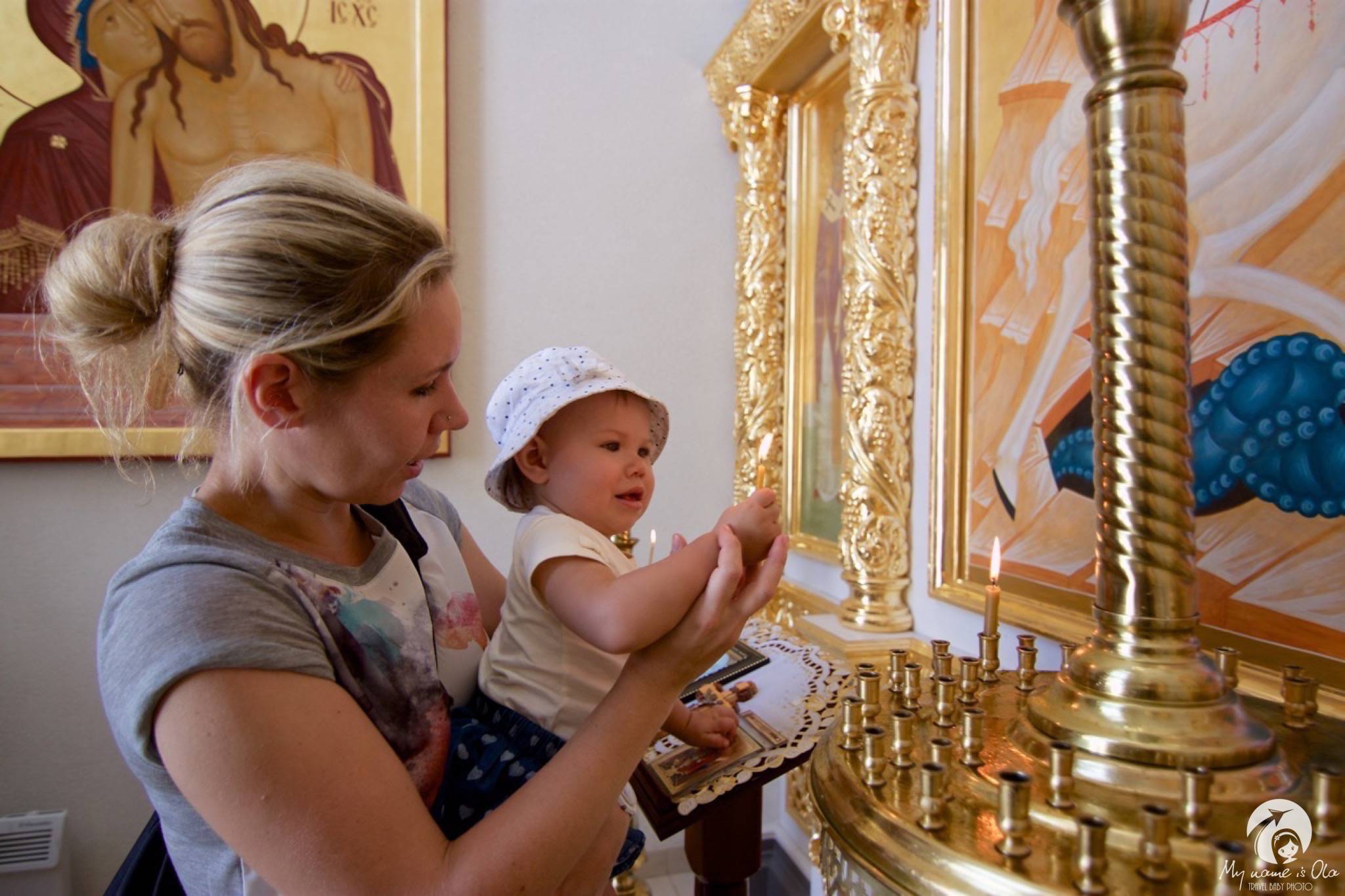
It is worth to see also a nearby Historical – Ethnographic Museum. Because Ola first saw a great playground right next to the church and after intense play and some games with a new Gagauz friend she became hungry we decided to look for some place with regional food. We gave it up quickly as we haven’t fount anything like that in the city center and ended up in one of restaurants in the Central Park of Comrat. It is quite common for developing countries that it is easier to get there some pizza or a hot-dog than something of local food. Our waiter did not have any idea which of their wines were produced in Gagauzia. Finally we reached for some Transnistrian brandy and a fruit coctail. But the most important thing was to feed Ola. It is completely clear that hungry Ola is mad Ola and mad Ola is the worst thing that can happen to us not only in Comrat but in every other place in the world. Thankfully, despite the fact that they had no high chair and nothing in menu suitable for one-year-old baby, Ola left the place with full stomach. Somewhere deep in our bags we always have a baby dinner in the jar that lets us survive any situation. Actually this always is our first choice. Whole park makes a nice impression: unfortunate but at least even Baum type brick, new playgroung for kids, working fountain and few european style restaurants. All that and especially the playground was loved by our daughter.
[photosetgrid layout=”13″][/photosetgrid]
And the city itself? We had mixed feelings – provincial town, shopping centers contrasting with surrounding poverty. Right next Gagauz flags you can see Russian ones, in their cars people tie black and orange St. George’s bands, here and there posters of Vladimir Putin. Nothing tells that this area still belongs to Moldova. In the restaurant we ate we heard important sentense, probably true one, that even the wine does not unite Comrat and Chisinau any more. The date of one of the major Moldovan holidays, the Wine Festival, was changed in Comrat for the week later than in Chisinau.
Walk through the streets of the city was not easy, beside main arteries sidewalks tend to fall apart. Landscape of the city are shopping centers contrasting disintegrating wooden houses. Streets names and stores signs are in Russian. Except for official signs it’s hard to find Moldovan language. In fact not even Moldovan but Romanian because in 2013 Constitutional Court of Moldova decided that country’s official language will be Romanian and the name “Moldovan language” will be used to describe Romanian language spoken in Moldova. Even Wikipedia closed Moldovan wersion and supports one for both Romania and Moldova. As our Russian-speaking waiter said Gagauz have their own Wikipedia in their national language! We seemed to hear only Russian on the streets of the city but they say that Gagauz is still being used in the country.
[photosetgrid layout=”12″][/photosetgrid]
Gagauz country
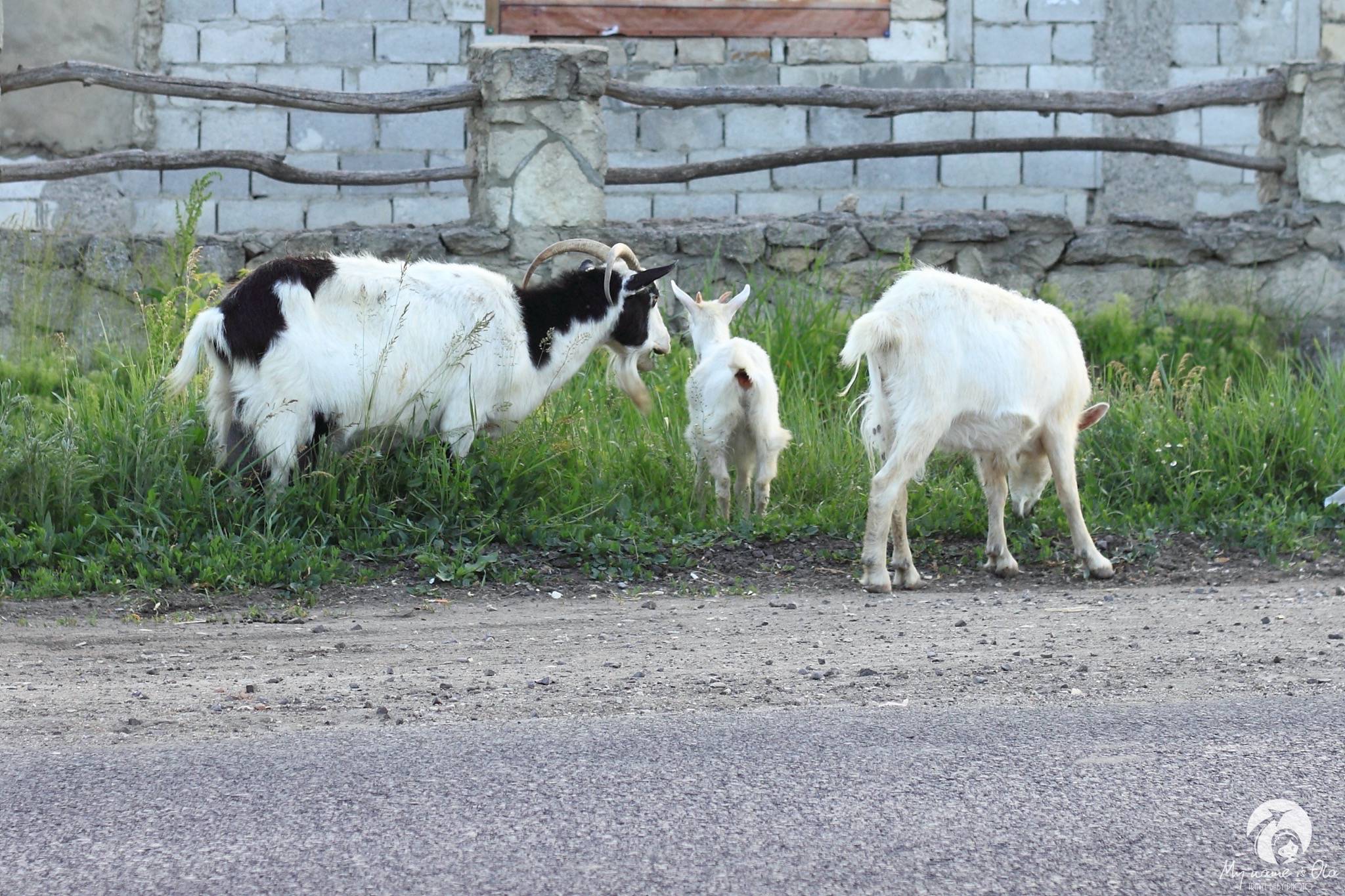
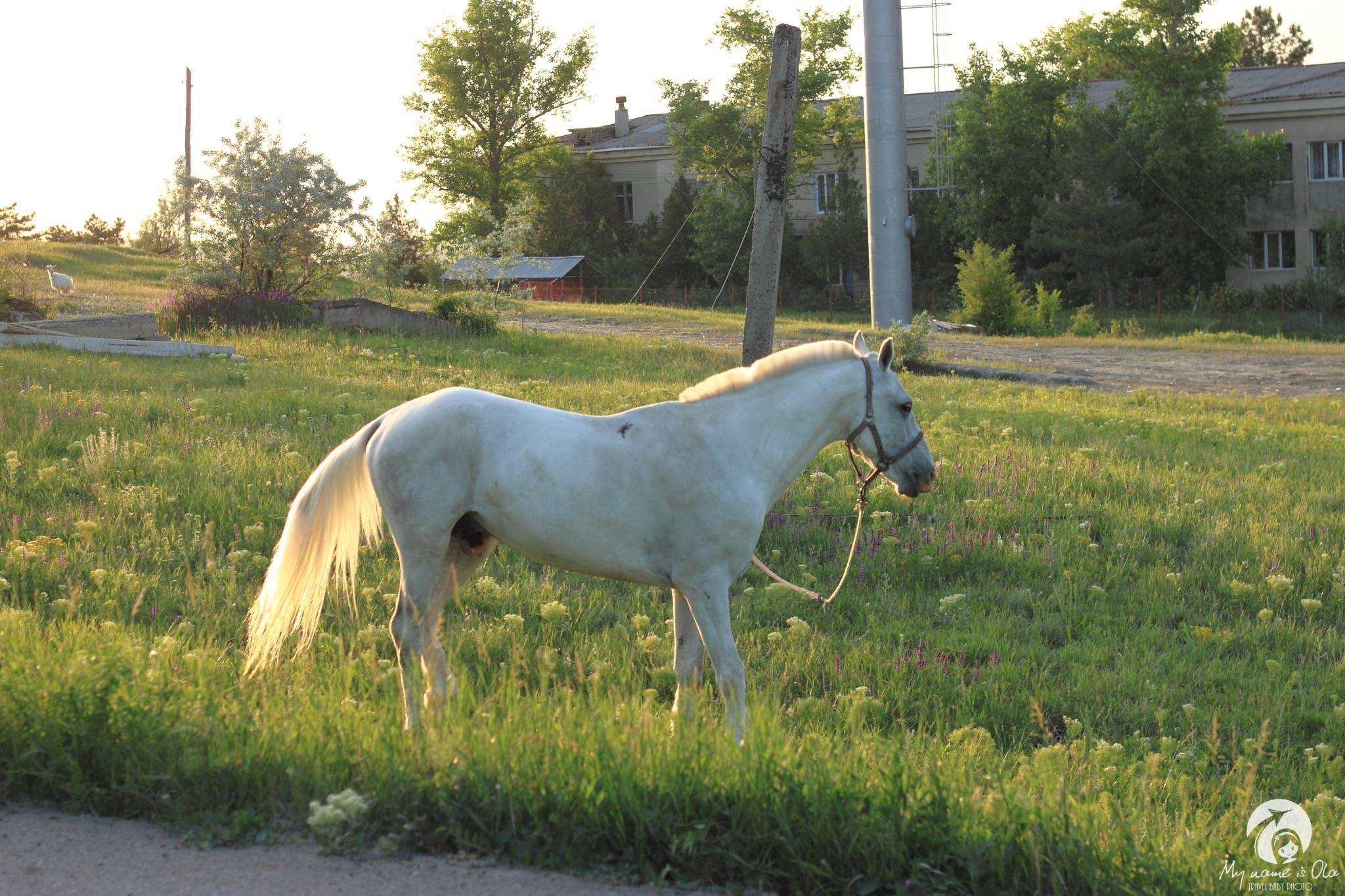
We haven’t found too many signs of Gagauzia in Comrat and counting to meet some in always more conservative country we left the city and headed to the country. First thing we noticed leaving Comrat was garbage everywhere. It’s on the fields, along the roads, sometimes when driving down a country we seemed to be going throug garbage dump. The trashes are contrasted by fields beautifully green in the summer. Of course the majority of them are wineries.
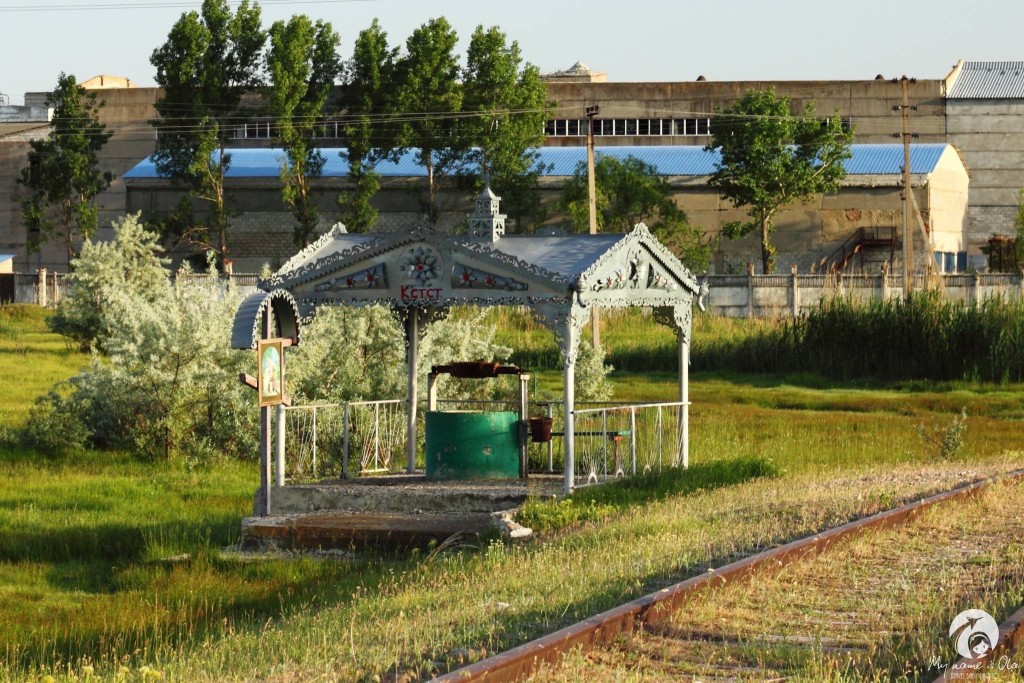
Outside the capital you won’t miss the poverty which is not so intense in the city. Farming is not well equipped in machines. They are replaced by great inventiveness of local people – we kept on finding strange tractors and other altered machines. Today it is probably the last place in Europe where we can find horse and donkey carts still in use. The most characteristic for all villages are beautifully decorated wells, roadside chapels and modest but with traditional ornaments houses. What is interesting, many villages are sewered but because of high cost people still use water form the wells. It is difficult to understand that even though each house is equipped in telephone, TV and gas, only half of them use running water.
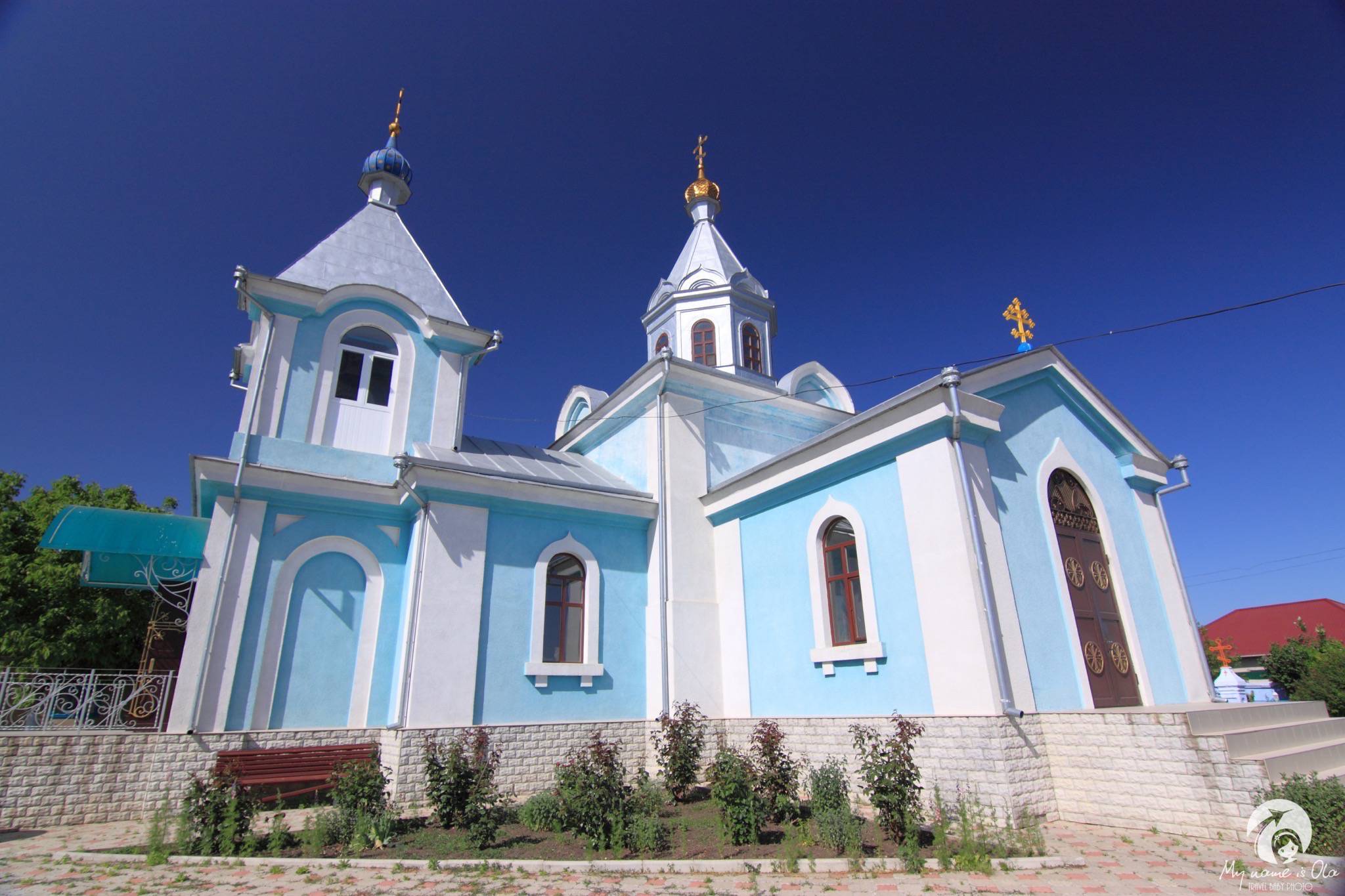
Life focuses around shops and churches. Temples from the outside do not impress that much but all of them are richly decorated inside. We paid attention to those as Orthodox religion is the thing that unites Gagauz people. Today this religion is very popular in Eastern Europe, in the Ottoman era it was an element of national identity. This tradition was not even destroyed by Soviet Union. Currently the state helps to rebuild Orthodox churches what results in many newly renovated temples.
[photosetgrid layout=”13″][/photosetgrid]
We went to one of Gagauz villages in the south – Avadarma. Complete silence was interrupted only by the bell. Although the church looked really impressive there were only few prayers inside atending the service. It seems that religion is here more like an element of cultural identity than attachement to religion. It is confirmed by researches – more Gagauz declare themselves as Orthodox than as believers. Right next to the church there is a newly-built Memorial of Nazi occupation victims. There are plenty of memorials in whole Gagauzia, some are dedicated to war heroes, people murdered during war or to the glory of the Red Army. In fact not all of them are from USSR times. Some are from earlier period, for example in Vulcanesti there is a big monument commemorating the victory of Russian Empire over the Turks. Monuments can be easily found almost everywhere and make us realize how important is the memory of ancestors and how strong the tradition of building the monuments is in Gagauzia.
[photosetgrid layout=”22″][/photosetgrid]
Memorials are well cared for, somebody has just changed the flowers. It’s quite strange that in the country which never had its army there are so many monuments to fallen soldiers. Majority of them died during Second World War and the Afghan War. Situation with the army can change very quickly as recently Gagauz parliament decided to create a National Guard, which might be the beginning of such formation. We might only assume what kind of conseqences that could bring. Similar situation took place in 1991 when Gagauz organized a substitute for armed forces, battalion “Budzak” formed of hundreds of volounteers. Moldova threatened to deal with it by force and in reaction to that threat Cremlin representatives with the offer of military support immediately showed up in Comrat. That situation was solved peacefully but in next power struggle in this area Moscow might not give up the possibility of demonstrating its power.
Quo vadis Gagauzia?
What happens next to Gagauzia? It’s hard to say. Only one day after we left the situation changed dramatically. Few days ago there was a change in the position of Comrat mayor. Unexpectedly the election was won by Serghei Anastasov representing pro-Russiand “Our Party” who defeated long-term mayor Nicolai Dudoglo supported among others by “Our Gagauzia”. It seems that voters set the bill to “Our Gagauzia” for joining pro-European Democratic Party of Moldova.
Nicolai Dudoglo also lost election for the Governor of Gagauzia. The post was taken over by supported by Moscow Irina Vlah who sees the future of the region woth close relation with Russia.
Do those events mean the change of Gagauz attitude towards Chisinau? This is what politicians declare but we have to notice that there are also changes taking place in Chisinau. Bescause of allegations of false education Prime Minister of Moldova Chiril Gaburici resigned. Forming the new government by pro-European parties might be difficult and new elections might bring different results. “Our Party” mentioned before, was not allowed to take part in last parliamentary election due to allegations of funding from Moscow but it gets high results in the polls and has just won the mayor’s officein Bielice and Comrat. In relation to recent goverment crisis and banking scandal support for pro-European parties is dropping.
New elections may bring different results, pro-Russian parties success can make Comrat and Chisinau closer but opposite outcome will probably make Gagauz pursue to their independence. So it is definitely worth to visit Moldova soon and remember about Gagauzia because you might hit that moment when the history will change right before your eyes.













 [/photosetgrid]


 [/photosetgrid]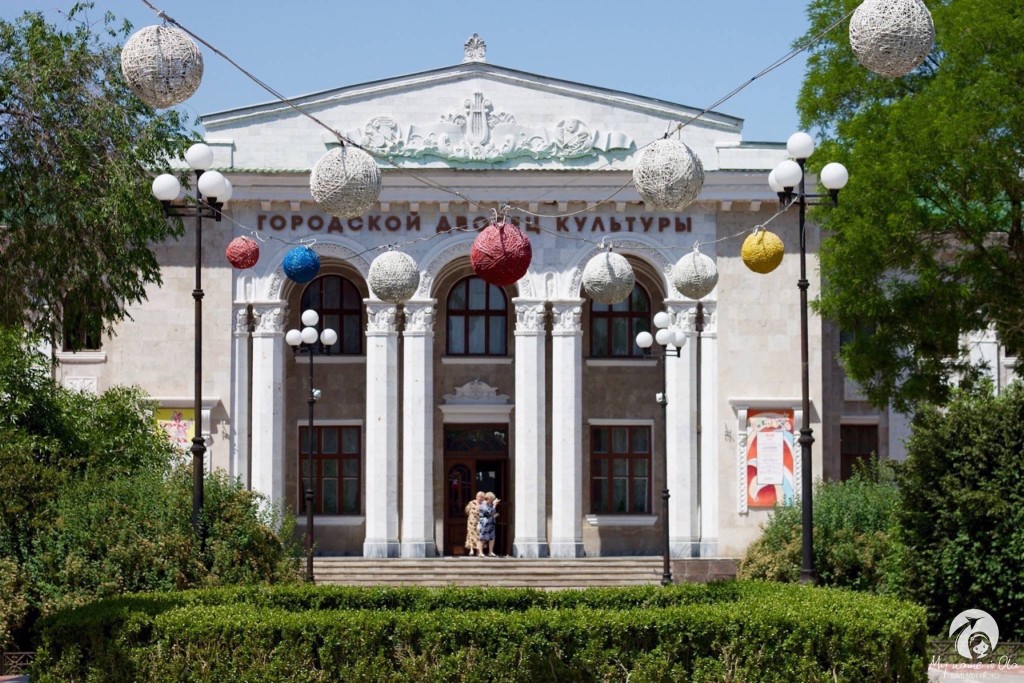

 [/photosetgrid]


 [/photosetgrid]

 [/photosetgrid]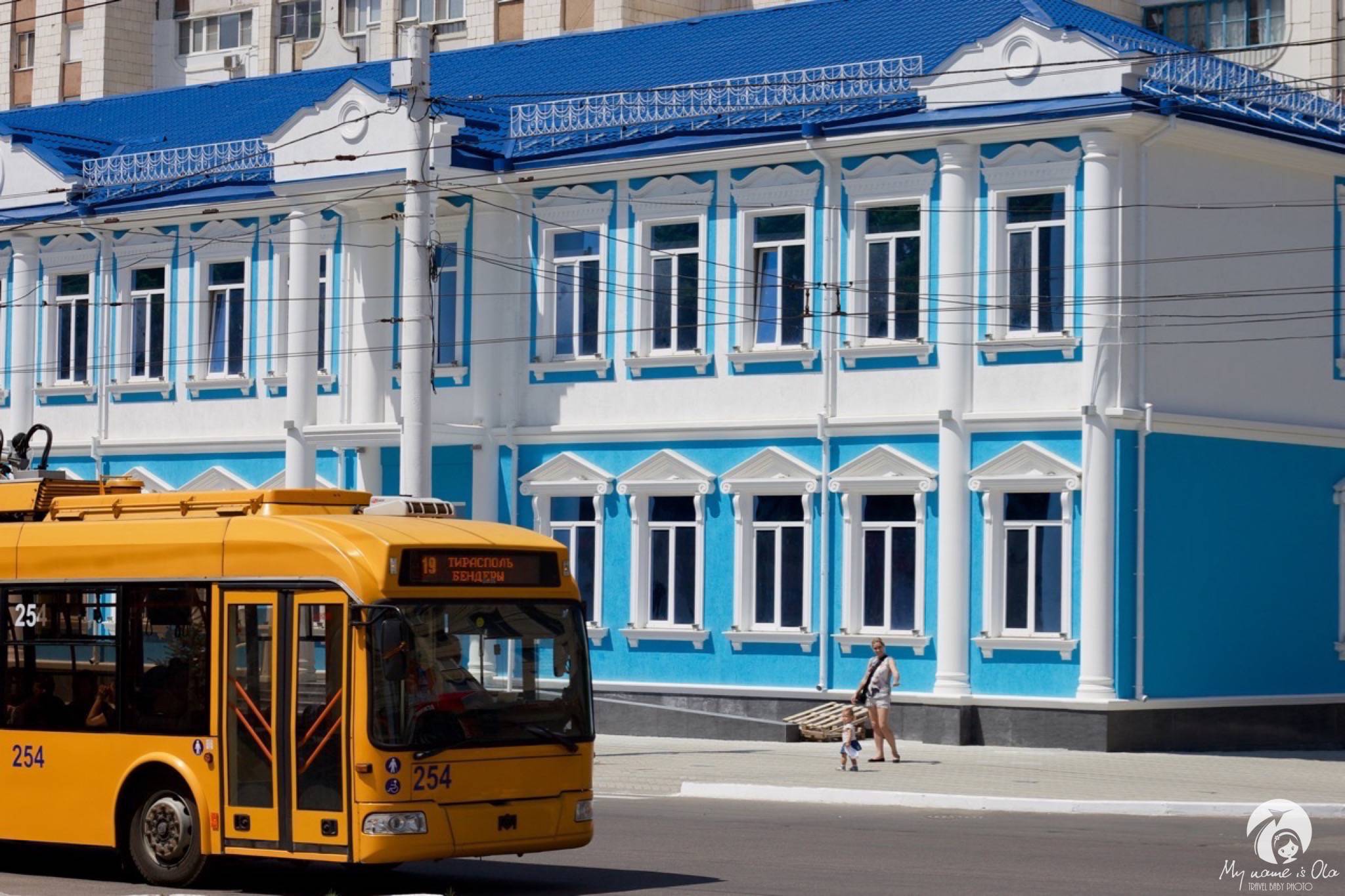

 [/photosetgrid]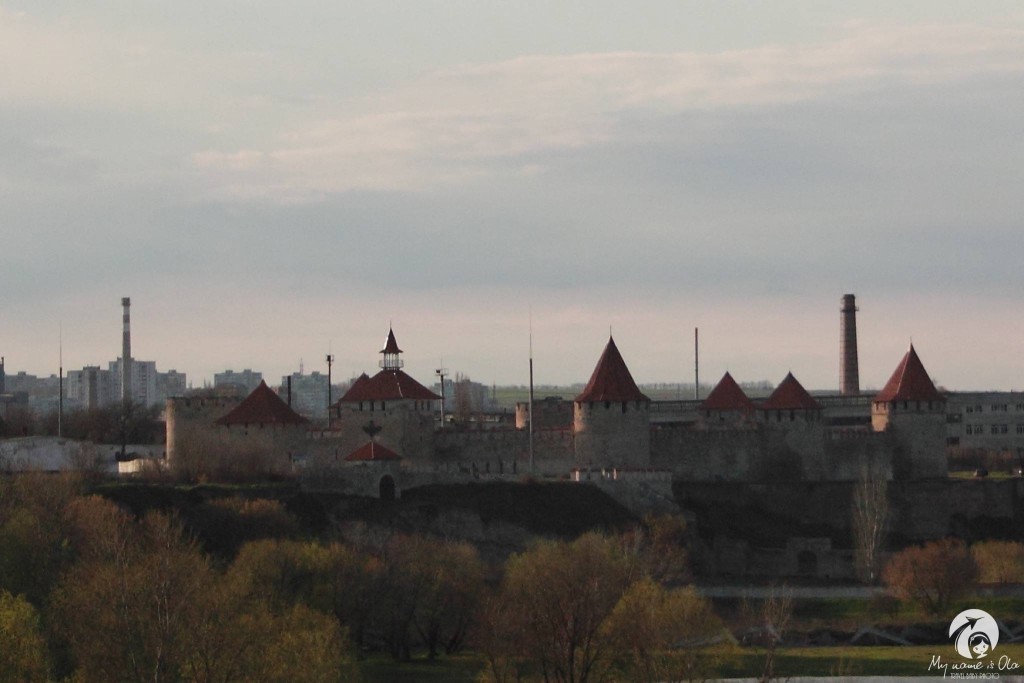


 [/photosetgrid]







 [/photosetgrid]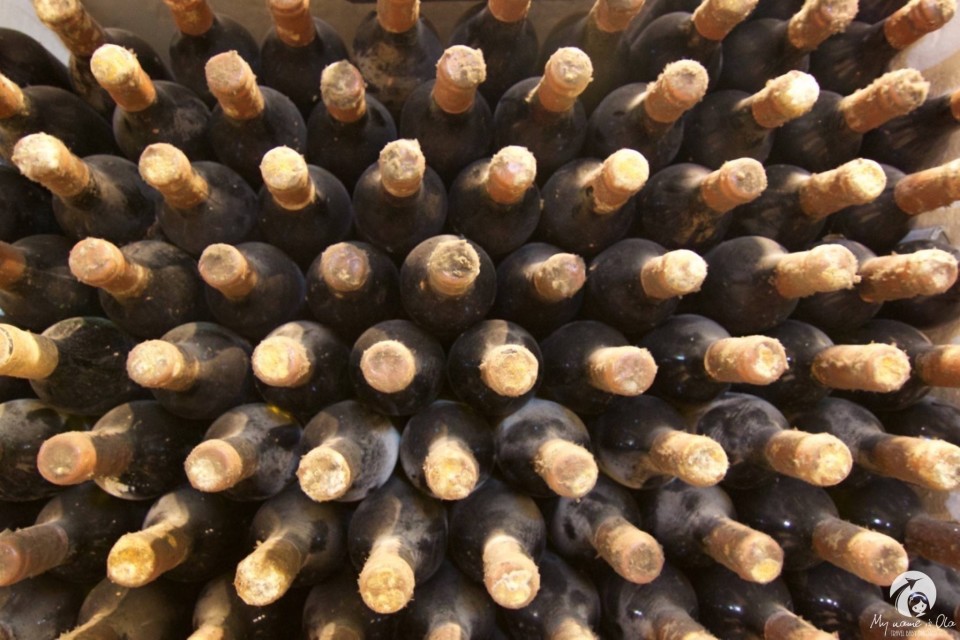


 [/photosetgrid]
 [/photosetgrid]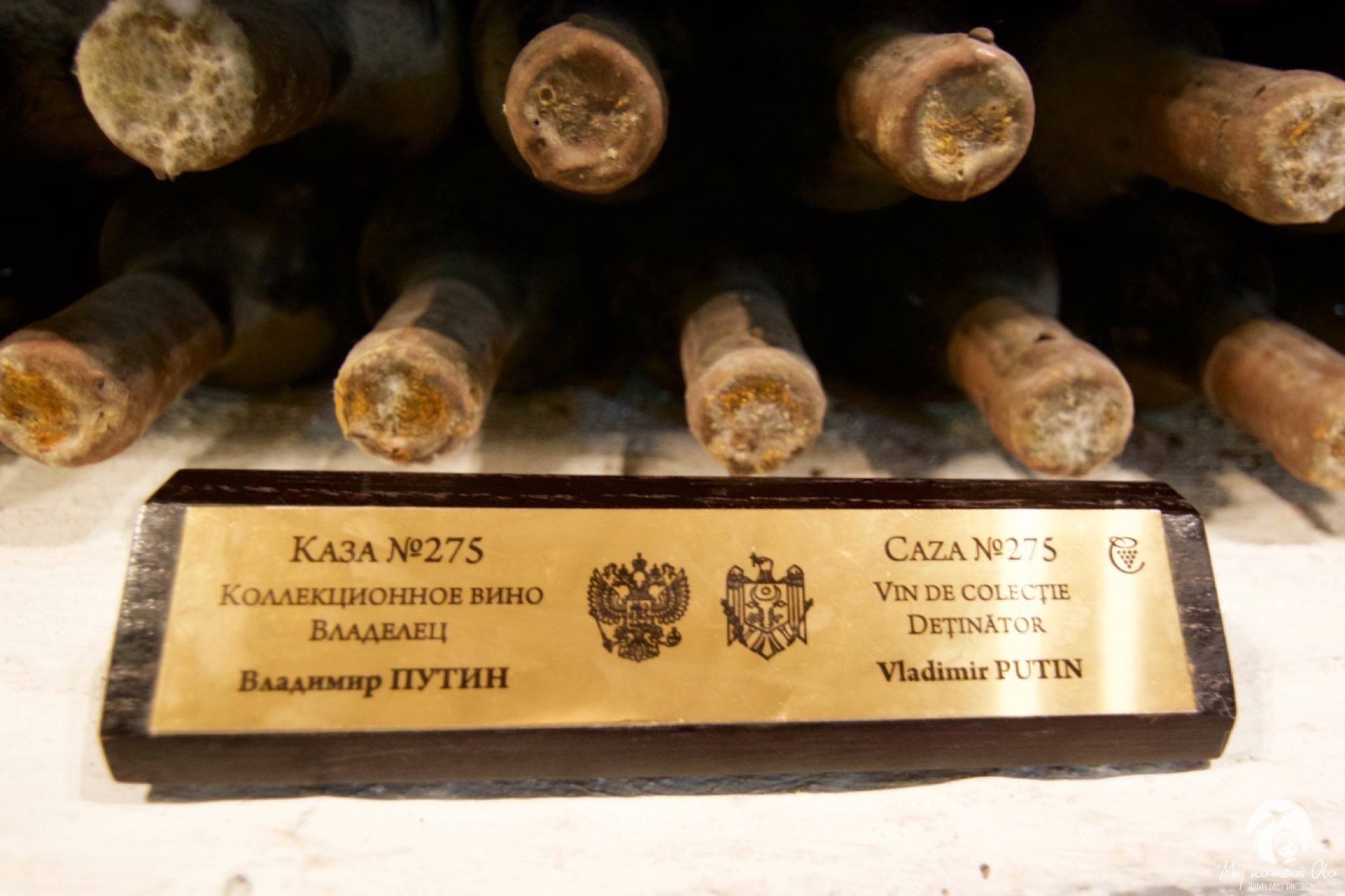

 [/photosetgrid]
 [/photosetgrid]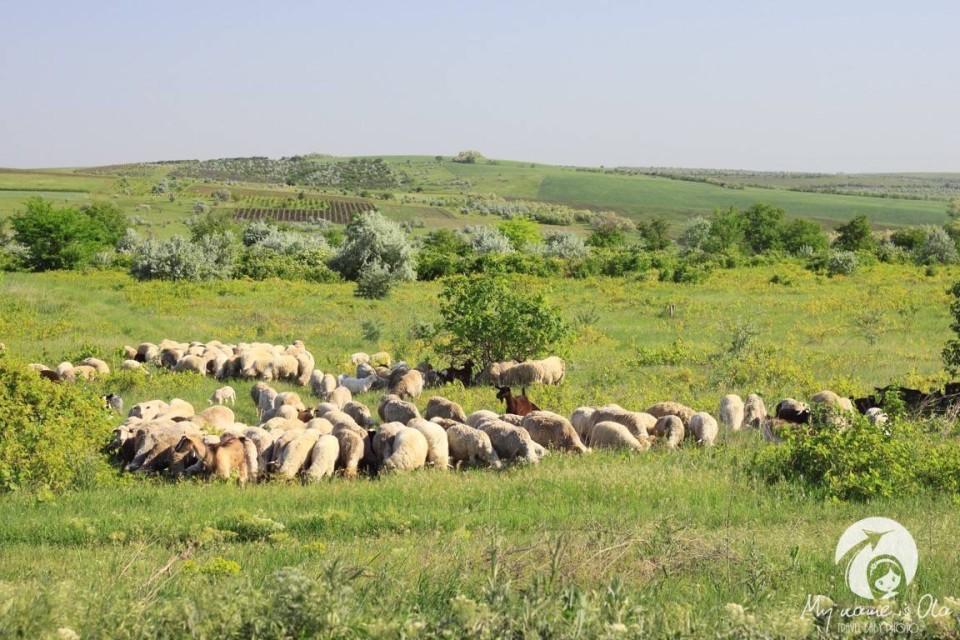



 [/photosetgrid]


 [/photosetgrid]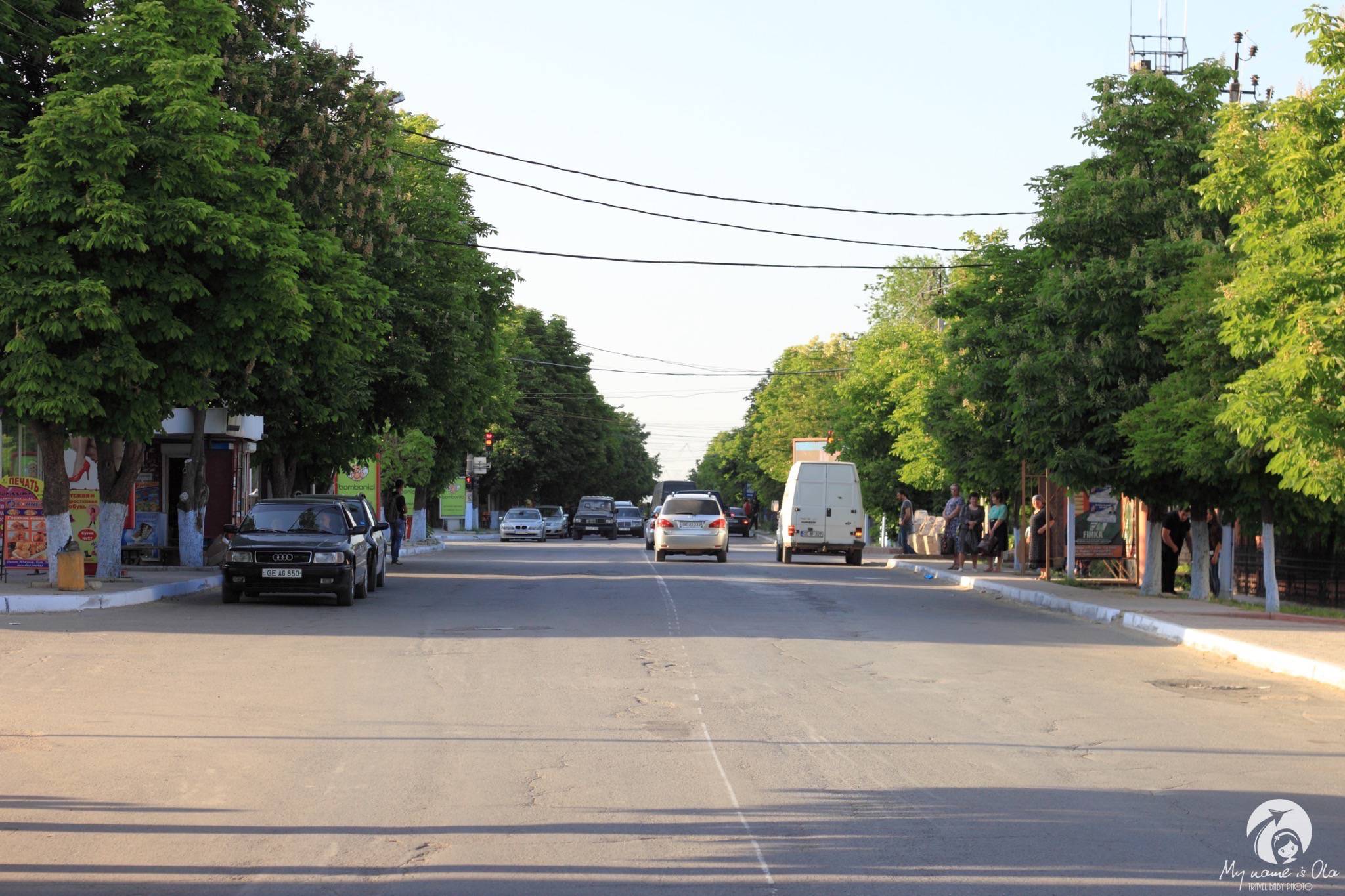
 [/photosetgrid]


 [/photosetgrid]

 [/photosetgrid]